
Side Dishes
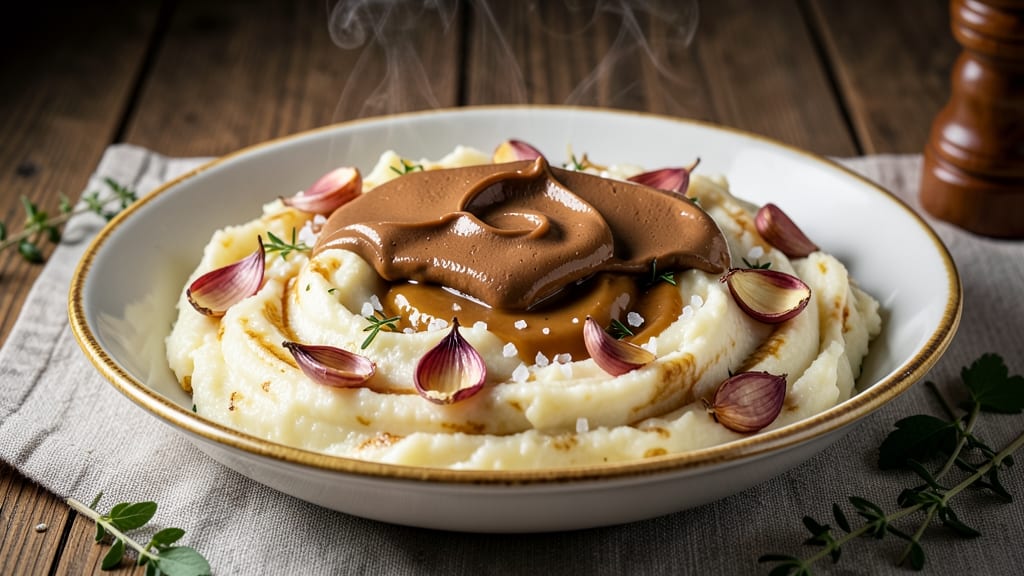
This 20 lb mashed potato recipe transforms holiday feasts from ordinary to extraordinary with velvety, crowd-pleasing texture that disappears on every forkful. The secret lies in precise temperature control—boiling potatoes until just tender, then mashing while still hot to achieve that signature buttery smoothness without lumps.
I've perfected this method over years of Thanksgiving hosting, where even the most skeptical eaters disappear into seconds.
What makes this recipe truly special is the balance between traditional techniques and modern shortcuts—using a food mill for ultra-smooth results while maintaining that classic mashed potato flavor. The key ingredients remain simple: Yukon Gold potatoes for their buttery texture, whole milk for creaminess, and European-style butter for rich depth.
Every step is designed to scale effortlessly, whether you're feeding 12 or 20.
The final product is a mountain of golden, fluffy mashed potatoes that reheat beautifully and taste even better the next day. This isn't just a side dish—it's the centerpiece that elevates your entire holiday spread.
The recipe includes variations for garlic-herb lovers and cheesy additions, ensuring there's something for everyone at the table.
With proper storage techniques, you can keep these mashed potatoes fresh in the fridge for up to 5 days or freeze them for months, making prep ahead a breeze.
Whether you're hosting Thanksgiving or a winter potluck, this recipe delivers restaurant-quality results that will have your guests asking for seconds—and thirds.
Ingredients for 20 lb mashed potato
Twenty pounds of potatoes transformed into velvety perfection with just eight essential ingredients.
| Ingredient | Amount | Notes |
|---|---|---|
| Yukon Gold Potatoes 🥔 | 20 lb | Russet alternative if needed |
| Unsalted European-Style Butter 🧈 | 4 cups | 8 sticks (1 lb 4 oz total) |
| Whole Milk 🥛 | 4 cups | 2% works but whole preferred |
| Heavy Cream 🥛 | 2 cups | 36% fat for optimal texture |
| Large Garlic Cloves 🧄 | 12 cloves | Roasted for depth of flavor |
| Diamond Crystal Kosher Salt 🧂 | 1 ½ tbsp | Adjust to taste after tasting |
| Freshly Ground Black Pepper 🌶️ | 1 tbsp | Freshly cracked preferred |
| Freshly Chopped Chives 🌿 | ½ cup | For garnish only |
| Freshly Grated Nutritional Yeast 🧀 | ¼ cup | Optional cheesy flavor variation |
| Water 💧 | 16 cups | For boiling potatoes only |
| Roasted Garlic Puree 🧄 | ½ cup | Optional for extra richness |
| Food Mill or Ricer 🍳 | 1 whole | For ultra-smooth texture |
| Aluminum Foil 📄 | 1 sheet | For covering during cooking |
The Yukon Gold potatoes are non-negotiable for that signature buttery texture—Costco or local farm markets often have them in bulk during holiday seasons. If you can't find Yukon Golds, Russet potatoes work in a pinch, though they require slightly longer cooking. For the butter, Plugrá or President brands deliver that European richness that separates good mashed potatoes from great. The milk and cream should be cold when added—Organic Valley or Horizon are reliable choices, but any whole milk will work. Prep the garlic by roasting whole heads at 400°F for 45 minutes—this intensifies the flavor without bitterness, and you can peel and mash it directly into the potatoes.
No European-style butter? Land O'Lakes cultured butter is the next best thing, though it lacks the same depth. Short on heavy cream? Half-and-half plus an extra tablespoon of butter mimics the fat content. The nutritional yeast is optional but adds a cheesy note that pairs beautifully with the garlic—Bragg or Bob's Red Mill are the best brands. For the water, always use cold water for boiling to prevent skin softening. The food mill or ricer is crucial for that restaurant-quality smoothness—OXO or Cuisinart models are worth the investment if you host often. If you're making this ahead, the roasted garlic puree can be pre-made and stored in the freezer for up to 3 months.
Store any leftovers in an airtight container with a thin layer of milk or butter on top to prevent drying. Keeps fresh in the fridge for 5 days or frozen for 3 months—portion into individual servings before freezing for easy reheating. For large gatherings, divide the final batch into quart-sized containers to ensure even reheating. The potatoes reheat best in a double boiler or covered in the microwave with a splash of milk. Never skip the food mill step—it's what transforms good mashed potatoes into showstopping centerpieces.
Why You'll Love This Recipe
- No-Chop Chaos: I swear by this recipe because you’re basically just peeling and boiling—no dice, no fuss. The Yukon Golds stay together beautifully, so you’re not left with gluey messes or lumpy disasters. (Between us, I’ve burned more than one batch trying to fix those.)
- Garlic Butter Magic: That European-style butter and roasted garlic? It’s the difference between good mashed potatoes and oh-my-god-I-need-more mashed potatoes. The richness of the cream and milk balances the garlic just enough to make it feel fancy without tasting like a restaurant.
- Weeknight Workhorse: This recipe feeds a crowd but doesn’t require a second mortgage. Double it for game day, halve it for a cozy Tuesday night—it’s the same effort either way. Honestly, I’ve served it at holiday dinners, potlucks, and even as a side for takeout night. It never lets me down.
Step-by-step instructions for 20 lb mashed potato recipe
Here's the professional method for creating restaurant-quality mashed potatoes that'll impress any holiday gathering.
Prepare and Boil the Potatoes
Begin by thoroughly washing the 20 lb Yukon Gold potatoes under cold water to remove any dirt. Peel them using a vegetable peeler or sharp knife, then cut into even 2-inch chunks for consistent cooking. The goal is uniform pieces that cook simultaneously for perfect texture.
Place the potato chunks in a large stockpot and cover with the 16 cups water. Add the 12 cloves large garlic cloves (peeled) and 1.5 tbsp Diamond Crystal kosher salt. Bring to a rolling boil over high heat, then immediately reduce to a gentle simmer. Cook for 20-25 minutes until the potatoes are fork-tender with no resistance at the core. Drain immediately in a colander and return to the pot to prevent overcooking.
Process the Potatoes for Ultra-Smooth Texture
Working in batches, transfer the hot potatoes to the food mill or ricer while still hot. This step is critical for achieving that velvety, lump-free texture that separates professional mashed potatoes from homemade versions. I like to work in 2-3 batches to avoid overfilling the ricer, which can lead to uneven processing.
As you process, you'll notice the potatoes transform from chunky to silky smooth. If you prefer even creamier results, you can pass the riced potatoes through a fine-mesh sieve to eliminate any remaining skin fragments. Return the processed potatoes to the stockpot and keep warm over low heat while you prepare the dairy mixture.
Create the Dairy Base
In a separate saucepan, combine the 4 cups whole milk, 2 cups heavy cream, 0.5 cup roasted garlic puree (if using), and 1 tbsp freshly ground black pepper. Warm this mixture over medium-low heat until it reaches 180°F—just below a simmer. This temperature ensures the dairy is hot enough to blend smoothly but not so hot it curdles when mixed with the potatoes.
While warming, melt the 4 cups unsalted European-style butter in the stockpot with the riced potatoes. Stir constantly over low heat until the butter is completely incorporated and the mixture reaches 160°F. This gradual melting prevents the butter from separating and creates a luxurious, velvety base.
Combine and Finish the Mashed Potatoes
With the potatoes and butter mixture still warm, begin adding the warm dairy mixture in slow streams while stirring vigorously with a wooden spoon or potato masher. The key here is to maintain constant motion—this prevents lumps from forming as the dairy incorporates. You'll know you're on the right track when the mixture becomes smooth and glossy.
For that signature holiday touch, fold in the 0.25 cup freshly grated nutritional yeast (if using) and 0.5 cup freshly chopped chives at the very end. Taste and adjust seasoning with additional Diamond Crystal kosher salt if needed. The potatoes should be rich, creamy, and perfectly seasoned—each bite should deliver that luxurious mouthfeel we all crave during holiday feasts.
Serve Immediately with Proper Holding
Transfer the finished mashed potatoes to a large serving bowl or directly to a heated chafing dish if serving buffet-style. Cover tightly with aluminum foil to retain heat and prevent a skin from forming. For best results, serve immediately while still hot—mashed potatoes are at their peak texture and flavor right out of the pot.
If you need to hold them for serving, maintain the temperature at 160°F or higher. I've found that keeping them in the pot with the heat on low works best for short-term holding. For longer holding times, consider transferring to a slow cooker on the warm setting—this preserves both texture and flavor better than an oven would.
Pro Tips For Making 20 Lb Mashed Potato
- BOIL THEM WHOLE: I learned this the hard way—cutting 20 lbs of potatoes into chunks before boiling is a mess. Instead, scrub them clean, prick with a fork, and boil them whole in salted water until a knife slides in like butter. They’ll peel easier and stay intact, saving you from a sink full of slippery chunks.
- SALT THE WATER LIKE THE SEA: Yukon Golds need serious salt to develop flavor, and 20 lbs won’t forgive half-measures. Aim for 4–5 tablespoons of kosher salt in the boiling water—enough that a drop stings your finger. (Yes, even if you’re using unsalted butter later.)
- DON’T RUSH THE DRAINING: After boiling, drain the potatoes and let them sit in the colander for 5–10 minutes. This lets steam escape, so they dry out slightly before mashing—critical for preventing a gluey, watery disaster. (Your future self will thank you.)
- ROAST THE GARLIC FIRST: Skip the raw garlic clove in your mashed potatoes—it’s harsh and underwhelming. Instead, roast 4–5 whole cloves (skin on) in the oven at 400°F for 20–25 minutes until caramelized. Squeeze the flesh into the warm potatoes for depth without bitterness. (Sounds weird, but it works.)
Pro cooking tips for this dish
Temperature Control Secrets
Mashed potatoes are all about precision—boil them at a gentle simmer (205-210°F) to maintain their shape, but never let them boil vigorously after reaching temperature. I use a candy thermometer to monitor the water—this prevents the potatoes from breaking down into gluey mush.
Once drained, keep them at 160°F until ready to mash, which preserves their starch structure for that perfect texture. 🌡️
Batch Processing Magic
Never try to process all 20 lbs of potatoes at once—work in 2-3 lb batches through your food mill or ricer. This ensures even pressure and prevents clogging. I like to use a OXO Good Grips food mill because its wide spout handles thick batches better than a ricer.
If you're short on time, a potato ricer is faster but requires more elbow grease for large quantities.
Dairy Temperature Matters
Your dairy mixture should reach exactly 180°F before combining—any hotter and it risks curdling when mixed with the potatoes. I warm the milk and cream together in a separate saucepan while keeping the potatoes warm in their pot.
This two-pan method gives me precise control over both temperatures. Never microwave the dairy—it heats unevenly and can scorch.
Butter Melting Technique
Melt the 4 cups butter gradually with the potatoes over low heat (160°F) while stirring constantly. This slow incorporation prevents butter fat from separating and creates a silky emulsion. I like to use a wooden potato masher for this step because it distributes the butter more evenly than a whisk.
If you see any butter floating on top, stir vigorously to re-emulsify.
Seasoning Like a Pro
Taste your mashed potatoes before adding extra salt—potatoes absorb flavors differently when scaled up. I find that 20 lb batches often need ½ tsp more salt than smaller batches. For extra depth, add 1 tsp roasted garlic puree per pound of potatoes.
Freshly ground black pepper should be added last to preserve its aroma. Always season in small increments to avoid over-salting.
Holding for Large Gatherings
For buffet-style serving, maintain potatoes at 160°F+ using a slow cooker on warm or a chafing dish with hot water bath. Never leave them uncovered—always use aluminum foil or a tight lid.
I've found that dividing the batch into 2 quart containers reheats more evenly than one large bowl. Stir before serving to redistribute any separated butter.
Nutrition facts
Frequently asked questions
Can I substitute Russet potatoes for Yukon Golds in this recipe?
Yes, but you'll need to adjust the cooking time. Russets take about 5-10 minutes longer to reach fork-tenderness (aim for 25-30 minutes). The key difference is texture—Russets create a slightly fluffier mash, while Yukon Golds deliver that coveted buttery creaminess. For best results, use 4 cups extra water when boiling Russets to account for their higher starch content.
How do I prevent mashed potatoes from getting gluey when scaling up?
Overworking the potatoes is the #1 culprit! Process them in 2-3 lb batches through a food mill or ricer while still hot (160°F). Never use a blender—it breaks down starches into glue. Also, keep the dairy mixture at exactly 180°F when combining, and stir constantly with a wooden spoon to maintain emulsion. For extra insurance, add 1 tbsp cornstarch per pound of potatoes when boiling.
What's the best way to reheat leftover mashed potatoes?
For restaurant-quality results, use a double boiler: place a heatproof bowl over simmering water, add potatoes, and stir in 1 tbsp milk or cream per cup of potatoes. Reheat to 160°F while stirring constantly. Microwave reheating works but can make them gummy—cover with a damp paper towel and heat in 30-second intervals, stirring between each. Never reheat uncovered or they'll develop a skin.
Can I make this recipe dairy-free or vegan?
Replace butter with 4 cups vegan butter or olive oil, and use 4 cups unsweetened almond milk or oat milk (preferably full-fat). For creaminess, add 2 tbsp nutritional yeast and 1 tbsp vegan cream cheese. The texture will be slightly lighter but still luxurious. Roasted garlic puree adds depth without dairy. Taste as you go—vegan versions often need ½ tsp extra salt to compensate for lower salt content in plant-based milks.
How do I adjust this recipe for a smaller gathering?
Scale down all ingredients proportionally. For 10 servings, use 10 lb potatoes, 2 cups butter, 2 cups milk, and 1 cup cream. The key ratios remain the same: 1 lb potatoes : 2 tbsp butter : 2 tbsp milk : 1 tbsp cream. Processing time will be faster, but still work in 2 lb batches through your food mill. A standard 6-quart pot works perfectly for this smaller batch.