Side Dishes
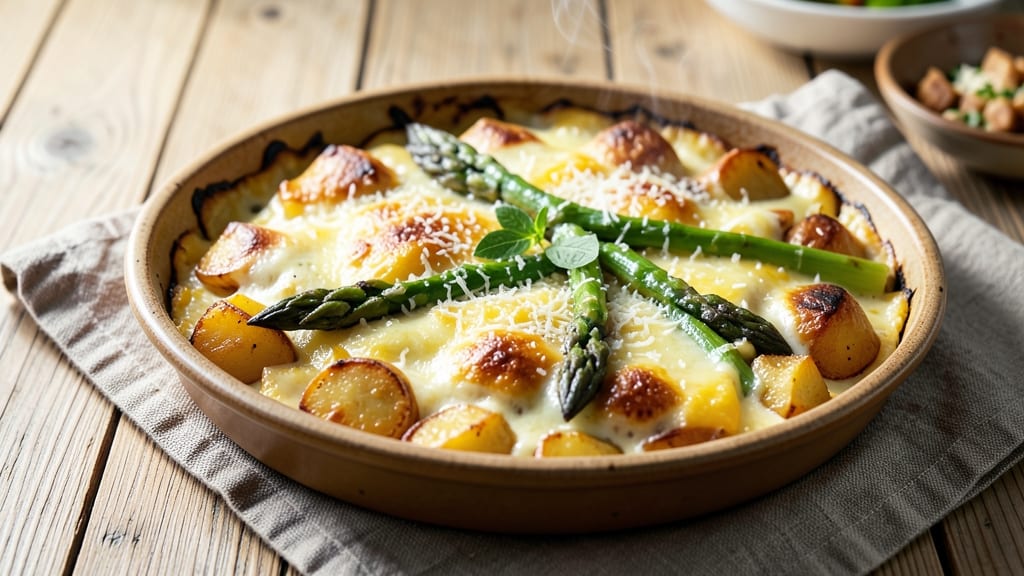
This asparagus and potato frittata recipe transforms humble ingredients into a restaurant-worthy breakfast or brunch dish with a golden crust and tender, flavor-packed interior. 💛 The secret lies in roasting the vegetables first—this caramelizes their natural sweetness while creating a crispy base that holds the eggs perfectly.
I developed this recipe after realizing how often my simple frittatas fell flat; this version delivers every time.
The beauty of this dish is its versatility—it works equally well for a weekday breakfast or a brunch spread, and the combination of earthy potatoes and fresh asparagus creates a satisfying texture contrast.
No fancy techniques required: just whisked eggs, a handful of cheese, and your prepped vegetables. The result is a foolproof dish that feels indulgent without requiring hours in the kitchen.
By the time it emerges from the oven, you'll have a fluffy yet firm frittata with a crispy edge that's impossible to resist. The potatoes add heartiness while the asparagus brings a bright, fresh element that keeps the dish from feeling too heavy.
Each bite delivers a perfect balance of textures—creamy eggs, tender vegetables, and that satisfying crunch from the crust.
Serve it warm with a side of roasted tomatoes or a simple arugula salad for a complete meal. The best part? Leftovers reheat beautifully, making this an ideal make-ahead option for busy mornings. Let's get started on this elevated vegetable frittata that proves simple ingredients can deliver extraordinary results.
Ingredients for asparagus and potato frittata
Twelve thoughtful ingredients crafting a restaurant-style frittata with perfect golden crust and tender vegetable heart.
| Ingredient | Amount | Notes |
|---|---|---|
| Large Eggs 🥚 | 8 whole | Room temperature for even cooking |
| Heavy Whipping Cream 🥛 | ¼ cup | Full-fat for richness |
| Russian Potatoes 🥔 | 1 ½ lb | Waxy variety, cut into 1-inch cubes |
| Asparagus Spears 🧅 | 1 lb | Trimmed, tough ends removed |
| Extra-Sharp Cheddar Cheese 🧀 | 1 cup | Shredded, aged variety preferred |
| Parmesan Cheese 🧀 | ½ cup | Freshly grated from block |
| Extra-Virgin Olive Oil 🫒 | 2 tbsp | High-quality, fruity variety |
| Diamond Crystal Kosher Salt 🧂 | 1 ½ tsp | Fine grain for even seasoning |
| Freshly Ground Black Pepper 🌶️ | ½ tsp | Coarsely cracked |
| Garlic Cloves 🧄 | 3 cloves | Minced for aromatic base |
| Fresh Thyme Leaves 🌿 | ¼ cup | Chopped, stems removed |
| All-Purpose Flour 🌾 | 1 tbsp | For crispy crust texture |
The potatoes and asparagus deserve special attention—Russian potatoes hold their shape beautifully while asparagus spears should be trimmed precisely at the woody ends. For the best results, source fresh asparagus from a farmers market, where the stalks are vibrant green and crisp. The cheeses are where flavor peaks: aged cheddar adds sharpness while freshly grated Parmesan brings umami depth. I always buy block cheese at Whole Foods for grating myself—pre-shredded lacks the melt and texture. The eggs? Pasture-raised from local farms if possible, but any high-quality eggs will work.
No fresh thyme? Dried thyme at one-third the amount suffices, though fresh delivers superior aroma. Substituting potatoes? Sweet potatoes or Yukon golds work equally well, though waxy potatoes create the ideal texture. Running short on cheddar? Gruyère or fontina offer rich alternatives. The heavy cream can be swapped for half-and-half or whole milk, though texture will be slightly lighter. For a vegan adaptation, replace the cream with unsweetened coconut milk and use nutritional yeast instead of Parmesan. The olive oil matters here—avoid light or refined oils that lack flavor.
Prep the vegetables first—they should be roasted until caramelized before mixing with eggs. Store prepped vegetables in an airtight container for up to 2 days in the fridge. The frittata reheats beautifully—30 seconds in the microwave or 5 minutes at 350°F restores crispiness. For make-ahead convenience, bake an extra frittata and freeze it in slices for quick breakfasts. The crust stays crispy when reheated properly, making this an ideal meal prep option for busy mornings.
Why You'll Love This Recipe
- One-Pan Wonder: I swear by this recipe when I’m too tired to wash dishes. The potatoes and asparagus roast right alongside the eggs—no extra pans, no stress, just golden edges and that satisfying crisp on the bottom.
- Creamy Cheesy Magic: That sharp cheddar melts into a gooey blanket, while the heavy cream makes it impossibly rich. Honestly, the first time I tasted it, I wondered why I’d ever made frittatas without cream before.
- Leftovers That Don’t Suck: Cold slices the next day? Still delicious. I pack it for lunch or reheat it in the oven—no soggy eggs here. Between us, it’s the only frittata that actually improves after sitting overnight.
- Spring in a Plate: Asparagus peaks in spring, but this recipe works year-round. Roast the veggies ahead, store them in the fridge, and throw them together when you’re hungry. (Yes, even on a Tuesday night.)
Step-by-step instructions for asparagus and potato frittata
Here's how to build a perfectly textured frittata with crisp edges and tender fillings.
🍳 Step 1: Prep Potatoes and Asparagus for Even Cooking
Preheat your oven to 400°F while you prepare the vegetables. Cut the 1.5 lb Russian Potatoes into 1-inch cubes—smaller pieces cook faster and absorb flavors better. Toss them with 1 tablespoon of the Extra-Virgin Olive Oil, half of the Diamond Crystal Kosher Salt (¾ tsp), and half of the Freshly Ground Black Pepper (¼ tsp). Spread on a baking sheet and roast for 20-25 minutes until golden and fork-tender.
While the potatoes roast, trim the tough ends from the 1 lb Asparagus Spears and cut them into 1-inch pieces. In a separate skillet, heat 1 tablespoon of the Extra-Virgin Olive Oil over medium heat. Add the asparagus and cook for 4-5 minutes until bright green and slightly blistered. Remove from heat and set aside with the potatoes.
👨🍳 Step 2: Build the Frittata Base with Garlic-Thyme Flour
In a 10-inch oven-safe skillet, heat the remaining 1 tablespoon Extra-Virgin Olive Oil over medium heat. Add the 3 minced Garlic Cloves and sauté for 30 seconds until fragrant but not browned. Immediately stir in the 1 tablespoon All-Purpose Flour to create a light roux—this forms the crispy crust foundation.
Pour in the 0.25 cup Heavy Whipping Cream and whisk constantly for 1 minute until slightly thickened. Remove from heat and let cool for 2 minutes. In a separate bowl, whisk together the 8 whole Large Eggs, remaining ¾ tsp Diamond Crystal Kosher Salt, and remaining ¼ tsp Freshly Ground Black Pepper. Gently fold in the 0.25 cup Fresh Thyme Leaves.
🥘 Step 3: Layer Ingredients for Perfect Texture
Pour the egg mixture into the skillet with the garlic-cream base and stir gently for 30 seconds to combine. Distribute half of the roasted potatoes and asparagus evenly across the surface. Sprinkle with half of the 1 cup Extra-Sharp Cheddar Cheese and half of the 0.5 cup Parmesan Cheese. Repeat with remaining vegetables and cheeses.
Return to medium-low heat and cook for 8-10 minutes until edges set slightly but center remains slightly jiggly. This gradual cooking prevents cracking while allowing the fillings to heat through. The key is patience—the frittata needs to develop structure before final baking.
🔥 Step 4: Bake to Golden Perfection
Transfer the skillet to the preheated 400°F oven and bake for 12-15 minutes until the top is golden brown and the center is just set. You'll see the edges pull away slightly from the pan—this indicates proper doneness. For extra browning, broil for 1-2 minutes at the end, watching closely to prevent burning.
Let rest for 5 minutes before serving—this allows the internal heat to distribute evenly. The frittata should be firm enough to slice with a spatula but still tender in the center. Serve warm with a simple arugula salad or crusty bread to soak up any residual sauce.
Pro Tips For Making Asparagus And Potato Frittata
- Preheat the pan like it’s 1985: Cast iron or stainless steel, screaming hot for 3-4 minutes—this isn’t a delicate omelet. The eggs need to scream, not whisper, when they hit the pan. I learned this the hard way after a lukewarm frittata that tasted like a sad soufflé.
- Trim those asparagus spears: Cut off the woody ends with a sharp knife, not your teeth (yes, I’ve done it). Leave the tips intact—those are the sweetest parts. Overcooking asparagus turns them to mush; roast them first for 5 minutes at 400°F so they’re tender but still hold shape.
- Don’t overmix the eggs: Whisk just until the yolks and whites blend—no need for a meringue. Lumps are fine; they’ll disappear. Overmixing makes the frittata dense. Add the cream and cheese after the eggs are mostly combined, then fold in the potatoes and asparagus gently. Rough edges? That’s a good sign.
- Use cold potatoes: Toss freshly boiled, cold potatoes into the egg mix—no need to reheat them. The contrast keeps the frittata from getting gummy. If they’re still warm, the cream will turn into a sad, watery mess. (I’ve seen it happen.) Drain them well, but don’t rinse—the starch is flavor.
Troubleshooting perfect results
Eggs Too Watery?
If your frittata turns out too runny, it's likely from eggs that were too cold or overmixed. Always use room-temperature eggs—cold eggs create steam that makes the texture watery.
Also, avoid over-whisking the eggs; just gently stir until combined. For extra insurance, add 1 extra tablespoon of flour to the roux base to help thicken the mixture. 💡
Crust Not Crispy?
The golden crust comes from the garlic-thyme flour roux and proper baking. If yours lacks crispiness, try these fixes: Increase the oven temperature to 425°F for the final 2-3 minutes of baking, or sprinkle 1 extra tablespoon of flour on top before baking.
Also, ensure your skillet is hot enough before adding the egg mixture—it should sizzle slightly when poured in.
Vegetables Undercooked?
Roasted potatoes and asparagus should be tender but not mushy before mixing with eggs. If they're still firm after baking, roast them for 5-10 extra minutes until fork-tender. For asparagus, blistering it in the skillet before mixing ensures it’s cooked through.
Pro tip: Salt the vegetables early—this helps break down their fibers faster during roasting. 🥔
Frittata Stuck to Pan?
Use a well-seasoned, oven-safe skillet (I recommend Lodge cast iron) and heat it thoroughly before adding oil. If it still sticks, your pan might not be hot enough.
For stubborn cases, let the frittata cool slightly, then run a thin offset spatula around the edges to loosen it before transferring to a plate. Avoid using nonstick spray—it can prevent proper browning.
Cheese Not Melting?
Cheese clumping usually means it wasn’t hot enough when baked. Sprinkle cheese in layers—half before baking, half after 5 minutes in the oven. For extra melt, use sharp cheddar (it melts better than mild) and avoid overfilling the skillet.
If needed, broil for 1-2 minutes at the end, watching closely to prevent burning. 🧀
Cracked Top Surface?
Cracks form when the frittata sets too quickly. To prevent this, reduce heat to medium-low after adding the egg mixture and let it cook slowly for 8-10 minutes before baking.
Also, avoid opening the oven door early—temperature fluctuations cause cracks. If it does crack, broil for 1-2 minutes to crisp the edges and hide the imperfections.
Nutrition facts
Frequently asked questions
Can I make this frittata ahead of time?
This frittata reheats beautifully. Bake an extra one and store it in an airtight container in the fridge for up to 4 days. For best results, reheat slices in a 350°F oven for 5-7 minutes or 30 seconds in the microwave (covered to retain moisture). The crust stays crispy when reheated properly.
What's the best way to cut a frittata?
Use a long, thin spatula or sharp chef's knife to slice through the center first, then work your way outward. For cleaner cuts, let the frittata rest for 5 minutes after baking—this helps it firm up. If it's still too soft, chill it in the fridge for 10 minutes before slicing.
Can I substitute other vegetables?
Yes! Swap the asparagus for zucchini, bell peppers, or spinach, or replace potatoes with sweet potatoes or Yukon golds. Just ensure your vegetables are prepped similarly—roasted or sautéed until tender but not mushy. The key is maintaining the right texture contrast for each bite.
Why does my frittata have a rubbery texture?
Overcooking is the most common cause. Remove the frittata from the oven when the center is still slightly jiggly—it will continue cooking as it rests. Also, avoid using cold eggs (they create steam) and make sure your skillet is properly preheated to ensure even cooking.
Can I make this frittata in a different size pan?
Yes, but adjust the baking time accordingly. A 9-inch pan will bake 2-3 minutes faster than a 10-inch, while a 12-inch pan may need 5-7 extra minutes. For best results, use a pan that's no more than 2 inches larger than your original—this helps create the perfect crust-to-egg ratio.