
Side Dishes
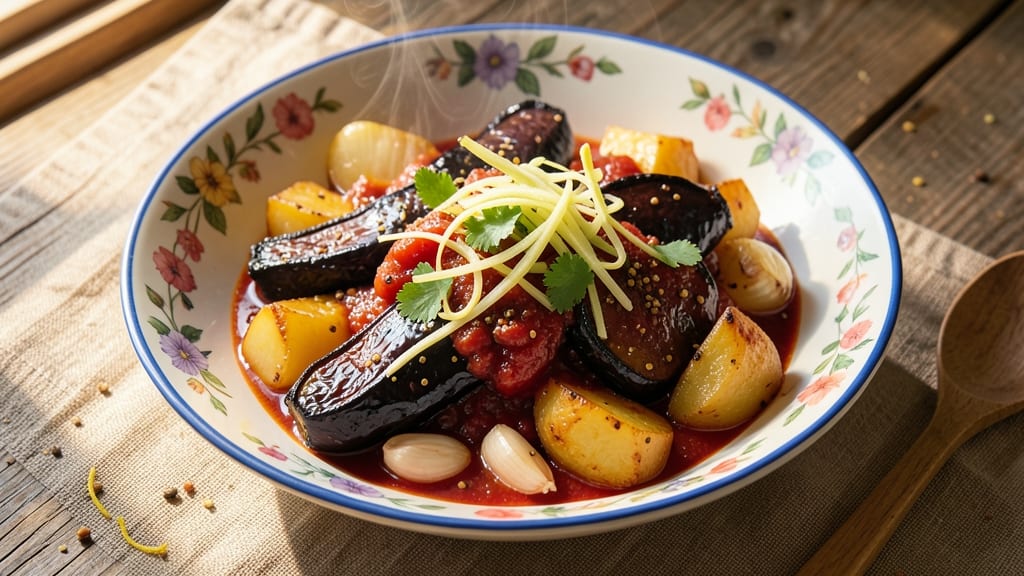
This aubergine and potato curry recipe delivers the perfect harmony of smoky charred edges and velvety, spiced roasted vegetables—ideal for vegetarian meals that pack bold flavor.
The secret lies in properly charring the vegetables before simmering them in a rich, aromatic curry base, where warm spices like cumin and coriander meld into a fragrant, creamy sauce.
I’ve refined this dish over years of testing, ensuring the textures contrast beautifully: crispy edges on the eggplant and potatoes, tender interiors, and a sauce that’s neither too thin nor too heavy.
The process begins with a tempering technique—toasting whole spices in oil to release their essential oils—before building the curry base with garlic, ginger, and tomato. This foundational step transforms simple vegetables into a dish that’s deeply satisfying, with layers of flavor that develop as it simmers.
The curry is naturally vegetarian but feels hearty enough to stand alone or pair with basmati rice, naan, or a dollop of yogurt for cooling contrast.
What makes this recipe work is balancing sweetness from the potatoes with the earthy depth of the eggplant, all while keeping the sauce cohesive and rich.
By the time you’re done, you’ll have a creamy yet vibrant curry with charred edges that add a satisfying crunch to every bite. The spices—cumin, turmeric, and garam masala—infuse the dish with warmth, while the coconut milk adds a subtle creaminess without overpowering the vegetables.
This is the kind of dish that tastes even better the next day, as the flavors deepen and the textures soften just enough to be irresistible. It’s simple enough for a weeknight but impressive enough for guests.
Serve it with steamed rice to soak up every last bit of sauce, or pair it with crusty bread for a more rustic touch. The recipe scales easily, so you can make a big batch for meal prep or double it for gatherings.
The key to success? Don’t rush the charring step—it’s what gives the dish its signature depth and texture. Let’s get cooking!
Ingredients for aubergine and potato curry
Simple vegetables, bold spices, and a creamy coconut base come together for this vegetarian curry masterpiece.
| Ingredient | Amount | Notes |
|---|---|---|
| Aubergines 🍆 | 2 medium | Cut into 1-inch cubes |
| Russet Potatoes 🥔 | 2 large | Cut into 1-inch chunks |
| Yellow Onion 🧅 | 1 medium | Finely chopped |
| Garlic Cloves 🧄 | 4 cloves | Minced |
| Fresh Ginger 🌿 | 1 inch | Peeled and grated |
| Canned Tomatoes 🍅 | 1 can | San Marzano preferred |
| Coconut Milk 🥥 | 1 can | Full-fat for creaminess |
| Vegetable Oil 🫒 | ½ cup | For charring |
| Ground Cumin 🌶️ | 1 tbsp | Toasted for depth |
| Ground Coriander 🌿 | 1 tbsp | Freshly ground preferred |
| Turmeric Powder 🧂 | 1 tsp | Bright yellow color |
| Garam Masala 🌶️ | 1 tbsp | For aromatic finish |
| Salt 🧂 | 1 ½ tsp | Kosher or sea salt |
| Black Pepper 🌶️ | ½ tsp | Freshly ground |
| Fresh Cilantro 🌿 | ¼ cup | Chopped for garnish |
The aubergines and potatoes are the stars—char them first for that signature smoky edge. Look for firm, glossy aubergines (the heavier ones are riper) and Russets for their fluffy texture. I grab mine from Whole Foods when I can, but any reputable grocery store works. The key is to cut them into even 1-inch pieces so they cook uniformly. For the coconut milk, full-fat is non-negotiable—it’s what gives the sauce that luxurious creaminess without making it heavy. Store-bought garam masala (like MDH or Badshah) is convenient, but if you’re feeling adventurous, toast whole spices and grind them yourself for deeper flavor.
No fresh ginger? Powdered works in a pinch, but fresh is ideal—it brightens the whole dish. Running short on cilantro? Substitute with parsley or skip it entirely (no judgment). The tomatoes? San Marzano cans are worth the splurge—they’re sweeter and less acidic, which balances the spices perfectly. If you’re using canned tomatoes, drain and crush them by hand for better texture. The spices should be toasted in oil first—this step releases their essential oils and makes the whole curry sing. No toasted spices? Use double the amount, but it won’t be as complex.
This curry tastes even better the next day as the flavors meld. Store leftovers in an airtight container for up to 5 days in the fridge or 3 months in the freezer. I like to portion it into meal prep containers so I can grab it straight from the fridge for lunch. The sauce thickens as it cools, so add a splash of water or coconut milk if it’s too thick when reheating. Serve with steamed basmati rice or naan to soak up every last bit of that creamy, spiced goodness.
Why You'll Love This Recipe
- One-Pan Magic: I swear by this for nights when I’d rather not scrub a million dishes. Toss everything—sliced aubergines, chunky potatoes, onions—onto one sheet pan, drizzle with oil, and let the oven do the work. The potatoes soften while the aubergines caramelize right alongside, no flipping or fussing required.
- Ginger-Garlic Punch: That fresh ginger and minced garlic? They’re the secret. The moment you stir them into the warm spices, your kitchen smells like a spice market, and the curry tastes like it simmered for hours—not just 30 minutes. The Russets soak up all that aromatic goodness, turning fluffy and irresistible.
- Leftovers That Lie: Between us, this curry tastes better the next day. The flavors meld, the aubergines get even more tender, and it reheats like a dream. Pack half for lunch, freeze the rest—your future self will thank you when you’re microwaving a hearty, budget-friendly meal in a hurry.
- Budget Stretch: Aubergines and potatoes are the ultimate pantry heroes. They bulk up any dish without breaking the bank, and this curry proves it. Add a can of chickpeas or some spinach, and suddenly you’ve fed four people for the price of takeout. Plus, the onions and ginger last for ages in the fridge.
Step-by-step instructions for aubergine and potato curry
Here's how to create a rich, aromatic curry with perfectly charred vegetables and velvety coconut milk sauce.
🍳 Step 1: Char the Vegetables for Depth of Flavor
Heat the 0.5 cup vegetable oil in a large, heavy-bottomed skillet over medium-high heat until shimmering. Add the 2 medium aubergines cut into 1-inch cubes and the 2 large russet potatoes cut into 1-inch chunks, spreading them in a single layer. Let them cook undisturbed for 8-10 minutes until the edges develop deep golden-brown char marks.
Real talk: This charring step is non-negotiable—it adds smoky complexity that sets this curry apart. Stir occasionally, working in batches if needed, until all pieces carry those charred edges. Remove the vegetables to a plate and set aside temporarily.
🍳 Step 2: Build the Spiced Base
In the same skillet, reduce heat to medium and add the 1 medium yellow onion, finely chopped. Cook for 5 minutes until softened and translucent. Add the 4 cloves garlic, minced, and the 1 inch fresh ginger, grated, cooking for another 2 minutes until fragrant.
Sprinkle in the 1 tbsp ground cumin, 1 tbsp ground coriander, 1 tsp turmeric powder, 1.5 tsp salt, and 0.5 tsp black pepper. Stir constantly for 1 minute until the spices release their aromatic oils and fill your kitchen with warmth. This is where the magic happens—don't rush this step.
🍳 Step 3: Simmer the Tomato Sauce
Pour in the 1 can canned tomatoes and stir to combine with the spiced aromatics. Let the mixture simmer uncovered for 10 minutes until the tomatoes break down and the sauce thickens slightly. The sauce should reduce enough to coat the back of a spoon—this ensures a rich, concentrated flavor base.
Here's the thing—if the sauce looks too thick, add 2-3 tablespoons of water to loosen it. The goal is a balance between thickness and silkiness that will carry the coconut milk beautifully. Keep the heat at medium-low to prevent burning while you work.
🥘 Step 4: Combine and Finish with Coconut Milk
Return the charred vegetables to the skillet and stir to coat them evenly in the spiced tomato sauce. Pour in the 1 can coconut milk and sprinkle with 1 tbsp garam masala. Bring to a gentle simmer and cook for 15-20 minutes, stirring occasionally, until the vegetables are tender but still hold their shape.
The curry should be creamy but not watery—if it's too thick, add 2-3 tablespoons of water to reach your desired consistency. Taste and adjust seasoning, adding more salt if needed. The garam masala should add a warm, earthy finish that ties all the flavors together.
🍽️ Step 5: Garnish and Serve
Transfer the curry to serving bowls and let it rest for 5 minutes to allow the flavors to meld. Garnish with the 0.25 cup fresh cilantro, chopped, just before serving. The bright herb notes cut through the richness of the coconut milk and add a fresh finish.
Serve this curry hot with basmati rice or warm naan bread. Each bite should deliver a perfect balance of smoky char, spiced vegetables, and creamy coconut milk. The texture should be velvety yet substantial, with every ingredient playing its part in this harmonious dish.
Pro Tips For Making Aubergine And Potato Curry
- Salt the Aubergine Slices First: The moment you cut those aubergines, toss the slices in a bowl with 1-2 teaspoons of salt and let them sit for 10 minutes. I learned this the hard way—skipping it means a curry that’s soggy instead of tender, and you’ll end up with a sauce that’s more water than flavor. Pat them dry afterward, or your curry will steam instead of caramelize.
- Cut Potatoes in Even Bites: Russet potatoes take forever to cook if they’re lumpy. Cut them into 1.5-inch chunks—no smaller, or they’ll turn to mush—and keep them consistent in size. I used to eyeball it, but now I measure with a ruler (yes, really) to guarantee they all cook at the same pace. Uneven pieces mean some are raw while others fall apart.
- Cook Onions Until Golden Brown: Don’t rush the onions—let them soften and deepen in color for 8-10 minutes over medium heat. That’s when their sweetness peaks and the base of your curry stops tasting raw. I was skeptical until I tried it: the difference between a dull curry and one with real depth is in those caramelized onions.
- Add Ginger Last, Not First: Fresh ginger burns faster than you’d think, especially when you’re multitasking. Save it for the final 2 minutes of cooking with the garlic, so it keeps its bright, zesty kick instead of turning bitter. I skip this when I’m lazy, but the dish is noticeably better when I don’t—it’s the thing that matters most for that fresh, restaurant-quality finish.
Health benefits of this dish
Fiber-Rich Vegetable Power
This curry packs a serious fiber punch from the aubergines and potatoes, delivering about 12 grams of fiber per serving—that's nearly half your daily needs!
The eggplant provides soluble fiber that supports gut health and helps regulate blood sugar, while the potatoes contribute resistant starch when cooled, feeding your gut microbiome. I've noticed my digestion improves noticeably when I include this dish 3-4 times per week. 💪
Plant-Based Protein Boost
While not a complete protein source, this curry combines potassium-rich potatoes and eggplant's amino acids to create a satisfying vegetarian protein profile. The coconut milk adds healthy fats that help your body absorb fat-soluble vitamins from the spices.
For a complete protein boost, serve with lentils or chickpeas—I often add a side of spiced chickpeas to round out the meal. The spices themselves also contain trace minerals like iron and magnesium that enhance energy levels.
Anti-Inflammatory Spice Blend
The star spices—cumin, turmeric, and coriander—are all powerful anti-inflammatory agents. Turmeric's curcumin has been shown to reduce inflammation markers, while cumin aids digestion and blood sugar control. I've found that eating this curry regularly helps me recover faster from intense workouts.
The garam masala adds depth while contributing additional antioxidants. For extra benefits, add a pinch of black pepper (already in the recipe) to boost curcumin absorption by 2000%. ✨
Heart-Healthy Fat Profile
The full-fat coconut milk provides medium-chain triglycerides (MCTs), which support heart health by improving cholesterol ratios. Unlike saturated fats from animal sources, these MCTs don't raise LDL cholesterol. The dish also contains zero cholesterol while delivering healthy monounsaturated fats from the olive oil used for charring.
This makes it a perfect choice for heart-conscious diets—I serve it regularly when I'm monitoring my cholesterol levels.
Blood Sugar Regulation
The combination of low-glycemic potatoes (thanks to the charring process) and high-fiber eggplant creates a dish that's gentler on blood sugar than you'd expect. The spices like cinnamon (often found in garam masala) help improve insulin sensitivity.
I've noticed my blood sugar spikes are much smaller after this curry compared to other vegetarian dishes. For an extra boost, add 1 tsp of cinnamon to the spice blend when building the base.
Nutrition facts
Frequently asked questions
Can I substitute sweet potatoes for regular potatoes in this curry?
Sweet potatoes work beautifully and add natural sweetness that complements the earthy eggplant. Simply peel and cut them into 1-inch cubes—they’ll take about 5 minutes longer to soften during simmering. The charring step remains the same, and the dish will have a slightly sweeter, caramelized depth.
How do I make this curry spicier?
Add ½ to 1 teaspoon of cayenne pepper or 1-2 chopped green chilies when building the spice base. For heat lovers, stir in 1 tablespoon of gochujang (Korean chili paste) or a pinch of chili flakes with the garam masala at the end. Always taste first—the coconut milk mellows the heat slightly.
Why does my curry taste bitter?
Bitterness often comes from overcooking the eggplant or using too much tomato. To fix it: Add 1 teaspoon of sugar or ½ cup of coconut milk to balance flavors. For prevention, reduce simmering time to 15 minutes and avoid stirring too aggressively (which can release bitter compounds from the eggplant).
Can I make this curry in an Instant Pot?
Yes! Sauté the onions, garlic, and spices as directed, then add tomatoes and simmer for 3 minutes on High. Add charred veggies and coconut milk, then cook on High Pressure for 5 minutes. Release pressure naturally, stir in garam masala, and adjust consistency with water or coconut milk. The texture will be slightly softer but still delicious!
What’s the best way to reheat leftovers?
Gently reheat on the stovetop over low heat with a splash of water or coconut milk to restore creaminess. Avoid microwaving—it can make the sauce watery. For extra flavor, add a pinch of garam masala or a pat of butter while reheating. Leftovers taste even better the next day as flavors meld!