
Side Dishes
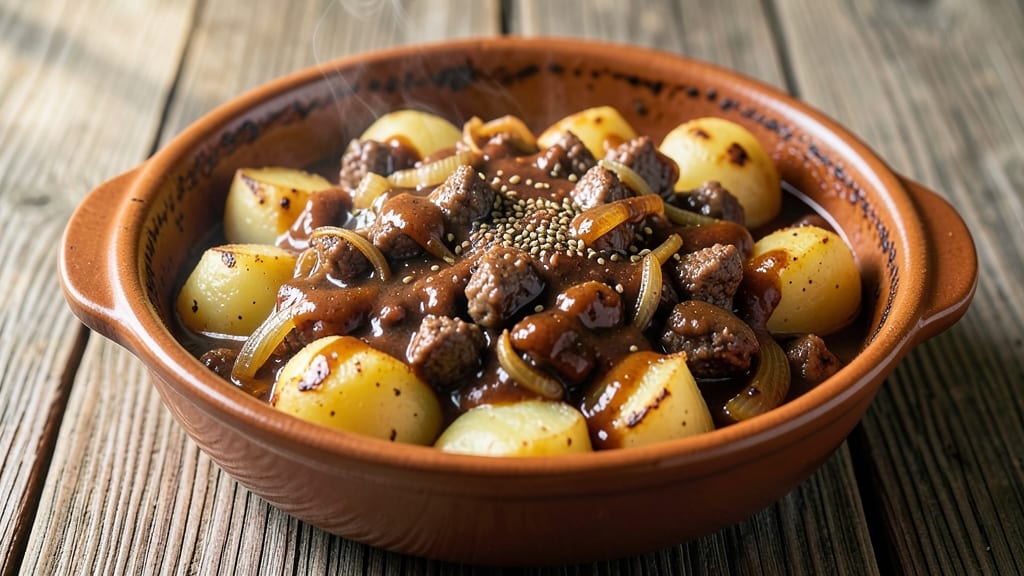
This Austrian potato goulash recipe brings hearty comfort to your table with its signature smoky paprika and deep caramelized onion flavors. 🔥 The dish transforms humble ingredients into a rich, aromatic stew that's perfect for chilly evenings or family gatherings.
What sets it apart is the balance between tender potatoes, savory meat, and the warm spices that define Austrian cuisine.
The secret to authentic flavor lies in slow-cooking the onions until they're deep brown and sweet, then building layers of smoky paprika and caraway. This method creates a sauce that clings to every potato and bite of meat, delivering that restaurant-quality depth you crave.
The dish is simple enough for weeknight cooking but impressive enough for special occasions.
What you'll end up with is a steaming bowl of potato goulash that's rich and satisfying—perfectly tender potatoes swimming in a velvety sauce with just the right amount of spice.
The aroma alone will have everyone gathering around the table, while the first bite delivers that comforting, homey flavor that makes this dish a classic.
Serve with crusty bread to soak up every last bit of that flavorful sauce, or pair it with a simple green salad for balance. This recipe makes enough for a crowd, so double the batch if you're expecting guests. Let's get cooking!
Ingredients for austrian potato goulash
Sixteen ingredients transform into a rich, smoky goulash that captures Austrian comfort food at its best.
| Ingredient | Amount | Notes |
|---|---|---|
| Yellow Onions 🧅 | 3 whole | Thinly sliced for caramelization |
| Russet Potatoes 🥔 | 2 ½ lb | Cut into 1-inch cubes |
| Ground Beef 🥩 | 2 lb | 80/20 fat ratio preferred |
| Smoked Paprika 🌶️ | 2 tbsp | For authentic smoky depth |
| Ground Caraway Seeds 🌿 | 1 tsp | Freshly ground for best flavor |
| Tomato Paste 🍅 | ½ cup | No-sugar-added preferred |
| Beef Broth 💧 | 3 cups | Low-sodium preferred |
| Red Wine 🍷 | ½ cup | Dry red like Cabernet |
| Bay Leaves 🌿 | 2 whole | Removed before serving |
| Garlic Cloves 🧄 | 4 cloves | Minced for aromatic base |
| Olive Oil 🫒 | 2 tbsp | Extra-virgin for richness |
| Salt 🧂 | 1 ½ tsp | Kosher salt preferred |
| Black Pepper 🌶️ | ½ tsp | Freshly ground preferred |
| Fresh Parsley 🌿 | ¼ cup | Chopped for garnish |
The onions are the flavor foundation—slow-cooking them until deep brown and sweet is non-negotiable. Yellow onions work best for this, and most grocery stores carry them year-round. For caramelization, use a heavy pot or Dutch oven to prevent sticking. The ground beef should be 80/20 fat ratio for maximum juiciness; Costco or Kroger typically carry this pre-ground. Freshly ground caraway seeds elevate the dish beyond standard recipes—Penzeys or bulk bins at natural markets are great sources. If you can't find them, whole caraway seeds toasted briefly in a dry pan work too.
No smoked paprika? Sweet paprika plus a pinch of liquid smoke gets you close, though the flavor won't be identical. Running out of red wine? Extra beef broth with a splash of balsamic vinegar maintains depth. The tomato paste can be substituted with crushed tomatoes (1 cup), though it'll dilute the sauce slightly. For a vegetarian version, swap the beef for mushrooms or lentils—just increase the cooking time by 15 minutes. The potatoes should be Russet or Yukon Gold; their waxy texture holds up best during slow cooking. Pre-cut them for convenience, but leave skins on for rustic texture.
This goulash tastes even better the next day as flavors meld. Store in an airtight container in the fridge for up to 5 days, or freeze portions for 3 months. For reheating, add a splash of beef broth to prevent drying. The sauce thickens as it cools, so adjust consistency with extra broth if needed. Garnish with fresh parsley just before serving—it adds a bright contrast to the rich flavors. Double the recipe if serving a crowd; the flavors intensify with more time on the stove.
Why You'll Love This Recipe
- One-Pot Magic: I swear by this—just brown the beef, toss in the onions and potatoes, then let the smoked paprika and caraway work their magic. No extra pans, no fuss, and honestly? That’s all it takes for a meal that feels like a hug.
- Smoky Depth: Between the smoked paprika and ground caraway, this isn’t just another beef stew. It’s got that earthy, slightly sweet warmth that lingers—like a campfire in a bowl. (Yes, even on a Tuesday night.)
- Leftovers That Shine: I make double batches because reheated goulash is still rich and hearty. The potatoes soak up all the flavor, so it’s never dry or sad—just pure, comforting satisfaction.
- Budget-Friendly Powerhouse: Ground beef, potatoes, onions—this is the kind of meal that stretches your dollar without skimping on taste. I’ll be real: it’s my go-to when I need to feed the family without breaking the bank.
Step-by-step instructions for Austrian potato goulash
Here's the method for a rich, hearty goulash with perfectly caramelized onions and tender potatoes.
🍳 Step 1: Caramelize the Onions and Sauté the Beef
Heat the 2 tablespoons olive oil in a large Dutch oven over medium-low heat. Add the 3 whole yellow onions, sliced thinly, and cook for 20-25 minutes until deeply golden brown and sweet-smelling. Stir occasionally to prevent burning—this patience pays off with incredible flavor.
Once the onions are perfectly caramelized, increase heat to medium-high and add the 2 pounds ground beef. Break it apart with a wooden spoon and cook until browned, about 5-7 minutes. The beef should release its juices and develop a rich color. Real talk: don't drain the fat—it's essential for building the sauce's depth.
👨🍳 Step 2: Build the Flavor Base with Aromatics and Spices
Push the beef mixture to one side of the Dutch oven and add the 2 tablespoons olive oil (if needed) to the empty space. Add the 4 cloves garlic cloves, minced, and cook for 30 seconds until fragrant. Then stir in the 2 tablespoons smoked paprika and 1 teaspoon ground caraway seeds, letting the spices toast for 1 minute—this awakens their flavors.
Return the beef to the center and stir to combine. Add the 0.5 cup tomato paste and cook for 2 minutes, stirring constantly. Here's the thing—this step develops the goulash's signature richness. The tomato paste will darken slightly as it cooks, creating a beautiful base for the sauce.
🍳 Step 3: Simmer with Wine and Broth
Pour in the 0.5 cup red wine and scrape up any browned bits from the bottom of the pot. Let it simmer for 3 minutes until the alcohol smell dissipates. Then add the 3 cups beef broth, 1.5 teaspoons salt, and 0.5 teaspoon black pepper. Stir in the 2 whole bay leaves and bring to a gentle boil.
Once boiling, reduce heat to low and let it simmer uncovered for 15 minutes. This initial simmer helps meld all the flavors together. You'll notice the sauce will thicken slightly as it reduces—this is exactly what we want for that perfect goulash consistency.
🥘 Step 4: Add Potatoes and Finish Cooking
Add the 2.5 pounds russet potatoes, cut into 1-inch cubes. Gently stir to submerge them in the sauce. Increase heat to medium and bring to a simmer, then reduce to low again. Cover and cook for 25-30 minutes, stirring occasionally, until the potatoes are fork-tender and the sauce has thickened to your desired consistency.
Here's where it gets fun—taste and adjust seasoning if needed. The potatoes should absorb the rich, smoky flavors of the goulash. If the sauce is too thin, uncover and simmer for another 5-10 minutes to reduce it further. The potatoes are done when they're tender with just a slight bite in the center.
🍽️ Step 5: Garnish and Serve
Remove the 2 whole bay leaves and discard them. Stir in the 0.25 cup fresh parsley, chopped, just before serving. The parsley adds a bright contrast to the rich, smoky flavors of the goulash. Ladle the goulash into bowls and serve immediately with crusty bread or over buttered egg noodles.
Each bite should deliver tender potatoes swimming in a rich, smoky sauce with deep layers of caramelized onion and beef flavors. The caraway seeds add a subtle earthy note that's characteristic of authentic Austrian goulash. Enjoy while it's hot—this dish tastes best straight from the pot!
Pro Tips For Making Austrian Potato Goulash
- Brown the Beef Slowly: After breaking up the ground beef, let it cook in batches on medium-low heat until it loses its raw color. I learned this the hard way—rushing it on high heat makes the meat greasy and dulls the smoked paprika’s flavor. Spread it out thin so it crisps just enough to seal, then stir in the onions.
- Pre-Cook the Onions: Sauté the sliced yellow onions until they’re soft and golden, not just translucent. This step takes about 10 minutes on medium heat—skip it, and the caraway seeds will taste harsh instead of earthy. A little browned onion adds depth the potatoes can’t.
- Don’t Overcrowd the Potatoes: Add the potatoes in a single layer, spaced apart, so they can crisp up instead of steaming. I used to dump them all in at once, and they’d turn mushy. If your pan’s too small, cook them in batches—crispy edges are the whole point.
- Toast the Spices First: Bloom the smoked paprika and caraway seeds in the beef fat for 30 seconds before adding liquids. This wakes up their flavors—my grandmother swore by it, and it’s the difference between a decent goulash and one that tastes like it’s been simmering all day. Just don’t walk away; they burn fast.
Storing and reheating this dish
Refrigerator Storage
Let your goulash cool completely before transferring to airtight containers—I use glass Pyrex with snap-on lids for best results. Store in the fridge for up to 5 days, but honestly, it tastes even better the second day as flavors meld.
The sauce thickens slightly when chilled, so add ¼ cup beef broth when reheating to restore its velvety consistency. 💫
Freezer Preparation
For long-term storage, portion goulash into quart-sized freezer bags or glass containers, leaving ½-inch headspace for expansion. Freeze for up to 3 months—the potatoes hold their texture surprisingly well.
When ready to eat, thaw overnight in the fridge before reheating. Pro tip: Label bags with the date to track freshness.
Stovetop Reheating
My preferred method is stovetop reheating—it preserves texture better than microwave. Transfer goulash to a pot over medium-low heat and add 2-3 tablespoons beef broth to prevent drying.
Stir frequently for 10-15 minutes until heated through (165°F internal temp). The sauce will thicken as it warms, so adjust with extra broth if needed.
Microwave Method
For quick reheating, cover goulash with a microwave-safe lid or damp paper towel. Heat on 50% power in 2-minute intervals, stirring between each, until piping hot. Add 1-2 tablespoons broth if the sauce looks too thick. This method works best for single servings—just be patient to avoid uneven heating.
Sauce Consistency Fixes
If your reheated goulash is too thick, stir in 1-2 tablespoons beef broth or water. For extra richness, add a pat of butter while reheating. The key is gradual heat—rushing causes the potatoes to absorb too much liquid.
I've found that reheating in batches maintains the best texture for each serving. 🔥
Garnish Refresh
Before serving reheated goulash, brighten it with fresh parsley or a sprinkle of smoked paprika. A drizzle of olive oil adds richness if the sauce seems dry.
The aroma alone will remind everyone why this dish is a classic—especially after a day or two in the fridge when flavors deepen. Trust me, the effort pays off!
Nutrition facts
Frequently asked questions
Can I use sweet potatoes instead of russet potatoes?
Sweet potatoes work but won't be as traditional. They'll hold their shape better and have a slightly sweeter flavor, but the classic Austrian version relies on russet or Yukon Gold potatoes for that hearty, starchy texture. If you must substitute, use 1.5 pounds of sweet potatoes instead of 2.5 pounds russet—sweet potatoes release more moisture when cooked.
What makes this goulash different from Hungarian goulash?
The key difference is the potato-to-meat ratio and spices. Austrian goulash features more potatoes (about 2.5 pounds for 2 pounds meat) and relies on caraway seeds for that earthy depth, while Hungarian versions often use paprika-heavy blends and less potato. The Austrian version also typically includes red wine for acidity, creating a richer, smoother sauce.
Why do the onions need to caramelize for so long?
Caramelizing the onions for 20-25 minutes until deep brown transforms their flavor from sharp to sweet and complex. This step is essential—it creates the goulash's signature depth. The long cooking time also removes moisture, helping thicken the sauce later. Skipping this step results in a thinner, less flavorful dish. Think of it as the flavor foundation!
Can I make this goulash in a slow cooker?
Brown the beef and caramelize the onions first in a skillet, then transfer everything to the slow cooker. Cook on low for 6-7 hours or high for 3-4 hours. The potatoes will absorb more liquid, so add ½ cup extra beef broth halfway through. The slow cooker method actually enhances the flavors by allowing them to meld even longer. Just stir occasionally to prevent sticking.
What if I don't have smoked paprika?
No problem! Mix 2 tablespoons sweet paprika with ½ teaspoon liquid smoke for a similar effect. For a smokier taste, add ¼ teaspoon smoked salt too. The flavor won't be identical, but it'll still be delicious. If you're avoiding smoked flavors entirely, use 1 tablespoon regular paprika plus ½ teaspoon garlic powder for warmth instead.