
Salads
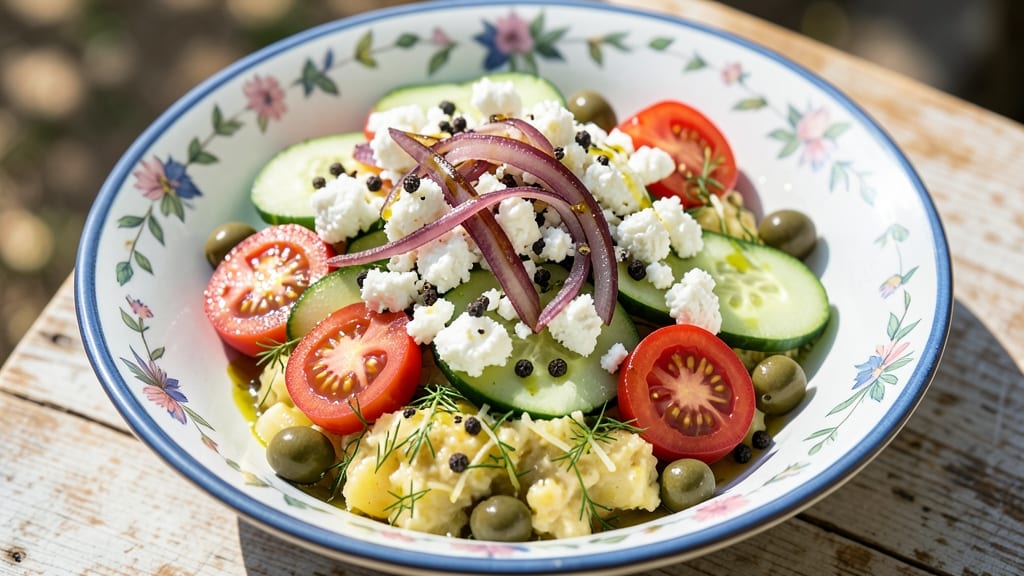
This authentic Greek salad with potato salad recipe bridges two worlds—crisp Mediterranean flavors meet comforting American traditions in one cohesive dish. ✨ The key is balancing traditional techniques (think fresh cucumbers, ripe tomatoes, and extra-virgin olive oil) with a Greek-inspired potato salad that adds hearty texture without overpowering the classic components.
What makes this recipe special is the harmony between components: the bright, tangy Greek salad with olives and feta, paired with a creamy potato salad infused with Mediterranean herbs like oregano and dill.
Both dishes share the same dressing foundation—lemon, olive oil, and garlic—creating a seamless flavor connection. The result is a meal that feels both nostalgic and exciting, perfect for summer gatherings or weeknight dinners.
The Greek salad stays true to its roots with crisp vegetables, while the potato salad gets a modern twist using Greek yogurt instead of mayo and finishing with crumbled feta for that signature Mediterranean touch.
Together, they create a visually stunning and satisfying plate that delivers on both tradition and comfort.
This recipe is designed to be flexible—serve as a main dish for a crowd or as a side that steals the show. The instructions walk through each component separately, ensuring you can prep ahead and assemble at the last minute.
Let's bring these two classics together in a way that feels fresh and familiar.
Ingredients for authentic greek salad recipe with potato salad
Six fresh ingredients for the Greek salad and seven hearty staples for the potato salad—authentic flavors with a comforting twist.
| Ingredient | Amount | Notes |
|---|---|---|
| Extra-Virgin Olive Oil 🫒 | ½ cup | High-quality, fruity variety |
| Fresh Cucumber 🥒 | 2 large | English cucumbers preferred |
| Ripe Tomatoes 🍅 | 4 medium | Vine-ripened for sweetness |
| Red Onion 🧅 | 1 whole | Thinly sliced for brightness |
| Kalata Olives 🫒 | 1 cup | Pitted, fresh or jarred |
| Crumbled Feta Cheese 🧀 | 1 cup | High-quality, aged feta |
| Fresh Dill 🌿 | ¼ cup | Chopped, stems removed |
| Fresh Oregano 🍃 | 2 tbsp | Dried works at 1/3 amount |
| Garlic Cloves 🧄 | 4 cloves | Minced for dressing |
| Russet Potatoes 🥔 | 3 lb | Waxy potatoes preferred |
| Greek Yogurt 🥛 | 1 ½ cups | Full-fat for creaminess |
| Lemon Juice 🍋 | ¼ cup | Freshly squeezed |
| Diamond Crystal Kosher Salt 🧂 | 1 ½ tsp | Fine grain preferred |
| Freshly Ground Black Pepper 🌶️ | 1 tsp | Cracked peppercorns |
The extra-virgin olive oil must be premium—California Extra or Colavita are excellent choices. For the Greek salad, Kalata olives bring that signature briny punch, but Castelvetrano olives work too if you can't find them. The feta cheese should be crumbled by hand for that perfect texture—pre-shredded loses its integrity. Fresh dill and oregano are non-negotiable for that Mediterranean essence, though dried will work in a pinch (use one-third the amount). The garlic should be fresh, not jarred—it makes all the difference in the dressing. For the potatoes, Yukon Golds are ideal, but Russets work if you boil them until tender.
No Kalata olives? Green olives or even capers add a similar briny note. Short on fresh herbs? Dried oregano and thyme can substitute, but reduce to one-third the quantity. The Greek yogurt can be swapped for vegan yogurt or even sour cream if needed. For a tangier dressing, add an extra tablespoon of lemon juice. The potatoes can be boiled ahead and chilled—they're even better the next day. If you're serving a crowd, double the dressing ingredients and store separately until ready to toss.
The Greek salad components keep best when stored separately—assemble just before serving to maintain crispness. The potato salad holds for 4-5 days in the fridge, though the texture gets slightly softer. For longer storage, freeze the potato salad portion (without the feta) for up to 3 months. The dressing can be made a day ahead and stored in a sealed container. If prepping for a gathering, slice the cucumbers and tomatoes last minute to preserve their freshness—they wilt fast once cut. The feta can be added just before serving to prevent sogginess.
Why You'll Love This Recipe
- No-Chop Shortcuts: I swear by the "slice-and-toss" method—just halve the cucumber and tomatoes, no need for fancy dice work. The red onion gets a quick soak in ice water to mellow its bite, and those Kalata olives? I buy them pre-pitted to save myself the hassle of squishing them out.
- Olive Oil Magic: That first drizzle of extra-virgin olive oil—warm, not cold—transforms everything. The cucumbers stay crisp, the tomatoes soften just enough to burst with juice, and the olives? They soak up the oil like little flavor sponges. Honestly, I could eat this with just a spoon.
- Picnic-to-Party Side: This salad is my lazy genius for anything: a no-fuss picnic spread, a last-minute charcuterie addition, or even a side for a big family dinner. The potatoes hold up for days, and the fresh veggies? Toss them in the morning, and they’ll still look vibrant by evening.
- Budget-Friendly Leftovers: I make a double batch on Sundays—halves the cost per serving, and the leftovers? Perfect for sandwiches or a quick lunch the next day. The potatoes stay firm, the olives keep their punch, and the tomatoes? I’ll be real, they’re best eaten fresh, but the rest is still solid for days.
Step-by-step instructions for authentic Greek salad with potato salad
Combine traditional Mediterranean techniques with comforting potato salad elements for a dish that honors both cultures.
🥘 Step 1: Prepare the Potato Salad Base
Begin by boiling the 3 lb russet potatoes in salted water until fork-tender, about 15-20 minutes. Drain immediately and let cool slightly before cutting into ½-inch cubes. I like to shock them in ice water for 5 minutes to stop cooking and prevent mushiness.
While the potatoes cool, whisk together the 1.5 cups Greek yogurt, 0.25 cup lemon juice, 1.5 tsp kosher salt, and 1 tsp black pepper in a large bowl. This tangy yogurt base is the foundation of our potato salad—it keeps the potatoes creamy without being heavy. Add the 2 tbsp fresh oregano and 0.25 cup chopped fresh dill for that bright Mediterranean flavor.
🥘 Step 2: Assemble the Traditional Greek Salad Components
Peel and slice the 2 large cucumbers into ¼-inch thick rounds, then sprinkle immediately with ½ tsp kosher salt and let sit for 10 minutes to draw out excess moisture. Pat dry with paper towels—this prevents a watery salad. While they drain, thinly slice the 1 whole red onion and halve the 4 medium tomatoes.
In a separate bowl, combine the cucumbers, tomatoes, onion, 1 cup Kalata olives, and 1 cup crumbled feta cheese. The olives should be pitted and fresh for optimal texture. Toss gently—just enough to distribute the feta evenly without breaking the tomatoes. This is where the authentic Greek flavors shine, so don't overmix.
🍳 Step 3: Create the Signature Dressing
In a small bowl, whisk together the 0.5 cup extra-virgin olive oil, minced 4 garlic cloves, and remaining 1 tsp kosher salt. This dressing is the heart of our Mediterranean twist—it bridges the potato salad's creaminess with the Greek salad's brightness. Taste and adjust seasoning, adding more salt or pepper if needed.
Drizzle half of this dressing over the Greek salad components and toss gently. Reserve the remaining dressing for later—it's perfect for finishing the potato salad and tying the two elements together. The olive oil should coat the vegetables lightly, enhancing their natural flavors without overwhelming them.
🥘 Step 4: Combine the Two Salads
Gently fold the cooled potato cubes into the yogurt mixture, reserving about ¼ cup of the dressing. This ensures the potatoes stay moist but don't turn mushy. Add the reserved dressing and toss until evenly distributed. The texture should be creamy yet light, with visible potato cubes throughout.
Now, carefully layer the Greek salad components over the potato salad in a large serving platter. Drizzle the remaining dressing over the top and sprinkle with an additional 1 tbsp chopped fresh dill for color and freshness. The contrast between the creamy potato base and the bright, fresh Greek elements creates a perfect balance of textures and flavors.
⏰ Step 5: Rest and Serve for Optimal Texture
Let the combined salad rest at room temperature for 15-20 minutes before serving. This allows the flavors to meld and the potato salad to absorb the dressing evenly. The Greek components will maintain their crispness while the potato salad reaches its ideal creamy consistency.
Serve immediately with warm pita bread or crusty bread to soak up the delicious juices. The authentic Greek flavors shine through in every bite, while the potato salad adds a comforting twist that makes this dish uniquely satisfying. The key is in the balance—each component should be recognizable yet harmonize perfectly with the other.
Pro Tips For Making Authentic Greek Salad Recipe With Potato Salad
- Soak the Olives: Kalata olives are salty by nature, but a quick 10-minute soak in warm water (not boiling) cuts the harshness without diluting their flavor. Drain and pat very dry afterward—wet olives make the salad soggy, and nobody wants that.
- Dice the Onion Last: Red onion adds bite, but it releases moisture fast. Chop it just before tossing the salad so it stays crisp and doesn’t turn the dressing into soup. If you’re ahead, store it in the fridge in a sealed container with a paper towel pressed on top.
- Salt the Potatoes Cold: If you’re boiling potatoes for the potato salad portion, add salt before they hit the water—otherwise, you’ll end up with bland spuds. A pinch of salt in the boiling water also keeps them from sticking together like glue. Drain them hot, but run them under cold water to stop cooking immediately.
- Toss with Wet Hands: The dressing sticks better if your hands are damp when mixing. A quick rinse under cold water before tossing ensures the oil clings to every cucumber slice and tomato wedge. This isn’t just about looks—it guarantees every bite has that bright, herby punch.
Make-ahead tips for this authentic greek salad recipe with potato salad
Potato Salad Prep
Start the potato salad portion a full day ahead—this is where the magic happens. Boil the 3 lb russet potatoes until tender, then cool them completely before cubing. Store the cubed potatoes in an airtight container with a splash of water to prevent browning.
The next day, mix them with the Greek yogurt dressing and herbs, then refrigerate for at least 4 hours to let flavors meld. This step makes all the difference in texture and taste. 🥔
Greek Salad Prep
Prepare the Greek salad components separately the day before serving. Slice the cucumbers and tomatoes, then store them in separate containers with paper towels to absorb moisture. Keep the olives and feta in their own containers—this prevents sogginess.
The dressing can be made ahead and stored in a sealed jar. When ready to serve, simply toss everything together with the reserved dressing. This keeps the vegetables crisp and vibrant. 🥒
Combining Components
For the final assembly, let both salads sit at room temperature for 15-20 minutes before combining. This helps the potato salad reach its ideal creamy consistency while keeping the Greek salad fresh.
Layer the Greek salad components over the potato salad just before serving to maintain that perfect crunch. The contrast in textures and temperatures makes this dish truly special. ✨
Storage Tips
If you're prepping for a crowd, store the potato salad in a large airtight container and keep the Greek salad components in separate containers. The potato salad can be refrigerated for up to 4 days, while the Greek salad components stay fresh for 2 days** when stored properly.
For longer storage, freeze the potato salad portion (without the feta) for up to 3 months. Always add the feta fresh to prevent sogginess. 💡
Make-Ahead Mistakes
Avoid adding the feta cheese to the Greek salad more than 30 minutes before serving—it absorbs moisture quickly and can make the salad soggy. Also, don't overmix the potato salad once combined; gentle folding ensures the potatoes stay intact and creamy.
Lastly, never skip the ice bath when cooling boiled potatoes—it stops the cooking process and keeps them firm. 🚫
Serving Suggestions
Serve this dish at room temperature for the best flavor and texture. Pair it with warm pita bread or crusty sourdough to soak up the delicious juices. For a festive touch, garnish with extra fresh dill and a sprinkle of cracked black pepper.
This dish is perfect for summer gatherings, picnics, or even a light weeknight dinner. The balance of flavors and textures makes it unforgettable. 🍽️
Nutrition facts
Frequently asked questions
Can I use regular mayo instead of Greek yogurt in the potato salad?
You can substitute mayo, but the texture and flavor will be heavier. For a lighter version, mix ½ cup Greek yogurt with ½ cup mayo. The yogurt keeps the salad creamy while adding that Mediterranean tang. If you prefer mayo-only, use full-fat for best results—it's more stable with potatoes.
How do I keep the Greek salad from getting soggy when making it ahead?
Store all components separately—cucumbers, tomatoes, olives, and feta in individual containers. Keep them dry with paper towels and add the dressing only when ready to serve. The feta should go on last to prevent moisture absorption. For extra crispness, sprinkle with salt before storing to draw out excess liquid.
What's the best way to serve this dish for a crowd?
Prepare the potato salad a day ahead and store it in a large container. Assemble the Greek salad components separately and keep them chilled. When ready to serve, spoon the potato salad onto a platter and arrange the Greek salad on top. Use a separate bowl for the dressing so guests can customize their portions. Serve with warm pita bread or crusty rolls.
Can I make this vegetarian?
This dish is already vegetarian. For extra protein, add chickpeas or white beans to the potato salad. You could also include grilled halloumi cheese or marinated tofu with the Greek salad components. The flavors will complement the Mediterranean theme beautifully.
Why does the recipe call for both fresh and dried herbs?
The fresh herbs (dill and oregano) provide vibrant flavor and aroma that dried can't match. However, if you're short on time, use 1 teaspoon dried oregano and 1 teaspoon dried dill (about one-third the amount of fresh). For best results, toast the dried herbs lightly in a dry pan for 30 seconds to enhance their flavor before adding.