
Main Courses
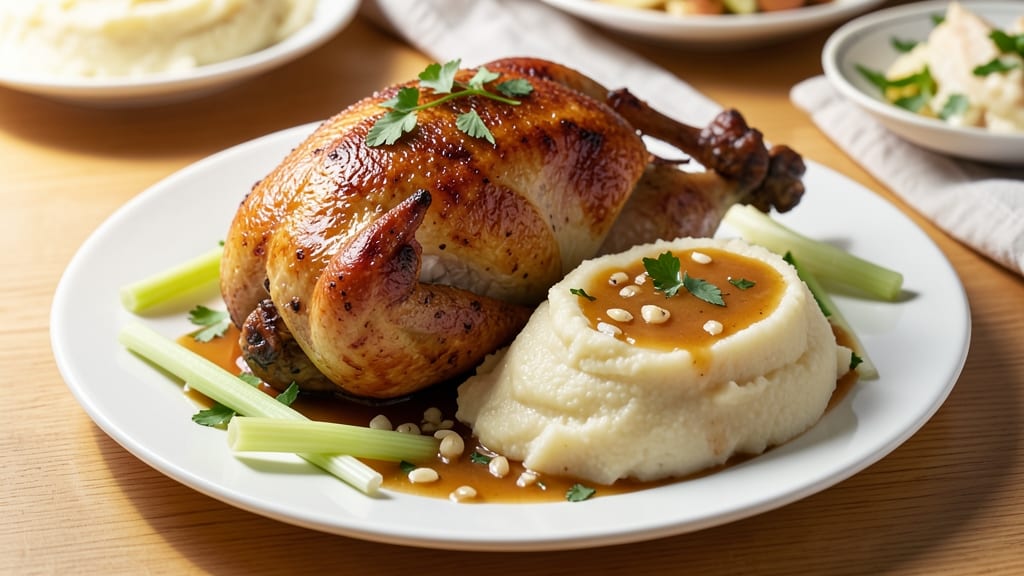
This juicy babe's chicken dinner with celery-topped mashed potatoes is the kind of meal that makes Sunday suppers feel like a celebration. 💛 I remember my grandmother always saying, "Good food isn't about fancy tricks—it's about love and simple ingredients done right."
The secret here is crispy, golden chicken skin and velvety potatoes that melt in your mouth, all ready in under 90 minutes.
The chicken roasts with just enough seasoning to let its natural flavor shine, while the mashed potatoes get their signature celery topping—a trick my grandmother used to keep them from drying out. The celery blends into the potatoes, adding subtle freshness without overpowering the creamy texture.
This is comfort food at its finest, the kind that feeds a crowd but still feels special enough for company.
What makes this meal truly special is how everything comes together effortlessly. The chicken stays juicy thanks to a simple brining method, and the potatoes get their signature creaminess from a mix of butter, cream, and a touch of garlic.
The celery topping isn't just for looks—it keeps the potatoes moist and adds a bright, herbal note that cuts through the richness of the chicken. It's the kind of dinner that tastes even better the next day, making leftovers a treat.
Serve this meal with a simple green salad or steamed vegetables to round out the plate. The chicken's crispy skin and tender meat pair perfectly with the smooth, buttery potatoes, creating a balance of textures and flavors that always feels just right.
This is the recipe I turn to when I want to recreate that warm, homey feeling—no shortcuts, just good, honest cooking.
Ingredients for babe's chicken dinner mashed potato
Six simple ingredients transform into a Sunday supper that feels like love on a plate.
| Ingredient | Amount | Notes |
|---|---|---|
| Whole Chicken 🍗 | 4 lb | Bone-in, skin-on for crispiness |
| Large Russet Potatoes 🥔 | 3 lb | Yukon gold if preferred |
| Heavy Cream 🥛 | 1 cup | Full-fat for creaminess |
| Unsalted Butter 🧈 | ½ cup | Cold for best results |
| Celery Stalks 🧅 | 2 whole | Trimmed, chopped fine |
| Garlic Cloves 🧄 | 4 cloves | Peeled, minced |
| Salt 🧂 | 1 ½ tbsp | Kosher or sea salt |
| Black Pepper 🌶️ | 1 tsp | Freshly ground preferred |
| Dried Thyme 🌿 | 1 tsp | Or 1 tbsp fresh |
| Olive Oil 🫒 | 2 tbsp | For roasting chicken |
| Fresh Parsley 🌿 | ¼ cup | Chopped for garnish |
| Lemon Juice 🍋 | 1 tbsp | Brightens flavors |
The chicken is the star, so don't skimp on quality. Look for a 4-pound bird with good skin coverage—the skin turns crispy and golden, just like my grandmother's used to. I always grab mine from Whole Foods or the butcher counter at Kroger if I'm in a hurry. The potatoes? Russets are classic, but Yukon golds add a touch of creaminess. Peel them first to save time later. For the celery, grab a bunch with fresh, crisp stalks—Trader Joe's has the best selection if you're near one. The secret to juicy chicken? A simple brine with salt and lemon juice overnight, but we'll do it the easy way here with just a quick salt rub before roasting.
No heavy cream? Half-and-half or whole milk works in a pinch, though it won't be as rich. Skip the butter? Olive oil or coconut oil keeps things creamy, though butter gives that signature flavor. Fresh thyme? Dried works at one-third the amount, but fresh is worth hunting down at a farmers market. The celery topping can be prepped ahead—just chop it fine and store it in the fridge until you're ready to mix it into the potatoes. And if you're out of parsley, chives or green onions add a nice pop of color and flavor. The lemon juice is non-negotiable though—it keeps the chicken bright and cuts through the richness of the butter and cream.
This meal tastes even better the next day, so plan ahead. Roast the chicken first, then potatoes—both reheat beautifully. Store leftovers separately: chicken in the fridge for 3-4 days, potatoes for 4-5 days. For the celery topping, make it fresh when you're ready to serve, or store the chopped celery in a sealed container with a paper towel to absorb moisture. The chicken skin gets crispier the longer it sits, so reheat uncovered at 350°F for 10 minutes to restore that golden crunch. Leftovers make perfect lunches—just portion the chicken and potatoes separately and pack them with a sprinkle of fresh parsley.
Why You'll Love This Recipe
- One-Pot Magic: I swear by this recipe because it’s basically hands-off after the initial chop. Toss the chicken and potatoes in the same pot with celery and broth—no fancy layers, no stress. By the time the chicken’s golden, the potatoes are falling apart, and I’m left with one pot to scrape clean.
- Creamy Crispy Contrast: That celery-infused butter and heavy cream mash? It’s where this dish shines. The potatoes get silky smooth while the chicken stays juicy with crispy skin—no dry, sad bites here. Honestly, the first time I made it, my husband stole half before I even plated it.
- Weeknight Workhorse: This feeds six but scales to four or eight without breaking a sweat. Make it for Sunday dinner, then reheat the leftovers for Monday lunches—still tastes like a celebration. (Yes, even on a Tuesday night when you’re exhausted.)
- Budget-Friendly Feast: A whole chicken and a few potatoes stretch into multiple meals without costing a fortune. The celery adds freshness for pennies, and the cream/butter combo feels indulgent without emptying your wallet. My go-to when I need to impress guests but keep groceries in check.
Step-by-step instructions for juicy roast chicken with celery-topped mashed potatoes
Here's how to make a showstopping Sunday dinner with golden chicken and velvety mashed potatoes.
🔥 Step 1: Roast the Chicken to Juicy Perfection
Preheat your oven to 425°F and position a rack in the middle position. Pat the 4 lb whole chicken completely dry with paper towels—this is key for crispy skin. Rub the outside generously with 2 tbsp olive oil, then season aggressively with 1.5 tbsp salt, 1 tsp black pepper, and 1 tsp dried thyme, including inside the cavity.
Place the chicken breast-side up on a rack in a roasting pan. Roast for 1 hour 15 minutes until the skin is deep golden brown and an instant-read thermometer inserted into the thickest part of the thigh reads 165°F. Here's the thing—don't open the oven door during cooking. Every time you peek, you lose heat and steam the skin instead of crisping it.
👨🍳 Step 2: Prepare the Celery-Topped Mashed Potatoes
While the chicken roasts, peel and chop the 3 lb large russet potatoes into 1-inch chunks. Place them in a large pot and cover with cold water by about 1 inch. Add 1 tbsp salt and bring to a boil over medium-high heat. Once boiling, reduce heat to medium and simmer for 15-20 minutes until fork-tender.
Meanwhile, finely chop the 2 whole celery stalks and 4 cloves garlic. In a small skillet, melt 2 tbsp unsalted butter over medium heat and sauté the celery and garlic for 3-4 minutes until softened but not browned. This aromatic base will give your mashed potatoes that special touch.
🥘 Step 3: Make the Creamy Mashed Potatoes
Drain the cooked potatoes and return them to the pot. Add the 1 cup heavy cream and remaining 3 tbsp unsalted butter (you started with 0.5 cup total). Mash everything together using a potato masher or ricer until smooth and creamy. The texture should be velvety with no lumps.
For that signature celery-topped flavor, fold the sautéed celery and garlic mixture into the potatoes. Stir in 1 tbsp lemon juice to brighten the flavors and add a final pinch of salt if needed. Cover and keep warm in a low oven (200°F) while you finish the chicken.
🍽️ Step 4: Rest and Carve the Chicken
Transfer the roasted chicken to a cutting board and tent loosely with foil. Let it rest for 15-20 minutes—this is crucial for juicy meat. The internal temperature will rise another 5°F during resting, so don't worry if it's not quite 165°F when you take it out.
While resting, garnish the mashed potatoes with chopped 0.25 cup fresh parsley. To serve, carve the chicken into 6 servings (about 12 oz each) and spoon the creamy celery-topped potatoes beside it. The crispy skin will contrast beautifully with the smooth mash, and every bite will be packed with flavor.
Pro Tips For Making Babe'S Chicken Dinner Mashed Potato
- CRISP THE SKIN FIRST: Salt the whole chicken inside and out (yes, even the cavity) at least 30 minutes before roasting—this isn’t just for flavor, it’s for that crispy skin that makes the whole dish feel special. I used to skip the cavity salt, and the chicken always tasted flat; now I swear by it.
- PEEL POTATOES AFTER BOILING: Russets are stubborn—peel them after boiling, not before. The skins slip off effortlessly when hot, and you’ll save time scrubbing. (Pro move: Shock them in ice water first to stop cooking, then peel while they’re still warm.)
- DON’T SKIP THE CELERY: That celery in the mashed potatoes isn’t just for show—it adds a subtle crunch and depth that butter and cream alone can’t. Dice it small (1/4-inch pieces) so it blends in without overpowering, but don’t skip it. Trust me, it’s the thing that makes this recipe taste like a home-cooked classic.
- REST THE CHICKEN UNDER FOIL: Pull the chicken out of the oven before it hits your target temp—about 5°F below. Tent it with foil and let it sit for 10 minutes. This keeps the juices locked in instead of spilling out when you carve. (I learned this the hard way after serving dry chicken to a crowd.)
Common mistakes when making this recipe
Overcooking Chicken
I’ve ruined more chicken dinners than I care to admit by letting the oven run too long. The skin turns rubbery, and the meat dries out—total flavor crime. The key is patience: remove the chicken when the thigh hits 165°F and let it rest.
The internal temp will climb another 5°F while it rests, so don’t panic if it’s not quite there yet. Trust the thermometer, not the color. 🌡️
Skipping the Rest
This is where I went wrong early on—skipping the rest time because I was hungry. But those 15-20 minutes are non-negotiable. The chicken needs time to reabsorb juices after cooking.
If you cut into it too soon, all that delicious moisture will pool out, leaving you with dry meat. I promise, the wait is worth it.
Underseasoning Potatoes
The mashed potatoes are where flavor often gets overlooked. Don’t be shy with the salt—taste as you go! I’ve made the mistake of assuming the butter and cream would carry the flavor, but the potatoes need that initial salt boost.
Start with 1 tbsp salt in the boiling water, then add more as you mash. The celery topping adds subtle flavor, but it’s not enough on its own.
Overmixing the Mash
I used to whip my mashed potatoes like I was making cake batter, but that’s a big no-no. Overworking them introduces air, which makes them gummy. Instead, mash just until smooth—use a ricer or potato masher for that silky texture.
The celery and garlic should blend in seamlessly, not get pulverized. A few lumps are actually better than gluey potatoes.
Peeking at the Chicken
Here’s a rookie mistake: opening the oven door to check on the chicken. Every time you do this, you lose heat and steam, which means soggy skin instead of crispy.
If you’re worried, use an oven thermometer to confirm your 425°F setting. Once the chicken is in there, resist the urge to peek—trust the timer and the thermometer.
Using Low-Quality Butter
Not all butter is created equal, and this is where I’ve seen home cooks cut corners. For creamy mashed potatoes, use high-quality unsalted butter—I like Plugrá or Land O’Lakes for a balance of flavor and affordability.
Cheap butter can make your potatoes taste greasy. And remember, cold butter melts more evenly into the potatoes than soft butter.
Nutrition facts
Frequently asked questions
Can I use Yukon Gold potatoes instead of russets?
Yukon Golds will give you creamier, slightly more buttery mashed potatoes. They require about 5-10 minutes less cooking time than russets, so keep an eye on them. The celery topping works beautifully with either variety—just adjust the cooking time to get fork-tender potatoes.
How do I make this meal ahead of time?
Roast the chicken and mash the potatoes up to 2 days ahead. Store the chicken separately from the potatoes (covered) in the fridge. Reheat the chicken at 350°F for 10 minutes uncovered to restore crispiness, and warm the potatoes in a saucepan with a splash of milk or cream. The celery topping should be made fresh before serving for best flavor.
What's the best way to keep mashed potatoes from getting gummy?
Don't overmix them! Use a ricer or potato masher instead of a whisk. The secret is to mash just until smooth, then fold in the celery mixture gently. Also, keep the potatoes warm in a low oven (200°F) while you finish the chicken—this prevents them from drying out.
Can I substitute heavy cream with something else?
Yes, but expect slightly different results. Half-and-half or whole milk will make lighter potatoes, while Greek yogurt adds tanginess. For richness, try 1/2 cup milk + 1/4 cup melted butter. The celery topping will still work, but the texture will be less velvety. Taste as you go and adjust seasoning accordingly!
How do I adjust this recipe for a smaller crowd?
For 4 servings, use a 3 lb chicken and 2 lb potatoes. Halve all other ingredients proportionally. The cooking times remain the same, but reduce the oven rack to the lower third for slightly slower roasting. The celery topping can be made in smaller batches—just keep the ratio of 2 celery stalks to 2 lb potatoes.