
Side Dishes
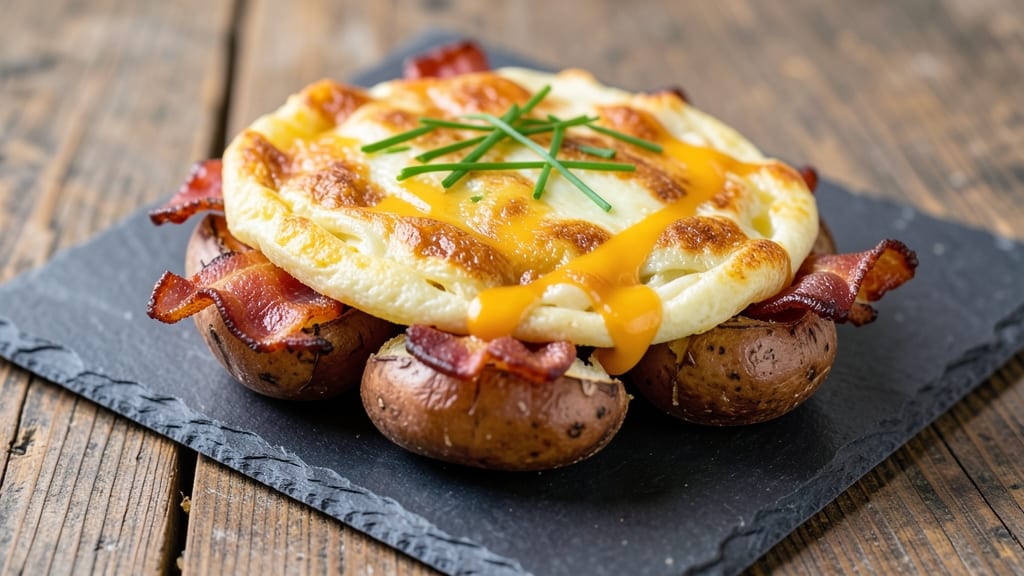
This baked potato omelette recipe transforms a classic breakfast into a hearty, restaurant-worthy dish in under 30 minutes. The secret lies in baking a russet potato until fluffy and tender—its creamy interior becomes the perfect vessel for a cloud-like omelette wrapped around sharp cheddar, crispy bacon, and fresh herbs.
I developed this recipe after craving something substantial yet simple, and it’s since become a weekend staple that feels indulgent without the fuss.
The process starts with baking the potato at 400°F until it’s effortlessly fork-tender, then scooping out its center to create a warm, buttery bed for the omelette. While the potato bakes, the eggs are whipped with a touch of cream to ensure a light, airy texture—no rubbery edges here.
The key is cooking the omelette low and slow, folding it gently around the fillings so every bite delivers that perfect harmony of creamy potato, rich egg, and savory toppings.
What you end up with is a dish that’s equal parts comforting and impressive—ideal for brunch or a lazy Sunday morning. The potato’s natural starch soaks up the egg’s richness, while the crispy bacon and melted cheese add layers of texture.
It’s the kind of meal that makes you feel like you’ve put in effort without actually breaking a sweat, and it reheats beautifully for leftovers.
Customize it with your favorite fillings: swap the bacon for sautéed mushrooms, add a dollop of sour cream, or kick it up with jalapeños and hot sauce. The possibilities are endless, but the technique remains foolproof. Let’s get cooking!
Ingredients for baked potato omelette
Four russets, six eggs, and a handful of pantry staples—this breakfast game-changer comes together faster than you can say 'fluffy omelette'.
| Ingredient | Amount | Notes |
|---|---|---|
| Russet Potatoes 🥔 | 4 whole | Large russets, baked until tender |
| Large Eggs 🥚 | 6 whole | Room temperature for best whisking |
| Heavy Cream 🥛 | ¼ cup | Full-fat for rich texture |
| Sharp Cheddar Cheese 🧀 | 1 cup | Freshly grated, sharp flavor |
| Cooked Bacon 🥓 | 4 oz | Crispy, chopped into small pieces |
| Fresh Chives 🌿 | ¼ cup | Chopped for fresh brightness |
| Unsalted Butter 🧈 | 2 tbsp | For potato and omelette |
| Salt 🧂 | 1 tsp | Kosher or sea salt |
| Black Pepper 🌶️ | ½ tsp | Freshly ground preferred |
| Garlic Powder 🧄 | ½ tsp | For potato seasoning |
| Sour Cream 🥛 | ¼ cup | Optional for serving |
| Hot Sauce 🌶️ | 1 tbsp | For serving (optional) |
Russet potatoes are non-negotiable here—their starchy interior is what makes this dish special. Buy the biggest russets you can find at Trader Joe's or your local grocery store, and don't skip scrubbing them clean first. The bacon? Cook it crispy ahead of time—it adds that perfect crunch when wrapped in the omelette. I always grab extra sharp cheddar because the flavor really shines when melted. The eggs should be room temperature, so take them out of the fridge 15 minutes before you start. Fresh chives are ideal, but dried works in a pinch if you're in a hurry.
No sharp cheddar? Pepper jack or Gruyère work great too—just adjust the amount to taste. Running low on bacon? Sautéed mushrooms or crispy hash browns are fantastic swaps. The heavy cream adds richness, but half-and-half in a pinch still gives you that silky texture. If you're feeling adventurous, toss in some diced jalapeños or sautéed onions for extra flavor. The hot sauce is totally optional, but trust me on this—it takes this dish from good to amazing. And if you don't have fresh chives, green onions or parsley work just as well.
Baked potatoes keep well in the fridge for 3-4 days if you make extras—just reheat in the oven at 350°F until warmed through. The omelette filling can be prepped ahead and stored in the fridge for 2 days, but assemble it fresh for the best texture. The whole dish reheats beautifully—perfect for leftovers. I always make a double batch of the filling and freeze portions for lazy mornings. Just pop it in the microwave for 30 seconds and wrap it up in a fresh omelette.
Why You'll Love This Recipe
- Foolproof Prep: I swear by this—just bake a potato the night before (or grab one from the fridge), slice it thin, and toss it in the oven while you scramble eggs. No peeling, no fuss, and honestly, the crispy edges make it worth the minimal effort.
- Cheddar-Bacon Magic: That sharp cheddar melts into a gooey blanket while the bacon adds salty crunch—it’s like a breakfast-for-dinner hug in every bite. The heavy cream ties it all together, making it richer than any basic omelette.
- Meal-Prep MVP: Make a double batch and store it in the fridge for up to 3 days. Reheat in the oven or microwave, and boom—hot, satisfying meals when you’re too tired to cook. (Yes, even on a Tuesday night.)
- Budget Breakfast Luxe: Russets are cheap, eggs are cheap, and bacon? Well, a little goes a long way. It’s the kind of dish that feels indulgent but won’t break the bank—perfect for when you want comfort without guilt.
Step-by-step instructions for baked potato omelette
Here's how to turn simple ingredients into a hearty breakfast masterpiece in under 30 minutes.
Bake the Potatoes Until Fork-Tender
Preheat your oven to 400°F and prick each of the 4 whole Russet Potatoes with a fork about 6 times on each side. Rub the potatoes with 1 tablespoon of the unsalted butter and sprinkle evenly with ½ teaspoon of the garlic powder and ½ teaspoon of the salt. This seasoning will infuse into the potatoes as they bake.
Place the potatoes directly on the oven rack (no need for a baking sheet) and bake for 45-55 minutes, until a knife slides in easily and the edges feel soft. You want them fully cooked through but still holding their shape—overcooking will make them dry. Let them cool slightly before handling, about 10 minutes, so the skin doesn't tear when you slice.
Whisk the Egg Mixture to Silky Perfection
While the potatoes bake, crack the 6 whole Large Eggs into a large bowl and add the 0.25 cup Heavy Cream. Using a whisk, beat the eggs and cream together until the yolks and whites are fully combined and the mixture is pale yellow. This step is crucial for creating fluffy, cloud-like omelette layers.
Add the 1 cup Sharp Cheddar Cheese, 0.5 teaspoon Black Pepper, and the remaining ½ teaspoon Salt to the egg mixture. Stir gently until the cheese is evenly distributed but don't overmix—you want just enough to create pockets for the filling. The cheese should melt beautifully into the eggs when cooked.
Prepare the Potato Filling
Once the potatoes are cool enough to handle, slice them in half lengthwise and scoop out the flesh, leaving about ¼-inch of potato in the skin. Place the potato flesh in a medium bowl and mash it with a fork until it reaches a chunky texture—you want some texture, not a smooth mash. Stir in the 4 oz Cooked Bacon and 0.25 cup Fresh Chives.
This filling should be hearty but still easy to fold into the omelette. If the mixture seems too dry, add 1 teaspoon of the Heavy Cream to help bind it. The bacon adds a smoky depth while the chives bring fresh brightness that cuts through the richness of the cheese and eggs.
Cook the Omelette to Golden Cloud Perfection
Heat a large nonstick skillet over medium-low heat and melt the remaining 1 tablespoon Unsalted Butter. Pour in the egg mixture, tilting the pan to spread it evenly. Let it cook undisturbed for 2-3 minutes until the edges begin to set and the bottom looks lightly golden.
Sprinkle half of the potato-bacon mixture down the center of the omelette, then carefully fold the omelette in half using a spatula. Cook for another 3-4 minutes until the bottom is golden brown and the center is just set. The omelette should be soft in the middle—it will continue cooking slightly after you remove it from the heat.
Serve with Optional Toppings
Slide the omelette onto a warmed plate and let it rest for 1 minute before slicing. This resting period helps the filling settle and makes for cleaner slices. Serve immediately with dollops of 0.25 cup Sour Cream and a drizzle of 1 tablespoon Hot Sauce if desired.
Each bite should deliver a perfect balance of fluffy egg clouds, creamy cheddar, tender potato chunks, and crispy bacon. The hot sauce adds a kick that cuts through the richness, while the sour cream cools the palate. This dish is hearty enough for a full breakfast but quick enough to make on busy mornings—just like promised!
Pro Tips For Making Baked Potato Omelette
- PRE-BAKE POTATOES LOW: Russets dry out fast—roast them at 375°F (190°C) for 45 minutes before mashing, not after. I learned this the hard way when my omelette turned into a sad, gluey mess. A fork should glide through them easily; if not, add 1-2 tablespoons of warm heavy cream while mashing.
- WHISK EGGS VIGOROUSLY: Beat the eggs with heavy cream until the mixture holds soft peaks when lifted—about 30 seconds longer than you think. My grandmother swore by this, and she was right: it creates a lighter, silkier texture that actually holds the potato and cheese instead of collapsing.
- SALT THE CHEESE FIRST: Grate the cheddar and toss it with ½ teaspoon of salt before folding it into the egg mixture. Sharp cheddar’s flavor gets lost if you wait—this guarantees every bite has that bright, tangy kick. (Yes, even if the cheese label says "extra sharp.")
- BAKE UNTIL SET: Pull the omelette from the oven when the center is just firm to the touch—no jiggle, but not rubbery. I used to overbake and end up with a dry, dense brick. Cover with foil the last 5 minutes if the top browns too fast, but resist the urge to peek. Patience here makes all the difference.
Regional styles of these flavors
New Mexico Style
In New Mexico, this dish gets a Southwestern twist by adding diced green chiles and Hatch chile powder to the egg mixture. I like to use 1-2 tablespoons of Hatch chile powder (adjust for heat preference) and stir in ½ cup of diced roasted green chiles with the potato filling.
Serve with a side of salsa verde or avocado slices for extra freshness. The smoky, slightly spicy flavors pair perfectly with the creamy omelette and crispy bacon. 🌶️
Pacific Northwest Twist
Up in the Pacific Northwest, where fresh seafood is abundant, swap the bacon for smoked salmon and add chopped fresh dill to the egg mixture. I recommend using 4 oz of smoked salmon (chopped) and 2 tablespoons of fresh dill in place of the chives.
The salmon adds a briny depth, while the dill brings a bright, herby note that balances the richness. Serve with a dollop of crème fraîche instead of sour cream for a local touch. This version is perfect for a weekend brunch with a coastal flair.
Southern Comfort Style
Down South, this dish becomes a true comfort food by incorporating crispy fried onions and hot honey. After folding the omelette, sprinkle ¼ cup of fried onions (store-bought or homemade) over the top before serving.
Drizzle with 1 tablespoon of hot honey (mix 1 tablespoon honey with ½ teaspoon cayenne pepper) for a sweet-spicy finish. The Southern version also calls for extra sharp cheddar and a side of buttermilk biscuits to soak up any extra egg.
This hearty take is ideal for a lazy Sunday morning. 🍯
Breakfast Hash Fusion
For a rustic, one-pan approach inspired by breakfast hash, skip the folded omelette and instead scramble the eggs directly into the baked potato halves. After scooping out the potato flesh, mash it with 2 tablespoons of butter and 2 tablespoons of heavy cream for extra creaminess.
Top with the scrambled eggs, crispy bacon, and sharp cheddar, then broil for 2-3 minutes until the cheese melts. This version is quicker and just as satisfying, with all the flavors of the original but in a more casual presentation.
Nutrition facts
Frequently asked questions
Why do I need to leave the baked potato skin intact?
The skin helps maintain the potato's shape while baking and adds a satisfying texture contrast to the creamy filling. However, if you prefer a completely skinless version, you can remove it after baking—just be gentle to avoid tearing the potato. The skin also prevents the potato from drying out too quickly during baking.
Can I make this dish ahead of time?
Prep the potato filling and store it in the fridge for 2 days, and bake the potatoes up to 3 days ahead. Reheat the filling in the microwave for 30 seconds, then assemble fresh omelettes for the best texture. The baked potatoes reheat beautifully in the oven at 350°F until warmed through.
What if my omelette turns out rubbery?
Rubbery omelettes usually happen from overcooking or too-high heat. Use medium-low heat and cook just until the edges set—about 3-4 minutes total. Also, make sure your eggs are room temperature and whisked until just combined (not frothy). A splash of heavy cream helps create that light, cloud-like texture.
Can I use sweet potatoes instead of russets?
Sweet potatoes work but won't give the same creamy texture. Their denser flesh holds up differently when mashed, and the flavor profile changes significantly. For this recipe, stick with russets—their starchy interior is key to that perfect fluffy-potato-omelette harmony. If you love sweet potatoes, try them in a hash-style version instead.
How do I make this vegetarian?
Swap the bacon for crispy sautéed mushrooms or smoked tofu crumbles, and add extra sharp cheddar for richness. For more protein, stir in white beans or lentils with the potato filling. The dish still delivers that hearty, satisfying texture without meat—just ensure your fillings are well-seasoned to match the savory profile.