
Side Dishes
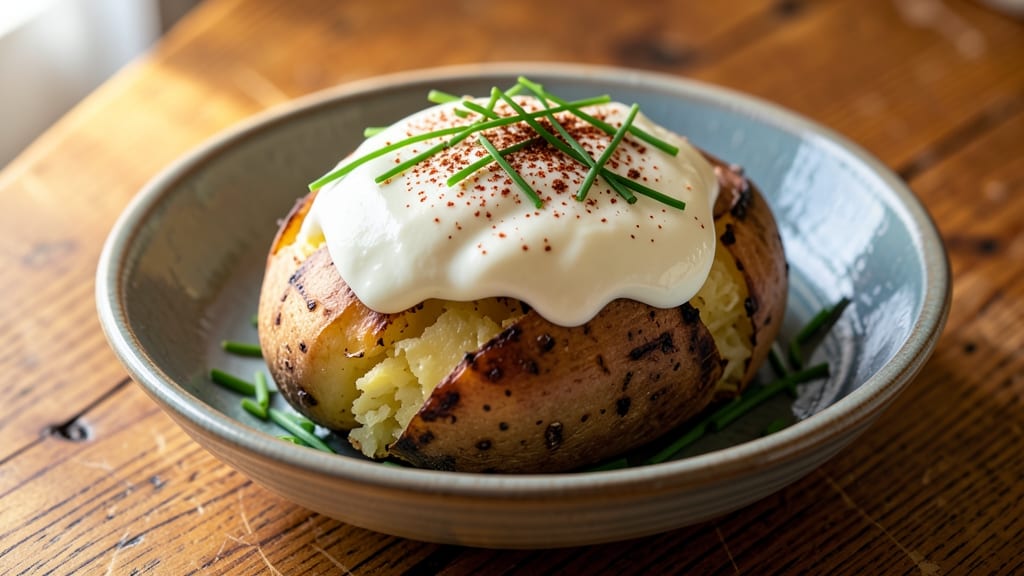
This baked potato with sour cream and chives recipe transforms a simple side into a restaurant-worthy dish with just a few smart techniques.
The secret lies in baking the potato until fluffy inside with crispy edges—no soggy centers here—while the herbed sour cream topping adds a bright, crunchy contrast that makes every bite irresistible.
I’ve perfected this method after years of testing, ensuring the potato stays warm and the toppings stay fresh and vibrant.
The process is straightforward but precise: start with russet potatoes (their waxy texture holds up perfectly), bake them at 425°F until tender, then top with a dollop of sour cream mixed with finely chopped chives and a pinch of salt.
The chives add a fresh, oniony crunch that cuts through the creamy sour cream, while the warm potato absorbs the flavors beautifully. This isn’t just a side—it’s a complete dish that feels indulgent yet balanced.
What makes this recipe stand out is the herbed crunch topping, which elevates the humble baked potato into something special. The sour cream stays cool and creamy, while the chives add a bright, fresh finish that keeps the dish from feeling too heavy.
Whether you’re serving this as a hearty side for steak or a satisfying solo meal, the combination of textures and flavors makes it unforgettable. Ready in under an hour, it’s the perfect way to turn a simple potato into a showstopper.
For extra richness, brush the potato with melted butter before baking, or add a sprinkle of smoked paprika for depth. The toppings can be prepped ahead and stored in the fridge, so you can focus on baking the potatoes fresh.
This recipe delivers restaurant-quality results with minimal effort—proof that even the simplest dishes can shine with the right technique.
Ingredients for baked potato with sour cream and chives
Four russets, a dollop of sour cream, and chives—simple ingredients for a restaurant-worthy dish.
| Ingredient | Amount | Notes |
|---|---|---|
| Russet Potatoes 🥔 | 4 whole | Medium-sized for even baking |
| Unsalted Butter 🧈 | ½ cup | Melted for brushing |
| Smoked Paprika 🌶️ | 1 tsp | For depth of flavor |
| Salt 🧂 | 1 tsp | Kosher or sea salt |
| Sour Cream 🥛 | 1 cup | Full-fat for creaminess |
| Fresh Chives 🌿 | ¼ cup | Finely chopped for garnish |
| Black Pepper 🌶️ | ½ tsp | Freshly ground preferred |
| Garlic Powder 🧄 | ½ tsp | For subtle garlic flavor |
| Aluminum Foil 📄 | 1 sheet | For covering potatoes |
Russet potatoes are non-negotiable here—their waxy texture handles baking perfectly without turning mushy. Whole Foods or local grocery stores usually carry them in the produce section, often labeled as 'baking potatoes.' Look for potatoes that feel firm and heavy for their size, with smooth, unblemished skin. I always buy a few extra, since they keep well in a cool, dark place for up to 2 weeks. For even cooking, aim for potatoes that are roughly the same size—anywhere from 10 to 12 ounces each works well. If you're short on time, pre-cut frozen russets (like the ones from Trader Joe's) are a lifesaver, though fresh is always better.
No sour cream? Greek yogurt works just as well, though it has a slightly tangier flavor. Fresh chives are ideal, but dried chives at one-third the amount will do in a pinch—just rehydrate them in warm water for 5 minutes first. The smoked paprika adds a subtle depth that elevates the dish, but if you don’t have it, regular paprika or a pinch of cayenne will give you a similar effect. For extra richness, mix in a tablespoon of cream cheese with the sour cream—it melts beautifully and adds a velvety texture. The garlic powder is optional but recommended; if you're using fresh garlic, 1/4 teaspoon of minced garlic will give you a more pronounced flavor.
Prep the toppings ahead of time and store them in an airtight container in the fridge for up to 3 days. The potatoes, however, are best baked fresh—reheating them can make them dry. If you're making this for a crowd, bake the potatoes in advance and keep them warm in a 200°F oven until ready to serve. The herbed sour cream topping stays fresh in the fridge for 3 days, making it easy to assemble last-minute. For extra crispiness on the potato skins, sprinkle a pinch of salt and a few drops of olive oil before baking—it’s a simple trick that makes all the difference.
Why You'll Love This Recipe
- I swear by this combo: Russet potatoes and butter. That’s it. The smoked paprika just adds this smoky whisper—no extra work, just better. Honestly, the crust alone is worth the oven time.
- Here’s what sold me: the outside gets paper-thin and flaky, while the inside stays pillowy. Slather on that sour cream and chives, and you’ve got a texture that’s both satisfying and weirdly elegant. (Yes, even on a Tuesday night.)
Step-by-step instructions for perfectly baked potatoes with herbed crunch topping
Here's how to transform simple russet potatoes into restaurant-quality sides with crispy skins and creamy interiors.
Prep and Season the Potatoes for Even Cooking
Preheat your oven to 425°F for maximum crispiness. Scrub the 4 whole Russet Potatoes thoroughly under cold water to remove any dirt—this ensures clean, unblemished skins after baking. Pat them completely dry with paper towels, as any moisture will prevent proper browning.
Pierce each potato all over with a fork, about 8-10 times per potato. This creates steam vents that prevent explosions in the oven. Place them on a baking sheet lined with aluminum foil (the same sheet we'll use later) and rub each potato generously with 0.5 cup melted unsalted butter. Sprinkle evenly with 1 tsp salt and 1 tsp smoked paprika, pressing the spices into the skin so they adhere well.
Bake Until Fork-Tender with Crispy Skin
Bake the potatoes for 45-50 minutes until they feel light when lifted and a knife slides in easily near the stem end. The skin should be deep golden brown in spots, while the interior should be completely tender. I like to rotate the baking sheet halfway through cooking to ensure even browning on all sides.
Real talk: Don't cut into them early—undercooked potatoes will continue cooking on the cutting board. The 1 tsp salt we added earlier will have dissolved into the potato flesh by now, seasoning it perfectly from the inside out. If you're worried about doneness, use an instant-read thermometer—they're done when the internal temperature reaches 205-210°F.
Prepare the Herbed Sour Cream Topping
While the potatoes bake, combine 1 cup sour cream, 0.25 cup finely chopped fresh chives, 0.5 tsp black pepper, and 0.5 tsp garlic powder in a small bowl. Mix gently with a fork just until combined—overmixing can make the sour cream grainy. Taste and adjust seasoning if needed, but the garlic powder and black pepper should complement the potatoes perfectly.
Here's the thing—using full-fat sour cream gives you that luxurious, creamy texture that pairs beautifully with the crispy potato skins. The chives add a bright, fresh finish that cuts through the richness. Keep this mixture at room temperature until serving so it's spreadable and creamy, not cold and stiff.
Create the Signature Crunch Topping
Once the potatoes are done, let them rest for 5 minutes on the baking sheet. This resting period allows the steam inside to redistribute, preventing dryness when you cut them open. While they rest, cut a 4-inch square from the 1 sheet aluminum foil and place it on a clean surface.
Spread about 2 tablespoons of the herbed sour cream mixture onto each foil square. Then sprinkle each with a generous pinch of black pepper and smoked paprika. The foil creates a crispy, crackly topping that adds texture contrast to the creamy filling—this is what elevates these potatoes from ordinary to extraordinary.
Assemble and Serve Immediately
Cut each potato in half lengthwise and place them on serving plates. Spoon about 2 tablespoons of the herbed sour cream mixture onto each half, then immediately top with the foil-covered squares. The residual heat from the potatoes will crisp the foil beautifully in about 1-2 minutes—watch for golden edges that signal perfect crunch.
Serve immediately while the foil is still crisp and the sour cream is at its creamiest. The combination of fluffy interior, crispy skin, creamy herbed topping, and crunchy foil garnish creates a perfect balance of textures and temperatures in every bite. These potatoes hold their heat well for about 10 minutes after baking, so don't make them too far ahead of serving.
Pro Tips For Making Baked Potato With Sour Cream And Chives
- PRICK THE POTATOES: I learned this the hard way—skipping the fork pricks leads to explosions (yes, they’ve happened). Poke each potato 3-4 times with a fork before baking to let steam escape. This keeps them fluffy inside instead of turning into a sad, dense brick.
- USE A THERMOMETER: Russet potatoes feel done when they’re soft, but that’s not always true. Aim for an internal temp of 205-210°F—that’s when the starches fully break down. I used to pull them too early, and the butter just soaked in like a sponge instead of melting into a creamy blanket.
- SALT THE POTATOES BEFORE BUTTER: This isn’t just about flavor—it’s about texture. Sprinkle ½ teaspoon salt into the cavity before adding the butter and smoked paprika. The salt helps the butter emulsify better, so it doesn’t just pool at the bottom like a lazy river.
- MAKE THE SOUR CREAM TOPPING AHEAD: Here’s the real time-saver: mix the sour cream with a pinch of salt and a splash of milk (or even a little melted butter) the night before. Store it in a jar, and by dinner, it’s already creamy and ready to dollop. No last-minute scrambling, and it won’t curdle when you add it hot.
Make-ahead tips for this baked potato with sour cream and chives
Pre-Baking Prep
Wash and dry your russet potatoes thoroughly, then pierce them all over with a fork to prevent explosions. Store them in the fridge overnight—this actually improves their texture by converting some of the starch to sugar, making them sweeter and creamier when baked. 🥔
Topping Prep Ahead
Make the herbed sour cream topping the night before and store it in an airtight container in the fridge. This gives the flavors time to meld together beautifully.
When ready to serve, let it sit at room temperature for about 10 minutes to soften slightly—this makes it easier to spread and creates that perfect creamy consistency.
Partial Baking
For large gatherings, bake the potatoes in batches and keep them warm in a 200°F oven until serving. This maintains their moisture and prevents them from drying out.
I like to wrap them loosely in aluminum foil after baking to hold in heat, then uncover just before serving to crisp up the skins again.
Foil Crunch Shortcut
Pre-cut your aluminum foil squares and store them in a small container with the seasoning (pepper and paprika) mixed in.
When ready to serve, just spoon on the sour cream mixture and press the foil on top—it crisps up perfectly from the residual heat of the potatoes in just 1-2 minutes.
Reheating Leftovers
If you have leftover baked potatoes, reheat them in a 350°F oven for 15-20 minutes, wrapped in fresh aluminum foil. This method keeps them moist and warm.
For the sour cream topping, simply stir it gently before serving—it won't crisp up again, but it will still taste amazing on warm potatoes.
Make-Ahead Serving Plates
For a stress-free meal, assemble your serving plates ahead of time. Place the foil squares on the plates and cover with plastic wrap. When the potatoes are ready, simply cut them open and transfer the halves to the plates.
The foil will crisp up beautifully from the heat of the potatoes, saving you time and effort during serving. ✨
Nutrition facts
Frequently asked questions
Can I use sweet potatoes instead of russets?
Sweet potatoes work beautifully for this recipe, but you'll need to adjust the baking time and technique. Sweet potatoes have more moisture, so bake them at 375°F for 60-75 minutes (they're done when tender all the way through). Their natural sweetness pairs wonderfully with the herbed sour cream, though you might want to reduce the smoked paprika to ½ teaspoon to avoid overpowering the flavor.
Why does my baked potato turn out dry?
Dry potatoes usually happen from either overbaking or cutting them too soon. Let them rest for 5 minutes after baking before cutting—the steam inside redistributes for perfect moisture. Also, avoid microwaving them to reheat (it dries them out). If storing leftovers, wrap them tightly in foil and reheat at 350°F for 15 minutes.
What's the best way to crisp the potato skins?
For maximum crispiness, brush the potatoes with melted butter and sprinkle with 1 tsp salt before baking. The foil crunch topping trick works because the residual heat from the potatoes crisps it perfectly in 1-2 minutes. For extra crunch, try a quick broil for 1-2 minutes at the end of baking—just watch closely to avoid burning.
Can I make this recipe ahead of time?
The herbed sour cream topping can be made 3 days ahead and stored in the fridge. The potatoes should be baked fresh—reheating them properly keeps them moist. For a stress-free meal, assemble the foil crunch topping squares ahead and store them separately, then crisp them with the warm potatoes when ready to serve.
What are some great toppings to add besides sour cream and chives?
Try adding crumbled bacon, shredded cheddar cheese, or sautéed mushrooms for extra flavor. For a lighter option, mix in Greek yogurt with the sour cream and add a sprinkle of everything bagel seasoning. The key is balancing textures—creamy, crunchy, and crispy all work beautifully together.