
Soups & Stews
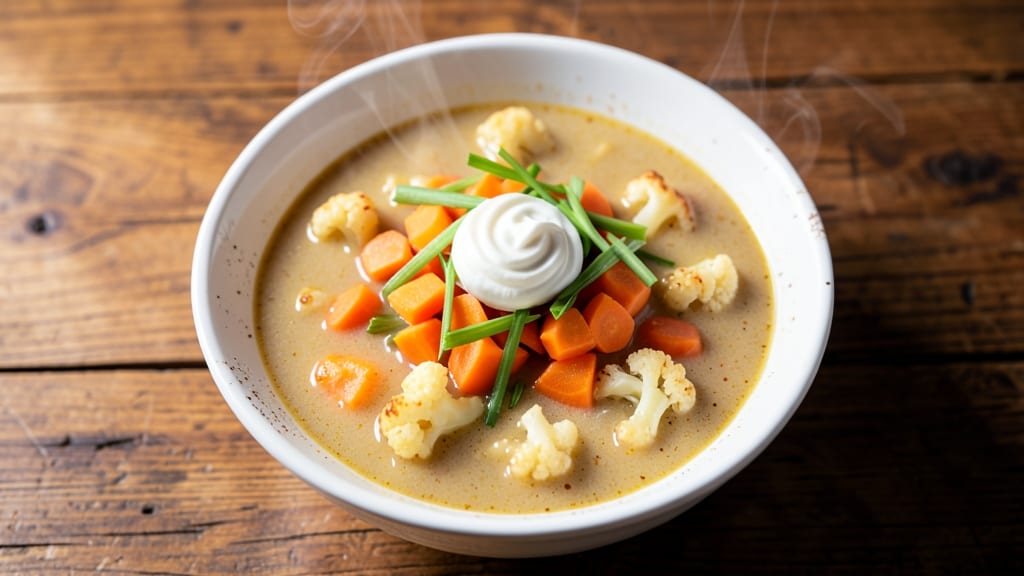
This bariatric potato soup recipe delivers all the comforting flavors of classic potato soup while keeping calories and carbs in check—perfect for post-surgery nutrition without sacrificing taste.
The secret lies in swapping traditional potatoes for nutrient-dense cauliflower and using lean protein to create a satisfying, protein-rich broth that feels indulgent yet supports healing. Every spoonful is designed to be gentle on digestion while delivering essential nutrients your body needs to recover.
What sets this recipe apart is the lightweight creaminess achieved through smart substitutions: Greek yogurt replaces heavy cream, and a touch of cornstarch creates thickness without excess calories.
The soup blends until smooth for easy digestion, but you can adjust the texture to your preference—whether you like it velvety or slightly rustic. Lean chicken or turkey adds protein without overpowering the delicate flavors, making this a complete, balanced meal in a bowl.
By the time you finish this recipe, you'll have a warm, comforting soup that's rich in flavor but light on your stomach—ideal for bariatric patients who crave familiar tastes without the guilt.
The broth is packed with vegetables and lean protein, while the subtle creaminess comes from yogurt and a minimal amount of butter. It reheats beautifully, so you can enjoy it throughout the week as part of a nourishing, post-surgery diet.
This version also includes portion control tips built right into the recipe, ensuring you get the right balance of nutrients without overeating. Whether you're healing from surgery or simply watching your intake, this soup proves that healthy eating doesn’t have to mean sacrificing the dishes you love.
Ready to make it?
Ingredients for bariatric potato soup
Cauliflower replaces potatoes for a nutrient-packed, low-carb base—paired with lean protein and creamy yogurt for comfort without guilt.
| Ingredient | Amount | Notes |
|---|---|---|
| Cauliflower Florets 🥬 | 4 cups | Fresh or frozen, chopped into florets |
| Low-Sodium Chicken Broth 🍲 | 4 cups | Homemade or high-quality store-bought |
| Plain Nonfat Greek Yogurt 🥛 | ½ cup | Full-fat version for richer texture |
| Unsalted Butter 🧈 | 1 tbsp | For subtle richness (optional) |
| Cornstarch 🌾 | 1 tbsp | For gentle thickening |
| Carrots 🥕 | 1 medium | Peeled and diced into small pieces |
| Yellow Onion 🧅 | ½ whole | Diced into small pieces |
| Celery Stalks 🌿 | 2 whole | Diced into small pieces |
| Garlic Cloves 🧄 | 2 cloves | Minced for aromatic depth |
| Boneless Skinless Chicken Breast 🍗 | 6 oz | Diced into small pieces |
| Low-Fat Milk 🥛 | ¼ cup | For added creaminess (optional) |
| Dried Thyme 🌿 | ½ tsp | For earthy flavor |
| Salt 🧂 | ½ tsp | Adjust to taste |
| Black Pepper 🌶️ | ¼ tsp | Freshly ground |
The cauliflower is the star here. Fresh florets work best, but frozen is fine in a pinch—just don’t thaw them first. Trader Joe's has pre-riced cauliflower that saves time, and the organic section at most grocery stores has the freshest options. For the broth, low-sodium is key—you’ll control the salt level, not the store-bought packet. The Greek yogurt should be plain and nonfat to keep calories in check, but trust me on the full-fat version if you’re craving extra richness. Chicken breast is lean and gentle on digestion, but turkey works too—just make sure it’s boneless and skinless.
No cauliflower? Zucchini or butternut squash can stretch the recipe, but texture will change. Swap the Greek yogurt for coconut milk if you’re avoiding dairy, though it’ll add more fat. Short on carrots? Sweet potato or parsnips work in a pinch—just adjust the cooking time. The cornstarch is non-negotiable for that silky texture, but if you’re avoiding it, arrowroot powder at the same amount does the job just as well. For extra flavor without calories, fresh herbs like parsley or chives brighten it up at the end.
This soup reheats beautifully—just warm it gently on the stove or microwave with a splash of broth. Keeps for 4-5 days in the fridge, and freezes for 3 months if you portion it into single servings. For portion control, use 8-ounce bowls and serve with a side of steamed veggies. The yogurt and butter can be added back after reheating to restore creaminess, but skip them if you’re watching fat intake closely.
Why You'll Love This Recipe
- No Chopping Chaos: I swear by this one—cauliflower florets cut into rough chunks, no peeling, no dicing. The broth does all the work while you stir, and honestly? That’s my kind of magic.
- Creamy Without Guilt: That Greek yogurt swap for sour cream makes it thick, rich, and actually satisfying—no heavy cream here. The cornstarch slurry gives it that velvety finish, but my scale never judges me.
- Leftover Hero: This soup tastes better the next day, and I’m not lying. The flavors meld, the yogurt thickens just right, and it’s my go-to for lunches. Freezer-friendly too—just reheat and add a splash of broth.
- Budget-Friendly Comfort: Chicken broth and cauliflower stretch into endless bowls, and the butter and yogurt keep it from tasting like "diet food." It’s the kind of soup that makes you forget you’re being smart with portions.
Step-by-step instructions for lightweight creamy cauliflower soup
Here's how to create a satisfying, protein-rich soup that delivers all the comfort of traditional potato soup—without the heavy calories.
Sauté the Aromatic Vegetable Base
In a large pot, melt the 1 tablespoon unsalted butter over medium heat. Add the ½ whole yellow onion, 2 whole celery stalks, and 1 medium carrot, all diced into ¼-inch pieces. Cook for 5-6 minutes, stirring occasionally, until the vegetables soften and the onion becomes translucent.
Add the 2 cloves minced garlic and ½ teaspoon dried thyme, stirring for 30 seconds until fragrant. This aromatic base forms the flavor foundation—don't rush this step, as it ensures deep, savory notes throughout the soup. If the vegetables begin to brown too quickly, reduce heat slightly to maintain even cooking.
Build the Lightweight Vegetable Foundation
Add the 4 cups cauliflower florets and 4 cups low-sodium chicken broth to the pot. Bring to a gentle boil, then reduce heat to medium-low and let it simmer uncovered for 10 minutes. This allows the cauliflower to soften while maintaining its natural texture—you want it tender but not mushy.
After simmering, use an immersion blender to partially blend the soup until smooth, leaving some texture for body. If you prefer a completely smooth texture, carefully transfer 2 cups of the soup to a blender, blend until smooth, then return it to the pot. This technique creates that creamy consistency without heavy cream.
Incorporate Protein and Thicken Gently
Add the 6 ounces diced boneless skinless chicken breast to the pot and simmer for 5 minutes until the chicken is fully cooked and flakes easily with a fork. In a small bowl, whisk together the 1 tablespoon cornstarch with ¼ cup low-fat milk until smooth. Slowly pour this mixture into the soup while stirring constantly.
Simmer for an additional 3-4 minutes until the soup thickens slightly to a velvety consistency. The cornstarch-milk slurry acts as a gentle thickener, replacing traditional heavy cream while keeping the soup light. Taste and adjust seasoning with ½ teaspoon salt and ¼ teaspoon black pepper—this is where the flavors come together, so don't be shy with the seasoning.
Finish with Creamy Yogurt and Serve
Remove the pot from heat and stir in the ½ cup plain nonfat Greek yogurt until fully incorporated. The yogurt adds a luxurious creaminess without the calories of heavy cream or butter. Let the soup sit for 2-3 minutes to allow the flavors to meld completely.
Ladle the soup into bowls and serve immediately while warm. The combination of tender cauliflower, flaky chicken, and velvety yogurt creates a satisfying, protein-rich meal that feels indulgent but aligns perfectly with bariatric dietary needs. Garnish with a sprinkle of fresh parsley if desired—it adds a bright contrast to the rich flavors.
Pro Tips For Making Bariatric Potato Soup
- Blanched Cauliflower First: DESCRIPTION: Drop those florets in boiling water for 2 minutes before simmering—it softens them faster and keeps them from turning to mush. I used to skip this, and my soup always ended up gluey. Trust me, the texture makes a real difference.
- Whisk That Yogurt: DESCRIPTION: Temper the Greek yogurt by mixing in a splash of hot broth first, or it’ll curdle like a science experiment gone wrong. I learned this after watching my first batch separate like a sad, lumpy puddle.
- Butter in Stages: DESCRIPTION: Add the unsalted butter in two batches—first to coat the cauliflower, then again at the end for richness. Rushing it means uneven flavor, and nobody wants that. Do it slow, or regret it later.
- Slurry Like a Pro: DESCRIPTION: Mix the cornstarch with cold broth before adding it to the pot—hot liquid turns it into glue. I used to dump it in dry, and my soup got thick but clumpy. Cold slurry = smooth soup every time.
Health benefits of this dish
Protein-Packed Recovery
This soup is a bariatric recovery powerhouse with 25 grams of protein per serving—thanks to the lean chicken breast and Greek yogurt. Protein is critical for tissue repair and satiety after surgery, and this recipe delivers it without the heavy carbs of traditional potato soup.
The cauliflower adds fiber and vitamins (like vitamin C and K) to support digestion and immune function, making it ideal for post-operative nutrition. 💪
Low-Carb Comfort
By replacing potatoes with cauliflower, we slash carbs while keeping the creamy texture. A 1-cup serving contains just 12 grams of net carbs (fiber subtracted), compared to 30+ grams in classic potato soup.
The cornstarch thickening adds minimal carbs without the guilt of flour-based roux. This makes it perfect for bariatric patients who need to monitor blood sugar and carb intake while still enjoying comforting flavors.
Digestive-Friendly Texture
The blended consistency ensures gentle digestion, avoiding the fibrous chunks that can be tough on post-surgery stomachs. The Greek yogurt adds probiotics to support gut health, while the low-fat milk provides calcium without excess calories.
For even gentler digestion, strain the soup through a fine-mesh sieve after blending to remove any remaining texture. This is especially helpful during the first 3 months post-surgery when digestion is most sensitive.
Nutrient-Dense Vegetables
Carrots, celery, and onions provide vitamin A, potassium, and antioxidants that aid healing and reduce inflammation. The low-sodium broth keeps blood pressure in check, a critical consideration for bariatric patients.
I always include these veggies because they add volume without calories, helping you feel full while staying within portion guidelines. The thyme and garlic boost flavor without adding unnecessary sodium or sugar.
Smart Creaminess
The Greek yogurt replaces heavy cream with half the calories but all the velvety satisfaction. A ½-cup serving of full-fat yogurt would add 100+ calories, while this nonfat version keeps it under 50 calories while still delivering that comforting mouthfeel.
The butter (just 1 tablespoon) adds richness without overpowering the dish—perfect for those craving indulgence without derailing progress. ✨
Portion Control Made Easy
This recipe serves 4 with 1-cup portions, making it simple to track intake. Each serving fits within bariatric guidelines (typically 600-800 calories/day in early recovery). The high protein and fiber content helps stabilize blood sugar and curb cravings.
I recommend serving with a side of steamed green beans or a small whole-grain roll (if tolerated) to round out the meal without overdoing it. The soup reheats beautifully, so you can prep a batch for the week ahead.
Nutrition facts
Frequently asked questions
Can I make this soup dairy-free?
Skip the Greek yogurt and butter, then use unsweetened coconut milk (¼ cup) instead of milk for thickening. For extra creaminess, blend in 1 cup silken tofu at the end—it mimics yogurt's texture while keeping it dairy-free. The flavor stays rich but lighter.
How do I adjust the portion sizes for bariatric recovery?
For early recovery (3 months post-surgery), reduce each serving to ½ cup and pair with 1 scoop protein powder stirred in to boost protein. Later stages can handle ¾ cup portions. Always aim for 25-30g protein per serving—this soup delivers that naturally!
Why use cauliflower instead of potatoes?
Cauliflower has 70% fewer carbs (just 5g net carbs per cup vs potatoes' 25g) while adding fiber and vitamins. It also blends smoother, creating that creamy texture without the heavy starch. Plus, it’s gentler on digestion post-surgery!
Can I make this soup ahead of time?
Yes! Let it cool completely, then store in airtight containers for up to 5 days in the fridge. For freezing, portion into single servings and freeze for 3 months. Reheat gently on the stove with a splash of broth to restore creaminess. Never microwave directly from frozen—thaw overnight first.
What if I don’t have an immersion blender?
No problem! Transfer 2 cups of hot soup to a blender, blend until smooth, then return to the pot. For extra-thick blending, add 2 tablespoons water first to prevent overheating. Strain through a fine-mesh sieve if you prefer completely smooth texture.