
Soups & Stews
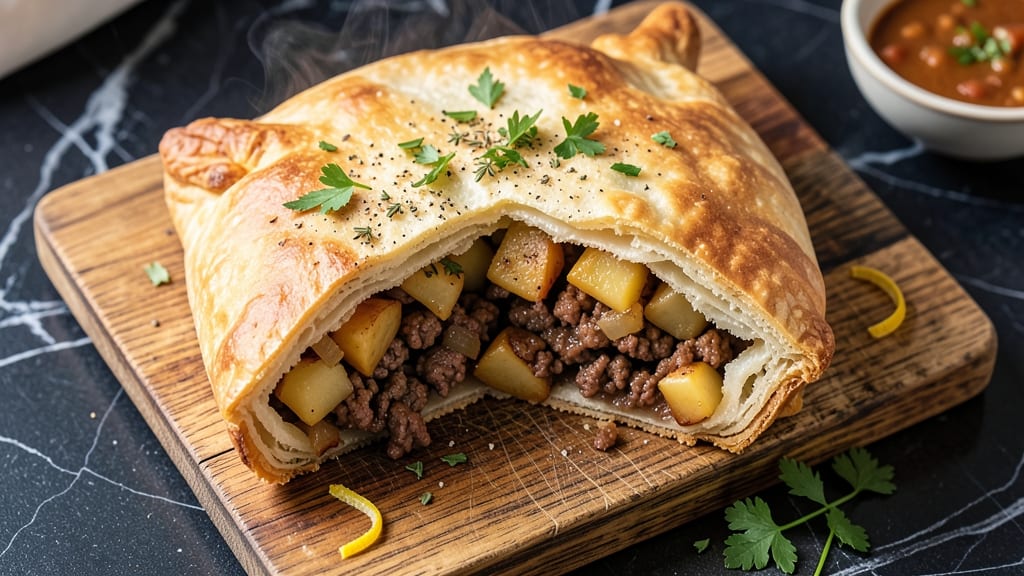
A beef and potato pasty recipe delivers the perfect balance of hearty, savory filling wrapped in a golden, flaky crust. This traditional dish, with its roots in British and Australian mining culture, transforms simple ingredients into a comforting meal that feels like a hug.
The secret lies in the dough's texture—light, crisp, and sturdy enough to hold the rich filling without falling apart.
The filling is where the magic happens: tender ground beef simmered with diced potatoes, onions, and a blend of herbs and spices that create layers of flavor.
What sets this recipe apart is the technique of folding the dough to form a half-moon shape, then crimping the edges to seal in all that savory goodness. It’s a method that ensures every bite is packed with juicy meat and creamy potatoes.
Baking brings out the best in this dish—crisp edges give way to a tender crust, while the filling stays moist and flavorful. The result is a pasty that’s perfect for a cozy family dinner or a picnic in the park.
Serve it with a side of gravy or a fresh salad to round out the meal.
This recipe isn’t just about the food; it’s about the tradition and the satisfaction of making something from scratch that tastes like home. Whether you're a seasoned cook or just starting out, the step-by-step instructions will guide you to a pasty that’s worth every effort.
Ingredients for beef and potato pasty
Simple ingredients that transform into a golden, flaky pasty hugging savory beef and potatoes.
| Ingredient | Amount | Notes |
|---|---|---|
| Ground Beef 🥩 | 1 ½ lb | Lean ground beef preferred |
| Russet Potatoes 🥔 | 3 medium | Peeled and diced small |
| Yellow Onion 🧅 | 1 whole | Finely chopped |
| All-Purpose Flour 🌾 | 3 cups | Plus 1 tbsp for dusting |
| Cold Unsalted Butter 🧈 | ½ cup | Cubed, for dough |
| Ice Water 💧 | ½ cup | For dough consistency |
| Salt 🧂 | 1 ½ tsp | Kosher or sea salt |
| Black Pepper 🌶️ | ½ tsp | Freshly ground preferred |
| Dried Thyme 🌿 | 1 tsp | Or 1 tbsp fresh thyme |
| Garlic Powder 🧄 | ½ tsp | Not garlic salt |
| Vegetable Oil 🫒 | 1 tbsp | For greasing dough |
| Egg 🥚 | 1 whole | For egg wash |
The potatoes need to be small and uniform—cut them while still cold for cleaner dice. Russets are ideal, but Yukon Golds add creaminess. For the beef, ground chuck gives better flavor than lean ground beef. If you're prepping ahead, keep the filling and dough separate until ready to assemble—this prevents soggy crust. The dough's secret? Cold butter and ice water—they keep it flaky. Grab the butter from the freezer section at Kroger or Whole Foods for the coldest cubes.
No thyme? Dried oregano at half the amount works in a pinch. The dough can be tricky—if it cracks, just patch it up. For extra richness, add 1 tbsp of beef broth to the filling. The egg wash? Skip it if you're vegan—just brush with milk instead. Potatoes too watery after peeling? Pat them dry with a towel before dicing. And if your dough feels sticky, chill it for 15 minutes before rolling—this makes all the difference.
Assembled pasties keep 2 days in the fridge, wrapped tightly in foil. Freeze for up to 3 months—just thaw overnight in the fridge before baking. The filling reheats beautifully, but the crust stays crispest when freshly baked. For leftovers, rewarm in a 350°F oven for 15 minutes. Pro tip: Double the dough and freeze extras—perfect for last-minute meals.
Why You'll Love This Recipe
- One-Bowl Magic: I swear by this recipe when I’m too tired to wash extra bowls. You just mix the ground beef with diced potatoes and onion, then fold in the flour-butter crust—no separate dough to fuss with. The cold butter creates flaky layers with almost no effort, and honestly? That’s my kind of cooking.
- Crispy-Creamy Payoff: The secret’s in the potatoes—thinly sliced and layered just right so they get tender inside while the crust turns golden. That salty-savory beef filling? It’s like a hug in your mouth, especially when the crust gets that buttery, shatter-y edge. (Yes, even on a Tuesday night.)
- Packed Lunch Hero: Between us, this is my go-to for meal prep. Bake a batch on Sunday, and you’ve got hearty, portable lunches all week—no sad soggy sandwiches here. The crust stays sturdy enough to handle a lunchbox, and the filling reheats like a dream (or just eat it cold if you’re lazy).
- Budget-Friendly Feast: Ground beef and russets are cheap staples, and this recipe stretches them into a filling meal for four—or more if you’re feeding hungry teens. I’ll be real: it’s the kind of dish that makes grocery day feel like a win, especially when leftovers taste just as good the second time around.
Step-by-step instructions for beef and potato pasty
Here's how to create that perfect flaky crust and hearty filling combination.
Prepare the Filling with Ground Beef and Potatoes
In a large bowl, combine the 1.5 lb ground beef, 3 medium diced Russet potatoes, and 1 whole finely chopped yellow onion. Sprinkle with 1.5 tsp salt, 0.5 tsp black pepper, 1 tsp dried thyme, and 0.5 tsp garlic powder. Mix everything gently with your hands until the ingredients are evenly distributed but not overworked.
This step is all about creating a cohesive filling that will stay together when baked. The potatoes will soften as they cook, so don't worry if they feel firm at this stage. The spices will infuse into the beef and potatoes, giving you that rich, savory flavor we all love in a pasty.
Make the Flaky Crust Dough
In a separate large bowl, combine the 3 cups all-purpose flour and 1.5 tsp salt. Cut in the 0.5 cup cold unsalted butter using a pastry cutter or your fingers until the mixture resembles coarse crumbs with pea-sized butter pieces. This texture is crucial for creating that flaky, layered crust.
Gradually add the 0.5 cup ice water, one tablespoon at a time, mixing just until the dough comes together. Be careful not to overmix—you want to keep the gluten development minimal for that perfect flaky texture. Once the dough forms a shaggy mass, turn it out onto a lightly floured surface and knead gently just until smooth, about 2-3 minutes.
Assemble the Pasty with Precision
Divide the dough into three equal parts. Roll out one-third of the dough on a lightly floured surface into a 12-inch circle. Transfer this to a parchment-lined baking sheet. Spread the beef and potato mixture evenly over the dough, leaving a 1-inch border around the edges. This border is essential for sealing the pasty properly.
Roll out the remaining two-thirds of the dough into a slightly larger circle. Brush the edge of the bottom dough with 1 whole beaten egg to help with adhesion. Place the top dough over the filling and press the edges together firmly, sealing tightly to prevent any filling from escaping during baking. Trim any excess dough and use it to reinforce the seal.
Create the Signature Crimp and Bake
Use a sharp knife or your fingers to create a decorative crimp along the edges of the pasty. Brush the entire surface with the remaining beaten egg for a golden finish. Preheat your oven to 375°F. Place the pasty on the middle rack and bake for 50-60 minutes, until the crust is golden brown and the filling is bubbling hot.
Here's the thing—don't open the oven during baking. The steam inside is what creates that beautiful flaky texture. If you peek too early, you risk losing that steam and ending up with a dense crust instead of the light, airy layers you want. When it's done, let the pasty rest for 10 minutes before serving to allow the filling to set slightly.
Serve Warm with Fresh Herbs
Use a sharp knife to cut the pasty into wedges, being careful not to let the filling spill out. Serve immediately while still warm. The contrast between the crispy, golden crust and the tender, savory filling is what makes this pasty so special. Garnish with fresh parsley if you like, but trust me, the simple presentation lets the flavors shine.
This pasty is best enjoyed right out of the oven when the crust is still crisp and the filling is piping hot. The flaky layers should separate easily, revealing that perfectly seasoned beef and potato mixture underneath. Each bite should deliver that satisfying combination of textures and flavors that makes this dish so beloved.
Pro Tips For Making Beef And Potato Pasty
- Boil Potatoes First: Don’t skip pre-cooking the Russets—parboil them 8-10 minutes until just tender, then drain and cool completely. This keeps them from turning to mush when wrapped in the dough later, and the filling stays sturdy even after baking.
- Preheat Pan Like It’s 1987: Get that skillet screaming hot before browning the ground beef and onions—think blackened steel, not lukewarm. I learned this the hard way: cold pans mean greasy, gray beef instead of crispy, caramelized edges that actually taste like meat.
- Dry the Dough: Pat the flour-butter dough thoroughly with paper towels before sealing the pasty—moisture is the enemy of a crispy crust. I used to rush this, and my pasties always came out soggy inside. Five minutes of drying now saves 30 minutes of disappointment later.
- Layer Butter Like a Pro: Dot the dough’s inner surface with small chunks of cold unsalted butter before adding the filling—this creates steam pockets that keep the potatoes fluffy. Skip the big slab in the center; it’ll melt into a greasy mess instead of golden pockets of flavor.
Dietary considerations for this dish
Gluten-Free Adaptation
Swap the all-purpose flour for a 1:1 gluten-free baking flour blend like Bob’s Red Mill or King Arthur. Use 3 cups of the blend, plus 1 tbsp xanthan gum to mimic gluten’s binding properties.
Chill the dough for 30 minutes before rolling—gluten-free dough can be stickier. For extra flakiness, add 1 tbsp cold vegetable shortening to the butter. 🌾
Dairy-Free Modifications
Replace the cold butter with ½ cup dairy-free margarine (like Earth Balance) or coconut oil (solid at room temperature). For the egg wash, use 1 tbsp plant-based milk (like almond or oat) mixed with 1 tbsp melted vegan butter.
The crust will still crisp beautifully—just avoid overbaking to prevent dryness.
Lower-Carb Options
Reduce the potatoes to 2 medium (about 1 cup diced) and add ½ cup riced cauliflower to bulk up the filling without excess carbs. Boost flavor with 1 tsp smoked paprika and ½ tsp onion powder.
For the crust, use a low-carb flour blend (like almond or coconut flour) mixed with ½ cup oat fiber for structure.
Vegetarian Twist
Replace the ground beef with 1.5 lb crumbled tempeh or lentils (cooked and seasoned identically). Add 1 tbsp soy sauce and 1 tsp liquid smoke to mimic beef’s depth.
For extra protein, fold in ½ cup cooked quinoa into the filling. The crust remains unchanged—this keeps the pasty’s signature texture intact. 🌱
Allergen-Friendly Tips
For nut allergies, use a gluten-free oat flour blend instead of almond flour. If avoiding eggs entirely, brush the crust with olive oil instead of egg wash. For soy-sensitive diets, opt for pea protein crumbles** instead of tempeh. Always check labels—some gluten-free blends contain soy or dairy derivatives.
Nutrition facts
Frequently asked questions
Why does the crust turn out dense instead of flaky?
The most common cause is overworking the dough or using warm butter. Keep your butter cold (even frozen) and handle the dough minimally. Also, avoid opening the oven during baking—steam is what creates those flaky layers. If your dough feels sticky, chill it for 15 minutes before rolling.
Can I make this pasty ahead of time?
Assemble the pasty and refrigerate it for up to 2 days before baking. For longer storage, wrap tightly in foil and freeze for 3 months. Thaw overnight in the fridge before baking. The crust stays freshest when baked fresh, but reheating leftovers at 350°F for 15 minutes works well.
What's the best way to cut a pasty without losing filling?
Use a sharp knife and cut straight down through the center point. Angle the knife slightly toward the center to create clean wedges. Work quickly to minimize filling spillage. For extra stability, place the pasty on a cutting board and press gently with your other hand as you cut.
Can I use sweet potatoes instead of regular potatoes?
While you can substitute sweet potatoes, they'll change the flavor profile significantly. If you do use them, reduce the amount to 2 medium and add ½ tsp cinnamon to complement their natural sweetness. The texture will be slightly softer, but the pasty will still hold together.
How do I fix a pasty that's leaking filling?
If you notice filling escaping during baking, the seal isn't tight enough. Remove the pasty from the oven, let it cool slightly, then reinforce the edges with extra dough or a strip of pastry dough. Return to the oven for 10-15 minutes to finish baking. For future attempts, press the edges firmly together and use a fork to crimp them securely.