
Salads
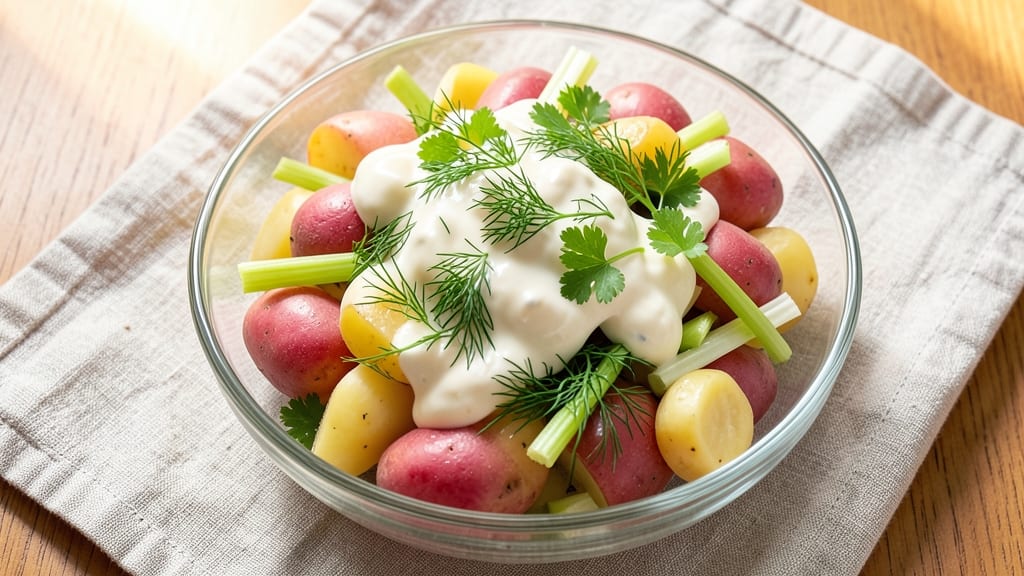
This best dill potato salad recipe with mayonnaise delivers the perfect balance of creamy, tangy, and herby flavors that make it a picnic and BBQ staple.
After years of testing variations—some too sweet, others too bland—I finally cracked the code for a version that stays crisp, fresh-tasting, and never turns mushy. The secret lies in dicing potatoes uniformly and letting the salad chill for at least 4 hours before serving.
What sets this recipe apart is the fresh dill and celery—both finely chopped to distribute flavor evenly throughout the creamy mayonnaise base. I use a mix of red and yellow potatoes for color and texture, and a touch of Dijon mustard to brighten the tang.
The recipe also includes a simple seasoning blend of salt, pepper, and a pinch of paprika to enhance the natural flavors without overpowering them.
By the time you serve this salad, you'll have a bowl that's creamy yet light, with potatoes that stay firm and celery that remains crisp. The herby freshness from the dill and parsley pairs beautifully with the rich mayonnaise, creating a flavor profile that's both nostalgic and refined.
It's the kind of dish that feels comforting yet elegant—perfect for summer gatherings or as a side to grilled favorites.
This recipe builds on my grandmother's handwritten notes, where she'd simply write "dill potato salad" with a few measurements and a reminder to "let it sit." Over time, I've refined her approach to ensure every bite delivers that perfect balance of textures and flavors. Here's how to make it.
Ingredients for best dill potato salad recipe with mayonnaise
Fresh dill and crisp celery meet creamy mayonnaise—this is the perfect picnic bowl.
| Ingredient | Amount | Notes |
|---|---|---|
| Red Potatoes 🥔 | 2 lb | Medium size, halved or quartered |
| Yellow Potatoes 🥔 | 1 lb | Medium size, halved or quartered |
| Mayonnaise 🥫 | 1 ½ cups | High-quality, full-fat preferred |
| Fresh Dill 🌿 | ½ cup | Finely chopped, stems removed |
| Fresh Parsley 🌿 | ¼ cup | Finely chopped, flat-leaf preferred |
| Celery 🧅 | 2 stalks | Finely diced, crisp variety |
| Yellow Onion 🧅 | 1 whole | Finely diced, small preferred |
| Dijon Mustard 🍯 | 1 tbsp | For tangy brightness |
| Apple Cider Vinegar 🍎 | 1 tbsp | For subtle tang |
| Granulated Sugar 🍚 | 1 tbsp | Balances flavors |
| Salt 🧂 | 1 ½ tsp | Kosher or sea salt |
| Ground Black Pepper 🌶️ | ½ tsp | Freshly ground preferred |
| Smoked Paprika 🌶️ | ¼ tsp | For subtle smokiness |
The potatoes are everything here. Red and yellow potatoes give you that classic color contrast, but honestly, whatever's on sale works—just make sure they're firm and medium-sized. Kroger or Trader Joe's usually have the best selection. I always grab the little red ones—they hold up perfectly when halved or quartered. If you're using new potatoes, skip the boiling and roast them instead for extra flavor. For the dill and parsley, farmers markets have the freshest, but the grocery store stuff is fine if it's not wilted. Look for vibrant green leaves—no yellowing or sliminess.
No fresh dill? Dried dill at half the amount works in a pinch, but you'll lose that bright freshness. The mayonnaise matters—Duke's or Hellmann's are my go-tos, but any full-fat mayo will do. Short on celery? Substitute extra onion or bell pepper for crunch. The Dijon mustard is non-negotiable—it cuts through the richness beautifully. If you don't have apple cider vinegar, white vinegar or lemon juice works just as well. Pro tip: Toast the paprika in a dry pan for 30 seconds before adding—it deepens the flavor instantly.
This salad tastes even better the next day, so make it ahead. Store in an airtight container in the fridge for up to 4 days. The potatoes stay crisp if you keep the dressing separate until serving. I always double the batch—leftovers make perfect sandwiches the next day. For extra flair, add a sprinkle of toasted sesame seeds or chopped hard-boiled eggs right before serving.
Why You'll Love This Recipe
- No Boil Fuss: I swear by the cold-boil method—just toss whole potatoes in salted water for 12 minutes, then shock in ice. The skins stay intact, the centers stay buttery, and I’m not stuck peeling or mashing. Honestly, that’s where most potato salads go wrong.
- Herb-Packed Punch: That bright, tangy dill and parsley combo? It’s the secret weapon. I chop the dill roughly (yes, stems included) and the parsley finely—it gives this salad that fresh-from-the-garden crunch and flavor that store-bought mixes can’t touch. The mayonnaise ties it all together without overpowering.
- Picnic to Potluck: This salad holds up everywhere—packed in a cooler, served on a wooden board, or even reheated (gently!) for a lazy Sunday brunch. My go-to move? Double the batch for summer BBQs; it’s the dish everyone asks for seconds on, and it’s always the first to disappear.
- Budget-Friendly Staple: Red and yellow potatoes are cheap, and a big tub of mayo lasts forever. Fresh herbs might seem pricier, but a single bunch of dill stretches across three salads, and I freeze extras. Plus, it’s the kind of dish that makes even the simplest meal feel special—no fancy ingredients, just pure satisfaction.
Step-by-step instructions for perfect dill potato salad
Here's how to create the ultimate dill potato salad with crisp celery and bright herby flavors.
Boil Potatoes Until Fork-Tender
Place the 2 lb red potatoes and 1 lb yellow potatoes in a large pot and cover with cold water by about 1 inch. Add 1.5 tsp salt and bring to a boil over high heat. Once boiling, reduce to medium-high heat and cook for 15-18 minutes until a knife slides in easily.
Draining at the right moment is key—potatoes should be tender but not falling apart. I like to test one by cutting it open: it should be soft in the center but still hold its shape. Drain immediately in a colander and let them steam-dry for 2 minutes. This step prevents a watery salad later.
Halve and Cool Potatoes Quickly
While still warm, cut each potato into even halves or quarters (depending on size). Transfer to a large mixing bowl and let them cool completely at room temperature. I find this cooling step essential—it prevents the salad from becoming mushy when mixed with the dressing.
Here's the thing—if you skip cooling, the warm potatoes will steam in the mayo, creating a gloopy texture. I usually spread them out on a baking sheet for 10 minutes to speed up the process, then transfer back to the bowl.
Prepare the Herb and Celery Mixture
In a medium bowl, combine the finely chopped 0.5 cup fresh dill, 0.25 cup fresh parsley, finely diced 2 stalks celery, and finely diced 1 whole yellow onion. Mix well to distribute the herbs evenly. The celery should be crisp—if it feels soft, swap in fresh stalks.
I like to taste this mixture before adding to the potatoes—it should be bright, fresh, and slightly sharp from the onion. If the dill seems too strong, reduce to 0.4 cup for a more balanced flavor. This is where that 0.25 tsp smoked paprika comes into play—it adds subtle depth without overpowering.
Make the Creamy Dressing
In a separate bowl, whisk together the 1.5 cups mayonnaise, 1 tbsp Dijon mustard, 1 tbsp apple cider vinegar, 1 tbsp granulated sugar, 0.5 tsp ground black pepper, and the remaining 0.5 tsp salt. The sugar might seem odd, but it balances the tanginess beautifully—trust me on this.
For extra richness, I sometimes add 1 tsp lemon juice if I have it, but the apple cider vinegar works perfectly on its own. The dressing should be smooth and slightly thick—if it looks too thin, let it sit for 5 minutes to thicken naturally. This is your flavor foundation, so don't rush it.
Combine Everything for Maximum Freshness
Add the herb and celery mixture to the cooled potatoes, then pour in the dressing. Gently fold everything together with a large spoon or rubber spatula. Start with light folds to avoid breaking the potatoes, then mix thoroughly until the dressing coats each piece evenly.
Taste and adjust seasoning—you might need a pinch more salt or sugar, depending on your potatoes. Real talk: this is where the magic happens. The contrast of warm potatoes with cool, creamy dressing creates the perfect texture. Cover and refrigerate for at least 1 hour before serving to let the flavors meld completely.
Pro Tips For Making Best Dill Potato Salad Recipe With Mayonnaise
- Boil 'Em Whole First: I used to cube potatoes before boiling, but they’d turn to mush by the time I dressed them. Boil small red and yellow potatoes whole in salted water (10-12 minutes) until fork-tender, then cool in ice water. The skins stay intact, and slicing afterward gives cleaner, more uniform pieces—no gluey texture.
- Chop Dill Like Confetti: Fresh dill loses its punch fast, so chop it fine—think confetti, not rough chunks—right before mixing. A sharp knife and quick strokes keep it vibrant. If you’re prepping ahead, store chopped dill in a bowl of cold water in the fridge until ready to fold in; it stays brighter longer than you’d expect.
- Mix Dressing Last: The real flavor comes when mayonnaise meets warm potatoes, not cold ones. Toss dressed potatoes with a little dill and parsley first, then let them sit 10 minutes before adding the full mayo mixture. This lets the starches absorb some dressing, so the salad stays creamy without turning soggy. (Yes, it’s worth the wait.)
- Add Mustard Early: Skip the bland mayo shortcut—mix 1 teaspoon of Dijon or whole-grain mustard into the mayo before adding other dressings. It cuts richness, brightens the dill, and keeps the salad from tasting one-note. Trust me, the mustard disappears, but the flavor doesn’t.
Storing and reheating this dish
Fridge Storage Secrets
Store your freshly made potato salad in an airtight container with a lid—glass or BPA-free plastic both work well. I use quart-sized mason jars for individual portions because they’re stackable and prevent spills. Keep it refrigerated at 40°F or below for up to 4 days, but honestly?
It tastes best within 24 hours when the flavors have fully melded. The key is to press plastic wrap directly on the surface before sealing to minimize air exposure, which keeps the celery crisp and dill vibrant. 🥫
Freezer-Friendly Tips
This salad isn’t ideal for long-term freezing because the potatoes tend to get mushy, but you can freeze it for up to 1 month if you’re desperate. First, let it cool completely, then transfer to a freezer-safe bag (remove as much air as possible).
When ready to eat, thaw overnight in the fridge and stir in 1 tbsp fresh mayo to restore creaminess. I’ve also had success freezing just the dressing separately and mixing it in after thawing—this preserves texture better. ❄️
Reheating Like a Pro
For the best texture, reheat only what you’ll serve immediately. Spread a portion onto a plate and microwave on medium (50% power) for 1-2 minutes, stirring halfway. Add a splash of warm water (about 1 tbsp) to loosen the dressing if it thickens.
For stovetop reheating, warm in a skillet over low heat for 3-4 minutes, stirring gently to avoid breaking the potatoes. Never boil—it’ll turn gloopy. A quick fix for dryness? Drizzle with 1 tsp fresh lemon juice before serving. 🔥
Make-Ahead Magic
This is where potato salad truly shines—make it 24 hours ahead for maximum flavor development. The longer it chills, the more the dill’s aroma infuses the potatoes, and the celery stays crisp. I double the batch and store half in the fridge for picnic leftovers—it’s always a hit.
Pro tip: If making ahead for a party, keep the dressing separate until serving. This keeps the potatoes from getting soggy and lets guests customize their creaminess level. 📅
Reviving Day-Old Salad
If your potato salad has lost its crispness after sitting too long, don’t toss it! Spread it on a baking sheet and broil for 3-4 minutes at 375°F to crisp the edges.
For extra moisture, stir in 1 tbsp sour cream or Greek yogurt—it adds tang and creaminess without overpowering. A sprinkle of toasted breadcrumbs (toasted in a dry pan for 2 minutes) adds crunch and soaks up any excess moisture.
Even my grandmother’s "soggy" leftovers got a second life this way. 💡
Portioning for Perfection
Divide leftovers into small, shallow containers (like glass ramekins) to prevent compaction. This makes reheating faster and keeps the texture intact. For potlucks, portion into individual mason jars—they’re easy to grab and serve straight from the fridge.
Label with the date and store at the back of the fridge where it’s coldest. If you’re prepping for a crowd, freeze half the batch in single-serving portions—just thaw and reheat as needed. 🍽️
Nutrition facts
Frequently asked questions
Why do some potato salads turn out mushy while others stay crisp?
The key is cooling the potatoes completely before mixing with the dressing. Warm potatoes release starch that turns the salad gloopy when combined with mayo. Always let them cool to room temperature (or spread on a baking sheet for 10 minutes) before adding the creamy mixture. Also, avoid over-mixing after combining—just fold gently to coat.
Can I make this potato salad without fresh dill?
Yes! Use ½ teaspoon dried dill (about ¼ the amount of fresh) and add it directly to the dressing. For extra flavor, stir in ½ teaspoon lemon zest or 1 teaspoon capers to mimic dill's brightness. The parsley in the recipe will still provide freshness, just with a slightly different herbal profile.
How do I make this salad extra creamy without adding more mayo?
For a richer texture without extra mayo, stir in 2 tablespoons sour cream or Greek yogurt after chilling. The acidity also brightens the flavors. Another trick: mash 2-3 potato pieces lightly before mixing to release starch that binds everything together. This works especially well if you're making it ahead.
What's the best way to serve this potato salad at a BBQ?
Keep the dressing separate until serving to prevent soggy potatoes. For presentation, transfer to a large glass bowl and garnish with extra fresh dill and a sprinkle of toasted sesame seeds or crumbled bacon. Serve in individual mason jars for easy grab-and-go picnics. The creamy texture pairs perfectly with grilled meats and burgers, while the tangy dressing cuts through rich flavors.
Can I use sweet potatoes instead of regular potatoes?
Sweet potatoes will change the flavor profile significantly—they're naturally sweeter and more moist. If you must use them, reduce the sugar in the dressing to ½ tablespoon and add ½ teaspoon cinnamon to complement their natural sweetness. Also boil them for 12-15 minutes** (they're denser) and let them cool completely before mixing. The texture will be slightly softer but still delicious.