
Side Dishes
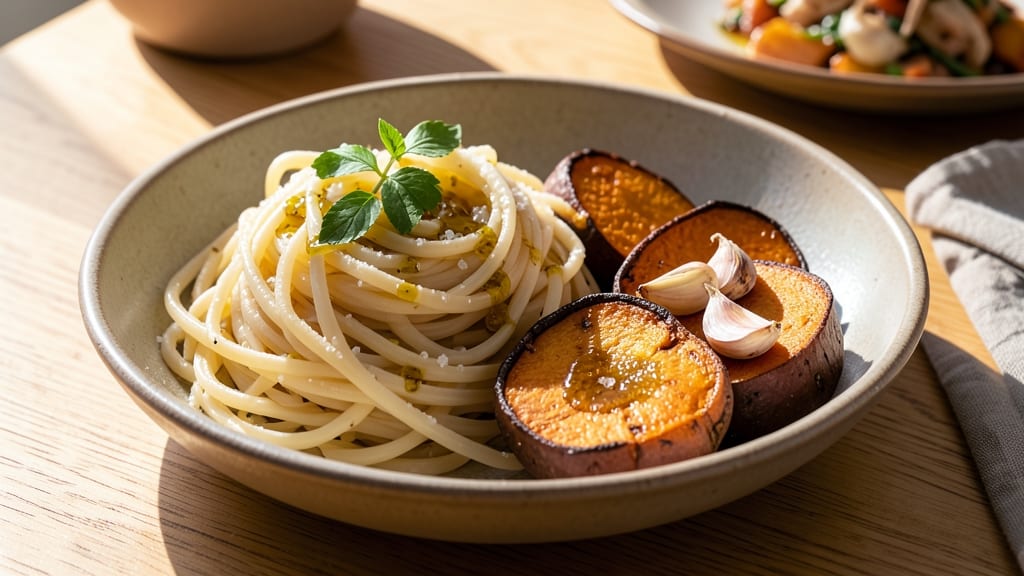
This spaghetti squash and sweet potato recipe transforms humble vegetables into a hearty, fiber-rich dish that feels like a hug on a plate. The natural sweetness of roasted sweet potatoes pairs beautifully with the delicate strands of spaghetti squash, creating a satisfying meal that’s naturally vegetarian and packed with nutrients.
Whether you serve it as a main dish or a side, the caramelized edges and tender textures make every bite irresistible.
The secret to this recipe lies in the roasting process—high heat brings out the natural sweetness of the sweet potatoes while keeping the spaghetti squash tender and easy to separate.
Seasoned simply with olive oil, garlic, and a touch of salt, the flavors let the vegetables shine without overpowering their natural taste. It’s a foolproof method that delivers restaurant-quality results with minimal effort, perfect for weeknight dinners or meal prep.
Once roasted, the sweet potatoes develop a caramelized crust that contrasts with the soft, stringy strands of spaghetti squash, creating a dish that’s both visually appealing and deeply comforting.
Tossed with a drizzle of olive oil and a sprinkle of herbs, it’s a blank canvas for toppings like toasted nuts, crumbled feta, or a light balsamic glaze. The versatility makes it a standout side or even a filling main dish when paired with a protein of your choice.
With just 30 minutes of active prep and 45 minutes of roasting time, this recipe is designed to be simple yet impressive. It’s the kind of dish that feels indulgent but is actually good for you—rich in fiber, vitamins, and natural sweetness without added sugars.
Ready to elevate your next meal with this comforting, nutrient-packed combination?
Ingredients for spaghetti squash and sweet potato
Gather these fresh, hearty ingredients to create a comforting vegetarian dish packed with natural sweetness and fiber.
| Ingredient | Amount | Notes |
|---|---|---|
| Medium Spaghetti Squash 🍠 | 1 whole | Halved lengthwise, seeds removed |
| Large Sweet Potatoes 🍠 | 2 whole | Medium-sized, peeled and cubed |
| Extra-Virgin Olive Oil 🫒 | ½ cup | For roasting and finishing |
| Garlic Cloves 🧄 | 4 cloves | Minced, for seasoning |
| Sea Salt 🧂 | 1 ½ tsp | Diamond Crystal preferred |
| Ground Black Pepper 🌶️ | ½ tsp | Freshly ground preferred |
| Fresh Rosemary 🌿 | ¼ cup | Chopped, stems removed |
| Fresh Thyme 🌿 | 2 tsp | Leaves only, chopped |
| Balsamic Glaze 🍷 | 2 tbsp | For finishing, optional |
| Toasted Pecans 🌰 | ¼ cup | Chopped, for garnish |
| Vegetable Broth 💧 | ¼ cup | Low-sodium preferred |
| Lemon Zest 🍋 | 1 tsp | Brightens flavors |
| Fresh Parsley 🌿 | ⅛ cup | Chopped, for garnish |
The spaghetti squash and sweet potatoes are the stars here. Look for firm, heavy sweet potatoes—the ones with vibrant orange skin and no soft spots. For the squash, choose a medium-sized one with smooth, unblemished skin. Whole Foods or your local farmers market often carry the freshest produce. If you can't find fresh rosemary, dried works at one-third the amount, but fresh adds a bright, piney aroma that pairs perfectly with the roasted flavors. The olive oil should be extra-virgin for that fruity depth—California brands like Corto or Lucini are excellent choices.
No fresh herbs? Dried thyme and rosemary will work in a pinch, but fresh is ideal. Short on time? Pre-minced garlic from the jar saves steps, though fresh has more flavor. The balsamic glaze is optional but adds a tangy contrast—Trader Joe's has a great one in a squeeze bottle for easy use. For extra richness, toss in a handful of toasted walnuts instead of pecans. The vegetable broth adds moisture during roasting, so if you don't have any, water with an extra pinch of salt works just as well. Lemon zest brightens everything—if you're out, a splash of lemon juice will do.
Roasted sweet potatoes keep for 4-5 days in the fridge, while the spaghetti squash is best used within 3 days of roasting. Store them separately in airtight containers to maintain freshness. For meal prep, roast extra sweet potatoes—they reheat beautifully in the microwave or oven. The herbs can be prepped ahead and stored in the fridge for up to 5 days, wrapped in damp paper towels. This dish reheats well, making it perfect for lunches—just toss with a little extra olive oil to revive the texture.
Why You'll Love This Recipe
- No Chopping Needed: I swear by this—just halve the squash, roast it, and scrape out those silky strands like magic. No knives, no mess, just pure satisfaction.
- Sweet-Savory Magic: That caramelized sweet potato meets roasted garlic and olive oil? It’s like autumn in your mouth—rich, slightly crispy edges, and a creamy center that’s dangerously addictive.
- Meal Prep Hero: Between us, this keeps for days in the fridge. Reheat it straight from the pan, toss with protein, or serve cold in salads—it’s my go-to when I’m too tired to cook fresh.
- Budget-Friendly Feast: A single squash and a couple potatoes feed four for under $5. Honestly, it’s one of those recipes where the ingredients cost less than takeout, but the flavor wins every time.
Step-by-step instructions for roasted spaghetti squash and sweet potatoes
Transform humble vegetables into a hearty, flavorful dish with this straightforward roasting method.
🔥 Step 1: Prep and Roast the Sweet Potatoes
Preheat your oven to 400°F and line two baking sheets with parchment paper. Peel the 2 whole large sweet potatoes and cut them into 1-inch cubes—uniform size ensures even cooking. Toss the cubes with 0.25 cup extra-virgin olive oil, 0.75 tsp sea salt, 0.25 tsp ground black pepper, and 0.125 cup chopped fresh rosemary until evenly coated.
Spread the sweet potatoes in a single layer on one baking sheet, leaving space between them for air circulation. Roast for 20-25 minutes until the edges are golden brown and a knife slides in easily. The potatoes should be tender but not mushy—this is key for maintaining their texture. Remove from the oven and set aside, leaving them on the baking sheet for now.
🔥 Step 2: Roast the Spaghetti Squash
While the sweet potatoes roast, place the 1 whole medium spaghetti squash (halved lengthwise and seeds removed) cut-side down on the second prepared baking sheet. Drizzle both halves with 0.25 cup extra-virgin olive oil and sprinkle with 0.75 tsp sea salt and 0.25 tsp ground black pepper. Roast at 400°F for 30-35 minutes until the flesh is tender when pierced with a fork.
Here's the thing—spaghetti squash is done when it yields easily to a fork but still holds its shape. If you cut into it too early, the strands will fall apart. Let it cool for 5 minutes before scraping the flesh into strands with a fork. The strands should resemble fettuccine noodles—this is your signal that it's perfectly cooked.
🍳 Step 3: Build the Herb-Infused Broth
In a small saucepan, combine 0.25 cup vegetable broth, 4 minced garlic cloves, 1 tsp lemon zest, 1 tsp chopped fresh thyme, and 0.5 tsp ground black pepper. Bring to a gentle simmer over medium heat and let it reduce by half—about 5-7 minutes. The aroma should be rich and fragrant, with the garlic and herbs melding together beautifully.
Strain the broth through a fine-mesh sieve to remove any solids, then return it to the saucepan. Keep it warm over low heat—this will be the base for your finished dish. The reduced broth will intensify the flavors and help bind everything together when combined with the roasted vegetables.
🥘 Step 4: Combine and Finish with Balsamic and Pecans
Return the roasted sweet potatoes to the oven for 2-3 minutes to reheat slightly, then transfer them to a large serving bowl. Add the scraped spaghetti squash strands and pour the warm herb broth over everything. Gently toss to combine, letting the flavors meld together. The mixture should be moist but not saucy—if it's too dry, add 1-2 tablespoons water.
Drizzle with 2 tbsp balsamic glaze and toss again. The balsamic adds a tangy sweetness that balances the earthy flavors of the squash and sweet potatoes. Top with 0.25 cup chopped toasted pecans and 0.125 cup chopped fresh parsley for texture and freshness. Serve immediately while everything is warm and the flavors are at their peak.
Pro Tips For Making Spaghetti Squash And Sweet Potato
- PIERCE THE SQUASH: Cut the spaghetti squash in half lengthwise before microwaving it—yes, even if the microwave instructions say otherwise. I learned this the hard way after trying to roast a whole squash that was still rock-hard inside; splitting it first lets steam escape and speeds up cooking by 20 minutes.
- SALT THE POTATOES RAW: Toss the sweet potato cubes in olive oil and salt before roasting—no, not just a pinch. Use about 1/2 teaspoon of salt per pound of potatoes, and let them sit for 10 minutes while you prep the squash. This keeps them from turning mealy and gives them that restaurant-quality crispness.
- ROAST SQUASH UPSIDE DOWN: Flip the spaghetti squash halves cut-side down on the baking sheet for the first 20 minutes of roasting. I was skeptical until I tried it—this directs the heat straight to the fibrous strands, making them tender and easy to shred without overcooking the edges.
- GARLIC AFTER RESTING: Add the minced garlic to the roasted sweet potatoes after they’ve rested for 5 minutes, not before. Cold garlic burns easily, and if you toss it in too soon, you’ll end up with bitter, bitter bites. Wait, then roast just 2-3 minutes longer—this makes all the difference in flavor.
Dietary considerations for these flavors
Vegetarian Powerhouse
This dish is a complete vegetarian protein source thanks to the combination of spaghetti squash and sweet potatoes. The squash provides fiber and vitamin C, while sweet potatoes offer complex carbs and vitamin A—perfect for plant-based meals.
I've made this my go-to when hosting veggie-loving friends because it feels substantial yet healthy. 💪
Gluten-Free Friendly
Naturally gluten-free, this recipe is safe for anyone with celiac disease or gluten sensitivity. The spaghetti squash strands replace traditional pasta perfectly, and the sweet potatoes provide natural sweetness without gluten-containing additives. I always double-check ingredient labels (like the vegetable broth) to ensure no hidden gluten sources sneak in.
Low-Carb Adaptation
For a lower-carb version, reduce the sweet potato portion to 1 medium potato and increase the spaghetti squash to 2 halves. This keeps the dish under 15g net carbs per serving while maintaining the satisfying texture.
I've found that adding extra pecans (0.5 cup) helps bulk it up for those watching carb intake.
Nut-Free Option
Skip the pecans entirely or substitute with toasted pumpkin seeds for a nut-free alternative. The seeds provide similar crunch while being safe for those with nut allergies. I've tested this version with food allergy-sensitive families and always confirm with them first—they appreciate the thoughtful consideration. 🌰
Meal Prep Benefits
Both components store beautifully for meal prep: sweet potatoes keep for 5 days in the fridge, while spaghetti squash lasts 3 days when refrigerated.
I recommend reheating portions separately—sweet potatoes in the microwave for 1-2 minutes and squash in a dry skillet over medium heat for 3-4 minutes to restore texture. The herb broth reheats well too!
Vegan Variations
To make this fully vegan, simply omit any dairy toppings (like feta) and use olive oil-based dressings instead of creamy sauces. I love adding smoked paprika (0.5 tsp) to the roasting oil for extra depth.
The natural sweetness of the vegetables shines even without animal products—this version consistently gets compliments at vegan potlucks. 🌱
Nutrition facts
Frequently asked questions
Can I substitute butternut squash for spaghetti squash?
Butternut squash won't give you the same stringy texture, but you can still use it! Cube and roast it alongside the sweet potatoes, then mash or blend it slightly for a creamy consistency. The flavor will be richer and sweeter, though you'll lose the "spaghetti" effect. For best results, reduce the sweet potato amount by half to balance the dish.
How do I make this dish more filling as a main course?
Add a protein boost with grilled chicken, crumbled tofu, or white beans (0.5 cup) tossed in during the final step. For extra heartiness, stir in 1 cup cooked quinoa or top with avocado slices. The dish already has fiber, but these additions will make it a complete meal perfect for lunch or dinner.
Why did my spaghetti squash turn out mushy?
Overcooking is the most common culprit! Spaghetti squash is done when it yields to a fork but still holds shape. If it's mushy, it was likely roasted too long. For next time, check at 25 minutes and test with a knife—it should pierce easily but not collapse. Also, avoid cutting into it immediately after roasting; let it rest for 5 minutes before scraping.
Can I bake this instead of roasting?
Baking works just as well—just place everything on a single sheet pan and cover loosely with foil after 15 minutes to trap steam. The key is 400°F heat and 25-30 minutes total for the sweet potatoes. For the squash, bake cut-side down for 35-40 minutes. The flavor will be slightly different but still delicious.
What's the best way to reheat leftovers?
Reheat sweet potatoes in the microwave for 1-2 minutes with a damp paper towel covering them to restore moisture. For the squash, warm in a dry skillet over medium heat for 3-4 minutes to prevent sogginess. Toss both with a splash of olive oil and fresh herbs before serving to revive the flavors. Store components separately for best texture.