
Side Dishes
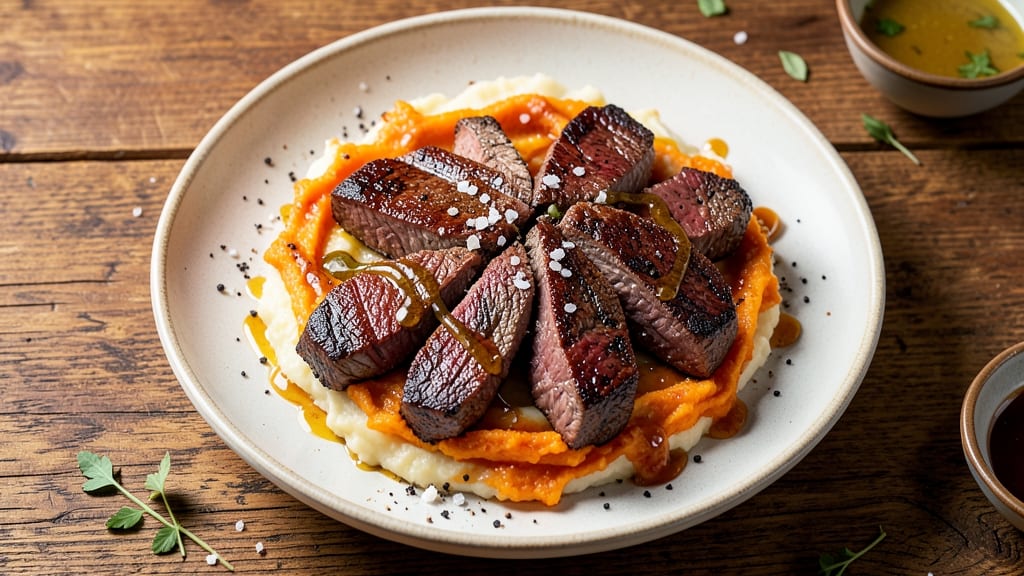
This steak and sweet potato mash recipe transforms dinner into a savory-sweet masterpiece with minimal effort. The secret lies in reverse-searing the steak for perfect tenderness while roasting sweet potatoes until caramelized and creamy—both finished in the same pan for effortless cleanup.
What makes this dish special is how the natural sweetness of the mash complements the rich, smoky flavor of the steak, creating a harmony that feels both elegant and comforting.
You’ll start with a simple seasoning blend for the steak—just salt, pepper, and garlic powder—to let its natural beefy flavor shine, then finish it with a high-heat sear for that coveted crust.
Meanwhile, the sweet potatoes roast until their edges turn golden and their centers become velvety smooth, with just a touch of butter and cream to elevate their natural sweetness. The result? A dish that’s restaurant-quality yet simple enough for any weeknight.
What you’ll end up with is a plate that looks as impressive as it tastes: a perfectly cooked steak resting atop a creamy, caramelized sweet potato mash, its edges slightly crisp from the oven.
The contrast between the tender steak and the velvety mash creates every bite, while optional garnishes like fresh rosemary or a drizzle of honey can take it to the next level. This is the kind of meal that feels like a celebration without requiring hours in the kitchen.
The best part? This recipe scales effortlessly for two or four, and leftovers reheat beautifully—making it ideal for meal prep or a special occasion. Whether you’re cooking for a date night or a family dinner, this one-pan wonder delivers flavor, texture, and convenience all in one. Let’s get cooking!
Ingredients for steak and sweet potato mash
Pantry staples plus a few fresh touches—this one-pan meal is restaurant-quality without the fuss.
| Ingredient | Amount | Notes |
|---|---|---|
| Ribeye Steak 🥩 | 1 ½ lb | 1-inch thick cut, room temperature |
| Sweet Potatoes 🍠 | 2 lbs | Medium, peeled and cubed |
| Unsalted Butter 🧈 | ½ cup | Cold, cut into chunks |
| Heavy Cream 🥛 | ¼ cup | Full-fat for richness |
| Garlic Powder 🧄 | 1 tsp | Freshly ground preferred |
| Kosher Salt 🧂 | 1 ½ tsp | Plus extra for seasoning |
| Freshly Ground Black Pepper 🌶️ | ½ tsp | Freshly cracked preferred |
| Fresh Rosemary 🌿 | ¼ cup | Chopped, for garnish |
| Olive Oil 🫒 | 2 tbsp | High smoke point preferred |
| Honey 🍯 | 1 tbsp | Optional drizzle |
| Fresh Thyme 🌿 | ⅛ cup | Chopped, for garnish |
The steak is non-negotiable here—ribeye or New York strip work best, but avoid anything leaner than 1-inch thick. Costco or local butchers often have the best cuts, but the regular supermarket will do if you grab it the same day. Look for good marbling and bright red color. Sweet potatoes? Organic if possible—they absorb flavors better, and the skin stays prettier when roasted. I usually grab a 2-pound bag and use half for this recipe, saving the rest for soups or roasting later. Peeled and cubed ahead of time saves you 10 minutes of chopping during cooking.
No ribeye? Sirloin or filet mignon will work, but you might need to adjust cooking time. The sweet potatoes can be swapped for regular potatoes if you're in a pinch (though they won't be as creamy), and coconut milk instead of heavy cream makes this vegan-friendly. Fresh rosemary and thyme are ideal, but dried works at one-third the amount. The honey drizzle is optional but takes this from good to showstopping—local raw honey has the best flavor. If you're short on time, skip the garnishes entirely; the mash and steak are the stars anyway.
This dish reheats like a dream—just warm the mash in the microwave with a splash of cream, then sear the steak in a hot pan. Keeps for 3 days in the fridge, though I've never had leftovers last that long. For meal prep, cook the sweet potatoes ahead and refrigerate them—reheat with extra butter and cream. The steak is best served fresh, but you can reheat it gently if needed. Store components separately to keep everything at its peak.
Why You'll Love This Recipe
- One-Pan Wonder: I swear by this for nights when I’d rather not wash dishes. The steak sears right on the same sheet the sweet potatoes roast—just flip, baste, and let the garlic powder work its magic while you’re at it.
- Rich, Unexpected Pairing: That buttery ribeye with velvety sweet potato mash? It’s like a hug for your taste buds. The heavy cream makes the mash silky, while the steak’s smoky crust cuts through—no overpowering flavors, just pure satisfaction.
- Weeknight to Dinner Party: Honestly, this is my go-to when I’ve got friends over but don’t want to slave away. The mash reheats beautifully, and the steak stays juicy—so I can prep ahead, then impress without stress. (Yes, even on a Tuesday night.)
- Budget-Friendly Luxury: Between us, ribeye feels fancy, but it stretches further than you’d think. The sweet potatoes are cheap, the butter and cream add richness without breaking the bank, and leftovers? They disappear faster than I can say “second helping.”
Step-by-step instructions for steak and sweet potato mash
Here's how to create a restaurant-worthy combo where perfectly seared steak meets creamy, caramelized sweet potato mash.
Prepare the Sweet Potatoes for Roasting
Preheat your oven to 400°F. While it heats, place the 2 lbs sweet potatoes in a large bowl and toss them with 2 tablespoons olive oil, 1 tablespoon honey, 1 teaspoon garlic powder, 1 teaspoon kosher salt, and ½ teaspoon freshly ground black pepper. The oil helps create a crispy exterior while the honey adds natural sweetness that caramelizes beautifully.
Spread the sweet potatoes in a single even layer on a rimmed baking sheet. You want them to roast directly on the sheet—not crowded—so they develop crispy edges. Roast for 30 minutes, then flip each piece and roast another 20-25 minutes until they're fork-tender with slightly crispy edges. You'll know they're done when they yield easily to a fork but still hold their shape.
Sear the Ribeye to Perfection
While the sweet potatoes roast, take the 1.5 lb ribeye steak out of the fridge and let it sit at room temperature for 30 minutes. Pat it completely dry with paper towels—this is crucial for a good sear. Season both sides generously with 1 teaspoon kosher salt and ½ teaspoon freshly ground black pepper, pressing the salt crystals into the meat so they adhere.
Heat a cast-iron skillet over high heat until it's screaming hot. Add 2 tablespoons olive oil and let it get shimmering hot. Place the steak in the pan and let it sear undisturbed for 4-5 minutes until a deep brown crust forms. Flip and sear the other side for another 4-5 minutes for medium-rare. For perfect doneness, use a meat thermometer—130°F for medium-rare. Transfer the steak to a plate and let it rest for 10 minutes before slicing.
Create the Sweet Potato Mash
Once the steak is resting, return those beautifully roasted sweet potatoes to the oven for 5 minutes at 400°F to warm through. While they warm, make the mash by adding the ½ cup cold unsalted butter and ¼ cup heavy cream to the roasting pan. Use a wooden spoon to scrape up all the caramelized bits from the bottom—this adds incredible depth of flavor.
Mash the sweet potatoes directly in the pan until smooth and creamy. If it's too thick, add 1-2 tablespoons hot water from the roasting pan to loosen it. Taste and adjust seasoning with more kosher salt or black pepper if needed. The butter and cream create a luxurious, velvety texture that pairs perfectly with the steak.
Garnish and Serve
Slice the rested steak against the grain into ¼-inch thick pieces. Spoon the sweet potato mash onto plates and top with the sliced steak. Garnish with ¼ cup chopped fresh rosemary and ⅛ cup chopped fresh thyme for a pop of color and fresh herbal notes. The rosemary adds a piney aroma that complements both the steak and sweet potatoes beautifully.
Drizzle any remaining pan juices from the steak over the top for extra richness. Serve immediately while the steak is still juicy and the mash is warm. The contrast of the savory, caramelized steak with the sweet, creamy mash creates a perfectly balanced meal that's both comforting and impressive.
Pro Tips For Making Steak And Sweet Potato Mash
- SEAR THE STEAK HARD: Cast iron or stainless steel pan only—get it screaming hot (5-7 minutes on high) before adding the ribeye. I used to cut corners here, and the steak would steam instead of develop that crust. A quick wipe-down with a paper towel afterward guarantees the butter won’t boil away like a sad campfire.
- PEEL AND CUBE POTATOES: Skip the skin—sweet potato mash isn’t gourmet potato leek pie. Cut into even 1.5-inch chunks so they cook uniformly. Uneven pieces mean some turn to mush while others stay tough. (Yes, even if you’re impatient like me.)
- DON’T SKIP THE REST: Let the ribeye rest covered with foil for 5-10 minutes after hitting your target temp. I learned this the hard way—cutting into it too soon means all the juices pool on your plate instead of staying where they belong. Patience here makes the difference between "meh" and "wow."
- UPGRADE WITH GARLIC: Roast a whole garlic bulb (halved, skin-on) in the oven at 400°F for 15 minutes while the steak rests. Squeeze the cloves into the mash—it’s sweeter, richer, and cuts through the cream’s heaviness. (No oven? Sauté minced garlic in the butter first, but it won’t be as deep.)
Common mistakes when making great steak and sweet potato mash
Overcooking the Steak
I’ve ruined more steaks than I’d like to admit by taking them off the heat too late. A 1.5 lb ribeye should hit 130°F internal temperature for medium-rare—any higher, and it turns tough.
Use a meat thermometer (I swear by the Thermoworks Smoke for accuracy) to avoid guessing. If you don’t have one, cut into the thickest part—juices should run clear, not pink. 🌡️
Skipping the Rest
This is a rookie mistake that turns juicy steak into dry disappointment. After searing, let the steak rest for 10 full minutes before slicing. The juices redistribute during this time, keeping every bite moist. I’ve seen people slice immediately and watch all the flavor drain away—don’t be that person.
Underseasoning the Mash
The sweet potato mash is where many cooks drop the ball. After adding butter and cream, taste before serving—it’s often bland because the roasted potatoes mellow flavors. Adjust with kosher salt (start with ½ tsp) and a pinch of black pepper.
I like adding a tiny splash of lemon juice (just ¼ tsp) to brighten the dish without overpowering it.
Crowding the Sweet Potatoes
Roasting sweet potatoes in a crowded pan steams them instead of caramelizing. Spread them in a single layer with ½ inch between each piece. If your baking sheet isn’t big enough, roast in batches. The extra effort ensures crispy edges and tender centers—trust me, it’s worth it. 🍠
Using Cold Butter for Mashing
Cold butter in hot sweet potatoes creates clumps instead of a silky texture. Let your ½ cup butter sit at room temperature for 10 minutes before adding it to the mash.
This ensures smooth, creamy results every time. I also like warming the cream slightly in the microwave (just 20 seconds) to help emulsify the mash.
Ignoring the Pan Juices
Those golden bits stuck to the pan after searing the steak are flavor gold. Don’t scrape them out—use them! Deglaze the pan with a splash of water or broth, then reduce it slightly to make a quick pan sauce.
Drizzle this over your steak and mash for an instant flavor boost that elevates the whole dish. 💛
Nutrition facts
Frequently asked questions
Can I use regular potatoes instead of sweet potatoes?
Regular potatoes will work, but the flavor and texture will differ significantly. Sweet potatoes add natural sweetness and a creamier, slightly drier texture when roasted. For a similar mash consistency, use Yukon Gold potatoes and reduce the cream to 2 tablespoons—they're naturally creamier than russets. The honey in the recipe won't be as necessary, so omit it or replace with 1 teaspoon maple syrup.
What's the best way to reheat leftovers?
Reheat the sweet potato mash gently in the microwave with a splash of cream or milk to restore creaminess. For the steak, warm it in a hot skillet with a pat of butter for 2-3 minutes per side to maintain juiciness. Never microwave steak—it turns rubbery. Store components separately in airtight containers for up to 3 days. The mash reheats beautifully, while the steak is best served fresh but can be warmed once.
How do I adjust this for a larger group?
Double the recipe, but use two baking sheets for the sweet potatoes to prevent crowding. For the steak, increase cooking time by 2-3 minutes per side—a 3 lb ribeye needs 5-6 minutes per side for medium-rare. Use a larger cast-iron skillet or work in batches. Keep all components at 165°F or above until serving to maintain food safety. Garnishes can be scaled up proportionally.
Why does my mash turn out watery?
Watery mash usually means overcooked potatoes or too much liquid. Roast sweet potatoes until fork-tender but not mushy—45-50 minutes total is ideal. For the mash, start with ½ cup butter and only add 1-2 tablespoons hot water if needed. If it's still too thin, simmer uncovered for 3-5 minutes to evaporate excess moisture. The cream should be warm but not boiling when added.
Can I make this dish ahead of time?
Prepare the sweet potato mash up to 2 days ahead—store it in an airtight container at room temperature, then reheat with extra butter and cream. For the steak, season it 12 hours ahead and refrigerate uncovered to enhance flavor. Cook the steak fresh, but you can reheat sliced portions gently in a skillet. Assemble just before serving to keep everything at its peak texture and temperature.