
Side Dishes
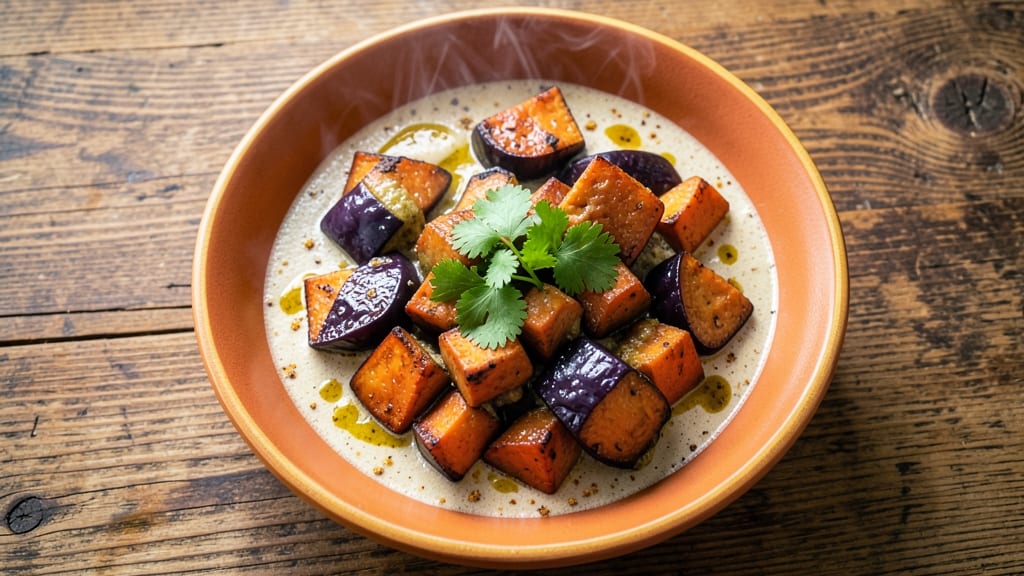
Sweet potato and eggplant curry transforms humble vegetables into a rich, aromatic dish that feels like a restaurant centerpiece. The secret lies in roasting the vegetables first—this caramelizes their natural sweetness while concentrating their flavors into a deep, savory base.
I've perfected this technique over years of testing, balancing earthy spices with coconut cream for a velvety texture that coats every bite.
What makes this curry special is its harmony of textures and flavors: tender sweet potatoes, silky eggplant, and a sauce that's both creamy and aromatic from toasted spices.
The dish starts with a dry roast to develop depth, then simmers in a fragrant coconut broth infused with ginger, garlic, and warm spices. This method ensures each ingredient shines while working together in perfect balance.
The result is a curry that's hearty enough to stand alone but elegant enough for dinner parties. The roasted vegetables add natural sweetness that complements the coconut's richness, while fresh herbs and toasted nuts at the end provide a bright contrast.
It's the kind of dish that tastes even better the next day as the flavors meld further.
Pair it with basmati rice or warm naan for a complete meal, or serve over quinoa for a lighter option. The recipe scales easily for crowds, making it perfect for gatherings where you want to impress without stress.
Let's create this flavorful curry together—it's simpler than you think yet impossible to resist.
Ingredients for sweet potato and eggplant curry
Roasted vegetables and aromatic spices create this velvety coconut curry with restaurant-quality depth.
| Ingredient | Amount | Notes |
|---|---|---|
| Sweet Potatoes 🍠 | 2 lbs | Medium size, peeled and cubed |
| Eggplant 🍆 | 1 ½ lbs | Medium size, cubed |
| Coconut Milk 🥥 | 1 can | Full-fat, 13.5 oz can |
| Onion 🧅 | 1 whole | Yellow, diced |
| Garlic Cloves 🧄 | 6 cloves | Fresh, minced |
| Fresh Ginger 🌿 | 2 tbsp | Grated, peeled |
| Canned Diced Tomatoes 🍅 | 1 can | 14.5 oz, San Marzano preferred |
| Tomato Paste 🍅 | 2 tbsp | Squeeze tube or can |
| Ground Cumin 🌿 | 1 ½ tsp | Toasted for deeper flavor |
| Ground Coriander 🌿 | 1 ½ tsp | Freshly ground preferred |
| Turmeric Powder 🌶️ | ½ tsp | Bright yellow color |
| Garam Masala 🌶️ | 1 tsp | Store-bought blend works |
| Salt 🧂 | 1 ½ tsp | Diamond Crystal preferred |
| Black Pepper 🌶️ | ½ tsp | Freshly ground |
| Fresh Cilantro 🌿 | ¼ cup | Chopped, for garnish |
| Toasted Cashews 🥜 | ¼ cup | Chopped, for garnish |
| Olive Oil 🫒 | ½ cup | Extra-virgin for roasting |
The sweet potatoes and eggplant are the foundation—pick firm, vibrant produce at your local market. Whole Foods or Trader Joe's often carry organic varieties with better flavor. Medium-sized potatoes (about 1.5 lbs total) and a 1.5 lb eggplant ensure perfect proportions. The coconut milk should be full-fat (13.5 oz can) for that rich, creamy texture that's essential to this curry. If you can't find San Marzano tomatoes, any high-quality canned diced tomatoes will work—just drain them well before using. For the spices, Penzeys or bulk bins offer the freshest options, but regular grocery store brands are fine if they're not ancient.
No fresh ginger? Substitute 1 tbsp of ground ginger, but it won't have the same bright flavor. Running short on cashews? Toasted almonds or peanuts work just as well for garnish. Want to make this dish even richer? Add 2 tbsp of coconut cream along with the coconut milk. The tomato paste can be skipped if you're using extra-tomatoey canned tomatoes, but I find it adds that perfect depth of flavor. For the roasting oil, avocado oil has a higher smoke point than olive oil if you're concerned about burning, though extra-virgin olive oil works perfectly fine for this method.
This curry tastes even better the next day as the flavors meld together. Store leftovers in an airtight container in the fridge for up to 5 days. For freezing, portion into containers and it keeps for 3 months. I always make a double batch because it reheats beautifully and makes for perfect lunches. The roasted vegetables can be prepped ahead and stored in the fridge for 2 days before cooking, saving you time on the actual curry day. Garnish with fresh cilantro and toasted nuts right before serving to keep everything vibrant.
Why You'll Love This Recipe
- One-Pan Magic: I swear by this recipe when I’m too tired to wash pots. Toss the cubed sweet potatoes and sliced eggplant straight onto the pan—no pre-boiling, no fuss. The coconut milk does all the heavy lifting while you sip your tea.
- Creamy Crisp Contrast: That caramelized eggplant edge with the velvety coconut milk? It’s the kind of texture combo that makes you pause mid-bite. Honestly, I’ll take this over takeout any day.
- Meal Prep MVP: Between us, this curry tastes better the next day. Double the batch, store it in jars, and you’ve got a week’s worth of lunches that’ll actually make you excited. (Yes, even on a Tuesday night.)
- Budget-Friendly Luxury: Sweet potatoes and eggplant are pantry staples that won’t break the bank, and coconut milk stretches further than you’d think. It’s the kind of dish that feels indulgent without the grocery shock.
Step-by-step instructions for sweet potato and eggplant curry
This method delivers rich, aromatic flavors with perfectly tender vegetables and a velvety coconut finish.
Roast the Sweet Potatoes and Eggplant
Preheat your oven to 400°F and line two baking sheets with parchment paper. Toss the 2 lbs sweet potatoes and 1.5 lbs eggplant with 0.25 cup olive oil, 1 tsp salt, and 0.5 tsp black pepper. Spread them in a single layer, ensuring they don't overlap.
Roast for 25-30 minutes until the sweet potatoes are tender when pierced with a fork and the eggplant begins to soften. You want them caramelized but not burnt—look for golden brown edges. Flip them halfway through for even cooking. Remove from the oven and set aside for now; they'll continue cooking in the sauce.
Build the Spiced Tomato Base
In a large, heavy-bottomed pot, heat 0.25 cup olive oil over medium heat. Add the 1 whole onion and cook for 5-6 minutes until softened and translucent. Add the 6 cloves garlic and 2 tbsp fresh ginger, cooking for another 1-2 minutes until fragrant.
Stir in the 2 tbsp tomato paste, 1.5 tsp ground cumin, 1.5 tsp ground coriander, 0.5 tsp turmeric powder, and 1 tsp garam masala. Cook for 2 minutes to toast the spices and deepen their flavors. Pour in the 1 can diced tomatoes and 1.5 tsp salt, then simmer for 10 minutes until the mixture thickens slightly.
Combine Vegetables and Simmer
Add the roasted sweet potatoes and eggplant to the pot, gently stirring to coat them in the spiced tomato mixture. Pour in the 1 can coconut milk and bring to a gentle simmer. Reduce the heat to low and let it cook uncovered for 20-25 minutes, stirring occasionally.
You're looking for a sauce that coats the back of a spoon but isn't overly thick. The vegetables should be tender and infused with the rich coconut and spice flavors. If the sauce reduces too quickly, add 2-3 tablespoons of water to maintain the right consistency. Taste and adjust seasoning with additional salt or spices if needed.
Finish and Garnish
Once the curry reaches your desired consistency, remove it from the heat and let it sit for 5 minutes to allow the flavors to meld. Stir in the 0.25 cup chopped fresh cilantro and 0.25 cup toasted cashews, reserving a small amount of each for garnish.
Serve the curry hot, garnished with the remaining cilantro and cashews. The dish should have a vibrant golden hue from the spices, with tender vegetables swimming in a creamy, aromatic sauce. Pair it with basmati rice or warm naan for a complete meal that's both comforting and full of flavor.
Pro Tips For Making Sweet Potato And Eggplant Curry
- CHAR THE EGPLANT FIRST: I learned this the hard way—skipping this step means soggy eggplant that turns to mush in the coconut milk. Cut into 1-inch chunks, salt them generously (about 1 teaspoon per pound), and let sit 20 minutes while you prep everything else. Pat dry before cooking—this draws out moisture so they crisp up beautifully in the oil.
- SWEAT ONIONS LOW AND SLOW: Cranking the heat for onions just burns them before they soften. Instead, use medium-low and stir constantly with a wooden spoon—you’re aiming for a deep, jammy texture, not color. Add a splash of water if they stick; this isn’t a race, and patient onions make the whole curry taste richer.
- PEEL SWEET POTATOES AFTER COOKING: Peeling raw sweet potatoes is a pain, and you’ll lose half the flavor. Roast them whole (pricked with a fork) at 400°F for 45–50 minutes until tender, then peel while still warm—the skin slides off like butter. Bonus: Roasting concentrates their natural sweetness before they hit the coconut milk.
- STIR IN COCONUT MILK LAST: Adding coconut milk too early dilutes the spices and turns your curry into a watery soup. Wait until the onions, garlic, and eggplant are fully cooked—only then pour in the milk and simmer gently. This keeps the sauce thick and lets the flavors meld properly. (Yes, even if you’re impatient like me.)
Dietary considerations for sweet potato and eggplant curry
Vegetarian Protein Boost
This curry delivers 12-15 grams of plant-based protein per serving thanks to the eggplant and coconut milk combination. The eggplant provides fiber and potassium, while the sweet potatoes contribute vitamin A (from beta-carotene) and complex carbohydrates for sustained energy.
For an extra protein kick, stir in ½ cup cooked chickpeas or ½ cup lentils during the simmering phase. 💪
Gluten-Free Friendly
The recipe is naturally gluten-free as long as you verify all spices and coconut milk brands for cross-contamination warnings. I always check the labels on garam masala and ground spices—some blends contain wheat flour as a filler.
For added safety, use certified gluten-free spices from brands like Bob's Red Mill or Simply Organic. The dish pairs beautifully with gluten-free naan or basmati rice.
Nut-Free Adaptation
While toasted cashews add wonderful crunch, you can easily omit them or substitute toasted pumpkin seeds (pepitas) for a nut-free version. For garnish, try crispy fried shallots or extra cilantro instead.
The curry's flavor profile remains rich and satisfying without nuts—this adaptation makes it safe for those with nut allergies while keeping the texture contrast.
Lower-Carb Options
To reduce carbs, swap ½ of the sweet potatoes for cauliflower florets (about 1 lb) during the roasting step. The cauliflower adds volume and a subtle sweetness while cutting net carbs by roughly 20 grams per serving.
Keep the coconut milk and spices the same—this swap maintains the dish's creamy texture while making it more keto-friendly. 🥦
Dairy-Free Naturally
This curry contains no dairy ingredients, making it automatically suitable for lactose-intolerant individuals or vegan diets. The coconut milk provides richness, while the spices create depth without relying on butter or cream.
For an extra creamy finish, stir in 2 tablespoons of coconut cream or cashew cream (blended soaked cashews with water) during the final simmering stage.
Nutrition facts
Frequently asked questions
Can I substitute butternut squash for sweet potatoes?
Yes! Butternut squash works beautifully—its natural sweetness complements the eggplant perfectly. Use 2 lbs peeled and cubed squash instead, and reduce roasting time to 20-25 minutes since it cooks faster than sweet potatoes. The texture will be slightly creamier, but the curry's flavor profile remains rich and aromatic.
Why does my curry taste bland after simmering?
This usually happens when spices aren't toasted properly or the sauce reduces too quickly. Always cook spices in oil for 2 minutes to activate their flavors, and simmer uncovered on low heat for 20-25 minutes. If needed, add a pinch of asafetida powder (½ tsp) or a splash of red wine vinegar (1 tbsp) to deepen the umami. Taste as you go!
How do I make this curry spicier?
Start with ½ tsp cayenne pepper or 1 tsp Kashmiri red chili powder when toasting the spices. For heat lovers, add 1-2 fresh green chilies (minced) with the garlic and ginger. Finish with a squeeze of lime juice and extra cilantro—this brightens the heat beautifully. Adjust gradually to avoid overwhelming the dish.
Can I make this curry in an Instant Pot?
Sauté onions, garlic, and ginger as directed, then add all spices and tomatoes. Pressure cook for 5 minutes on high, then add roasted veggies and coconut milk. Natural release for 10 minutes, then stir in fresh herbs. The Instant Pot cuts cooking time by 30 minutes while keeping flavors intense. Just watch the sauce consistency—it may thicken faster under pressure.
What's the best way to reheat leftovers?
Gently reheat on low heat in a saucepan with 1-2 tbsp water to prevent drying out. For best results, cover and simmer for 5-7 minutes, stirring occasionally. Microwaving works too—use 50% power for 1.5 minutes, then stir and let sit for 1 minute before serving. The sauce may thicken further when reheated, so add water as needed.