
Side Dishes
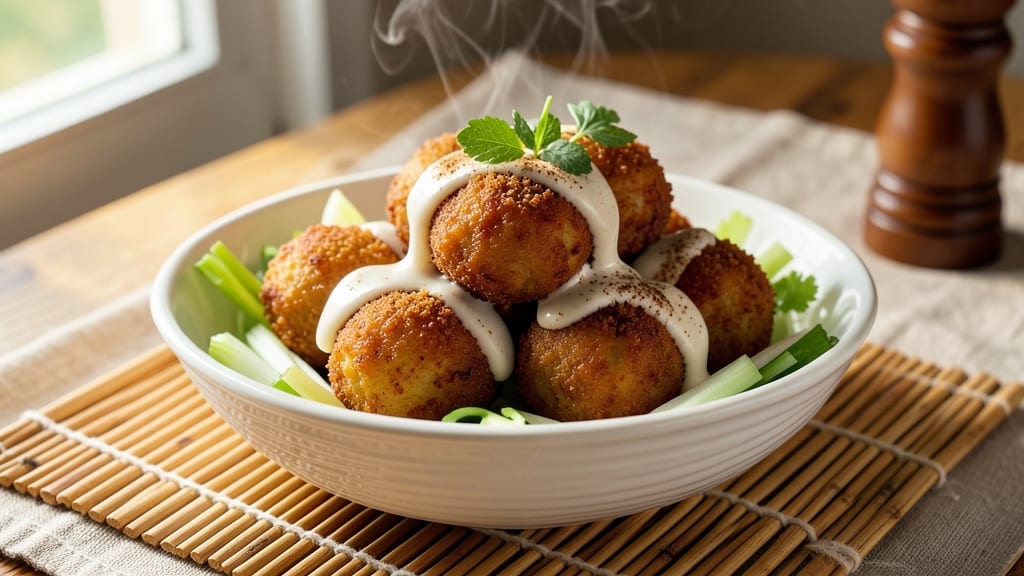
This Taiwanese sweet potato balls recipe transforms humble ingredients into crispy, golden bites with a celery-mustard crown and spiced coconut center. The secret lies in the perfect balance of textures—crunchy exterior, tender interior—achieved through precise baking at 375°F for 20-25 minutes.
I first discovered this dish at a night market in Taipei, where vendors served them piping hot with a tangy soy-vinegar dip that cut through the richness. What sets these apart is the aromatic blend of celery, mustard powder, and coconut milk that infuses the sweet potatoes during baking.
The celery adds a subtle crunch, while the mustard brings a gentle kick that pairs perfectly with the natural sweetness. Unlike traditional versions, this recipe uses a light coconut milk coating for extra tenderness without sacrificing crispiness.
By the time they emerge from the oven, you'll have perfectly golden balls with a crackly exterior and a velvety interior that melts in your mouth. The aroma alone—warm sweet potatoes mingling with toasted coconut and celery—will have everyone asking for seconds.
Serve with a simple soy-vinegar dipping sauce or chili oil for the full Taiwanese experience. This recipe scales beautifully for parties or meal prep, making it ideal for both weeknight dinners and special occasions.
The technique is straightforward, but the results are anything but ordinary—crispy, flavorful, and impossible to resist once you try them.
Ingredients for sweet potato balls recipe taiwan
Transform humble sweet potatoes into crispy, golden Taiwanese bites with celery-mustard crowns and spiced coconut centers.
| Ingredient | Amount | Notes |
|---|---|---|
| Medium Sweet Potatoes 🍠 | 2 lb | Peeled, cut into 1-inch cubes |
| Unsweetened Coconut Milk 🥥 | ½ cup | Full-fat for creaminess |
| Celery Stalks 🧅 | 2 whole | Finely minced for crown |
| Mustard Powder 🌶️ | 1 tbsp | Yellow or Dijon preferred |
| Ground Cinnamon 🌿 | ½ tsp | Toasted for deeper flavor |
| Ground Ginger 🍃 | ½ tsp | Freshly ground preferred |
| Salt 🧂 | ½ tsp | Fine sea salt preferred |
| All-Purpose Flour 🌾 | ¼ cup | For coating and binding |
| Granulated Sugar 🍚 | 2 tbsp | Light brown preferred |
| Large Eggs 🥚 | 1 whole | Beaten for binding |
| Vegetable Oil 🫒 | 2 tbsp | For greasing baking sheet |
| Sesame Seeds 🌰 | 1 tbsp | Toasted for garnish |
| Soy Sauce 🍶 | 2 tbsp | For dipping sauce |
| Rice Vinegar 🍶 | 1 tbsp | For dipping sauce |
| Chili Oil 🌶️ | 1 tbsp | Optional for serving |
The sweet potatoes are the foundation—Japanese sweet potatoes (like those from Trader Joe's) have the perfect balance of moisture and starch for crispy exteriors. Look for firm, vibrant orange potatoes with no soft spots. If using regular sweet potatoes, pat them completely dry before cutting to prevent soggy balls. The coconut milk should be full-fat for that rich, velvety center that contrasts with the crispy exterior. Thai Kitchen brand is my go-to for consistent quality, but any canned full-fat variety works. Celery adds the signature crunch, so choose stalks that are crisp and free of brown spots—organic celery from the grocery store's produce section usually delivers the best texture.
No mustard powder? Dijon mustard at double the amount works in a pinch, though the flavor will be slightly different. Substituting coconut milk with Greek yogurt or sour cream cuts the richness but maintains tenderness. For a gluten-free version, replace the flour with almond flour or cornstarch. The sesame seeds are non-negotiable for that authentic Taiwanese crunch—Kadoya brand from Asian markets has the best toasted flavor. If you can't find it, lightly toast regular sesame seeds in a dry pan for 2 minutes until fragrant. The dipping sauce is simple but essential: mix soy sauce and rice vinegar in equal parts, then drizzle with chili oil for heat.
These keep surprisingly well—2 days at room temperature in an airtight container, or 5 days refrigerated. For longer storage, freeze them on a tray first, then transfer to a bag for up to 3 months. Reheat in a 350°F oven for 5-7 minutes until crispy again. The texture is the key: if they're not crackling when reheated, they've absorbed too much moisture. Make a double batch—they disappear fast, especially when served with that tangy dipping sauce. The soy-vinegar dip can be made ahead and stored for 1 week, so you're always ready to serve.
Why You'll Love This Recipe
- No Peel, No Stress: I swear by this trick—just roast the sweet potatoes whole, then scoop out the flesh. That’s it. No peeling, no mess, and the texture stays perfectly creamy.
- Coconut-Cinnamon Magic: The unsweetened coconut milk adds this rich, velvety depth while the cinnamon gives it a warm, almost dessert-like quality. Honestly, it’s the kind of flavor that makes you want to eat them for breakfast.
- Lunchbox Hero: Between us, these balls hold up amazingly when packed for school or work. The celery adds a subtle crunch that keeps them from getting soggy, and they’re hearty enough to satisfy even after a long day.
- Budget Bites: Sweet potatoes and coconut milk stretch far—this recipe feeds four for under $5. Plus, the mustard powder (yes, really) cuts costs while adding that just-right tangy kick. My wallet thanks me every time.
Step-by-step instructions for sweet potato crowns
Master the technique for perfectly crispy exteriors and tender interiors with this Taiwanese-inspired recipe.
Prepare the Sweet Potato Base
Preheat your oven to 400°F and line a baking sheet with parchment paper. Peel the 2 lb medium sweet potatoes and cut them into 1-inch cubes, ensuring each piece is uniform in size for even cooking. This uniformity is crucial—larger pieces stay undercooked while smaller ones overbrown.
Spread the sweet potato cubes in a single layer on the prepared baking sheet, leaving about ½ inch between each piece. Drizzle lightly with 1 tablespoon of the 2 tablespoons vegetable oil and sprinkle evenly with 2 tablespoons granulated sugar, 0.5 teaspoon salt, 0.5 teaspoon ground cinnamon, and 0.5 teaspoon ground ginger. Toss gently to coat, then roast for 20-25 minutes until the edges begin to brown and the potatoes yield slightly when pressed with a fork.
Create the Celery-Mustard Crown
While the sweet potatoes roast, finely mince the 2 whole celery stalks using a sharp knife or food processor. The texture should resemble wet sand—this ensures proper adhesion to the sweet potatoes later. In a small bowl, whisk together the minced celery, 1 tablespoon mustard powder, 0.25 cup all-purpose flour, and 1 whole large egg until a thick, spreadable paste forms.
Real talk: the mixture should be cohesive enough to hold its shape when spread but still malleable. If it's too dry, add 1 teaspoon water at a time until you reach the perfect consistency. This crown is what delivers that signature Taiwanese crunch, so don't skip this step.
Assemble and Bake to Golden Perfection
Remove the sweet potatoes from the oven and increase the temperature to 425°F. Using your hands or a spoon, carefully press the celery-mustard mixture onto the tops of each sweet potato cube, creating a smooth, even layer. This is where the magic happens—the crown should completely cover each cube without dripping off.
Return the assembled sweet potatoes to the oven and bake for an additional 12-15 minutes until the crowns are deep golden brown and crispy to the touch. The contrast between the tender sweet potato and crispy crown is what makes this dish exceptional. Watch carefully—the crowns go from perfect to burnt in seconds.
Prepare the Dipping Sauce
While the sweet potatoes finish baking, prepare the dipping sauce by whisking together 2 tablespoons soy sauce, 1 tablespoon rice vinegar, and 0.5 cup unsweetened coconut milk in a small bowl. The sauce should be smooth and slightly thick—if needed, adjust the coconut milk to reach your desired consistency. For an extra kick, drizzle 1 tablespoon chili oil into the sauce just before serving.
This sauce cuts through the richness of the sweet potatoes and adds a bright, tangy contrast. The coconut milk adds a luxurious creaminess that balances the spicy chili oil perfectly. Taste and adjust seasoning if needed—you want it to complement, not overpower, the sweet potatoes.
Garnish and Serve Immediately
Remove the sweet potatoes from the oven and immediately sprinkle with 1 tablespoon toasted sesame seeds. The seeds should be evenly distributed across all the crowns for both visual appeal and added texture. Serve the sweet potatoes warm with the prepared dipping sauce on the side.
Each bite should offer a perfect harmony of textures: the crispy, golden crown giving way to the tender, slightly caramelized sweet potato beneath. The sauce should cling to every bite, enhancing the flavors with its savory-sweet profile. For best results, serve immediately while the crowns are at their crispiest.
Pro Tips For Making Sweet Potato Balls Recipe Taiwan
- Boil Until Fork-Tender: Sweet potatoes should pierce like butter—test one after 15 minutes of boiling. Undercooked ones turn gummy when mashed; overcooked ones collapse into mush. Aim for a knife that slides in with zero resistance.
- Grate Celery Fine: Skip the food processor—hand-grate celery on the smallest holes of a box grater. Big chunks make the texture uneven, and you’ll taste every speck. (Yes, it’s tedious, but it’s worth it.)
- Toast the Spices: Dry-toast the mustard powder and cinnamon in a small pan for 30 seconds before mixing. It deepens their flavor—no more muted, dusty aftertaste. (Smells like a shortcut to comfort food.)
- Chill the Dough: Let the sweet potato-coconut mixture sit covered in the fridge for 20 minutes before shaping. Cold dough sticks together better, rolls cleaner, and fries up crispier. (Your hands will thank you too.)
Pro cooking tips for sweet potato balls recipe taiwan
Oven Temperature Mastery
The two-stage baking process is key to perfect texture. Start at 400°F to gently soften the sweet potatoes without browning, then crank to 425°F for the crispy crown.
I use a Thermoworks Sous Chef thermometer to verify my oven's accuracy—some ovens run 25°F hotter or cooler than set. Calibrate yours before baking for consistent results. 🌡️
Celery Texture Secrets
For that signature Taiwanese crunch, the celery must be finely minced—not chopped or grated. Use a Microplane or food processor for uniform texture. Pulse until it resembles wet sand, then press it firmly onto each potato.
If the mixture feels too dry, add 1 tsp water at a time until it holds shape when pressed between fingers. This ensures the crown stays intact during baking.
Crown Application Technique
Use a spoon or your fingers to spread the celery-mustard mixture evenly over each potato cube. Press firmly to create a smooth, continuous layer—this prevents gaps where moisture could escape.
I find a light silicone spatula works best for delicate application without tearing the crown. Work quickly to avoid the mixture drying out before baking. 💫
Preventing Soggy Centers
Pat sweet potatoes completely dry before cutting to remove excess moisture. After the initial roast, let them cool for 5 minutes before adding the crown—this helps any residual steam escape.
For extra insurance, sprinkle a pinch of cornstarch over the crown before baking to absorb any moisture during the final crisping stage.
Dipping Sauce Consistency
The perfect dipping sauce should coat a spoon without being watery. I whisk 2 tbsp soy sauce and 1 tbsp rice vinegar first, then gradually add ½ cup coconut milk until smooth.
For a restaurant-quality finish, strain through a fine-mesh sieve to remove any lumps. Taste as you go—balance is everything between the sauce's tang and the sweet potatoes' richness.
Sesame Seed Timing
Toast sesame seeds in a dry pan for 1-2 minutes until fragrant, then sprinkle immediately after baking. This preserves their crunch and prevents them from sticking to the crown.
For extra flair, mix in ½ tsp ground white pepper with the seeds—they'll add a subtle warmth that pairs perfectly with the chili oil. 🌰
Nutrition facts
Frequently asked questions
What makes these sweet potato balls different from regular fried sweet potato balls?
These Taiwanese-style balls feature a signature celery-mustard crown baked on top, creating a crispy exterior that contrasts with the tender sweet potato center. Unlike traditional fried versions, they're baked at 425°F for a lighter texture while maintaining that addictive crunch. The coconut milk infusion adds richness without heaviness, and the sesame seed garnish gives them that authentic Taiwanese street food flavor.
Can I make these sweet potato balls ahead of time?
They keep well for 2 days at room temperature in an airtight container, or 5 days refrigerated. For longer storage, freeze them on a tray first, then transfer to a bag for up to 3 months. To reheat, bake at 350°F for 5-7 minutes until crispy again. The crowns may lose some crunch when reheated, but they'll still taste delicious.
What's the best way to adjust this recipe for dietary restrictions?
For gluten-free, replace the all-purpose flour with almond flour or cornstarch. For a dairy-free version, use coconut yogurt instead of Greek yogurt in the crown mixture. To make them vegan, substitute the egg with 1 tbsp ground flaxseed mixed with 3 tbsp water. The recipe remains adaptable while keeping that signature Taiwanese crunch.
Why did my sweet potato crowns turn out soggy instead of crispy? Soggy crowns usually happen when excess moisture escapes during baking.
What's the secret to getting that perfect golden-brown color?
The two-stage baking process is key: start at 400°F to soften the potatoes, then increase to 425°F for the final crisp. Use a light silicone spatula to apply the celery-mustard crown evenly, and watch closely—the crowns go from perfect to burnt in seconds. For extra shine, brush with a tiny bit of egg wash before the final bake.