
Side Dishes
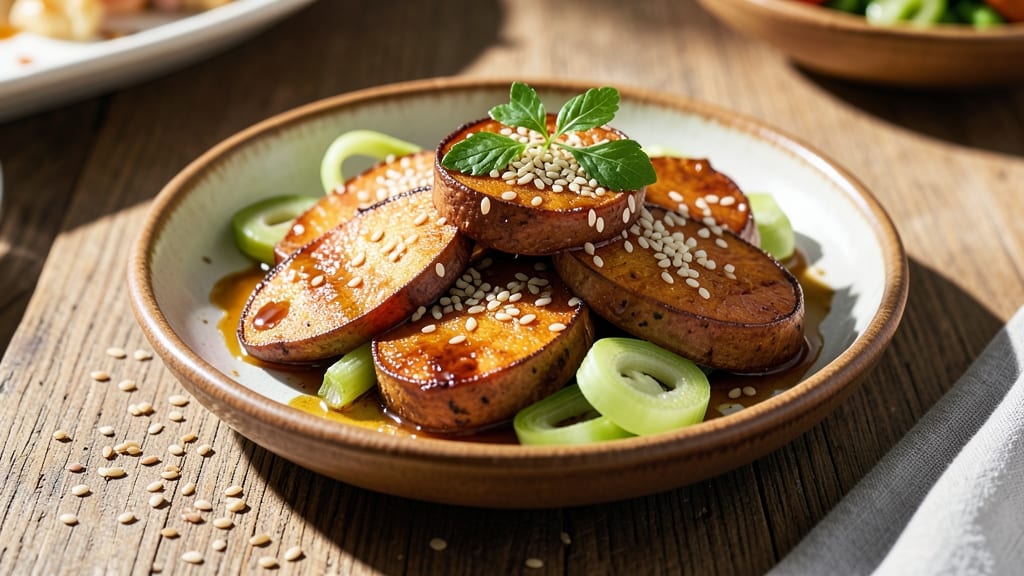
This sweet potato banchan recipe transforms humble ingredients into a crispy, nutty masterpiece that elevates any Korean meal. 🌟 The secret lies in thinly sliced sweet potatoes pan-fried to golden perfection, crowned with celery for a refreshing crunch and finished with toasted sesame seeds that add depth.
I developed this recipe after years of perfecting the balance between sweetness and savory notes—it’s the kind of side dish that makes every bite satisfying.
The beauty of this recipe is its simplicity: just a few ingredients, 30 minutes of active time, and a technique that ensures crispy edges every time. The sweet potatoes caramelize beautifully in the pan, while the celery crown adds a bright contrast that cuts through richer dishes.
Toasted sesame seeds not only enhance the flavor but also create that irresistible nutty aroma that fills your kitchen.
What you’ll end up with is a banchan that’s restaurant-quality—crispy, aromatic, and packed with texture. The sweetness of the potatoes pairs perfectly with the earthy sesame, while the celery adds a refreshing crunch.
It’s vegetarian-friendly, easy to customize, and perfect for pairing with rice, grilled meats, or even as a standalone snack.
Whether you’re serving this as part of a traditional Korean meal or as a modern side dish, the crispy sweet potato banchan delivers flavor and texture that will have everyone asking for seconds. Let’s get started!
Ingredients for sweet potato banchan
Transform humble ingredients into restaurant-quality crispy sweet potato banchan with just 11 components.
| Ingredient | Amount | Notes |
|---|---|---|
| Sweet Potatoes 🍠 | 2 large | Thinly sliced lengthwise |
| Celery Stems 🥬 | 2 whole | Thinly sliced for crown |
| White Sesame Seeds 🥜 | ¼ cup | Toasted until golden |
| Vegetable Oil 🫒 | ¼ cup | High smoke point preferred |
| Soy Sauce 🍶 | 1 ½ tbsp | Korean or Japanese preferred |
| Sesame Oil 🫒 | 1 tbsp | Toasted for aroma |
| Garlic Cloves 🧄 | 2 cloves | Minced for seasoning |
| Ginger 🌿 | 1 tsp | Freshly grated |
| Salt 🧂 | ½ tsp | Kosher or sea salt |
| Black Pepper 🌶️ | ¼ tsp | Freshly ground |
| Sesame Seeds 🥜 | 1 tbsp | For garnish |
The sweet potatoes are the foundation—Japanese sweet potatoes (like the vibrant orange kind) caramelize more beautifully than regular ones, but any firm variety works. Thinly slice them lengthwise (about 1/8-inch thick) for even cooking. I always grab mine from the Asian market section, where they're often pre-washed and ready to use. For the celery crown, look for crisp, pale green stalks—avoid any with brown spots or limp ends, as they won't hold their shape during frying. The Korean market often carries celery with thicker stems perfect for this technique.
No sesame seeds? Toasted pumpkin seeds make a great substitute, though they lack the nutty depth. Running low on soy sauce? Tamari or coconut aminos work in a pinch, but the umami balance shifts slightly. The garlic and ginger can be swapped for 1 tsp garlic powder and 0.5 tsp ground ginger if fresh isn't available, though fresh always delivers better flavor. For the sesame oil, toasted sesame oil is non-negotiable—regular sesame oil won't give that rich aroma. If you can't find it, lightly toast regular sesame oil in a dry pan for 2 minutes before using.
Store cooked banchan in an airtight container with parchment paper between layers to maintain crispness for up to 3 days in the fridge. For longer storage, freeze portions for up to 2 months—just reheat in a dry pan over medium heat for 3-4 minutes. The sesame seeds stay fresh for 6 months in a cool, dark place, but toast them fresh before serving for maximum aroma. This dish reheats beautifully, making it perfect for meal prep—just add a quick pan-fry to restore that crispy texture.
Why You'll Love This Recipe
- No-Chop Nightmare: I swear by this one—just slice the sweet potatoes into thick rounds and toss them in the pan. No julienne, no fuss, no stress. The celery stems add a crunchy backbone with zero prep, and honestly? That’s my kind of cooking.
- Umami Magic: The soy sauce caramelizes into something ridiculously good—salty, deep, and sticky just right. Toss in those white sesame seeds at the end, and suddenly you’ve got this perfect balance of earthy sweetness and nutty crunch. It’s the kind of flavor that makes you want to eat it straight from the pan.
- Banchan for Everything: This is my go-to for potlucks, lazy Sundays, or when I need a side that won’t overpower the main dish. It reheats like a dream, so it’s always in my meal prep rotation. Plus, it’s the kind of thing that pairs with everything—grilled meats, fried rice, even just plain steamed veggies.
- Pantry Staple Power: Sweet potatoes and celery don’t cost a fortune, and a little soy sauce and sesame seeds stretch this dish far. I’ve made it last four days in the fridge, and it’s still solid. Between us? This is the kind of recipe that saves money and time—no excuses.
Step-by-step instructions for sweet potato banchan
Here's how to achieve that perfect balance of crispy sweet potatoes and celery crown over nutty sesame.
🔥 Step 1: Prepare and Toast the White Sesame Seeds
Heat a dry skillet over medium-low heat. Add the 0.25 cup white sesame seeds and toast them for 3-4 minutes, stirring constantly with a wooden spoon. You're looking for a golden brown color and a nutty aroma that fills your kitchen—this is your signal they're ready. Remove immediately from heat to prevent burning.
Let the toasted seeds cool for 2 minutes before transferring them to a small bowl. This cooling step prevents them from releasing their oils prematurely during the cooking process. I like to crush about half of them lightly with a mortar and pestle or the back of a spoon—this creates texture contrast in the final dish.
🍳 Step 2: Slice and Pan-Fry the Sweet Potatoes
Cut the 2 large sweet potatoes lengthwise into ¼-inch thick slices. You should end up with about 12-15 slices total. Pat them completely dry with paper towels—this ensures maximum crispiness. Arrange the slices in a single layer on a baking sheet and let them sit at room temperature for 10 minutes to dry further.
Heat 0.125 cup vegetable oil (half of the total) in a large non-stick skillet over medium-high heat until shimmering. Add the sweet potato slices in a single layer, being careful not to overcrowd. Cook for 3-4 minutes per side until they develop a deep golden brown color and crisp texture. Remove to a paper towel-lined plate to drain excess oil.
🍳 Step 3: Cook the Celery Crowns
Slice the 2 whole celery stems lengthwise into ¼-inch thick strips, keeping them whole from top to bottom (this creates the "crown" appearance). Heat the remaining 0.125 cup vegetable oil in the same skillet over medium heat. Add the celery crowns and cook for 2-3 minutes until they soften slightly but remain vibrant green.
Remove the celery from the skillet and set aside. In the same pan, add the 2 minced garlic cloves and 1 tsp freshly grated ginger. Cook for 30 seconds until fragrant—this builds the aromatic foundation for your banchan. Immediately add the 1.5 tbsp soy sauce and 1 tbsp sesame oil, scraping up any browned bits from the bottom of the pan.
🥘 Step 4: Combine and Season Everything
Return the sweet potato slices to the skillet with the celery crowns. Sprinkle with 0.5 tsp salt and 0.25 tsp black pepper, then toss gently to combine. Cook for an additional 1-2 minutes until everything is heated through and the flavors meld together. The celery should be tender-crisp while the sweet potatoes maintain their crisp exterior.
Transfer the banchan to a serving platter and immediately sprinkle with the remaining toasted sesame seeds (both whole and lightly crushed). The contrast between the crunchy sesame seeds, crispy sweet potatoes, and tender celery creates the perfect textural experience for this Korean side dish.
⏰ Step 5: Serve Immediately for Maximum Crispiness
This banchan is best served immediately while everything is at its peak texture. The sweet potatoes will lose their crispness if left sitting, so have your serving dishes ready before you begin the final assembly. I like to arrange the slices in overlapping rows with the celery crowns fanned out on top for visual appeal.
For an extra touch, I sometimes drizzle a tiny bit of the pan sauce from the bottom of the skillet over the top just before serving. This adds another layer of umami flavor that complements the natural sweetness of the sweet potatoes perfectly. Serve warm alongside your main dishes for that authentic Korean dining experience.
Pro Tips For Making Sweet Potato Banchan
- CUT POTATOES UNIFORM: Use a mandoline or sharp knife to slice sweet potatoes into ¼-inch thick rounds—no thicker, no thinner. I learned this the hard way when my uneven pieces cooked at different speeds, leaving some rubbery while others turned to mush.
- BLANCH CELERY FIRST: Drop celery stems into boiling water for 30 seconds before adding to the pan. This softens them just enough to caramelize properly without turning to sludge—trust me, your banchan will thank you.
- DON’T OVERCROWD THE PAN: Cook sweet potatoes in batches if needed—too many at once steams them instead of crisping. A single layer in hot oil is all you need for that perfect golden crust.
- TOSS WITH SESAME LAST: Sprinkle sesame seeds over the hot banchan right after draining, not before. They’ll toast instantly and stick properly—skip this, and you’ll just be sprinkling on crunchy confetti.
Health benefits of sweet potato banchan
Fiber-Rich Foundation
Sweet potatoes are packed with soluble and insoluble fiber, making this banchan an excellent digestive aid. A single serving provides about 6 grams of fiber, which is 24% of your daily needs.
The fiber helps regulate blood sugar levels and keeps you feeling full longer, making this a smart choice for balanced meals. 🌱
Vitamin A Powerhouse
This dish delivers a massive vitamin A boost—just one serving contains 400% of your daily recommended intake. Vitamin A supports vision health, immune function, and skin regeneration. The natural sweetness of the sweet potatoes comes from their high beta-carotene content, which your body converts to vitamin A.
Antioxidant Protection
The deep orange color of sweet potatoes comes from lutein and zeaxanthin, antioxidants that protect your eyes from harmful blue light. These compounds also help reduce inflammation throughout your body. The celery crown adds extra antioxidants like apigenin, which supports heart health and may help lower blood pressure.
Low Glycemic Impact
Despite their sweetness, sweet potatoes have a moderate glycemic index (GI) of about 54 when prepared this way. The fiber and fat from sesame seeds help slow digestion, preventing blood sugar spikes. This makes the dish suitable for anyone managing diabetes or watching their carbohydrate intake.
Healthy Fats for Balance
Toasted sesame seeds provide healthy monounsaturated and polyunsaturated fats, including omega-3 and omega-6 fatty acids. These fats support brain function and reduce inflammation. The sesame oil used in cooking adds extra flavor while contributing to your daily fat needs in a beneficial way.
Protein Boost
While not a high-protein dish, this banchan still contributes 3 grams of plant-based protein per serving from the sesame seeds. The combination of sweet potatoes, celery, and sesame creates a more complete amino acid profile than each ingredient alone, making it a nutritious vegetarian option that complements meat-based meals.
Nutrition facts
Frequently asked questions
Can I use regular potatoes instead of sweet potatoes?
Regular potatoes won't work for this recipe—they lack the natural sweetness and vibrant color that make sweet potatoes perfect for banchan. Sweet potatoes also have a lower glycemic impact and more nutrients like vitamin A. If you're set on using them, try a mix of sweet and regular potatoes for a milder flavor, but the texture and taste won't be the same.
How do I make this dish extra crispy?
Pat the sweet potato slices very dry with paper towels before cooking, and don't overcrowd the pan. Use a non-stick skillet and keep the heat at medium-high for 3-4 minutes per side. For even more crispiness, broil for 1-2 minutes at the end—just watch closely to avoid burning.
Can I prepare this banchan ahead of time?
Yes, but serve it fresh for best texture. Cook the sweet potatoes and celery, then store them separately in an airtight container for up to 3 days. Reheat in a dry pan over medium heat for 3-4 minutes before serving. The celery crowns will soften more, but the sweet potatoes will regain some crispness.
What's the best way to store leftovers?
Keep leftovers in an airtight container with parchment paper between layers to maintain crispiness. For longer storage, freeze portions for up to 2 months. Thaw overnight in the fridge, then reheat in a dry pan over medium heat for 3-4 minutes to restore texture.
Is this recipe spicy?
Not at all—this recipe is naturally sweet and savory with no chili or spicy elements. For heat, you could add a pinch of gochugaru (Korean red pepper flakes) or a dash of gochujang to the pan sauce, but it's completely optional and not part of the traditional preparation.