
Side Dishes
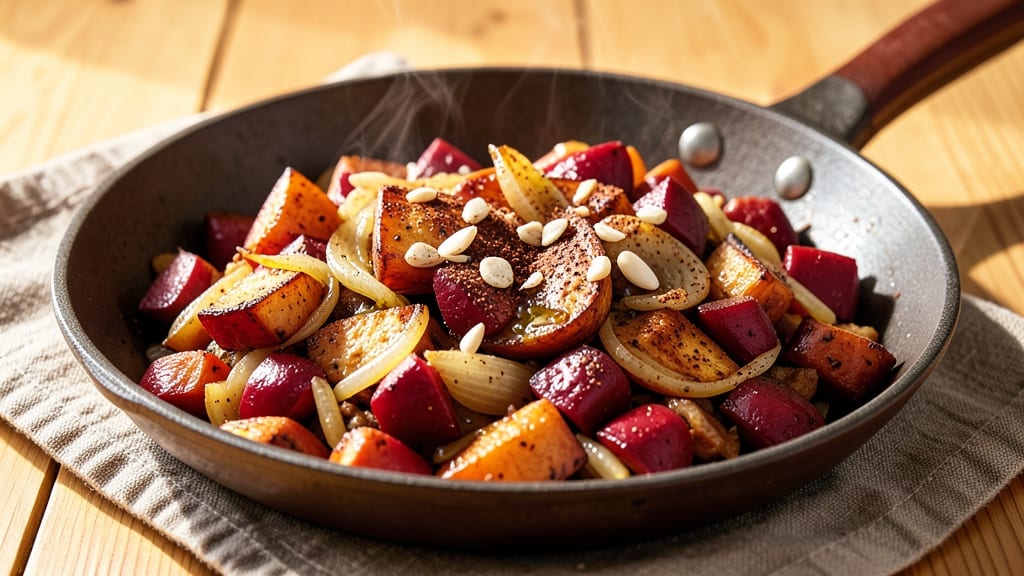
This sweet potato beet hash recipe transforms humble root vegetables into golden, caramelized bites that pack earthy depth and natural sweetness—all in one pan. The secret lies in slow-cooking the vegetables until tender, then crisping them at high heat for that satisfying crunch.
I developed this recipe after realizing how versatile this hash could be: hearty enough as a main dish or light enough as a side that elevates any meal.
The magic happens in the pan, where sweet potatoes and beets develop a crispy exterior while staying tender inside. A touch of smoked paprika and garlic powder adds warmth, while a squeeze of lemon brightens the dish at the end.
Unlike traditional hash recipes, this version skips heavy oils—just a light drizzle of olive oil ensures the vegetables caramelize beautifully without becoming greasy.
What you’ll end up with is a vibrant, flavorful hash that’s impossible to resist—each bite delivers a perfect balance of sweetness, earthiness, and smoky depth. The colors alone make it visually striking, with deep purples, oranges, and golden edges that signal a dish worth savoring.
Serve it as a standalone meal or pair it with a fried egg for extra protein.
This recipe is also incredibly adaptable: swap in kale or spinach for extra greens, or make it vegan by omitting butter entirely. The techniques here—proper pan control, layering flavors, and achieving that crispy texture—are the same ones professional chefs use, but simplified for home cooks. Let’s get cooking!
Ingredients for sweet potato beet hash
Transform humble root vegetables into golden, caramelized bites with these twelve precise ingredients.
| Ingredient | Amount | Notes |
|---|---|---|
| Sweet Potatoes 🍠 | 2 lbs | Medium size, peeled and cubed |
| Beets 🍠 | 1 ½ lbs | Medium size, peeled and cubed |
| Extra-Virgin Olive Oil 🫒 | 2 tbsp | Light drizzle for caramelization |
| Yellow Onions 🧅 | 1 whole | Medium size, diced |
| Garlic Cloves 🧄 | 4 cloves | Minced for aromatic depth |
| Smoked Paprika 🌶️ | 1 tsp | For subtle smoky warmth |
| Garlic Powder 🧄 | ½ tsp | Enhances savory notes |
| Salt 🧂 | 1 tsp | Diamond Crystal preferred |
| Black Pepper 🌶️ | ½ tsp | Freshly ground for brightness |
| Lemon Juice 🍋 | 2 tbsp | Freshly squeezed for acidity |
| Fresh Parsley 🌿 | ¼ cup | Chopped for vibrant garnish |
| Vegetable Broth 💧 | ½ cup | Low-sodium for balanced flavor |
The sweet potatoes and beets are the heart of this dish—organic, vibrant varieties yield the best color and texture. Whole Foods or local farmers markets often carry heirloom beets with deep purple hues and sweet potatoes with rich orange flesh. Avoid pre-cut vegetables; peeling and cubing fresh ensures even cooking. For the best flavor, choose beets that are firm to the touch with glossy skins, and sweet potatoes that feel heavy for their size. The vegetable broth should be low-sodium to prevent overwhelming the natural sweetness of the vegetables, and brands like Pacific Foods or Imagine are excellent choices.
No smoked paprika? Regular paprika plus a pinch of liquid smoke replicates the depth, though the flavor won't be identical. Fresh parsley can be swapped for cilantro or chives, though parsley's bright, clean notes best complement the earthy vegetables. If you're short on time, pre-cut frozen sweet potatoes and beets work in a pinch, though they won't caramelize as beautifully. The lemon juice is crucial—Meyer lemons add a subtle floral note, but regular lemons work fine. For extra protein, consider adding crumbled feta or goat cheese at the end, though this would make it non-vegetarian.
Store any leftovers in an airtight container in the refrigerator for up to 4 days. Reheat gently in a skillet with a splash of water or broth to restore crispiness. This hash freezes beautifully for up to 3 months—portion into single servings before freezing for easy reheating. For best results, reheat from frozen in a cold skillet over medium heat, adding a light drizzle of olive oil to refresh the crispy texture.
Why You'll Love This Recipe
- One-Pan Magic: I swear by this recipe when I’m too tired to scrub pots—just roast everything together, no flipping or fussing. The sweet potatoes caramelize while the beets soften, and the onions melt into golden threads with zero extra effort.
- Earthy Sweet Crunch: That contrast? Chef’s kiss. The deep, almost honeyed beets pair with the creamy sweet potatoes, and the crispy edges from the olive oil—oh, and the garlic? It turns this into something you’ll crave, not just eat.
- Lunchbox Hero: Between us, this hash is my go-to for meal prep. Pack it cold or reheat it—it holds up perfectly. My kids grab it for school lunches, and honestly? I’ve been known to eat it straight from the fridge when I’m in a rush.
- Budget Bright Spot: Sweet potatoes and beets are the ultimate pantry stretchers. A single bag of each feeds my family for days, and the olive oil adds richness without breaking the bank. (Yes, even on a Tuesday night.)
Step-by-step instructions for sweet potato beet hash
Transform humble root vegetables into restaurant-quality hash with deep caramelization and perfect texture.
Prep and Par-Cook the Vegetables
In a large pot, combine the 2 lbs sweet potatoes and 1.5 lbs beets with enough water to cover by 1 inch. Add 1 tsp salt and bring to a boil over high heat. Reduce to a simmer and cook for 12-15 minutes until fork-tender but not falling apart. Drain well and set aside—this partial cooking ensures even browning later without steaming.
While the vegetables cook, dice the 1 whole yellow onions into ¼-inch pieces and mince the 4 cloves garlic. The onions should be uniformly sized for even cooking, and the garlic should be finely minced so it blends seamlessly into the hash. Keep these separate until you're ready to add them to the pan.
Build Deep Caramelization in the Pan
Heat a 12-inch cast-iron skillet over medium-high heat until smoking hot. Add 1 tablespoon of the extra-virgin olive oil and swirl to coat. Working in batches to avoid crowding, add the par-cooked sweet potatoes and beets, spreading them in a single layer. Let them sear undisturbed for 5-6 minutes until deep golden brown on one side—this is where the magic happens.
Flip the vegetables and continue cooking for another 5-6 minutes, stirring occasionally. The goal is to develop a rich caramelized crust while keeping the centers tender. If the pan starts smoking excessively, reduce heat slightly but don't walk away—constant attention prevents burning. The vegetables should be deeply browned with crispy edges by now.
Add Aromatics and Seasonings
Push the vegetables to one side of the skillet and add the remaining 1 tablespoon extra-virgin olive oil. Toss in the diced onions and cook for 4-5 minutes until softened and lightly golden. Add the minced garlic and cook for 30 seconds until fragrant—this prevents the garlic from burning while infusing its flavor.
Sprinkle the vegetables with 1 tsp smoked paprika, 0.5 tsp garlic powder, and 0.5 tsp black pepper. Stir gently to distribute evenly, letting the spices toast for 1 minute until aromatic. This step enhances the earthy sweetness of the vegetables and adds a subtle smoky depth that balances the dish.
Finish with Broth and Bright Acid
Pour in the 0.5 cup vegetable broth and the 2 tbsp lemon juice, scraping up any browned bits from the bottom of the pan. These bits, called fond, are packed with flavor—don't miss them. Let the liquid simmer for 3-4 minutes until mostly absorbed, stirring occasionally. The lemon juice brightens the dish and cuts through the richness of the caramelized vegetables.
The hash should now be moist but not saucy, with vegetables that are tender yet still hold their shape. If it seems dry, add a splash more broth or water. Taste and adjust seasoning with additional salt if needed—this is where you fine-tune the balance of flavors.
Garnish and Serve Immediately
Remove the skillet from heat and let it rest for 2 minutes to allow the flavors to meld. Stir in the 0.25 cup chopped fresh parsley, which adds a vibrant pop of color and freshness. The parsley should be evenly distributed throughout the hash, brightening each bite.
Serve the hash immediately while still hot, straight from the skillet. The vegetables should be crispy on the edges and tender in the center, with a perfect balance of caramelized sweetness and savory depth. Pair with a fried egg on top for a complete breakfast or serve alongside crusty bread to soak up any remaining juices.
Pro Tips For Making Sweet Potato Beet Hash
- ROAST THE BEETS FIRST: I learned this the hard way—raw beets turn mushy when you toss them into the pan with everything else. Roast them whole at 400°F (200°C) for 45 minutes first, then peel and chop. They’ll hold their shape and add sweetness without falling apart.
- CUBE THE SWEET POTATO: Uniform ½-inch cubes cook evenly and get that perfect crispy edge. Skip the knife and use a mandoline if you’re impatient—it’s faster and more consistent. (Yes, even if you’re skeptical like I was.)
- SWEAT THE ONIONS LOW: High heat burns onions before they soften. Start with medium-low and let them cook for 8–10 minutes until translucent. This builds flavor without charring—your hash will taste richer if you resist the urge to rush.
- ADD GARLIC AT THE END: Cooking garlic with onions makes it bitter. Slice it thin, add it with the last 30 seconds of cooking, and let it sizzle just until fragrant. This keeps the flavor bright and avoids that burnt taste that ruins everything.
Common mistakes when making this recipe
Overcrowding the Pan
This is the #1 mistake I see—adding too many vegetables at once. When you crowd the pan, the vegetables steam instead of caramelizing, resulting in soggy, flavorless hash. I always work in batches, spreading the sweet potatoes and beets in a single layer.
A 12-inch cast-iron skillet can handle about ½ of the total vegetables at a time—don't rush this step. Patience here makes all the difference for that perfect crispy texture. 🔥
Skipping the Par-Cook
Some recipes call for raw sweet potatoes and beets straight into the pan, but this leads to uneven cooking—some pieces burn while others stay raw inside. The 12-15 minute par-cook in boiling water ensures everything finishes tender and caramelized simultaneously.
Trust me, this extra step prevents frustration later. For best results, use a timer so they don't overcook and turn mushy.
Ignoring the Fond
Those browned bits stuck to the bottom of your pan? That's the fond, and scraping it up adds layers of flavor. Many cooks miss this by not deglazing properly.
After adding the broth, use a wooden spoon to scrape every last bit from the pan—it's packed with caramelized sweetness that elevates the entire dish. This is where restaurant-quality flavor comes from. 💫
Underseasoning Early
Taste your hash before serving—it's a common mistake to assume the spices will be enough. I always add salt and spices gradually, tasting after each addition. The vegetables absorb flavors differently as they cook, so don't season everything at once.
The lemon juice at the end is crucial too—it brightens the dish and balances the sweetness. Adjust seasonings at the very end for the best results.
Using Cold Vegetables
Cold sweet potatoes and beets straight from the fridge take forever to caramelize and often end up unevenly cooked. Let them sit at room temperature for 15-20 minutes before cooking.
This helps them develop even color and crispiness. I keep them in a colander while I prep other ingredients—it's a small step that makes a big difference in texture. 💡
Walking Away from the Pan
Hash requires constant attention, especially during the searing phase. If you turn your back for even a minute, the vegetables can burn quickly. Keep the heat at medium-high and stir occasionally, but not too often—you want those deep brown spots.
This is where the Maillard reaction creates all that delicious flavor. Stay close to the stove during this critical step.
Nutrition facts
Frequently asked questions
Can I make this hash without par-cooking the vegetables?
While possible, par-cooking ensures even cooking and prevents burning. For raw sweet potatoes and beets, reduce pan heat to medium and cook in batches for 15-20 minutes, stirring frequently. You'll sacrifice some crispiness, but the texture will still be tender. This method works best with smaller, uniform pieces.
What's the best way to reheat leftovers?
Reheat gently in a skillet over medium-low heat with a splash of water or broth to restore crispiness. Avoid microwaving—it makes the hash soggy. For extra crunch, add a pinch of smoked paprika while reheating. Leftovers keep well for 4 days in an airtight container.
Can I substitute other root vegetables?
Swap beets for carrots or parsnips (adjust cook time to 10-12 minutes for par-cooking). For sweet potatoes, try butternut squash or yams, but reduce par-cook time to 8-10 minutes since they're softer. The key is maintaining a 1:1 ratio of sweet to earthy vegetables for balanced flavor.
How do I make this vegan?
Skip the butter entirely and use 100% extra-virgin olive oil for cooking. For extra richness, add 1 tbsp nutritional yeast when tossing with lemon juice. The hash stays fully plant-based while maintaining all the caramelized depth. Vegan broth ensures no animal products remain in the dish.
Why did my hash turn out mushy?
Overcooking or skipping the par-cook step usually causes mushiness. Always par-cook until fork-tender but firm, and sear at medium-high heat for crispy edges. Crowding the pan also steams vegetables instead of caramelizing them. Work in batches and keep heat consistent for perfect texture.