
Side Dishes
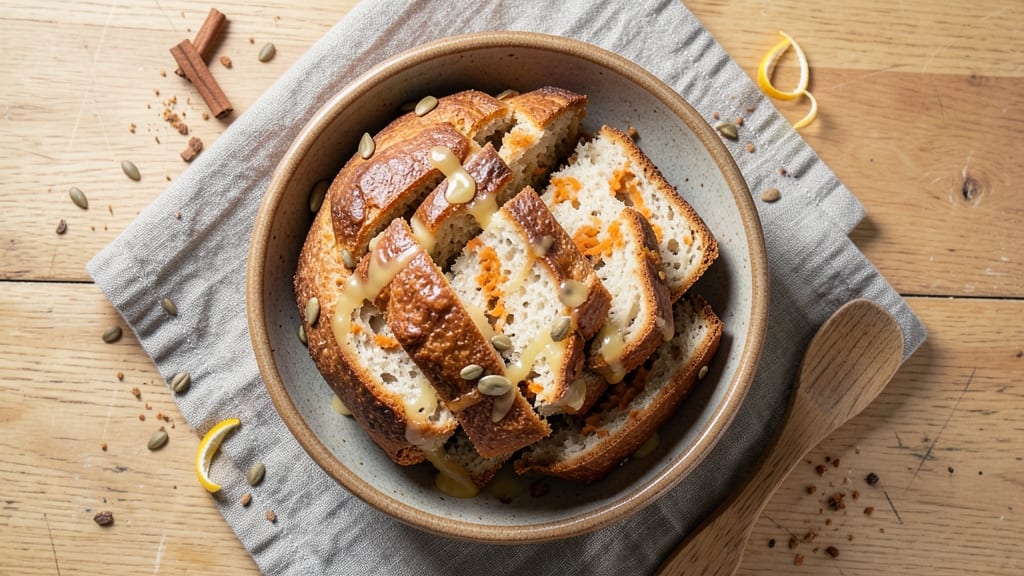
This sweet potato bread recipe no sugar transforms humble ingredients into a moist, naturally sweet loaf that feels like a warm hug on a chilly day.
The secret lies in roasting the sweet potatoes until tender—this caramelizes their natural sugars without any refined additives, creating a bread that’s subtly sweet yet perfectly balanced.
I developed this recipe after years of baking with diabetic-friendly ingredients, and it’s become a staple in my kitchen for its simplicity and satisfying texture.
The beauty of this method is how the sweet potatoes infuse the dough with their earthy sweetness while keeping the bread tender and slightly dense—ideal for sandwiches or toast.
No sugar substitutes are needed; the roasted potatoes do all the work, and a touch of cinnamon and nutmeg enhances their natural warmth. What you’ll end up with is a loaf that’s rich in flavor, lightly spiced, and perfect for breakfast or dessert cravings without the sugar crash.
Baking takes just 50 minutes from start to finish, and the process is straightforward: roast, mix, proof, and bake. The result is a bread with a golden crust and a crumb that’s moist yet sturdy enough to hold up to strong cheeses or avocado.
This recipe proves that naturally sweetened bread can be just as indulgent as traditional versions—without the guilt.
For extra depth, consider adding a sprinkle of flaxseeds or chopped walnuts before baking, or brushing the top with a light layer of melted butter for added richness. The possibilities for variations are endless, but the core method remains foolproof. Let’s get baking!
Ingredients for sweet potato bread recipe no sugar
Roasted sweet potatoes and warm spices create a naturally sweet bread without refined sugar.
| Ingredient | Amount | Notes |
|---|---|---|
| Orange Sweet Potatoes 🍠 | 2 ½ lbs | Peeled, roasted until tender |
| All-Purpose Flour 🌾 | 4 cups | Unbleached preferred |
| Granulated Sugar Substitute 🍯 | ¼ cup | Monk fruit sweetener or erythritol |
| Active Dry Yeast 🍞 | 2 ¼ tsp | 1 packet or 2¼ tsp |
| Warm Water 💧 | 1 ¼ cups | 110°F for yeast activation |
| Unsalted Butter 🧈 | ½ cup | Cold, cubed for dough |
| Ground Cinnamon 🌿 | 2 tsp | High-quality for warmth |
| Ground Nutmeg 🌿 | ½ tsp | Freshly grated preferred |
| Salt 🧂 | 1 ½ tsp | Diamond Crystal kosher |
| Ground Flaxseed 🌾 | 2 tbsp | For omega-3 boost |
| Eggs 🥚 | 2 large | Room temperature |
| Pure Vanilla Extract 🌸 | 1 tsp | High-quality for flavor |
| Chopped Walnuts 🌰 | ½ cup | Optional for texture |
The sweet potatoes are the star here. Orange varieties like Jewel or Garnet have the best natural sweetness. Roast them until fork-tender—this caramelizes their sugars for that subtle sweetness without any additives. I always grab mine from the organic produce section at Whole Foods or Trader Joe's for consistent quality. If using regular sweet potatoes, they'll be slightly less sweet but still delicious. For best results, roast them at 400°F until they collapse easily with a fork—about 45 minutes. The texture should be creamy, not dry.
No monk fruit sweetener? Erythritol or allulose work just as well—just measure carefully since they're often bulkier. The yeast needs to be fresh and active, so test it in warm water with a pinch of sugar (should foam within 5 minutes). For the butter, Land O'Lakes or Plugrá brands melt beautifully without overpowering. The flaxseed can be swapped for chia seeds at the same amount, but flaxseed adds a nice nutty depth. Walnuts are optional but add great crunch—Costco or bulk bins offer the best prices. If you're avoiding nuts, skip them entirely and the bread will still be delicious.
This dough is best used within 24 hours of mixing, but it keeps well wrapped in the fridge. The baked loaf stays fresh for 3-4 days at room temperature or 1 week in the fridge. For longer storage, slice and freeze portions—just thaw at room temperature before serving. The bread reheats beautifully in a 350°F oven for 5-10 minutes to restore its warmth. I always bake two loaves—one for the week and one to freeze for when I'm short on time.
Why You'll Love This Recipe
- No Sugar, No Stress: I’ll be real—this bread is shockingly easy. You just mash the sweet potato, mix in the flour and yeast, and let it rise while you do dishes. No kneading, no waiting hours, just hands-off magic.
- Sweet Potato Magic: That natural sweetness from the orange flesh? It’s like caramelized cinnamon without the sugar. The crumb stays moist for days, and the crust? Lightly golden, not too crisp—perfect for toast or slathered with almond butter.
- Breakfast to Snack: Honestly, I make this for breakfast (toasted with peanut butter) and pack slices for lunch. It’s also the star of my "no-bake" dessert—drizzled with melted dark chocolate and a sprinkle of sea salt. Versatile enough to fool anyone into thinking it’s a specialty loaf.
- Budget-Friendly Staple: Sweet potatoes are cheap, and this recipe stretches far. I’ve fed a crowd with one batch, and leftovers? They last a week in the fridge, wrapped tight. Plus, no weird ingredients—just pantry basics you already own.
Step-by-step instructions for sweet potato bread without refined sugar
This method delivers moist, flavorful bread with natural sweetness from roasted sweet potatoes.
Roast the Sweet Potatoes Until Tender
Preheat your oven to 400°F and line a baking sheet with parchment paper. Peel and cut the 2.5 lbs orange sweet potatoes into ½-inch thick slices. Arrange them in a single layer on the prepared sheet, leaving ½-inch between each slice for even cooking.
Roast for 25-30 minutes until the edges are golden brown and a knife slides in easily with minimal resistance. You're aiming for tender flesh that will mash smoothly into the dough. Let the roasted sweet potatoes cool completely before proceeding—this prevents steam from affecting your yeast activation.
Activate the Yeast and Prepare the Dough Base
In a small bowl, combine the 2.25 tsp active dry yeast with 1.25 cups warm water (about 110°F) and let it sit for 5-10 minutes until it becomes frothy. This confirms your yeast is alive and ready to work. If it doesn't foam, your bread won't rise properly.
In a large mixing bowl, combine the 4 cups all-purpose flour, 1.5 tsp salt, 2 tsp ground cinnamon, and 0.5 tsp ground nutmeg. Whisk these dry ingredients together to distribute the spices evenly throughout the flour. This creates a flavorful foundation for your bread.
Mix the Dough and Incorporate Sweet Potatoes
Add the cooled roasted sweet potatoes to the bowl with dry ingredients. Using a potato masher or fork, mash them into a chunky puree while still in the bowl. This preserves some texture that will enhance the bread's crumb. Stir in the 0.25 cup granulated sugar substitute and 2 tbsp ground flaxseed.
In a separate small bowl, whisk together the 2 large eggs, 1 tsp pure vanilla extract, and the yeast mixture. Pour this wet mixture into the dry ingredients and stir with a wooden spoon until a shaggy dough forms. The dough will be thick and sticky at this stage—this is normal with sweet potato dough.
Knead and Incorporate Butter
Turn the dough out onto a lightly floured surface and knead for 5-7 minutes until smooth and elastic. I like to work in stages—knead for 2 minutes, then add ½ cup cold cubed unsalted butter and continue kneading until fully incorporated. The butter should be evenly distributed but still visible in small flecks throughout the dough.
Return the dough to the bowl, cover with a damp towel, and let it rise in a warm place for 1-1.5 hours or until doubled in size. You'll know it's ready when it springs back slowly when gently pressed. The warm environment helps the yeast activate properly without needing refined sugar.
Shape, Add Walnuts, and Final Rise
Punch down the risen dough and turn it out onto a lightly floured surface. Gently shape it into a 9x5-inch loaf pan, leaving room for the dough to expand. If using, fold the 0.5 cup chopped walnuts into the top half of the dough before shaping—this creates beautiful texture contrasts in each slice.
Cover the pan with a towel and let the dough rise for another 30-45 minutes until it domes slightly above the pan. Preheat your oven to 375°F while the dough rises. Bake the bread for 45-50 minutes until the top is golden brown and an instant-read thermometer inserted into the center reads 190-200°F. The bread should sound hollow when tapped on the bottom.
Pro Tips For Making Sweet Potato Bread Recipe No Sugar
- STEAM THE POTATOES FIRST: I learned this the hard way—peeling and grating raw sweet potatoes is a mess. Boil or steam them until tender (about 15 minutes), then cool before grating. This makes the dough smoother and prevents gummy texture from excess moisture.
- USE COOL GRATED POTATO: Let grated sweet potato sit for 10 minutes after cooking before mixing with wet ingredients. Warm potato releases starch like crazy, making your dough sticky and hard to handle. Patience here saves you from a gloppy disaster.
- WEIGH THE FLOUR: Scooping flour from the bag adds air and throws off ratios. Use a kitchen scale for the all-purpose flour—1 cup packed vs. scooped can mean 120g vs. 150g. Precise measurements guarantee a consistent rise and texture.
- PROOF THE YEAST LONGER: Sweet potato dough is denser than usual, so give the yeast 15–20 minutes to fully activate in warm water (not hot—just above body temp). If it’s sluggish, add a pinch of sugar substitute to jumpstart it. A slow rise leads to flat, heavy bread.
Pro cooking tips for sweet potato bread recipe no sugar
Roasting Perfection
The key to unlocking natural sweetness in your sweet potato bread is roasting the potatoes until they’re fork-tender. I recommend using a 400°F oven and roasting for 25-30 minutes until the edges are golden and the flesh collapses easily.
This step caramelizes the natural sugars, creating that subtle sweetness without any added sugar. Let them cool completely before mashing to avoid steam from affecting your yeast—this is where many home bakers go wrong. 🍠
Yeast Activation Test
Never skip testing your yeast! Mix the 2.25 tsp active dry yeast with 1.25 cups warm water (110°F) and let it sit for 5-10 minutes. It should become frothy and bubbly—this confirms it’s alive and ready to work.
If it doesn’t foam, your bread won’t rise properly. I always keep a small jar of yeast in the fridge for freshness, and I’ve never had an issue with activation when using Fresh Start yeast from the grocery store.
Dough Consistency Secrets
This dough will be thick and sticky—don’t panic! The sweet potatoes add moisture, so resist the urge to add extra flour. Instead, use a wooden spoon to gently mix everything together in the bowl.
When kneading, work in stages: knead for 2 minutes, then add the ½ cup cold cubed butter and continue until fully incorporated. The butter should be distributed as small flecks throughout the dough for maximum flavor.
Warm Rise Environment
Creating a warm environment for rising is crucial. Place your dough in a bowl, cover it with a damp towel, and set it near a warm spot—like the top of your fridge or near a lightly warmed oven (with the oven off).
The dough should double in size in 1-1.5 hours. If your kitchen is cold, try placing the bowl over a bowl of warm water to maintain consistent temperature. This helps the yeast activate properly without relying on refined sugar.
Butter Incorporation Trick
For the best flavor, use cold cubed butter instead of melted. As the dough kneads, the butter will soften and distribute evenly, creating pockets of richness throughout the bread.
I like to use European-style butter like Plugrá because it has a higher fat content, which enhances the bread’s texture and flavor. If your dough feels too sticky after adding the butter, let it rest for 10 minutes before shaping—this helps the gluten relax and makes handling easier.
Final Rise and Baking
After the first rise, punch down the dough and shape it into a 9x5-inch loaf pan, leaving room for expansion. For extra texture, fold in ½ cup chopped walnuts into the top half of the dough before shaping.
Let it rise again for 30-45 minutes until it domes slightly above the pan. Bake at 375°F for 45-50 minutes until the internal temperature reaches 190-200°F.
The bread is done when it sounds hollow when tapped on the bottom—this is your cue that it’s fully baked and ready to enjoy. 💫
Nutrition facts
Frequently asked questions
Can I substitute regular potatoes for sweet potatoes in this recipe?
Regular potatoes won't work well because they lack the natural sweetness and moisture that sweet potatoes provide. The recipe relies on the caramelization of sweet potato sugars during roasting for that signature flavor. If you must use regular potatoes, you'd need to add 1-2 tablespoons of maple syrup or mashed banana to compensate for the lost sweetness, but the texture and flavor won't be identical.
How do I know when my sweet potato bread is fully baked?
Your bread is done when it reaches an internal temperature of 190-200°F and has a golden-brown crust. Tap the bottom—it should sound hollow. For extra confirmation, insert a toothpick: it should come out clean or with just a few moist crumbs. Overbaking can make the bread dry, so pull it out when it's just slightly underdone if needed.
Can I make this bread without eggs?
Yes! Replace the 2 eggs with 2 tablespoons ground flaxseed mixed with 6 tablespoons water (let it sit for 5 minutes to thicken). Alternatively, use ½ cup unsweetened applesauce or ½ cup mashed ripe banana for binding. The texture will be slightly denser but still delicious. For best results, use these substitutes in a warm environment during rising.
Why did my bread turn out dense instead of light and airy?
Dense bread usually results from overmixing, underproofing, or expired yeast. Make sure your yeast is fresh (test it first), and don't knead more than 5-7 minutes. Also, ensure the dough doubles in size during both rises—this takes 1-1.5 hours in a warm environment. If your kitchen is cold, try placing the dough near a warm oven (with the oven off) or over a bowl of warm water.
How can I make this bread even more flavorful?
Boost the flavor by adding 1 teaspoon orange zest to the dough or brushing the top with a mix of 1 tablespoon melted butter and ½ teaspoon cinnamon before baking. For extra richness, swap the walnuts for pecans or hazelnuts, or add 1 teaspoon vanilla bean paste instead of extract. The possibilities are endless—experiment with spices like cardamom or ginger for new twists!