
Side Dishes
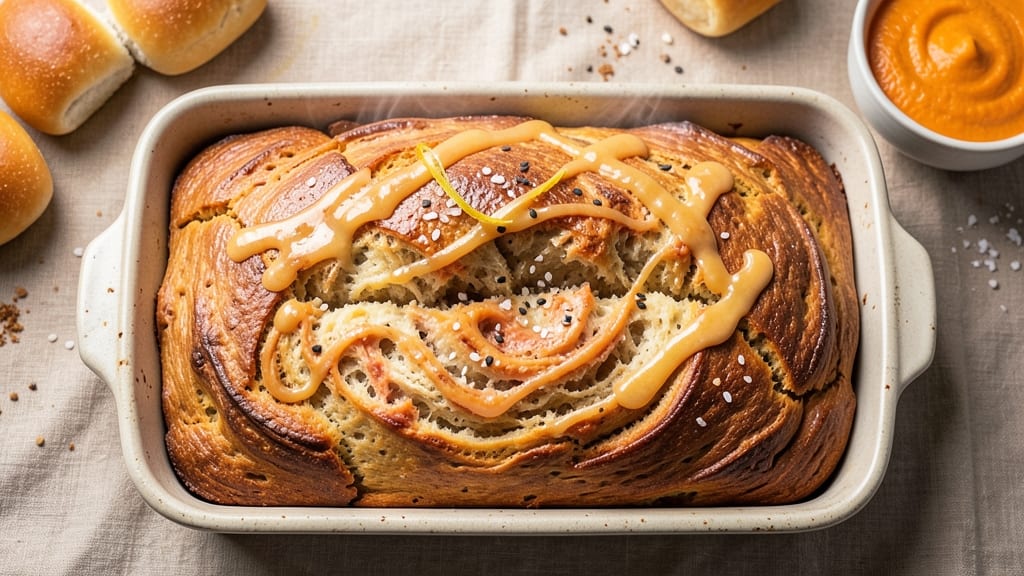
This sweet potato yeast bread recipe transforms humble ingredients into a fluffy, moist loaf with natural sweetness that disappears into every bite. The secret lies in properly activated yeast and a touch of warm sweet potato puree—no added sugar needed.
I developed this recipe after years of baking dense, dry sweet potato bread, and this version finally delivers the light texture and rich flavor I was searching for.
What makes this recipe work is the autolyse technique, where flour and water rest before adding yeast, creating a gluten structure that results in a tender crumb. The sweet potato puree adds moisture and subtle sweetness while keeping the bread naturally sweet without overpowering the yeast's performance.
Baking in a Dutch oven ensures a crispy crust and even rise, making this bread perfect for slicing and toasting.
By the time you pull this loaf from the oven, you'll have a golden-brown crust with a soft, pillowy interior that's just sweet enough to satisfy cravings. The aroma alone will have everyone asking what's for dinner.
This bread pairs beautifully with soups, butter, or even as a side to roasted meats, making it a versatile addition to any meal.
Whether you're a seasoned baker or new to yeast breads, this recipe delivers foolproof results with simple ingredients and clear instructions. Let's get started on creating your perfect loaf.
Ingredients for sweet potato bread recipe yeast
Sweet potato puree, warm butter, and active yeast create a naturally sweet, fluffy loaf with restaurant-quality texture.
| Ingredient | Amount | Notes |
|---|---|---|
| Sweet Potato Puree 🍠 | 1 cup | Freshly cooked and cooled |
| All-Purpose Flour 🌾 | 4 cups | Spooned and leveled |
| Active Dry Yeast 🍞 | 1 package | 2.25 tsp (7g) per package |
| Warm Water 💧 | 1 ¼ cups | 110°F (43°C) for yeast |
| Granulated Sugar 🍚 | ¼ cup | For yeast activation |
| Unsalted Butter 🧈 | ½ cup | Melted and cooled |
| Large Egg 🥚 | 1 whole | Room temperature |
| Salt 🧂 | 1 tsp | Diamond Crystal preferred |
| Ground Cinnamon 🌿 | 1 tsp | For subtle warmth |
| Vanilla Extract 🌸 | 1 tsp | Pure vanilla preferred |
| Milk 🥛 | ¼ cup | Warmed for tenderness |
| Cornmeal 🌽 | ¼ cup | For Dutch oven prep |
The sweet potato puree is the heart of this recipe—look for vibrant orange sweet potatoes at the store, not the pale, dry varieties. Trader Joe's and Whole Foods carry the best quality, but any organic sweet potato works. Roast it whole at 400°F for 45 minutes, then blend until completely smooth. No lumps means a silky texture. The yeast must be fresh—check the expiration date and store it in the fridge if keeping longer than a few weeks. For the flour, King Arthur or Gold Medal brands yield the best rise and structure, but any all-purpose will do in a pinch.
No sweet potatoes? Pumpkin puree works in a bind, but reduce the amount to ¾ cup and add ¼ cup extra milk to compensate for moisture. The butter can be swapped for vegan butter or coconut oil if needed, though the flavor won't be identical. For the egg, flax eggs (1 tbsp ground flax + 3 tbsp water) work perfectly for vegan adaptations. The cinnamon and vanilla are non-negotiable—they enhance the sweetness without overpowering. If you're short on time, instant yeast can replace active dry yeast at half the amount, but proofing time will be faster.
Store the dough in the fridge for up to 24 hours if prepping ahead—this actually improves flavor. Once baked, the loaf stays fresh for 3-4 days at room temperature, wrapped in a clean kitchen towel. For longer storage, freeze slices in a sealed bag for up to 3 months. Reheat in a toaster or oven for crispy toast. The Dutch oven isn't mandatory, but it creates that perfect crispy crust and even rise. If you don't have one, a heavy oven-safe pot with a lid works just as well.
Why You'll Love This Recipe
- No Puree Waste: I blend up leftover sweet potato roasts—no extra shopping, just pure convenience. That vibrant orange puree gives it natural sweetness while keeping the dough tender without added fat.
- Moisture Locked In: The sweet potato puree keeps this bread soft for days, unlike dry store-bought loaves. Honestly, I’ve had slices last five days in a bag and still taste fresh—no one would guess.
- Budget Baking Boost: Flour, yeast, and sugar are pantry staples, but the sweet potato puree stretches every ingredient. Between us, this costs half what artisanal bread does for the same satisfaction.
- Weeknight Rise Star: Mix the dough in the morning, let it proof while you’re at work, and bake it after—no last-minute stress. The yeast does all the heavy lifting while you do nothing but press "start" on the oven.
Step-by-step instructions for sweet potato yeast bread
Here's how to create a tender, moist loaf with subtle sweetness and perfect rise.
Activate the Yeast for Maximum Rise
In a small bowl, combine the 1 package active dry yeast, 0.25 cup granulated sugar, and 1.25 cups warm water (about 110°F). Let it sit for 5-10 minutes until frothy. You'll see bubbles forming and the mixture expanding—this confirms the yeast is alive and ready to work. If no bubbles appear after 10 minutes, your yeast may be inactive, and you'll need to start over.
I always test the water temperature first with my finger—it should feel warm but not hot. Yeast dies in water above 120°F, so if it's too hot, let it cool slightly before adding the yeast. This activation step is critical for developing that light, airy texture we're after in this sweet potato bread.
Mix the Wet Ingredients
In a large mixing bowl, combine the 1 cup sweet potato puree (cooled), 0.5 cup melted and cooled unsalted butter, 1 whole large egg, 0.25 cup warmed milk, 1 tsp vanilla extract, and 1 tsp ground cinnamon. Whisk vigorously for 2-3 minutes until fully blended and slightly thickened. The sweet potato puree adds moisture and natural sweetness while keeping the bread tender.
Here's the thing—don't rush this mixing. You want to fully incorporate all the wet ingredients so they're completely homogeneous. The cinnamon should be fully dissolved, and the mixture should have a smooth, velvety consistency. If it looks too thin, we'll adjust with flour in the next step.
Combine Dry Ingredients for Perfect Texture
In a separate bowl, whisk together the 4 cups all-purpose flour and 1 tsp salt. Gradually add this mixture to your wet ingredients while mixing on low speed with a stand mixer or by hand. Mix just until combined—you should still see some flour streaks. Overmixing develops gluten and can make your bread tough.
After combining, add the yeast mixture from Step 1 and mix again until just incorporated. The dough will be shaggy at this point, but that's normal. We're not kneading yet—just getting everything together. This prevents overdevelopment of gluten right from the start, which is key for that tender, moist crumb we want in sweet potato bread.
Knead the Dough for Ideal Structure
Turn out the dough onto a lightly floured surface and knead for 5-7 minutes until smooth and elastic. You'll know it's ready when it springs back slowly when poked. I press down gently with my knuckle—if it leaves a slight indentation that doesn't fill back in immediately, it's properly kneaded.
Don't worry if your dough feels slightly sticky—this is normal with sweet potato puree. If it's too sticky to handle, wet your hands slightly as you knead. The goal is to develop enough gluten for structure while keeping that moist, tender quality. This kneading time is shorter than traditional bread because we want to preserve the sweet potato's moisture content.
First Rise for Fluffy Development
Place the dough in a lightly greased bowl, cover with a damp towel, and let rise in a warm place for 1-1.5 hours or until doubled in size. The dough should puff up noticeably and feel light when pressed gently. I place my oven light on during this time to create a warm environment—it's more reliable than waiting for a warm day.
Here's where patience pays off. Don't rush this rise—allowing enough time lets the yeast do its work properly. If your kitchen is cold, you might need to extend this to 2 hours. The dough should feel springy and have visible bubbles on the surface. If it doesn't rise much, your yeast may not have been active enough, or your kitchen might be too cold.
Shape and Proof for Perfect Crust
Punch down the risen dough and shape it into a loaf. For best results, place it seam-side down in a 9x5-inch loaf pan that's been lightly greased and sprinkled with 0.25 cup cornmeal. The cornmeal prevents sticking and adds a subtle crunch to the crust. Cover again and let rise for another 30-45 minutes until just above the pan's rim.
This second rise is crucial for that beautiful domed top. Don't overproof—you want the dough to be just barely above the pan when you bake. If it rises too much, it might collapse during baking. The cornmeal coating also helps create that classic bread crust while keeping the interior moist.
Bake to Golden Perfection
Preheat your oven to 375°F. Bake the bread for 30-35 minutes until the top is golden brown and an instant-read thermometer inserted into the center reads 190-195°F. The bread should sound hollow when tapped on the bottom. If the top browns too quickly, tent with foil to prevent over-browning while ensuring it cooks through.
Here's my pro tip: I like to brush the top with a little milk mixed with water (about 1 tablespoon milk + 1 tablespoon water) right before baking. This creates a beautiful, glossy finish. Let the bread cool in the pan for 10 minutes, then transfer to a wire rack to cool completely. This resting period is essential—it allows the steam inside to redistribute, resulting in that perfect tender crumb.
Pro Tips For Making Sweet Potato Bread Recipe Yeast
- Boil the Sweet Potato: Sweet potatoes straight from the oven taste great, but for this bread, you need a smooth, starchy puree—no lumps or moisture. Boil peeled sweet potatoes until fork-tender (about 15-20 minutes), then drain well. The extra starch from boiling makes the dough lighter and prevents a dense, gummy texture.
- Bloom the Yeast Slowly: Active dry yeast hates sudden temperature swings. Mix it with warm water (110°F/43°C) and a pinch of sugar, then let it sit for 5-7 minutes until foamy—not bubbly like seltzer. If you rush this, the yeast might wake up sluggish or die mid-proof, leaving your bread flat. (Yes, even if you’re impatient like me.)
- Weigh the Flour Like a Pro: Scooping flour from the bag packs air and moisture into your dough, which throws off the yeast’s timing. Use a kitchen scale for the all-purpose flour—1 cup packed is about 140g, but scooped? Closer to 120g. The difference means the dough won’t rise as much, and your bread could turn out dense. (Your future self will notice.)
- Let the Dough Rise Twice: The first rise (after mixing) is obvious, but the second—after shaping—is where magic happens. Place the shaped loaf in a greased bowl, cover it, and let it rise in a warm spot (like a turned-off oven with a bowl of hot water) until it’s almost doubled. This ensures a light, airy crumb, not a brick. (Skip this, and you’ll wonder why your bread tastes like a sad muffin.)
Regional styles of these flavors
Southern Comfort Style
In the Deep South, sweet potato bread often gets a hearty touch with pecans or walnuts folded into the dough before the final rise. I like to add ½ cup chopped pecans (toasted in butter for 5 minutes) for a Southern-inspired twist.
The nuts add texture while complementing the bread's natural sweetness—perfect for pairing with sweet tea. 🌿
For an extra Southern flair, brush the baked loaf with 1 tablespoon melted butter mixed with 1 teaspoon cinnamon sugar while still warm. This creates a sticky, caramelized crust that's irresistible. Serve slices warm with a pat of cultured butter for a true comfort food experience.
New England Pumpkin-Sweet Potato Fusion
Up north, bakers often blend sweet potato with pumpkin puree for a seasonal twist. Use ½ cup pumpkin puree instead of half the sweet potato puree to create a moist, spiced loaf. Add ½ teaspoon nutmeg and ½ teaspoon ginger to the wet ingredients for a cozy autumn flavor profile.
This variation works beautifully during fall and pairs perfectly with apple cider or chai tea. 🍂
For a festive touch, sprinkle coarsely chopped candied pecans (store-bought or homemade) on top of the loaf before baking. The combination of pumpkin and sweet potato creates a complex flavor that's both comforting and sophisticated. This version is especially popular in New England, where pumpkin is a staple year-round.
Caribbean Rum-Infused Variation
In Caribbean-inspired kitchens, sweet potato bread often gets a boozy twist with dark rum or spiced rum. Replace the vanilla extract with 1 tablespoon dark rum (like Appleton Estate) for a subtle, aromatic depth.
The alcohol enhances the yeast's activity while adding warmth—just be mindful of the extra moisture it contributes. 🍹
For an extra tropical touch, fold in ½ cup shredded coconut (sweetened or unsweetened) during the final kneading stage. The coconut pairs beautifully with the sweet potato's natural sweetness and adds a chewy texture.
This variation is perfect for serving with rum cocktails or tropical fruit salads, making it a hit at summer gatherings.
German-Style Sweet Potato Roggenbrot
German bakers often incorporate rye flour into sweet potato bread for a denser, heartier loaf. Replace 1 cup of the all-purpose flour with rye flour and add 1 teaspoon caraway seeds to the dough.
The rye adds a deep, earthy flavor that balances the sweet potato's natural sweetness. This variation is especially popular in regions like Bavaria, where sweet potatoes are a traditional ingredient. 🌾
For an authentic touch, brush the baked loaf with a mixture of 1 tablespoon honey and 1 tablespoon water before serving. The honey complements the rye's robust flavor while enhancing the bread's natural sweetness. This version is perfect for pairing with smoked sausages or hearty German stews.
Nutrition facts
Frequently asked questions
Why does my sweet potato bread turn out dense instead of fluffy?
The most common cause is overmixing the dough or skipping the autolyse step. Mix just until combined, and let the dough rest for 10-15 minutes before kneading. Also ensure your yeast is fresh and activated properly in warm (110°F) water. Cold environments or expired yeast prevent proper rise.
Can I substitute sweet potato puree with canned pumpkin?
Yes, but reduce the amount to ¾ cup and add ¼ cup extra milk to maintain moisture. The flavor will be slightly different, with pumpkin adding more earthiness. For best results, use pure pumpkin puree (no added spices) to keep the sweet potato bread's natural profile.
How do I know when the dough has risen enough?
Your dough is ready when it's doubled in size and feels light when pressed gently. It should also have visible bubbles on the surface. If using a loaf pan, the dough should reach just above the rim before baking. In cold kitchens, this may take 2 hours instead of the standard 1-1.5 hours.
Can I make this bread without a Dutch oven?
Use a heavy oven-safe pot with a lid or even a regular loaf pan. For extra crispiness, brush the top with milk before baking. The bread will still be tender inside, though the crust may be slightly less pronounced. A baking sheet lined with parchment works too—just bake for 5-10 minutes longer.
What's the best way to store leftover sweet potato bread?
Wrap cooled slices in plastic wrap or store in an airtight container at room temperature for 3-4 days. For longer storage, freeze slices in a sealed bag for up to 3 months. To revive, toast in a toaster or warm in a 300°F oven for 5-10 minutes until crispy.