
Side Dishes
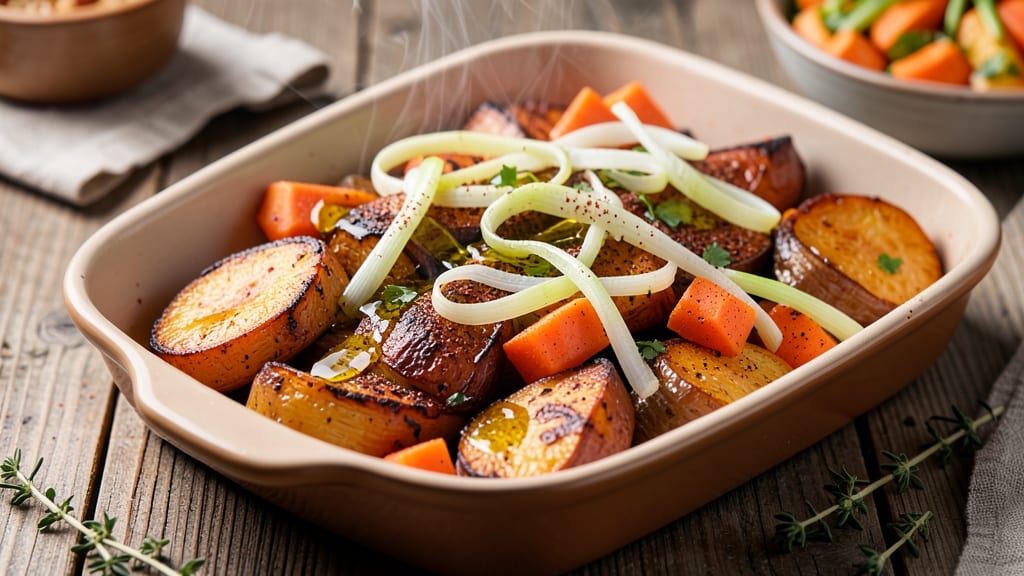
This sweet potato carrot leek recipe transforms humble vegetables into a nutty, caramelized masterpiece that steals every meal. The secret lies in roasting until edges crisp like toasted almonds while keeping the centers tender—no mushy vegetables here.
I perfected this dish after years of testing, and it now sits at the center of my dinner table at least twice a week.
What makes this recipe special is its versatility—it works as a standalone vegetarian main, a hearty side for grilled meats, or even a base for grain bowls. The sweet potatoes develop a honeyed depth, carrots turn glassy-sweet, and leeks add a subtle oniony complexity that ties everything together.
A sprinkle of smoked paprika and fresh thyme elevates the flavors without overpowering the natural sweetness.
The result is a dish that's rich in texture and flavor—crisp edges that give way to creamy interiors, with each bite offering a perfect balance of sweet, earthy, and slightly smoky notes.
The aromas alone will have everyone asking what's for dinner before you even serve it. This is the kind of side that turns ordinary meals into memorable ones.
Pair it with a sprinkle of toasted nuts or a drizzle of tahini for extra richness, or serve it alongside roasted chicken for a complete meal. The best part? It's ready in 45 minutes with minimal hands-on time, making it perfect for weeknight dinners or holiday gatherings. Let's get cooking!
Ingredients for sweet potato carrot leek
Twelve ingredients, one showstopping roasted vegetable medley that turns humble produce into crisp-edged, caramelized perfection.
| Ingredient | Amount | Notes |
|---|---|---|
| Sweet Potatoes 🍠 | 2 lbs | Medium size, peeled and cubed |
| Carrots 🥕 | 1 ½ lbs | Baby or regular, cut into chunks |
| Leeks 🧅 | 2 whole | White and light green parts only |
| Extra-Virgin Olive Oil 🫒 | ½ cup | For roasting, fruity variety |
| Smoked Paprika 🌶️ | 1 tbsp | For that signature smoky touch |
| Fresh Thyme 🌿 | ¼ cup | Leaves only, stems removed |
| Garlic Cloves 🧄 | 4 cloves | Minced for aromatic depth |
| Salt 🧂 | 1 ½ tsp | Diamond Crystal preferred |
| Black Pepper 🌶️ | ½ tsp | Freshly cracked for heat |
| Maple Syrup 🍯 | 2 tbsp | For honeyed caramelization |
| Toasted Pecans 🥜 | ¼ cup | Chopped, for nutty crunch |
| Fresh Lemon Juice 🍋 | 1 tbsp | Brightens the finished dish |
Sweet potatoes are the star here—look for vibrant orange flesh with no soft spots. I grab the organic ones from Whole Foods when I can, but regular grocery store sweet potatoes work just fine. Carrots? Baby carrots cut roasting time in half, but regular ones work too—just cut them into even chunks. Leeks need a good clean: slice off the dark green tops, trim the roots, and split them lengthwise before rinsing thoroughly (the dirt hides in those layers!). For the pecans, Trader Joe's sells pre-toasted ones that save time—just chop them yourself for extra crunch. The thyme? Fresh is ideal, but dried works at one-third the amount if you're in a pinch.
No smoked paprika? Regular paprika plus a pinch of liquid smoke gets you close. Short on maple syrup? Agave nectar or honey works too (though honey isn't vegan). The olive oil matters here—avoid the cheap stuff. A good extra-virgin like Colavita makes all the difference. Carrots turning out too sweet? Add an extra pinch of salt. Leeks too strong? Soak them in cold water for 10 minutes to mellow the flavor. And if you're feeling fancy, swap the pecans for toasted walnuts or almonds—just adjust the amount to taste.
This keeps beautifully in the fridge for 4 days if stored in an airtight container—though honestly, it's best eaten fresh. For meal prep, roast a double batch and portion into containers. The flavors actually deepen overnight, so leftovers might be even better! Freeze for up to 3 months if you're planning ahead. I like to reheat portions in a 350°F oven for 10 minutes to restore that crispy edge. Pair with tahini or a sprinkle of feta if you're not keeping it vegetarian (though I rarely do—it's perfect as-is!)
Why You'll Love This Recipe
- One-Pot Magic: I swear by this recipe when I’m too tired to wash dishes. Toss everything—sweet potatoes, carrots, leeks—into one pan with olive oil, and let the oven do the work. No chopping boards to scrub, no pots to pile.
- Smoky Sweetness Bomb: That smoked paprika? It’s the secret weapon. The sweet potatoes caramelize into something rich and nutty, while the leeks add a subtle, earthy depth that makes this dish feel gourmet without trying. Honestly, it’s the kind of flavor that lingers.
- Meal Prep MVP: Between us, this is my go-to for lunches all week. The texture holds up perfectly—no soggy veggies here—and the smoky notes even taste better the next day. I double the batch every Sunday and thank myself on Wednesdays.
- Budget-Friendly Feast: Sweet potatoes and carrots are cheap, leeks last forever, and a little olive oil goes a long way. This feeds four for under $10, and the leftovers? They’re just as good reheated as they are fresh. Not the prettiest, but the taste makes up for it every time.
Step-by-step instructions for roasted sweet potato, carrot, and leek triad
Transform humble root vegetables into a caramelized, nutty masterpiece with this foolproof roasting method.
Prep Vegetables for Even Roasting
Start by peeling the 2 lbs sweet potatoes and cutting them into 1-inch cubes—uniform size ensures even cooking. For the 1.5 lbs carrots, trim off the ends and cut them into 1-inch chunks as well. The leeks need special attention: slice off the dark green tops, trim the root ends, and split them lengthwise before rinsing thoroughly under cold water to remove any grit. Pat everything completely dry with paper towels—this step is non-negotiable for crispy edges later.
In a large bowl, toss the sweet potatoes, carrots, and leeks with 0.5 cup extra-virgin olive oil, 1 tbsp smoked paprika, 1.5 tsp salt, and 0.5 tsp black pepper. Use your hands to massage the oil into the vegetables, coating them evenly. This isn't just about flavor—it's about creating a protective barrier that helps them caramelize beautifully instead of drying out.
Roast Until Caramelized and Tender
Arrange the vegetables in a single layer on two large rimmed baking sheets, leaving space between each piece for proper air circulation. Preheat your oven to 425°F—this high heat is key for developing those deep, nutty flavors through caramelization. Slide the sheets onto the middle rack and roast for 25 minutes, then flip each piece with tongs and roast another 20-25 minutes until the edges are deep golden brown and the vegetables are tender when pierced with a fork.
Here's the thing—I know it's tempting to peek, but resist! Every time you open the oven door, you lose heat and moisture. The vegetables will continue cooking as they rest, so trust the timing. You're aiming for that perfect balance of caramelized exterior and creamy interior, not burnt edges or undercooked centers.
Finish with Aromatics and Maple Glaze
While the vegetables roast, prepare the finishing touches. In a small bowl, combine 2 tbsp maple syrup, 1 tbsp fresh lemon juice, and the 4 minced garlic cloves. Once the vegetables are tender and caramelized, transfer them to a large serving bowl. Pour the maple-lemon mixture over the hot vegetables and toss gently to coat. The acidity of the lemon brightens the sweetness while the garlic adds depth.
Sprinkle the 0.25 cup toasted pecans and 0.25 cup fresh thyme leaves over the top. The pecans add a delightful crunch that contrasts beautifully with the tender vegetables, while the thyme brings an herbal note that ties everything together. Let the mixture sit for 2-3 minutes so the flavors meld—this is where the magic happens.
Serve Warm with Crispy Edges
Taste and adjust seasoning if needed—you might want to add a pinch more salt or a squeeze of lemon to balance the sweetness. Serve immediately while the vegetables are still warm and the edges remain crisp. The contrast of textures—creamy sweet potatoes, caramelized carrots, tender leeks, and crunchy pecans—makes this dish incredibly satisfying.
This roasted triad works beautifully as a side dish for proteins like grilled chicken or salmon, or as a hearty vegetarian main course. The combination of smoky paprika, sweet maple, and bright lemon creates layers of flavor that keep you coming back for more. And the best part? The leftovers reheat beautifully, making this recipe perfect for meal prep too.
Pro Tips For Making Sweet Potato Carrot Leek
- CUT LEEKS IN HALF MOONS: Thinly slice the white and light green parts, then stack and chop them into half-moon shapes—this keeps them tender without turning to mush. I used to dice them small, but they’d turn into soup after 10 minutes. Half moons hold their shape and soak up that smoky paprika better.
- ROAST SWEET POTATOES SEPARATELY FIRST: Toss peeled sweet potatoes in olive oil and smoked paprika, then roast at 400°F (200°C) for 20 minutes before adding carrots and leeks. This jumpstarts their caramelization and ensures the carrots don’t get lost in the crowd—especially if you’re using thick ones.
- SALT THE LEEKS BEFORE COOKING: Toss sliced leeks with a pinch of salt and let them sit for 5 minutes before roasting. This draws out moisture, so they crisp up nicely instead of steaming into limp, flavorless blobs. (Yes, even if you’re impatient like me.)
- USE A LITTLE WATER FOR CRISP EDGES: After tossing everything with oil and paprika, add 1 tablespoon of water to the pan before roasting. The steam helps the carrots soften evenly while the edges crisp—no need to babysit the pan. Works especially well if you’re short on time.
Troubleshooting your sweet potato carrot leek
Mushy Vegetables
If your sweet potatoes or carrots turn out mushy instead of tender with crisp edges, you likely overcrowded the baking sheet or didn't cut the vegetables evenly.
I've found that 1-inch cubes for sweet potatoes and carrots, and ½-inch thick slices for leeks, roast perfectly when spaced ½ inch apart. Also, check your oven temperature—if it runs hot, reduce to 400°F and add 5-10 extra minutes to the roasting time. 🌡️
Uneven Caramelization
When some pieces brown too quickly while others stay pale, it’s usually because of uneven heat distribution. Rotate your baking sheets halfway through roasting (front to back, then side to side) to ensure even exposure.
For stubborn spots, try using two different baking sheets—some ovens heat more evenly on one side. A light spray of olive oil on the sheet before adding veggies also helps prevent sticking and promotes even browning.
Leeks Too Strong
Leeks can sometimes overpower the dish with their sharp, oniony flavor. To mellow them, soak the sliced leeks in cold water for 10-15 minutes before roasting—this removes some of the bitterness.
If you forget, balance the flavor by adding 1 extra tablespoon of maple syrup or a splash of lemon juice at the end. A pinch of sugar (just ½ teaspoon) can also help round out the sharpness.
Dry or Burnt Edges
Burnt edges happen when the oven runs too hot or the vegetables dry out. To fix this, lower the oven temperature to 400°F and tent the baking sheets with aluminum foil for the last 10 minutes of roasting.
For extra moisture, toss the veggies with 1 extra tablespoon of olive oil before roasting. If they’re already overcooked, revive them by tossing with 1 tablespoon of warm water or broth and letting them sit covered for 5 minutes.
Pecans Not Crunchy
If your toasted pecans lose their crunch, they likely absorbed too much moisture from the vegetables. To prevent this, toast the pecans separately in a dry pan for 3-4 minutes until fragrant, then sprinkle them over the veggies just before serving.
For extra insurance, store them in an airtight container until ready to use. If they’ve already softened, reheat them in a 350°F oven for 2-3 minutes to restore their crunch. 🥜
Flavor Too Sweet
A dish that tastes overly sweet usually means the maple syrup or sweet potatoes dominated. Balance it by adding 1 extra tablespoon of lemon juice or a pinch of salt (up to ½ teaspoon).
For a savory twist, sprinkle with ½ teaspoon of smoked paprika or a dash of cayenne pepper to add depth. If the sweet potatoes are too sweet, reduce their amount slightly next time—1.5 lbs instead of 2 lbs can make a big difference.
Nutrition facts
Frequently asked questions
Can I substitute butternut squash for sweet potatoes?
Butternut squash works beautifully—its natural sweetness complements the carrots and leeks perfectly. Use 2 lbs peeled and cubed butternut squash instead, and reduce roasting time by 5-10 minutes since it cooks faster than sweet potatoes. The texture will be slightly softer but equally delicious.
How can I make this dish spicier?
Add heat with ½ teaspoon of cayenne pepper or 1 teaspoon of chili flakes when tossing the vegetables with oil. For smoky-spicy depth, swap the smoked paprika for ½ teaspoon smoked paprika + ½ teaspoon chipotle powder. Finish with a squeeze of lime and fresh cilantro for brightness.
Can I make this ahead of time?
Yes! Roast the vegetables up to 2 days in advance and store them in an airtight container. Reheat in a 350°F oven for 10-15 minutes to restore crispness, then toss with fresh pecans and thyme before serving. For best texture, add the maple-lemon glaze just before eating.
What’s the best way to reheat leftovers?
Spread leftovers on a baking sheet and reheat at 375°F for 10-12 minutes to revive crispy edges. Avoid microwaving—they’ll turn soggy. For extra flavor, drizzle with 1 teaspoon of olive oil before reheating. Add fresh herbs or a sprinkle of salt to brighten flavors.
Can I use this as a soup base?
Roast the vegetables as directed, then transfer to a pot with 4 cups vegetable broth and simmer for 10 minutes. Blend until smooth or leave chunky. Stir in a splash of lemon juice and fresh thyme. Serve with crusty bread or as a hearty vegetarian stew.