
Sauces & Condiments
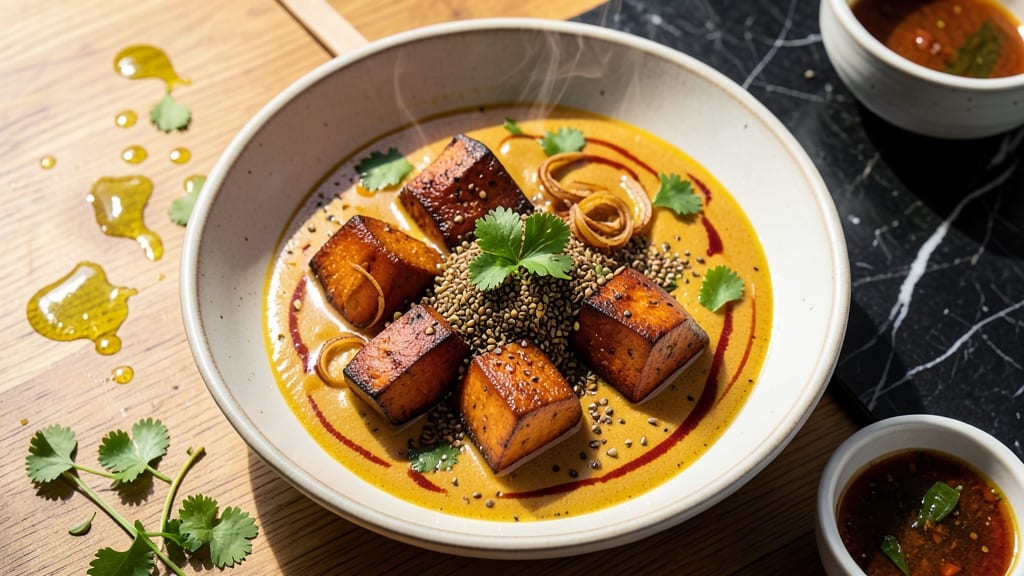
This sweet potato curry sauce transforms humble ingredients into a velvety, aromatic condiment that elevates everything from roasted meats to grilled vegetables. The secret lies in roasting sweet potatoes first—caramelizing their natural sugars before blending them into a rich, spiced coconut base.
I developed this recipe after years of testing curry sauces, and the difference between this and store-bought versions is night and day.
The foundation is a balanced spice blend—turmeric for golden color, cumin for earthy warmth, and coriander for brightness—all gently toasted in coconut oil to deepen their flavors. Simmering with coconut milk creates a naturally thick, velvety texture without added thickeners.
What sets this apart is the roasted sweet potato purée, which adds natural sweetness and a smooth, almost custard-like body that clings beautifully to proteins or grains.
By the time you finish blending, you'll have a sauce that's rich yet light, with layers of spice and coconut creaminess that develop even more flavor as it sits.
The roasted depth from the sweet potatoes prevents the sauce from tasting overly sweet, while the coconut milk keeps it lusciously creamy. This isn't just a sauce—it's a flavor experience that turns simple meals into something special.
Use it immediately over grilled chicken or fish, or store it in the fridge for up to 5 days—it actually tastes better the next day as the flavors meld.
The possibilities are endless, from drizzling over rice dishes to using as a marinade base. Let's get started on creating this versatile, restaurant-quality sauce at home.
Ingredients for sweet potato curry sauce
Roasted sweet potatoes and toasted spices create this velvety, aromatic curry sauce.
| Ingredient | Amount | Notes |
|---|---|---|
| Medium Sweet Potatoes 🍠 | 2 whole | Peeled, cut into 1-inch cubes |
| Coconut Milk 🥥 | 1 ½ cups | Full-fat for creaminess |
| Extra-Virgin Olive Oil 🫒 | ¼ cup | For roasting and toasting |
| Ground Turmeric 🌿 | 1 tbsp | Fresh root preferred |
| Ground Cumin 🌶️ | 1 ½ tsp | Toasted for depth |
| Ground Coriander 🌿 | 1 ½ tsp | Freshly ground preferred |
| Garlic Cloves 🧄 | 4 cloves | Peeled, roughly chopped |
| Fresh Ginger 🌿 | 2 tbsp | Finely grated, peeled |
| Lemon Juice 🍋 | 2 tbsp | Freshly squeezed |
| Vegetable Broth 💧 | ½ cup | Low-sodium preferred |
| Salt 🧂 | ½ tsp | Kosher or sea salt |
| Black Pepper 🌶️ | ¼ tsp | Freshly ground preferred |
Sweet potatoes are the star here—orange-fleshed varieties like Jewel or Garnet give the best flavor. Roast them until caramelized (about 30 minutes at 400°F) for that deep, natural sweetness. Trader Joe's and Whole Foods carry the best organic options, but regular grocery stores work too. The coconut milk needs to be full-fat for that luxurious creaminess—Thai Kitchen or Goya cans are my go-to brands. Fresh turmeric root? Grate it yourself for brighter color, but ground works if you're in a pinch. Toast your spices in the oil for 30 seconds—it makes all the difference in flavor depth.
No fresh ginger? Substitute with 1 tbsp ground ginger, but it won't have the same zing. Running low on coconut milk? Heavy cream or cashew cream works in a bind (though the flavor shifts slightly). The lemon juice balances the richness—Meyer lemons add a floral note if you've got them. No vegetable broth? Water plus 1 tsp soy sauce gets you close. For extra richness, add 1 tbsp tahini to the blend. The sauce thickens as it cools, so if it's too thick after blending, stir in 1-2 tbsp water. Want more heat? Add a pinch of cayenne or a dash of hot sauce.
This sauce keeps beautifully—5-7 days in the fridge, 3 months frozen. I always make a double batch because it's perfect for everything from grilled chicken to roasted veggies. For freezing, portion into ice cube trays and pop out as needed. The flavors actually improve after a day or two as everything melds together. Store in an airtight jar, and the coconut milk won't separate if you let it cool completely before sealing. Reheat gently on the stove or microwave for 30 seconds—no need to thin it out.
Why You'll Love This Recipe
- One-Pot Magic: I swear by this recipe when I’m too tired to wash dishes. Peel the sweet potatoes, toss them in olive oil and spices, then let the oven do the work while I stir coconut milk into a velvety sauce—zero extra pans, zero stress.
- Golden Spice Bomb: That first bite of sweet potato with the turmeric’s warm glow and cumin’s earthy kick? It’s like sunshine in a bowl. The coconut milk balances it so perfectly, you’ll want to eat it straight from the pot.
- Meal Prep MVP: Make a double batch on Sunday and use it all week—drizzled over rice, swirled into scrambled eggs, or spooned onto toast. Honestly, I’ve even used it as a base for cold noodle salads when I’m too lazy to cook.
- Budget Buster: Sweet potatoes and coconut milk stretch this sauce like nothing else. A single can of coconut milk turns into three meals, and the spices cost pennies. My wallet and my taste buds thank me every time.
Step-by-step instructions for sweet potato curry sauce
Here's how to make this rich, velvety sauce with roasted depth and balanced spices.
Roast the Sweet Potatoes for Caramelized Flavor
Preheat your oven to 400°F and line a baking sheet with parchment paper. Toss the 2 whole medium sweet potatoes (peeled and cut into 1-inch cubes) with 2 tablespoons of the extra-virgin olive oil until evenly coated. Spread them in a single layer on the baking sheet.
Roast for 25-30 minutes until the edges are deep golden brown and they're tender when pierced with a fork. This roasting step develops the natural sweetness and creates a caramelized base for your sauce. I like to flip them halfway through for even browning—don't skip this, or you'll get uneven color.
Toast the Spices and Aromatics
While the sweet potatoes roast, heat the remaining 2 tablespoons extra-virgin olive oil in a large skillet over medium heat. Add the 4 cloves peeled garlic and 2 tablespoons finely grated fresh ginger, cooking for 1-2 minutes until fragrant but not browned—you want to wake up the flavors without burning them.
Reduce heat to low and add the 1 tablespoon ground turmeric, 1.5 teaspoons ground cumin, and 1.5 teaspoons ground coriander. Toast for 30 seconds until the spices smell deeply aromatic. This step is crucial—it blooms the flavors and removes any raw taste from the spices. Don't walk away; spices burn quickly.
Build the Sauce Base
Transfer the roasted sweet potatoes to the skillet with the spiced oil. Stir to combine, then add 1.5 cups coconut milk and 0.5 cup vegetable broth. Bring to a gentle simmer over medium-low heat, then reduce heat to low and let it cook uncovered for 10-12 minutes until the sauce thickens slightly and the sweet potatoes are completely tender.
Here's where the magic happens: use an immersion blender to purée the mixture directly in the pot until completely smooth. If you don't have one, carefully transfer to a blender in batches (don't fill past the max line) and blend until silky. The sauce should be thick enough to coat the back of a spoon but still pourable. If it's too thick, whisk in 1-2 tablespoons water to reach your desired consistency.
Finish with Brightness and Balance
Return the puréed sauce to the skillet and stir in the 2 tablespoons lemon juice, 0.5 teaspoon salt, and 0.25 teaspoon black pepper. Taste and adjust seasoning—you might need a pinch more salt or a splash more lemon juice to balance the richness. The sauce should be vibrant with a bright, tangy finish that cuts through the coconut's creaminess.
Simmer gently for another 5 minutes to let all the flavors meld together. The sauce is now ready to serve over rice, noodles, or even as a dip. For extra richness, you can stir in 1 tablespoon coconut oil at the end, but it's already perfectly balanced as is. The roasted sweet potatoes give it depth while the coconut milk keeps it luxuriously creamy.
Pro Tips For Making Sweet Potato Curry Sauce
- PEEL AND CUBE UNEVENLY: Sweet potatoes cook faster when cut into rough, uneven chunks—no need for perfect dice. The larger surface area on some pieces caramelizes better while the smaller ones soften, giving you that mix of textures in every bite. (Yes, it looks messy, but that’s how you get depth of flavor.)
- TOAST SPICES IN OIL: Before adding coconut milk, bloom your cumin and turmeric in olive oil over medium heat for 30 seconds—just until fragrant. This step wakes up the spices and prevents that dull, powdery taste that happens when you stir them in cold. (I used to skip this and wondered why my curry always tasted flat.)
- SIMMER GENTLY AFTER ADDING MILK: Once the coconut milk hits the pot, drop the heat to low and let it barely simmer. Sweet potatoes release starch when they break down, and a rolling boil turns your sauce into glue. A slow simmer keeps it creamy without curdling—think of it as babysitting your curry, not rushing it.
- USE STALE COCONUT MILK: If your coconut milk smells slightly off or has a thin layer of oil on top, that’s actually good—it means it’s ripe and will add richness to your sauce. Fresh milk can taste too sweet or watery; the older (but not spoiled) stuff blends better. (I learned this after wasting two cans of "perfect" milk that made my curry taste bland.)
Serving suggestions for sweet potato curry sauce
Over Grilled Proteins
This sauce is a game-changer for grilled chicken, shrimp, or salmon. Brush 2-3 tablespoons onto proteins during the last 5 minutes of grilling to create a caramelized crust. The roasted sweet potatoes add natural sweetness that pairs perfectly with the smoky char.
I love serving it with garlic butter grilled shrimp—the coconut creaminess balances the shrimp's natural sweetness beautifully. 🔥
With Rice or Noodles
Transform any rice or noodle dish into a flavor-packed meal. Stir ¼ cup sauce into 1 cup cooked jasmine rice or toss with 8 ounces cooked noodles (udon or rice noodles work best).
For extra richness, top with toasted cashews or chopped cilantro. I often make a double batch to have on hand for quick weeknight dinners—just reheat gently with a splash of water.
As a Dip or Spread
Use this sauce as a dip for veggie sticks, spring rolls, or even crispy tofu. Serve it warm or at room temperature with baby carrots, cucumber slices, or pita chips.
For a heartier option, spread it on toasted naan or flatbread with a sprinkle of chopped cilantro and crushed red pepper flakes. The roasted sweet potato base gives it a satisfying thickness that holds up perfectly for dipping. 🥗
Sauce for Bowls
Elevate grain bowls with this sauce as the star. Drizzle 3-4 tablespoons over 1 cup quinoa or farro, then top with roasted veggies, avocado, and your choice of protein. I love pairing it with grilled chicken and roasted Brussels sprouts for a balanced, restaurant-quality meal.
The sauce's natural sweetness complements the earthy flavors of grains and veggies while keeping everything cohesive. ✨
With Roasted Vegetables
Drizzle this sauce over roasted vegetables like cauliflower, carrots, or sweet potatoes for an instant flavor boost. Toss 2 cups roasted veggies with 2 tablespoons sauce and a pinch of salt.
The roasted sweet potato notes in the sauce enhance the caramelization of the veggies, creating a harmonious dish. Serve as a side or a main with crusty bread for dipping. 💫
Marinade Base
Use this sauce as a marinade for chicken, tofu, or fish. Combine ½ cup sauce with 1 tablespoon soy sauce and let proteins marinate for 30-60 minutes before grilling or baking.
The spices and coconut milk tenderize while adding incredible flavor. I marinate chicken thighs in this for 2 hours before grilling—they turn out incredibly juicy and flavorful. 🍗
Nutrition facts
Frequently asked questions
Why roast the sweet potatoes instead of boiling or microwaving them?
Roasting caramelizes the sweet potatoes, developing their natural sugars into deeper, richer flavors that create a velvety texture in the sauce. Boiling or microwaving would make them watery and lose that caramelized depth. The 30-minute roast at 400°F transforms them from bland to intensely flavorful—this is the secret to a restaurant-quality sauce at home.
Can I make this sauce without coconut milk for a dairy-free version?
Replace the 1.5 cups coconut milk with 1 cup full-fat cashew cream (blend soaked cashews with water) or 1 cup Greek yogurt for a tangy twist. The sauce will still be creamy, though the flavor profile will shift slightly away from coconut's natural sweetness. For extra richness, add 1 tablespoon tahini to the blend.
How do I fix a sauce that's too thick or too thin?
If the sauce is too thick after blending, whisk in 1-2 tablespoons water or vegetable broth to reach a pourable consistency. For a thicker sauce, simmer uncovered for 5-10 extra minutes to reduce. Pro tip: The sauce naturally thickens as it cools, so adjust while warm for the best texture. If it separates, stir in 1 teaspoon arrowroot powder dissolved in water.
Can I use regular potatoes instead of sweet potatoes?
Regular potatoes will work, but the flavor will be completely different—less sweet, more starchy, and lacking that caramelized depth. Sweet potatoes bring natural sweetness and a creamy texture that's essential for this sauce. If you're out of sweet potatoes, try butternut squash purée (about 1.5 cups) as a substitute, but the taste won't be identical.
How do I store and reheat this sauce?
Store in an airtight container in the fridge for up to 5-7 days or freeze for 3 months. Reheat gently on the stove over low heat or microwave for 30 seconds, stirring occasionally. For freezing, portion into ice cube trays, then transfer to a bag—this makes it easy to thaw just what you need. The sauce actually tastes better after a day or two as the flavors meld!