
Side Dishes
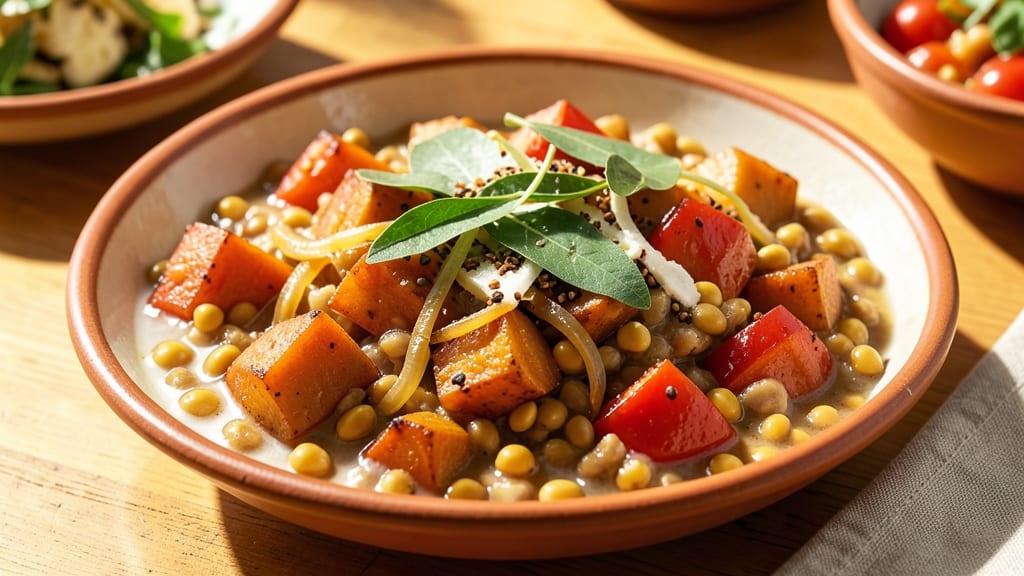
This sweet potato dal recipe transforms humble lentils and root vegetables into a rich, spiced coconut harmony that feels both comforting and sophisticated. The secret lies in slow-cooking yellow lentils with sweet potatoes until they dissolve into a velvety, golden broth—infused with warm spices and coconut milk for depth.
I developed this version after years of perfecting traditional dal, and the sweet potato adds natural sweetness that balances the earthy lentils beautifully.
The dish begins with a tempering of whole spices—cumin, mustard seeds, and curry leaves—that sizzle in hot oil until fragrant, forming the aromatic base. Sweet potatoes are added early to soften gradually, while yellow lentils break down into a creamy texture without needing thickening agents.
Coconut milk rounds out the flavors, creating a dish that’s naturally vegan, protein-packed, and deeply satisfying—perfect for pairing with steamed basmati rice or warm roti.
What makes this dal special is its versatility and simplicity. No special equipment is needed—just a pot and patience. The spices develop complex layers as they simmer, while the sweet potatoes caramelize slightly, adding a subtle sweetness that complements the savory lentils.
Garnish with fresh cilantro and a squeeze of lemon to brighten the dish, and you’ll have a complete meal that’s nutritious, flavorful, and restaurant-worthy—all in one pot.
This recipe works equally well as a standalone dish or alongside grilled vegetables, naan, or even as a hearty breakfast with toasted bread. The leftovers reheat beautifully, making it ideal for meal prep. Let’s create this comforting, spiced dal that brings warmth to any table.
Ingredients for sweet potato dal
Pantry staples meet exotic spices in this velvety coconut-lentil creation.
| Ingredient | Amount | Notes |
|---|---|---|
| Yellow Lentils (Whole) 🌾 | 1 cup | Rinsed thoroughly before cooking |
| Sweet Potatoes (Peeled and Cubed) 🍠 | 1 ½ lb | Medium-sized, cut into 1-inch pieces |
| Coconut Milk (Full-Fat) 🥥 | 1 can (13.5 oz) | Canned, no additives |
| Onion (Yellow) 🧅 | 1 whole | Medium, finely chopped |
| Tomatoes (Ripe) 🍅 | 2 medium | Chopped, or substitute 1 cup canned tomatoes |
| Fresh Ginger 🌿 | 1 inch | Peeled, grated (about 1 tbsp) |
| Cumin Seeds 🌶️ | 1 tsp | Toasted lightly for aroma |
| Mustard Seeds 🌶️ | ½ tsp | Whole, for tempering |
| Curry Leaves 🌿 | 10 whole | Fresh, or 1 tsp dried |
| Garlic Cloves 🧄 | 4 cloves | Minced finely |
| Ground Turmeric 🌿 | ½ tsp | Freshly ground preferred |
| Ground Cumin 🌶️ | 1 tsp | For depth of flavor |
| Garam Masala 🌶️ | 1 tsp | Store-bought or homemade blend |
| Vegetable Oil 🫒 | 3 tbsp | High smoke point preferred |
| Fresh Cilantro 🌿 | ¼ cup | Chopped, for garnish |
| Lemon Juice 🍋 | 1 tbsp | Freshly squeezed |
| Salt 🧂 | 1 tsp | Adjust to taste |
The foundation starts with yellow lentils—their firm texture holds up beautifully to the sweet potatoes' natural sweetness. For the sweet potatoes, medium-sized works best (about 1.5 lbs peeled and cubed), as they caramelize slightly during the slow cook. Coconut milk should be full-fat for that rich, creamy texture—Thai Kitchen or Aroy-D brands are my go-to for consistent quality. The spices are where the magic happens: cumin seeds and mustard seeds must be toasted in hot oil until they pop, creating that essential aromatic base. Curry leaves add a citrusy depth that's hard to replicate with dried substitutes, so seek them out at Indian grocery stores or online if your local market doesn't carry them.
No fresh ginger? Powdered ginger works at half the amount, but the fresh version gives that bright, zesty kick. Swap the curry leaves for an extra pinch of ground coriander if needed, though you'll lose some of that unique aroma. The tomatoes can be fresh or canned—San Marzano canned tomatoes add a sweetness that pairs perfectly. For extra richness, stir in 1 tbsp of cashew paste (soaked cashews blended) at the end. The garlic should be minced finely—no need to press it, just chop it small for even distribution. If you're short on time, pre-minced garlic from a jar works, though fresh is always better.
This dal tastes even better the next day as the flavors meld together. Store leftovers in an airtight container in the fridge for up to 5 days, or freeze for 3 months. The coconut milk may separate slightly when refrigerated—just stir vigorously before reheating. For meal prep, double the batch and portion into containers. The garam masala can be added fresh before serving, or mixed in during the final 5 minutes of cooking. Garnish with cilantro and a squeeze of lemon juice right before serving to brighten the dish—this is non-negotiable for that restaurant-quality finish.
Why You'll Love This Recipe
- One-Pot Magic: I swear by this recipe because it’s the only dal I make when I’m too tired to wash a second pot. The lentils and sweet potatoes simmer together—no extra straining, no fuss—while the coconut milk thickens everything into a velvety, naturally rich sauce. (Yes, even on nights when I’ve already burned dinner once.)
- Sweet Potato Twist: That caramelized sweetness from the roasted cubes? It’s the star. The natural sugars in the sweet potatoes mellow out the earthy lentils, and the coconut milk adds this creamy, almost dessert-like depth—like a hug for your taste buds. (I’ll be real: my picky 10-year-old asks for seconds.)
- Meal Prep MVP: This dal keeps perfectly for four days in the fridge, and it reheats like a dream—no splitting or drying out. I make a big batch on Sundays, portion it out, and freeze half for those “I can’t decide what to eat” nights. (Bonus: it’s the only dal my husband will take to work.)
- Budget Luxury: Full-fat coconut milk makes it feel special, but it’s still cheaper than takeout. Sweet potatoes and yellow lentils stretch forever, and I often bulk them up with whatever veggies are on sale—spinach, zucchini, you name it. (Between us, this is my go-to when I’m broke but refuse to eat sad food.)
Step-by-step instructions for sweet potato dal
This one-pot dal delivers rich, aromatic harmony where coconut milk and sweet potatoes transform humble lentils into something extraordinary.
Prepare the Base with Toasted Spices
Heat 3 tablespoons vegetable oil in a heavy-bottomed pot over medium heat. Add the 1 teaspoon cumin seeds and let them sizzle for 30 seconds until they turn golden and fragrant. Immediately add the 0.5 teaspoon mustard seeds and 10 whole curry leaves, stirring constantly for 1 minute until the mustard seeds pop and the curry leaves darken slightly.
Add the 1 whole onion (finely chopped) and cook for 5 minutes, stirring occasionally, until softened and translucent. This step builds the aromatic foundation - don't rush it. The onions should caramelize just enough to deepen the flavor without burning. Add the 4 cloves garlic (minced) and 1 inch fresh ginger (grated) and cook for another 2 minutes until fragrant and golden.
Build the Flavor with Tomatoes and Spices
Stir in the 2 medium tomatoes (chopped) and cook for 5 minutes until they break down into a thick paste. Add the 0.5 teaspoon ground turmeric, 1 teaspoon ground cumin, and 1 teaspoon salt, stirring well to combine. The mixture should darken slightly as the spices bloom and release their oils.
Cook for an additional 3 minutes until the raw tomato flavor disappears and the spices meld together. This is where the magic happens - the spices should be fully incorporated and the mixture should coat the back of a spoon. The dal should smell earthy and complex, with notes of cumin, curry, and ginger.
Simmer the Lentils and Sweet Potatoes
Add the 1 cup yellow lentils (whole) and 1.5 lb sweet potatoes (peeled and cubed) to the pot. Pour in 2 cups water (enough to just cover the ingredients) and bring to a gentle boil. Once boiling, reduce heat to low and simmer uncovered for 20 minutes, stirring occasionally to prevent sticking.
After 20 minutes, check the lentils - they should be slightly softened but still firm. Add 1 can (13.5 oz) coconut milk (full-fat) and 1 teaspoon garam masala, stirring gently to combine. The coconut milk will create a creamy texture while keeping the dal light. Simmer for another 15-20 minutes until the sweet potatoes are tender and the lentils are fully cooked but still hold their shape.
Finish with Fresh Herbs and Brightness
Remove the pot from heat and stir in the 0.25 cup fresh cilantro (chopped) and 1 tablespoon lemon juice. The lemon juice brightens the rich flavors while the cilantro adds freshness. Taste and adjust seasoning with additional salt if needed - the dal should be well-seasoned but not overly salty.
Let the dal sit covered for 5 minutes to allow the flavors to meld together. The final texture should be creamy from the coconut milk but still have some body from the lentils and sweet potatoes. Serve hot with steamed rice or crusty bread for a complete meal.
Pro Tips For Making Sweet Potato Dal
- SOAK LENTILS 2 HOURS: I learned this the hard way—skipping the soak makes your dal gummy no matter how long you simmer. Yellow lentils soften fast but stay dense if rushed; 2 hours in warm water (not boiling) guarantees a creamy texture without splitting. Drain and rinse right before cooking, or they’ll turn mushy while you prep the rest.
- SWEAT ONIONS LOW: Crank the heat to medium-low for onions here—high heat burns them before they soften, and you’ll taste that bitter edge in your dal. Aim for 8-10 minutes until they’re translucent but not golden; this builds flavor without char. (Yes, even if you’re impatient like me.)
- PEEL POTATOES AFTER COOKING: Peeling sweet potatoes raw is a pain, but peeling them after parboiling (5 minutes in salted water) makes the skin slide off like butter. Skip this step, and you’ll fight stubborn orange clumps while cubing. Pro move: Shock them in ice water afterward to stop cooking.
- ADD COCONUT MILK LAST: Stir in full-fat coconut milk only in the final 5 minutes—any earlier, and the heat will split its fats, giving your dal a soapy taste. Warm it separately first, then fold it in gently. (Your future self will thank you.)
Perfect pairings for this recipe
Rice Pairings
Steamed jasmine rice is my go-to pairing—its delicate floral notes complement the dal's earthy spices beautifully. Cook 1 cup jasmine rice with 1.5 cups water and ½ tsp salt for fluffy grains that soak up the coconut-rich dal.
For extra indulgence, try basmati rice with a pinch of cardamom pods toasted in the pot before cooking. 🍚
Bread Companions
Warm garlic naan or tandoori roti adds a satisfying crunch to scoop up the dal. I love making my own naan by mixing 1 cup flour, ½ cup yogurt, 1 tbsp oil, and ½ tsp baking soda, then cooking on a skillet until puffed.
For a quicker option, toast whole wheat pita bread with a smear of garlic butter before serving.
Vegetable Sides
Light, crisp vegetables balance the dal's richness. A simple cucumber-raita made with 1 cup yogurt, ½ cup grated cucumber, 1 tbsp mint leaves, and a pinch of roasted cumin cools the palate.
Alternatively, serve sautéed spinach with 1 tbsp ghee and ½ tsp garam masala for a heartier bite. 🥬
Protein Additions
For extra protein, stir in ½ cup cooked chickpeas during the final 5 minutes of cooking. The chickpeas absorb the dal's flavors while adding texture. Another option is to serve with pan-seared tofu cubes tossed in 1 tsp turmeric and ½ tsp black pepper.
Both additions keep the dish vegan while boosting heartiness.
Dessert Pairings
Finish the meal with a light, sweet contrast. A scoop of mango lassi (blended yogurt, mango, and cardamom) cuts through the dal's richness. For a simpler option, serve rosewater-infused rice pudding with a sprinkle of pistachios.
The floral notes echo the dal's spices while providing a satisfying sweet finish. 🍦
Nutrition facts
Frequently asked questions
Can I substitute regular potatoes for sweet potatoes in this dal?
While you can technically use regular potatoes, the flavor and texture will differ significantly. Sweet potatoes add natural sweetness and a creamy, almost custard-like quality when cooked. Regular potatoes will make the dal less rich and more starchy. If you must substitute, use orange-fleshed potatoes for a closer flavor, but expect a slightly different mouthfeel.
How do I adjust the spice level for sensitive palates?
Start by reducing the mustard seeds to ¼ teaspoon and omit the curry leaves if you find them too intense. For a milder tempering, use ½ teaspoon ground cumin instead of whole seeds. Always taste as you go—you can add more salt or coconut milk to balance flavors without extra heat. The coconut milk naturally mellows the spices.
What's the best way to store and reheat leftovers?
Store leftovers in an airtight container in the fridge for up to 5 days or freeze for 3 months. When reheating, add 2-3 tablespoons water per cup of dal and simmer gently on low heat until warmed through. The coconut milk may separate slightly when cold—just stir vigorously before serving. Avoid microwaving as it can make the texture grainy.
Can I make this dal in an Instant Pot or pressure cooker?
Yes! Sauté the spices as directed, then add all ingredients except coconut milk and garam masala. Cook on high pressure for 5 minutes, then quick-release. Stir in coconut milk and garam masala, then simmer on low heat for 5 minutes to meld flavors. The pressure cooker reduces time to about 20 minutes total instead of 45-50 minutes on the stovetop.
Why does my dal turn out too thick or too thin?
If it's too thick, stir in 2-3 tablespoons warm water or coconut milk. For a thinner consistency, add 1-2 tablespoons water and simmer gently. The key is the initial water measurement—start with 2 cups for 1 cup lentils and adjust as needed. The sweet potatoes release moisture, so they may require less additional liquid than traditional dal recipes.