Desserts
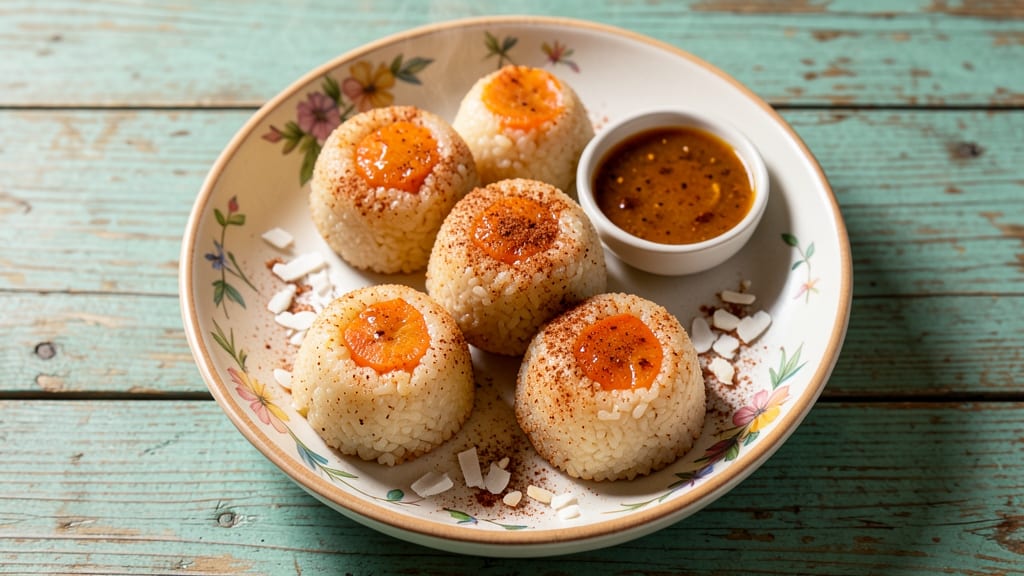
Sweet potato glutinous rice balls deliver a perfect balance of sticky, warmly spiced sweetness that makes them irresistible. These bite-sized treats combine tender sweet potato filling with chewy glutinous rice dough, creating a texture that's both satisfying and comforting.
The aroma of cinnamon and cardamom infusing the dough while steaming is enough to make your kitchen feel like a tropical paradise.
What sets these apart is the two-stage cooking process—first shaping the rice dough around sweet potato filling, then steaming until the exterior becomes translucent and the filling melts into a velvety consistency.
Traditional versions use banana leaves for wrapping, but a simple parchment-lined steamer works just as well for home cooks. The result is a dessert that's equally at home on a holiday table or as an after-dinner treat.
Each bite offers a harmonious blend of flavors: the natural sweetness of the potato, the earthy warmth of spices, and the delicate chew of glutinous rice. The dough's natural stickiness means they hold their shape beautifully while delivering that melt-in-your-mouth texture.
This recipe captures the essence of Southeast Asian desserts without requiring specialized ingredients—just a few pantry staples and patience for the perfect steam.
Serve warm with a drizzle of coconut milk or palm sugar syrup for extra decadence, or pair with a spicy-sweet chili dip for a contrasting flavor experience. The versatility of these rice balls makes them perfect for gifting, potlucks, or simply enjoying with a cup of tea.
Let's create these comforting treats that taste like a warm hug in every bite.
Ingredients for sweet potato glutinous rice balls
These twelve simple ingredients transform into bite-sized tropical hugs with perfect chew and spiced sweetness.
| Ingredient | Amount | Notes |
|---|---|---|
| Glutinous Rice Flour 🌾 | 2 cups | For chewy texture, not sticky rice |
| Sweet Potatoes 🍠 | 2 lb | Orange-fleshed, peeled and mashed |
| Granulated Sugar 🍚 | ¾ cup | Or palm sugar for deeper flavor |
| Coconut Milk 🥥 | 1 can (13.5 oz) | Full-fat for creaminess |
| Ground Cinnamon 🌿 | 1 tbsp | Freshly ground for warmth |
| Ground Cardamom 🌿 | ½ tsp | Toasted for aromatic depth |
| Salt 🧂 | ½ tsp | Fine sea salt preferred |
| Vegetable Oil 🫒 | 2 tbsp | For dough elasticity |
| Water 💧 | ½ cup | Warm for better mixing |
| Palm Sugar Syrup 🍯 | ¼ cup | Optional for drizzling |
| Coconut Flakes 🥥 | ¼ cup | Toasted for garnish |
| Parchment Paper 📄 | 1 sheet | For steaming liner |
The glutinous rice flour is your secret weapon here—it's not the same as regular rice flour, so don't substitute. Bob's Red Mill or Thai Kitchen brands are my go-tos, available at most Asian markets or the international aisle of larger grocery stores. For the sweet potatoes, orange-fleshed varieties work best—they're naturally sweeter and more vibrant. If you can't find them, regular sweet potatoes will work, but they might be slightly less flavorful. The coconut milk should be full-fat canned, not the carton kind—it makes a world of difference in creaminess. Toast your spices lightly in a dry pan before grinding for an extra aromatic boost, but don't burn them or they'll turn bitter.
No glutinous rice flour? Tapioca starch mixed with regular rice flour (1:1 ratio) gets you close, though the texture won't be identical. Running short on palm sugar? Brown sugar or maple syrup work in a pinch, but the flavor profile will shift slightly. For the coconut milk, if you've only got light coconut milk, reduce it by half with water to mimic the creaminess. The parchment paper is crucial—if you don't have it, aluminum foil with holes punched in works as a last resort. And if you're feeling adventurous, try adding a pinch of vanilla extract to the dough for an unexpected depth of flavor that pairs beautifully with the spices.
These keep beautifully for 3 days at room temperature wrapped in a clean kitchen towel, or 1 week in the fridge. For longer storage, freeze them for up to 3 months—just steam from frozen, adding 5-10 minutes to the cooking time. The best part? They reheat perfectly in the steamer or even the microwave for 10-15 seconds. I always make a double batch because they disappear faster than you can say 'tropical paradise.' Store extras in an airtight container between layers of parchment to prevent sticking.
Why You'll Love This Recipe
- No Boil, No Stress: I swear by this recipe because it skips the boiling step—just steam the sweet potatoes until fork-tender, mash them with coconut milk, and mix in the flour. The dough comes together faster than you can say "dessert," and no one will guess you didn’t slave over it.
- Caramelized Comfort: That first bite of warm, chewy rice balls with a crispy exterior and gooey sweet potato center? It’s like hugging a spiced latte. The cinnamon and sugar toast to perfection, and the coconut milk adds this buttery richness that makes it impossible to stop at one.
- Snack or Side: Honestly, these work everywhere. Pack them as lunchbox treats for the kids (they’ll devour them before the apples), serve them warm at holiday gatherings, or toss a batch in the freezer for when you’re too tired to cook. They’re the ultimate neutral canvas—sweet enough for breakfast, hearty enough for dinner.
- Pantry Magic: Between us, this recipe is my go-to when I’m low on cash or time. Sweet potatoes and rice flour are cheap staples, and a can of coconut milk stretches far. Plus, leftovers reheat beautifully—just a quick microwave zap or steamed until warm, and they taste just as good the third day as the first.
Step-by-step instructions for sweet potato glutinous rice balls
Here's how to craft these irresistibly chewy, spiced bites with perfect texture and flavor.
Prepare the Sweet Potato Filling
Peel and chop the 2 lb sweet potatoes into even chunks, then boil until fork-tender (15-20 minutes). Drain well and mash until completely smooth—no lumps should remain. This ensures a silky filling that won't disrupt the rice dough's texture.
In a mixing bowl, combine the mashed sweet potatoes with 0.75 cup granulated sugar, 1 tbsp ground cinnamon, 0.5 tsp ground cardamom, and 0.5 tsp salt. Mix thoroughly until the sugar dissolves completely and the spices are evenly distributed. The mixture should smell richly aromatic and look vibrant orange—this is your flavor foundation.
Mix the Glutinous Rice Dough
In a separate large bowl, whisk together the 2 cups glutinous rice flour with 2 tbsp vegetable oil. Gradually add the 0.5 cup warm water while stirring with chopsticks or a wooden spoon—you'll need to work quickly as the dough thickens almost immediately.
Once the dough comes together into a smooth, slightly sticky mass, knead it gently for 2-3 minutes until it's elastic but not dry. If it feels too stiff, add 1 tsp water at a time; if too sticky, sprinkle in 1 tsp rice flour. The ideal consistency should hold together when pinched but still be pliable enough to shape.
Combine and Shape the Balls
Divide the sweet potato mixture into 12 equal portions (about 1.5 tbsp each). Roll each portion into a smooth ball, then flatten slightly into a disc. Take a golf-ball-sized piece of dough and wrap it completely around each sweet potato disc, sealing the edges gently but firmly.
Roll each wrapped ball between your palms to create smooth, even surfaces. Place them on a plate dusted with glutinous rice flour to prevent sticking. For perfect symmetry, use a small bowl as a guide to press gently on the top of each ball—this creates that signature dimpled look.
Steam to Perfection
Line a steamer basket with the 1 sheet parchment paper, then arrange the balls in a single layer, leaving 1 inch between each. Bring 2 inches of water to a rolling boil in a pot, then place the steamer over it. Cover and steam over medium-high heat for 15 minutes—you'll see condensation form on the lid.
After 15 minutes, check for doneness by gently pressing a ball. It should feel firm to the touch with just a hint of give in the center. If they're not quite set, steam for 2-3 more minutes. Remove carefully and let cool for 5 minutes before serving.
Finish with Warm Spices
While the balls cool, lightly toast the 0.25 cup coconut flakes in a dry skillet over low heat until fragrant (2-3 minutes). Drizzle each ball with 1 tsp palm sugar syrup and sprinkle generously with toasted coconut flakes. The syrup should glisten slightly, adding that final touch of sweetness.
Serve warm for maximum chewiness and flavor impact. These bites are best enjoyed fresh—their texture softens slightly as they cool, so don't wait too long. Store leftovers in an airtight container for up to 3 days, but I promise they won't last that long!
Pro Tips For Making Sweet Potato Glutinous Rice Balls
- STEAM THE POTATOES FIRST: Skip the raw chunks—boil or steam your sweet potatoes until they’re fork-tender (about 15 minutes), then mash them while still warm. Cold potatoes turn gummy when mixed with glutinous rice flour, and you’ll end up fighting dough that sticks like glue. I learned this the hard way after making three batches that crumbled apart.
- WEIGH THE FLOUR, DON’T SCOOP: Glutinous rice flour packs differently—scooping leads to dry, crumbly balls. Use a kitchen scale for precision (about 2 cups = 250g) and sift it lightly before mixing. My grandmother swore by this, and she was right: the texture stays smooth and cohesive, not dense or sandy.
- DON’T OVERMIX THE DOUGH: Once you combine the mashed sweet potato, flour, and coconut milk, stop stirring after 30 seconds. Overworking activates the gluten, and your balls will turn tough instead of chewy. Fold just until combined—think "rustic," not "perfect." (Yes, even if you’re impatient like me.)
- CHILL THE BALLS BEFORE FRYING: Form the balls, then refrigerate them for 30 minutes. Cold dough fries up crispier and holds its shape better—no more flat, sad pancakes. I was skeptical until I tried it: the outside gets golden, the inside stays pillowy, and they don’t fall apart when you bite in. Worth the wait.
Pro cooking tips for great sweet potato glutinous rice balls
Dough Consistency Secrets
The magic happens in the dough's texture—too sticky and they'll fall apart, too dry and they'll be tough. I measure the glutinous rice flour by weight (250g) for precision, then mix it with 2 tbsp vegetable oil first to create a smooth base.
The key is using warm water (about 100°F) when combining—this helps activate the starches instantly. Work quickly but gently when kneading; overworking develops gluten, making the dough less chewy. 🌾
Sweet Potato Texture Control
Your filling's smoothness determines the final texture. I prefer orange-fleshed sweet potatoes because their natural moisture blends perfectly with the spices. After mashing, strain through a fine-mesh sieve to eliminate any stubborn lumps—this prevents graininess in the finished product.
For extra silkiness, blend the mashed sweet potatoes with 2 tbsp coconut milk before mixing with spices. The filling should be thick enough to hold its shape when rolled but still pliable. 🍠
Steaming Mastery
Steaming temperature is critical—too low and they won't set properly; too high and they'll cook unevenly. I use a medium-high heat with 2 inches of water in the pot, maintaining a gentle simmer (tiny bubbles at the edges).
The parchment paper liner prevents sticking and helps distribute steam evenly. For perfect doneness, test one ball after 15 minutes—it should spring back when pressed gently but still feel slightly soft in the center. 🌡️
Shaping Like a Pro
Even shaping prevents cracking during steaming. I use a small round cookie cutter (about 1.5 inches) to flatten the sweet potato filling before wrapping—this creates consistent shapes. When rolling the dough, keep your palms slightly damp to prevent sticking.
For that classic dimpled top, press gently with a small metal spoon after shaping, then dust with extra glutinous rice flour to set the pattern. This extra step makes all the difference in presentation. 💫
Spice Toasting Technique
Lightly toasting your spices before using them unlocks their full aroma. I toast the cinnamon and cardamom together in a dry skillet over low heat for 1 minute, stirring constantly until fragrant but not browned.
For the coconut flakes, toast them separately until golden (about 2-3 minutes)—this enhances their nutty flavor. Let them cool completely before using, as residual heat can melt the palm sugar syrup too quickly. The contrast between warm spices and cool coconut makes these bites irresistible. 🌿
Make-Ahead Pro Tips
These rice balls reheat beautifully, but timing matters. For room temperature storage, wrap them individually in parchment paper and stack in an airtight container. To reheat, steam for 5-7 minutes over medium heat—they'll regain their perfect chew.
For freezing, arrange on a tray first to prevent sticking, then transfer to a bag. Thaw overnight in the fridge before reheating. The flavors actually deepen overnight, making them even more delicious the next day. ❄️
Nutrition facts
Frequently asked questions
Can I make these without glutinous rice flour?
You can substitute with a mix of tapioca starch and regular rice flour (1:1 ratio), but the texture will be slightly different—less chewy and more firm. For best results, use mochiko flour (Japanese sweet rice flour), which is widely available in Asian markets. If you're short on time, try 100% tapioca starch for a stickier, more traditional texture.
How do I prevent the rice balls from sticking together?
Dust your work surface and hands with extra glutinous rice flour while shaping, and place finished balls on a plate lined with parchment paper. For extra insurance, chill them in the fridge for 15 minutes before steaming—the cold helps them hold their shape. If they stick during steaming, gently separate them with a damp spoon after cooking.
Can I bake these instead of steaming?
Yes, but the texture will be different—baked versions are lighter and less chewy. Preheat oven to 350°F (175°C), place balls on a parchment-lined tray, and bake for 18-20 minutes until golden. Brush with coconut milk before baking for extra moisture. For best results, steam first for 10 minutes then finish in the oven to get a hybrid texture.
What's the best way to store leftovers?
Keep them in an airtight container between layers of parchment paper for up to 3 days at room temperature. For longer storage, freeze them for 3 months—steam from frozen, adding 5 minutes to cooking time. To reheat, steam for 5-7 minutes over medium heat or microwave for 15 seconds (cover with a damp paper towel to retain moisture).
Can I add other fillings besides sweet potato?
Try mashed ripe banana with cinnamon, red bean paste for a Thai-inspired twist, or even chocolate-hazelnut spread for a dessert version. Keep fillings moist but well-drained to prevent soggy dough. For savory options, use spiced pumpkin or mashed butternut squash with a pinch of salt and smoked paprika.