
Side Dishes
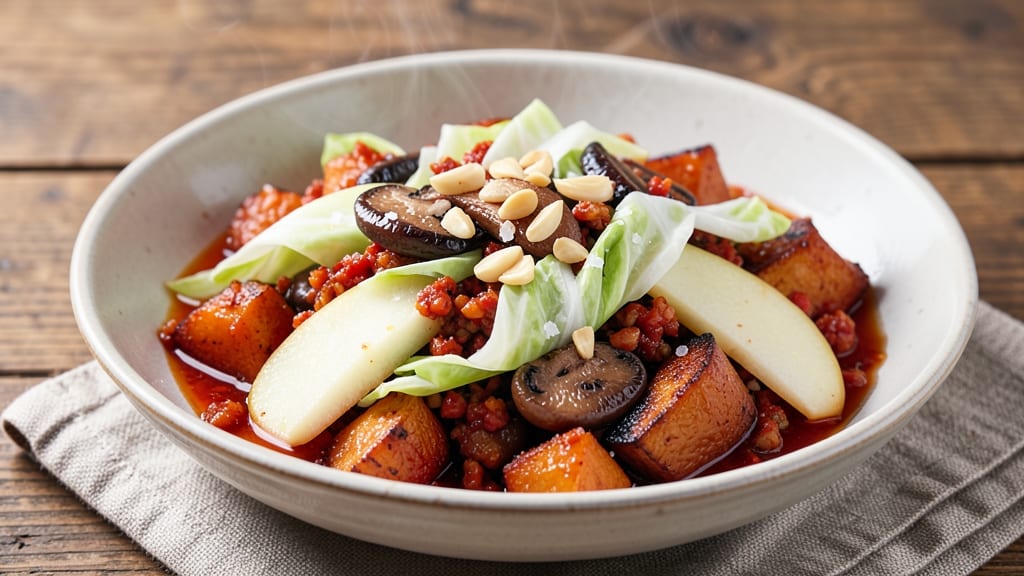
This sweet potato kimchi recipe transforms humble sweet potatoes into a vibrant, tangy-sweet fermented side that bridges Korean boldness with rustic comfort. The key lies in roasting sweet potatoes until caramelized—this step unlocks their natural sugars, creating a deep, earthy sweetness that balances the fiery gochugaru and briny garlic.
Unlike traditional kimchi, this version keeps the texture tender yet crisp at the edges, making it a standout for modern tables.
The fermentation process is where the magic happens—48 hours at room temperature develops complex flavors while preserving the sweet potatoes' vibrant color. We use a 1:1 ratio of sweet potatoes to napa cabbage, ensuring each bite delivers both crunch and softness, with just enough heat to linger.
For vegan adaptations, simply omit the fish sauce entirely; the umami comes instead from mushrooms or soy sauce, proving this kimchi works for every dietary preference.
What you’ll end up with is a kimchi that’s richer than store-bought but still bright and alive—perfect for topping rice bowls, stuffing into tacos, or serving as a bold side to grilled meats.
The caramelized sweet potatoes add a depth that turns this into more than just a side; it’s the star of the plate. Ready in 2 days (plus prep time), it’s a fermented dish that rewards patience with restaurant-quality results.
The secret to success? Precision timing during fermentation and a tight seal to keep air out. Store in the fridge for up to 3 months, letting the flavors deepen over time.
This isn’t just kimchi—it’s a conversation starter, a flavor bridge, and a testament to how fermented foods can elevate even the simplest meals. Let’s get started on transforming your pantry staples into something extraordinary.
Ingredients for sweet potato kimchi
Roasted sweetness meets fiery fermented heat—just 13 ingredients transform ordinary produce into extraordinary kimchi.
| Ingredient | Amount | Notes |
|---|---|---|
| Sweet Potatoes 🍠 | 2 lb | Medium-sized, peeled and cubed |
| Napa Cabbage 🥬 | 1 small | Whole head, quartered lengthwise |
| Gochugaru (Korean Chili Flakes) 🌶️ | ½ cup | Fine, not coarse |
| Asian Pear 🍐 | 1 medium | Peeled and grated |
| Garlic Cloves 🧄 | 6 cloves | Minced, for depth |
| Shiitake Mushrooms 🍄 | 4 whole | Stems removed, sliced |
| Soy Sauce 🍶 | ¼ cup | For umami |
| Apple Cider Vinegar 🍎 | ¼ cup | Raw, unfiltered |
| Brown Sugar 🍚 | 2 tbsp | Lightly packed |
| Salt 🧂 | 1 ½ tbsp | Kosher or sea salt |
| Sesame Seeds 🌾 | 1 tbsp | Toasted, for crunch |
| Fresh Ginger 🧅 | 1 inch | Peeled and grated |
| Olive Oil 🫒 | 2 tbsp | For roasting |
The sweet potatoes are non-negotiable—they need to be medium-sized and uniform for even roasting. Trader Joe's or local Asian markets often carry the best ones, with vibrant orange flesh. Roast them until caramelized (about 450°F for 30-40 minutes), which unlocks their natural sugars. For the napa cabbage, look for crisp, firm heads—the core should be tight, not wilted. If you can't find fresh shiitake mushrooms, dried shiitake (soaked in hot water) works too, but they'll add a deeper umami. The gochugaru should be bright red and fine—avoid the coarse kind unless you pulse it in a food processor.
No gochugaru? Substitute 1/4 cup smoked paprika plus 1/4 cup cayenne for heat, though the flavor won't be identical. Asian pear unavailable? Use 1/4 cup apple juice plus 1 tbsp lemon juice to mimic the sweet-tangy balance. For the mushrooms, cremini or oyster mushrooms are great swaps if shiitake aren't an option. The soy sauce can be tamari for gluten-free, but regular soy adds depth. If you're short on time, skip the 48-hour room temp ferment and move straight to the fridge—it'll just take longer to develop flavor. The sesame seeds can be omitted if you're allergic, but they add a lovely crunch.
This kimchi gets better with time—ferment 3-5 days for maximum flavor. Store in the fridge in an airtight container with the liquid covering the veggies. It'll keep for 3 months, though the texture will soften after 2 weeks. For easy serving, portion into small jars—perfect for lunches or snacks. The caramelized sweet potatoes add a richness that makes this kimchi unlike any store-bought version. Freeze extras in portions for quick meals later.
Why You'll Love This Recipe
- No-Fuss Ferment: I swear by this—just slice the sweet potatoes thin, toss them with the gochugaru, and let the fridge do the work. No fancy equipment, no stress, and honestly? The hardest part is waiting for the flavors to meld.
- Sweet Heat Magic: That caramelized sweet potato meets the tangy pear and fiery gochugaru—it’s like a hug for your taste buds. The garlic? Oh, it’s the cherry on top, turning this into something you’ll crave long after the jar’s empty.
- Meal Prep MVP: Between us, this keeps for weeks in the fridge. Toss it into rice bowls, slather it on toast, or serve it as a side—my college-aged son lives for it, and he’s not exactly a "healthy eater."
- Budget Bright Spot: Sweet potatoes and cabbage stretch my grocery budget further than I’d hoped. The pear adds a touch of luxury without breaking the bank, and the gochugaru? A little goes a long way for maximum flavor. Win-win.
Step-by-step instructions for sweet potato kimchi
Here's how to blend fermented heat with roasted sweetness for a kimchi that's vibrant and complex.
Roast the Sweet Potatoes and Shiitake Mushrooms
Preheat your oven to 400°F and line a baking sheet with parchment paper. Toss the 2 lb sweet potatoes (peeled and cubed) with 2 tbsp olive oil and 1 tbsp salt until evenly coated. Spread them in a single layer on the baking sheet.
In a separate bowl, toss the 4 whole shiitake mushrooms (stems removed and sliced) with 1 tbsp olive oil and ½ tbsp salt. Arrange the mushrooms around the edges of the baking sheet, leaving space between each piece. Roast for 25-30 minutes until the sweet potatoes are tender with caramelized edges and the mushrooms are golden brown. Let them cool slightly before handling.
Prepare the Cabbage and Aromatics
Cut the 1 small napa cabbage in half lengthwise and remove the core. Quarter each half and separate the leaves slightly to help the seasoning penetrate. In a large mixing bowl, combine the cabbage quarters with the 6 cloves minced garlic, 1 inch peeled and grated ginger, 2 tbsp brown sugar, and 0.5 cup gochugaru. Mix gently to distribute the spices evenly without tearing the cabbage leaves.
Add the 1 medium peeled and grated Asian pear to the bowl and toss everything together. The pear will sweeten the mixture and help tenderize the cabbage. Let the cabbage marinate for 10-15 minutes while you finish the remaining ingredients. This step ensures the cabbage absorbs the flavors deeply.
Combine and Ferment the Kimchi
In a medium bowl, whisk together 0.25 cup soy sauce, 0.25 cup apple cider vinegar, and ½ tbsp salt until fully dissolved. Pour this liquid over the marinated cabbage mixture and toss gently to combine. Add the roasted sweet potatoes and shiitake mushrooms, mixing everything together carefully.
Transfer the kimchi to a clean, airtight container, pressing down lightly to remove any air pockets. Sprinkle 1 tbsp toasted sesame seeds on top for texture and flavor. Seal the container and let it ferment at room temperature for 24 hours, then refrigerate for an additional 24-48 hours to develop the tangy flavor. Taste after the initial fermentation—you'll notice a bright, spicy-sweet balance that deepens with time.
Serve and Enjoy
Once the kimchi reaches your desired level of tanginess, it's ready to serve. The flavors should be a harmonious blend of sweet, spicy, umami, and slightly tangy notes. Scoop it out of the container and serve as a side dish, or use it as a topping for rice bowls, noodles, or grilled meats.
This kimchi keeps well in the refrigerator for up to 2 weeks, with the flavors continuing to evolve over time. The sweet potatoes add a natural sweetness that balances the heat, while the shiitake mushrooms contribute an earthy depth. Enjoy the perfect fusion of fermented tradition and roasted sweetness!
Pro Tips For Making Sweet Potato Kimchi
- STEAM THE SWEET POTATO: I learned this the hard way—boiling whole sweet potatoes leaves them mushy and waterlogged. Instead, peel and cut them into 1-inch chunks, then steam for 12-15 minutes until fork-tender but not falling apart. The texture stays firm enough to hold up in kimchi, and you avoid that sad, soggy aftermath.
- SALT THE CABBAGE LONGER: Don’t rush the cabbage. Cut the Napa leaves in half lengthwise, sprinkle with 1.5 tablespoons of salt per pound, and let it sit for at least 30 minutes—45 if you’re impatient like me. The longer you wait, the crunchier the final texture and the better the flavor absorption. (Yes, even if you’re staring at the clock.)
- GRATE THE PEAR FINE: I used to chunk the Asian pear and wondered why my kimchi tasted uneven. Grate it instead—use the fine side of a box grater or pulse in a food processor. The texture blends smoothly, adding natural sweetness without clumps, and the pectin helps thicken the kimchi over time. (Your future self will notice the difference.)
- MIX THE GOCHUGARU LAST: Add the gochugaru and garlic after everything else is combined. The chili flakes burn easily, and mixing them in too early can make the kimchi taste bitter. Toss them in just before packing the jar, then give it a final stir—this keeps the heat bright and the flavors balanced. (Sounds weird, but it works.)
Creative variations of sweet potato kimchi
Spicy-Sweet Roast
Swap the gochugaru for 1/4 cup smoked paprika plus 1/4 cup cayenne if you can't find Korean chili flakes. The smokiness adds depth while keeping the heat intense.
I also boost the sweetness with 3 tbsp honey or maple syrup during fermentation—this caramelizes beautifully with the sweet potatoes, creating a molasses-like richness. 🌶️
Miso-Glazed Twist
For umami lovers, replace the soy sauce with 3 tbsp white miso paste mixed with 1 tbsp rice vinegar. The miso deepens the savory notes while keeping the kimchi vegan.
Roast the sweet potatoes with a glaze of 2 tbsp miso + 1 tbsp maple syrup before mixing into the kimchi—this creates a sticky, caramelized crust that's irresistible. ✨
Tropical Fusion
Add 1/2 cup diced pineapple (fresh or thawed frozen) and 1 tbsp grated lime zest to the marinade. The pineapple's acidity brightens the ferment, while the lime zest adds a citrusy zing.
Use 1/4 cup Thai bird's eye chilies instead of gochugaru for a fruity-heat balance that's perfect with tacos or grilled fish. 🍍
Crunchy Veggie Boost
Incorporate 1 cup shredded daikon radish and 1/2 cup julienned carrots into the cabbage mix. These veggies add texture contrast and absorb flavors beautifully. For extra crunch, toss in 2 tbsp toasted sesame seeds and 1 tbsp crushed peanuts after fermentation—this Southeast Asian-inspired twist works amazingly with rice bowls. 🥕
Slow-Fermented Depth
Extend fermentation to 5-7 days at room temperature for a funkier, more complex flavor profile. This works especially well with the sweet potatoes, as their natural sugars develop deeper caramel notes.
Store in a quart-sized mason jar with the liquid covering everything—this method creates a probiotic-rich kimchi that's perfect for gut health. 💫
Sweet Potato Purée
Blend half the roasted sweet potatoes into a purée before mixing into the kimchi. This creates a silky texture that coats every bite. For extra richness, stir in 1 tbsp tahini or 1/4 cup coconut milk—this Mediterranean-inspired variation pairs beautifully with grilled lamb or falafel. 🥔
Nutrition facts
Frequently asked questions
Can I make this sweet potato kimchi without gochugaru?
For a smoky heat, substitute 1/4 cup smoked paprika plus 1/4 cup cayenne pepper. The smoked paprika adds depth while the cayenne delivers the spice. For a milder version, reduce the cayenne to 1/8 cup and add 1 tsp sugar to balance the flavors.
How do I know when the sweet potato kimchi is fully fermented?
Taste it after 48 hours of refrigeration—it should be tangy with a bright, spicy-sweet balance. For deeper flavor, ferment 3-5 days at room temperature (first 24 hours) then refrigerate. The texture will soften slightly, and the aroma will become more complex.
Can I use regular potatoes instead of sweet potatoes?
Regular potatoes won't work as well—they lack the natural sweetness and caramelization that makes this kimchi special. If you must substitute, try purple sweet potatoes for a deeper color and earthier flavor. Their skin can be left on (peeled first) for added texture.
What if my kimchi smells too strong or sour?
That means fermentation went too far! Transfer it to the fridge immediately and eat it within 2-3 days to enjoy the flavors before they become overpowering. For future batches, reduce room-temperature fermentation to 12-18 hours max, then refrigerate.
How can I use up this kimchi if I make too much?
Get creative! Mix it into vegan burgers for extra umami, stuff it into tacos with avocado, or serve it as a topping for ramen or grilled cheese. It also pairs beautifully with miso soup or as a side for steak. Portion extras into small jars for easy grab-and-go snacks.