
Side Dishes
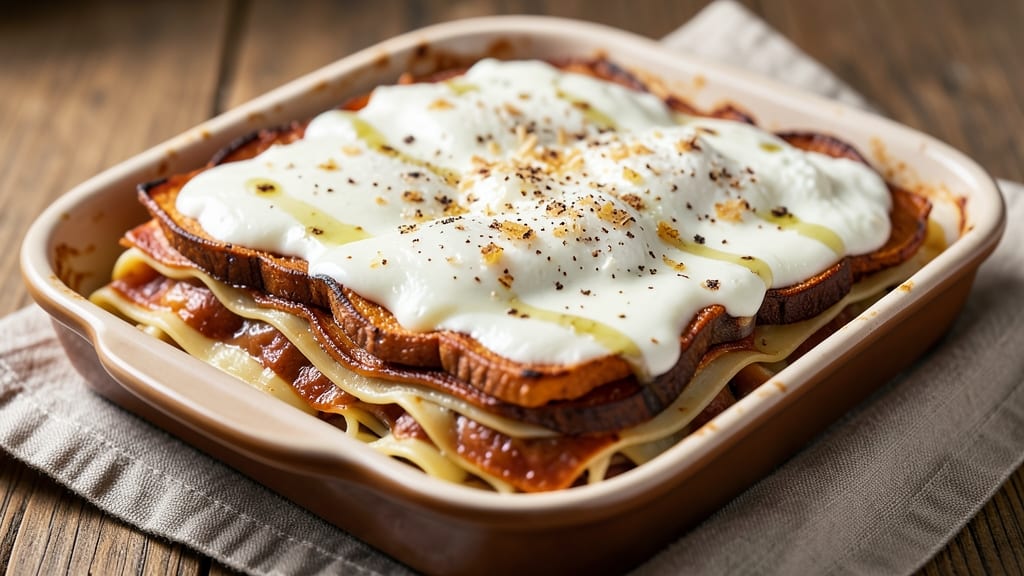
This sweet potato lasagne transforms a classic Italian dish into a cozy, layered masterpiece with velvety sweet potato filling and crispy golden edges. 🌟 The secret lies in roasting sweet potatoes until tender yet firm, then blending them into a smooth, slightly sweet base that pairs perfectly with rich béchamel and melted cheese.
What makes this recipe special is how the textures play together—creamy filling, crispy noodles, and a bubbly cheese topping that begs to be pulled apart.
Unlike traditional lasagne, this version swaps meat for hearty sweet potatoes, making it a comforting vegetarian option that still delivers deep, satisfying flavors. The layering technique is simple but crucial: start with a thin layer of sauce on the bottom to prevent sticking, then alternate between noodles, filling, and cheese.
Baking at 375°F for 40 minutes ensures everything cooks evenly without drying out.
By the time it emerges from the oven, you'll have a lasagne with rich, caramelized edges, tender sweet potato layers, and a golden cheese crust that's impossible to resist. The contrast of creamy filling against crispy pasta creates every bite's perfect balance.
This dish is ideal for family dinners or gatherings—it reheats beautifully and tastes even better the next day.
Pair it with a simple arugula salad or garlic bread to round out the meal. The sweetness of the potatoes complements the tangy greens, while the bread soaks up any extra sauce. Here's how to build this comforting, crowd-pleasing lasagne from start to finish.
Ingredients for sweet potato lasagne
Six ingredients transform classic lasagne into a velvety, comforting vegetarian masterpiece.
| Ingredient | Amount | Notes |
|---|---|---|
| Medium Sweet Potatoes 🍠 | 3 lbs | Organic preferred, peeled and cubed |
| Lasagne Noodles 🍝 | 12 pieces | No-boil or pre-cooked recommended |
| Ricotta Cheese 🧀 | 1 ½ cups | Whole-milk for creaminess |
| Mozzarella Cheese 🧀 | 2 cups | Part-skim for balance |
| Parmesan Cheese 🧀 | 1 cup | Freshly grated from block |
| Heavy Cream 🥛 | 1 cup | Full-fat for richness |
| Butter 🧈 | 4 tbsp | Unsalted, for béchamel |
| All-Purpose Flour 🌾 | ½ cup | For roux, sifted |
| Garlic Cloves 🧄 | 4 cloves | Minced for béchamel |
| Nutmeg 🌶️ | ½ tsp | Freshly grated |
| Salt 🧂 | 1 ½ tsp | Kosher or sea salt |
| Black Pepper 🌶️ | ½ tsp | Freshly ground |
| Marinara Sauce 🍅 | 2 ½ cups | High-quality jarred or homemade |
| Olive Oil 🫒 | 2 tbsp | For roasting sweet potatoes |
| Fresh Thyme 🌿 | ¼ cup | Chopped, or 1 tsp dried |
Sweet potatoes are the heart of this dish—organic or heirloom varieties have the best texture. Whole Foods or Trader Joe's carry reliable options, but any grocery store's sweet potatoes work if they're firm and heavy for their size. Roast them until tender but not mushy—you want that creamy texture when blended. The ricotta should be full-fat for a truly luscious filling, and Parmesan needs to be freshly grated from a block—pre-grated lacks the depth. For the béchamel, European-style butter adds extra richness, but regular unsalted works fine.
No ricotta? Cottage cheese blended smooth works in a pinch, though it's slightly grainier. Substituting mozzarella with vegan cheese keeps it vegetarian, but texture will differ. The béchamel can be made ahead—it actually tastes better after resting. If you're short on time, store-bought béchamel sauce saves steps. For the marinara, Rao's or Barilla are reliable jarred options, but homemade with San Marzano tomatoes elevates the dish. The thyme can be dried at one-third the amount, but fresh adds bright aroma that complements the sweet potatoes beautifully.
Roasted sweet potatoes keep in the fridge for 5 days, while the assembled lasagne reheats best at 350°F for 20 minutes—cover tightly with foil to prevent drying. The béchamel can be frozen for 3 months in airtight containers. I always make an extra batch of filling to freeze for quick weeknight meals. Portion into individual servings before baking for easy reheating—just pop in the oven and enjoy that comforting texture every time.
Why You'll Love This Recipe
- No Peel, No Stress: I roast the sweet potatoes whole—just poke holes, rub with oil, and bake. No peeling, no chopping, and that caramelized skin? It’s the secret weapon.
- Creamy Without the Heavy: Ricotta and mozzarella layers make this lasagne light yet rich. The sweet potatoes soak up the cheese like a dream, and the parmesan finish? Pure satisfaction.
- Leftovers That Shine: This dish actually tastes better the next day—crispy edges soften into perfection. I’ve reheated portions for lunch all week, and no one ever guesses it’s not fresh.
- Budget-Friendly Luxury: Sweet potatoes stretch further than regular potatoes, and ricotta’s cheaper than béchamel. You get restaurant-quality layers without the markup—just real, cozy comfort.
Step-by-step instructions for sweet potato lasagne
Here's how to build layers of creamy sweet potato, rich béchamel, and tangy marinara for a lasagne that's as comforting as it is impressive.
🍳 Step 1: Roast the Sweet Potatoes Until Tender
Preheat your oven to 400°F and line a large baking sheet with parchment paper. Toss the 3 lbs medium sweet potatoes (peeled and cut into 1-inch cubes) with 2 tbsp olive oil, 0.5 tsp salt, and 0.25 cup fresh thyme. Spread them in a single layer on the baking sheet.
Roast for 25-30 minutes until the edges are golden brown and a knife slides in easily. You want them soft enough to mash later but with some texture remaining. If they're browning too quickly, tent with foil to prevent burning. Here's the thing—over-roasting turns sweet potatoes gummy, so pull them when they're just tender.
👨🍳 Step 2: Prepare the Sweet Potato-Ricotta Mixture
While the sweet potatoes roast, combine 1.5 cups ricotta cheese, 1 cup heavy cream, 0.5 tsp nutmeg, 0.5 tsp black pepper, and 0.5 tsp salt in a mixing bowl. Whisk until smooth and creamy—this will be your velvety base layer.
Once the sweet potatoes are done, transfer them to the mixing bowl and mash them with a potato masher or fork until mostly smooth with a few small lumps remaining. The texture should be thick but spreadable—like a cross between mashed potatoes and ricotta. Taste and adjust seasoning if needed. This mixture is the heart of your lasagne, so don't skip the nutmeg; it adds that classic sweet potato lasagne warmth.
🍳 Step 3: Make the Creamy Béchamel Sauce
In a medium saucepan, melt 4 tbsp butter over medium heat. Add 0.5 cup all-purpose flour and whisk constantly for 1-2 minutes until the mixture forms a smooth, pale roux. This is your sauce foundation—don't let it brown or it'll taste bitter.
Gradually whisk in 1 cup heavy cream and continue cooking for 3-4 minutes until the sauce thickens enough to coat the back of a spoon. Stir in 4 minced garlic cloves and 0.5 tsp nutmeg, then remove from heat. The sauce should be silky and just thick enough to cling to the noodles. If it's too thick, whisk in 1-2 tablespoons milk to reach your desired consistency.
🥘 Step 4: Assemble the Lasagne Layers
Preheat your oven to 375°F. In a 9x13-inch baking dish, spread 1 cup marinara sauce on the bottom to prevent sticking. Add 4 lasagne noodles (no-boil or pre-cooked) and top with half of the sweet potato-ricotta mixture. Sprinkle with 1 cup mozzarella cheese and 0.5 cup parmesan cheese, then add another 1 cup marinara sauce.
Repeat the layers: noodles, remaining sweet potato mixture, remaining mozzarella, remaining parmesan, and the final 1.5 cups marinara sauce. The top layer should be noodles, then sauce. Here's the critical part—press down gently on each layer to eliminate air pockets. This ensures even baking and prevents a soggy lasagne. Cover tightly with aluminum foil and bake for 30 minutes.
🔥 Step 5: Bake to Bubbly Perfection
Remove the foil and bake for another 15-20 minutes until the top is golden brown and bubbly. The edges should be crisping slightly, and the cheese should be melted and slightly browned. If the top browns too quickly, tent with foil to prevent burning while the center finishes cooking.
Let the lasagne rest for 10-15 minutes before slicing. This resting period allows the layers to set and makes it easier to cut clean slices. The result should be tender noodles, creamy sweet potato layers, and a rich, bubbly cheese topping in every bite. Serve with a simple green salad and crusty bread for the ultimate comfort meal.
Pro Tips For Making Sweet Potato Lasagne
- ROAST SWEET POTATOES FIRST: I learned this the hard way—slicing raw sweet potatoes into lasagne sheets is a mess. Roast them whole at 400°F (200°C) for 45 minutes first, then slice while still warm; they’ll hold shape better and caramelize faster in the lasagne.
- SALT THE RICOTTA LIKE PASTA WATER: Ricotta’s blandness disappears when you salt it properly. Mix in ½ teaspoon of salt per ½ cup ricotta before combining with other cheeses—it’ll make the flavor sing without tasting like you overdid it.
- BOIL NOODLES AL DENTE, THEN CHILL: Overcooked lasagne noodles turn to mush. Boil them one minute less than package instructions, then plunge into ice water for 30 seconds. They’ll firm up when layered and bake, holding their texture perfectly.
- LAYER PARMESAN LAST, NOT FIRST: I used to sprinkle Parmesan at the bottom—big mistake. Add it only to the final layer and the top of the cheese sauce. This keeps the rich, nutty flavor where it matters most: at the end of every bite.
Essential equipment for this dish
Baking Dish
Use a 9x13-inch baking dish with a minimum 2-inch depth—this ensures even heat distribution and prevents overflow. I recommend Ceramic or stoneware dishes (like Pyrex) because they retain heat better than metal, helping create that perfect golden crust.
If you don’t have one, a heavy-duty aluminum pan works too—just avoid thin, flimsy metal that can warp under high heat. 🔥
Cheese Grater
A fine-mesh cheese grater is non-negotiable for Parmesan—pre-grated cheese lacks the sharp, aromatic flavor. I swear by the Microplane for its efficiency and consistency. For mozzarella, use a block form (not shredded) and tear it into chunks before baking—it melts more smoothly and creates a creamy texture.
Pro tip: Grate Parmesan fresh while assembling layers so it doesn’t dry out.
Mixing Bowls
Invest in three nested mixing bowls (small, medium, large) for efficient prep. The small bowl holds your seasoned ricotta mixture, the medium bowl is for blending roasted sweet potatoes, and the large bowl catches any spills while you mash.
I use stainless steel bowls—they’re durable and won’t absorb odors like plastic. For the béchamel, a medium saucepan with high sides prevents splatter when whisking in the flour.
Lasagne Tools
A lasagne cutter (a long, serrated knife or lasagne slicer) makes clean slices effortless—no more uneven, crumbly edges. If you don’t own one, a sharp chef’s knife works, but angle it at 45 degrees for precision.
For layering, a spatula helps spread the sweet potato mixture evenly without tearing the noodles. I also keep a small offset spatula handy to smooth the top sauce layer before baking.
Oven Thermometer
Your oven’s temperature gauge is often inaccurate—use an oven thermometer (like Thermoworks Oven Thermometer) to confirm it’s hitting 375°F. Sweet potato lasagne relies on precise heat control: too low, and the layers stay undercooked; too high, and the top burns before the center cooks.
I’ve ruined more lasagnes than I’d admit by trusting my oven’s dial—don’t make my mistake! Place the thermometer near the center rack for accurate readings.
Nutrition facts
Frequently asked questions
Can I make this lasagne ahead of time?
Assemble the lasagne up to 24 hours ahead and refrigerate uncovered. Before baking, let it sit at room temperature for 30 minutes to even out the temperature, then bake as directed (add 10-15 minutes to the baking time). For freezing, assemble completely, cover tightly with foil and plastic wrap, and freeze for up to 3 months. Thaw overnight in the fridge before baking.
What if I don't have no-boil lasagne noodles?
Use regular lasagne noodles, but boil them 1 minute less than package instructions for al dente texture. Drain well and rinse under cold water to stop cooking. The key is to prevent soggy layers—press each noodle layer firmly into the sauce to create a solid base. For extra insurance, spread a thin layer of béchamel between noodle layers before adding the sweet potato mixture.
How do I prevent a soggy lasagne?
The #1 cause of sogginess is undercooked noodles or too much liquid. Start with a thin layer of sauce on the bottom, use no-boil noodles or al dente cooked noodles, and press each layer firmly. Bake uncovered for the final 15-20 minutes to let excess moisture evaporate. If your lasagne seems too wet, bake an additional 5-10 minutes uncovered to crisp the top.
Can I substitute regular potatoes for sweet potatoes?
Not recommended! Sweet potatoes have a natural sweetness and creamier texture that works perfectly with the cheese. Regular potatoes would make the filling too starchy and watery. If you're out of sweet potatoes, try butternut squash (roasted and puréed) as a close substitute, but adjust the seasoning—it's less sweet and more neutral in flavor.
What's the best way to reheat leftovers?
Cover tightly with foil and reheat at 350°F for 20-25 minutes until heated through. For individual portions, reheat in the microwave for 2-3 minutes on 50% power, then finish in the oven for 5 minutes to restore the crispy top. Never reheat straight from the fridge—bring to room temperature first to prevent uneven heating and potential food safety issues.