
Desserts
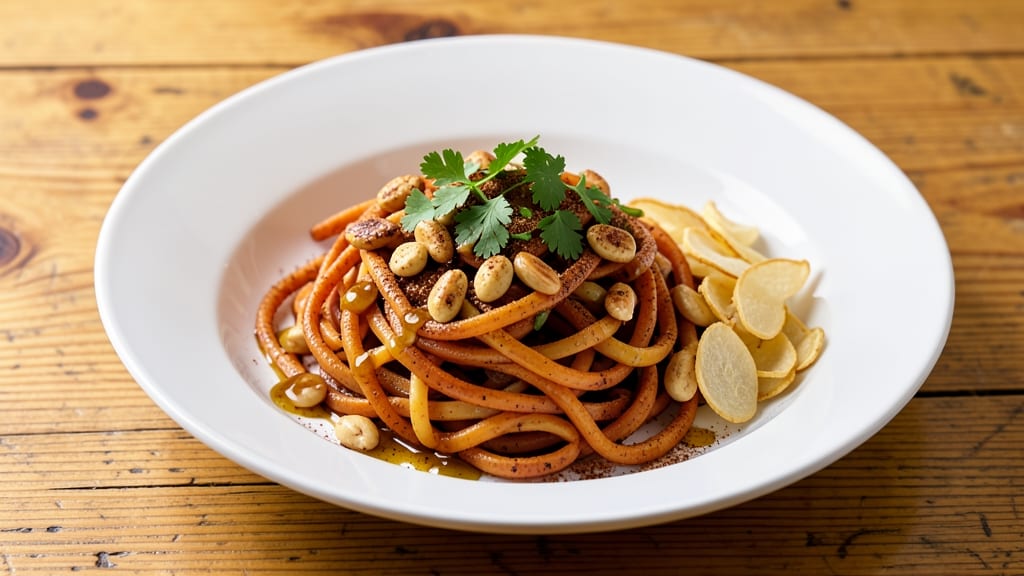
This vegetarian sweet potato noodles recipe transforms humble sweet potatoes into elegant, spiced swirls that feel like a restaurant dessert. The secret lies in spiralizing the potatoes and cooking them just enough to maintain that silky texture while developing warm, aromatic flavors.
I developed this recipe after realizing how versatile sweet potatoes could be beyond traditional roasting or mashing.
What makes these noodles special is their ability to absorb flavors beautifully while maintaining a tender, almost custard-like texture. You'll start by spiralizing the sweet potatoes and sautéing them with a blend of warm spices—cinnamon, nutmeg, and a touch of cayenne—that create depth without overpowering.
The result is a dish that's naturally vegetarian but feels hearty and satisfying, perfect for those craving something warm and comforting.
By the time you're done, you'll have golden-brown sweet potato noodles with a delicate crunch at the edges and a velvety interior. The spices infuse the potatoes beautifully, creating a dish that's both aromatic and visually appealing.
These noodles pair wonderfully with a drizzle of maple syrup or a sprinkle of toasted pecans, adding texture and sweetness that complement the warm spice profile.
This recipe is ideal for those looking to elevate simple ingredients into something extraordinary with minimal effort. The technique is straightforward, and the results are impressive—perfect for a weeknight dinner that feels special or a dessert that's both healthy and indulgent. Let's get started!
Ingredients for sweet potato noodles recipe vegetarian
Eleven ingredients transform simple sweet potatoes into restaurant-worthy spiced swirls with velvety texture.
| Ingredient | Amount | Notes |
|---|---|---|
| Large Sweet Potatoes 🍠 | 2 whole | Organic preferred, uniform size |
| Extra-Virgin Olive Oil 🫒 | ¼ cup | Lightly toasted for aroma |
| Ground Cinnamon 🌿 | 1 ½ tsp | Ceylon preferred for delicate flavor |
| Ground Nutmeg 🌿 | ½ tsp | Freshly grated for potency |
| Cayenne Pepper 🔥 | ¼ tsp | Adjust for heat preference |
| Kosher Salt 🧂 | 1 tsp | Diamond Crystal preferred |
| Pure Maple Syrup 🍯 | ¼ cup | Grade A for delicate flavor |
| Toasted Pecans 🥜 | ¼ cup | Chopped, for garnish |
| Unsweetened Almond Milk 🥛 | ¼ cup | For optional creaminess |
| Fresh Lemon Juice 🍋 | 1 tbsp | Brightens the dish |
| Fresh Rosemary 🌿 | 1 sprig | Finely chopped, optional garnish |
The sweet potatoes are the foundation—organic varieties like Jewel or Beauregard hold their shape best during spiralizing. Whole Foods or local farmers markets carry excellent selections; look for firm, vibrant tubers with smooth skin. Pre-spiralizing, microwave the potatoes for 2-3 minutes to soften slightly—they'll hold together better when sautéed. For the spices, Penzeys or Spicewalla offer premium ground cinnamon and nutmeg, but even basic grocery store brands work if they're fresh. The cayenne should be labeled 'hot' if you prefer noticeable heat, but start with half the amount and adjust to taste.
No spiralizer? Use a vegetable peeler to create long, thin strips—it takes longer but works beautifully. Substitute maple syrup with agave nectar or date syrup for a different flavor profile, though maple's caramel notes complement the sweet potatoes perfectly. For nut-free options, swap pecans with toasted pumpkin seeds or candied walnuts. The almond milk can be omitted entirely if you prefer a lighter texture, but it adds a lovely creaminess that balances the spices. If you can't find Ceylon cinnamon, regular ground cinnamon works—just reduce the amount by half to avoid overpowering the dish.
Spiralized sweet potatoes oxidize quickly, so toss them immediately in lemon juice to preserve color and prevent browning. Store cooked noodles in an airtight container with parchment paper between layers—they'll keep for 3-4 days in the fridge. For longer storage, freeze portions in a single layer before transferring to a bag, where they'll last up to 3 months. Reheat gently in a dry skillet over low heat, adding a splash of water to maintain moisture. The dish reheats beautifully, with flavors deepening slightly as the spices meld further.
Why You'll Love This Recipe
- No Spiralizer Needed: I just slice the sweet potatoes into thick strips with a knife—no fancy tools, no mess. They roast into tender, caramelized "noodles" that hold their shape perfectly, and honestly? The knife method works better than any gadget I’ve tried.
- Warm Spice Magic: That cinnamon and nutmeg combo transforms them into something cozy and unexpected. A pinch of cayenne adds just enough kick to wake up your taste buds, and the olive oil? It turns crispy at the edges while staying silky inside—like a hug in every bite.
- Lunchbox Hero: Between us, these are my go-to for packed lunches. They reheat beautifully (yes, even on a Tuesday night) and keep their texture for days. Add a sprinkle of salt before storing, and they’ll taste fresh the next day—no sad, mushy leftovers here.
- Budget-Friendly Staple: Sweet potatoes are dirt cheap, and you’ll use the whole thing—no peeling, no waste. A single bag lasts me weeks, and I never run out of a meal that feels special without breaking the bank. Plus, the spices? You already have them.
Step-by-step instructions for sweet potato noodles vegetarian
Transform humble sweet potatoes into elegant, silky noodles with this method—rich in flavor and effortlessly vegetarian.
Prepare the Sweet Potatoes
Begin by preheating your oven to 400°F. Wash the 2 whole large sweet potatoes thoroughly, then pierce each with a fork in several places to prevent bursting. This step ensures even cooking and prevents the skin from splitting under heat.
Place the sweet potatoes directly on the oven rack or on a baking sheet lined with parchment paper. Roast for 45-60 minutes until the flesh yields easily when pierced with a knife and the skin is slightly charred in spots. The potatoes should be tender throughout but not mushy—this texture is essential for creating the noodle-like strands later.
Create the Spiced Sweet Potato Puree
Once the sweet potatoes are fully cooked, remove them from the oven and let them cool for 10 minutes. Using a sharp chef's knife, carefully slice off the ends and peel away the skin. The flesh should be vibrant orange and easily separable from the skin.
Transfer the peeled sweet potato flesh to a food processor or high-powered blender. Add 0.25 cup extra-virgin olive oil, 1.5 teaspoons ground cinnamon, 0.5 teaspoon ground nutmeg, 0.25 teaspoon cayenne pepper, and 1 teaspoon kosher salt. Pulse until the mixture is completely smooth, scraping down the sides as needed. The result should be a velvety, spiced puree with a rich, aromatic fragrance.
Form and Cook the Sweet Potato Noodles
Transfer the sweet potato puree to a piping bag fitted with a star-tip nozzle, or use a zip-top bag with a small corner snipped off. Pipe the mixture onto a parchment-lined baking sheet, creating thin, noodle-like strands about ¼-inch thick. Space them evenly apart to allow for even cooking.
Bake at 375°F for 15-20 minutes, flipping the noodles halfway through, until they are golden brown and firm to the touch. The edges should be slightly crisp, while the interior remains tender. Remove from the oven and let cool for 5 minutes before serving.
Assemble the Dish
In a small saucepan, combine 0.25 cup pure maple syrup, 0.25 cup unsweetened almond milk, and 1 tablespoon fresh lemon juice. Warm over medium heat until the mixture is just simmering, then stir in the finely chopped 1 sprig fresh rosemary. Let it steep for 2 minutes to infuse the sauce with rosemary's aromatic notes.
Drizzle the warm sauce over the sweet potato noodles and garnish with the 0.25 cup toasted pecans, sprinkled evenly over the top. The pecans add a delightful crunch that contrasts beautifully with the silky noodles. Serve immediately while the noodles are still warm and the sauce is glossy.
Pro Tips For Making Sweet Potato Noodles Recipe Vegetarian
- PEEL AND SPIRAL COLD: Sweet potatoes are stubborn when hot—peel and spiral them right after pulling from the fridge. The cooler temp keeps them from oxidizing or sticking to your peeler, and you’ll get cleaner, more uniform noodles without the mess. (Yes, even if you’re impatient like me.)
- ROAST NOODLES TWO STAGES: First, toss the raw noodles in olive oil and roast at 425°F (220°C) for 10 minutes—just to soften. Then flip, add spices, and finish at 375°F (190°C) for 15-20 minutes. This prevents burning while letting the cinnamon and nutmeg bloom properly. I learned this the hard way—one batch of charred noodles taught me patience.
- SALT THE OIL FIRST: Before adding the noodles, heat the olive oil in the pan and sprinkle in a pinch of salt. Let it sizzle for 30 seconds—this creates a flavor base that clings to the noodles better than tossing salt in later. It’s a tiny step, but it makes a real difference in depth.
- STIR AND SCRAPE OFTEN: Sweet potato noodles stick like glue, especially when caramelizing. Every 3-4 minutes, scrape the bottom with a spatula and stir vigorously—even if it looks dry. This ensures even cooking and prevents a crispy, uneven texture. (Your future self will thank you when the noodles come out silky, not burnt in spots.)
Storing and reheating this dish
Fridge Storage Tips
Store your sweet potato noodles in an airtight container with parchment paper between layers to prevent sticking. They’ll keep for 3-4 days in the fridge, with flavors deepening slightly as the spices meld together.
I always add a damp paper towel to the container to maintain moisture—this prevents the noodles from drying out. 🥄
Freezer Prep
For longer storage, freeze portions in a single layer on a parchment-lined tray before transferring to a quart freezer bag. This prevents clumping and makes reheating easier. Label with the date—they’ll stay fresh for up to 3 months.
I like to portion them into 2-3 serving sizes so I can grab exactly what I need later.
Reheating Perfectly
For stovetop reheating, place noodles in a nonstick skillet over low heat with 1 tablespoon water to prevent sticking. Cover and heat for 3-5 minutes, stirring occasionally, until warmed through. The gentle heat preserves that silky texture—no microwave sogginess here! 🔥
Sauce Refresh
If reheating with sauce, warm it separately in a small saucepan over medium-low heat. The maple-lemon-rosemary combo reheats beautifully—just bring it to a gentle simmer for 1-2 minutes before drizzling over the noodles. A quick sprinkle of toasted pecans restores that perfect crunch.
Make-Ahead Shortcut
Prep the spiced puree ahead of time and store it in the fridge for up to 2 days. When ready to cook, simply pipe and bake fresh—this cuts your active cooking time by half.
I often do this on Sunday nights so I can assemble the dish quickly during the week.
Texture Preservation
If your noodles seem dry after reheating, add 1 teaspoon unsweetened almond milk and let them steam for 30 seconds covered. The extra moisture revives that velvety consistency without making them mushy. For extra richness, stir in ½ teaspoon olive oil while reheating. ✨
Nutrition facts
Frequently asked questions
Can I make sweet potato noodles without a piping bag?
Use a zip-top bag with a tiny corner snipped off or a plastic squeeze bottle. For thicker noodles, try a 1-inch thick stream, or spread the puree with a spoon and cut into strips with a knife before baking. A fork works too—just drag it through the puree to create ridges.
Why did my sweet potato noodles turn out mushy?
Overcooking is the most common cause—check for golden edges with tender centers at 15-20 minutes. If your oven runs hot, reduce temperature to 350°F. Also ensure your sweet potatoes were fully cooked but not mushy before pureeing. Underripe potatoes release too much moisture when baked.
What other vegetables pair well with these noodles?
These noodles shine with roasted brussels sprouts or sautéed kale for extra texture. For creaminess, try adding crumbled tofu or cashew cheese to the sauce. Fresh herbs like thyme or parsley brighten the dish too. Think of them as a canvas for your favorite veggie combos!
Can I make these noodles gluten-free?
Yes, this recipe is naturally gluten-free! Just ensure all your ingredients—like maple syrup and spices—are certified gluten-free. The sweet potato puree itself contains no gluten, and the baking method keeps it safe for gluten-sensitive diets. Always double-check labels on store-bought items.
How do I adjust the sweetness level?
For less sweetness, reduce maple syrup to 2 tablespoons and add 1 extra tablespoon lemon juice to balance. For more caramel notes, increase syrup to 3 tablespoons and add a pinch of sea salt to enhance flavors. The nutmeg and cinnamon already provide natural sweetness, so adjust carefully!