
Side Dishes
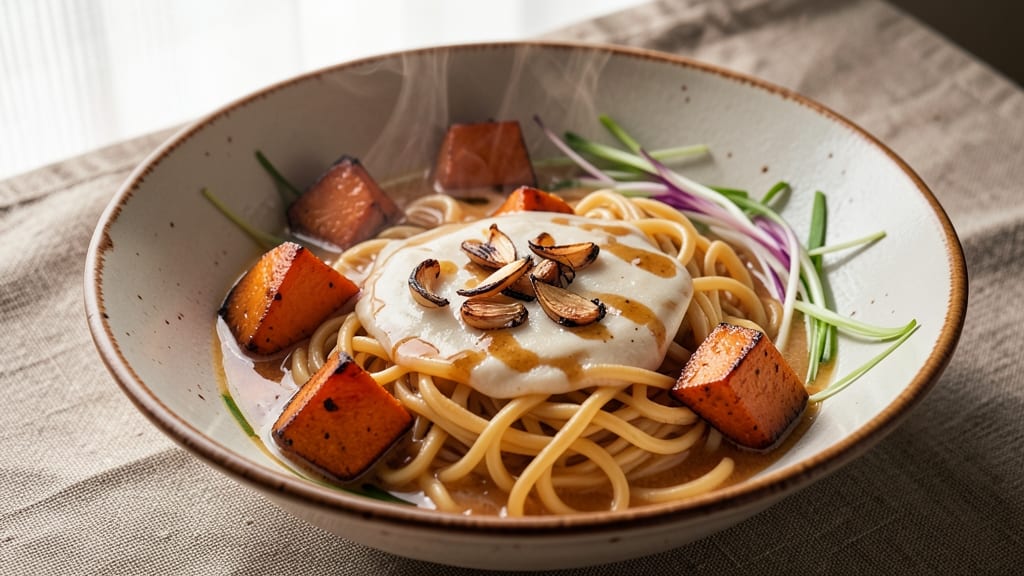
This sweet potato ramen recipe transforms a simple bowl into a symphony of flavors—creamy coconut broth meets earthy sweet potato, balanced by deep umami and a touch of spice. The secret lies in roasting the sweet potatoes until caramelized, then blending them into the broth for a velvety texture that clings to every noodle. I developed this version after craving something comforting yet vibrant, and it became an instant family favorite.
The broth is where the magic happens: coconut milk provides richness, while miso paste and soy sauce deliver that essential umami depth. You’ll roast the sweet potatoes until tender and slightly crispy, then puree them into the simmering broth for natural sweetness that harmonizes with the savory base.
The result? A bowl that’s creamy, aromatic, and packed with layers of flavor without being overpowering.
What sets this apart is the balance—sweet potatoes add natural sweetness, but the broth’s umami and spice keep it sophisticated. Serve with chewy ramen noodles, a soft-boiled egg, and garnishes like green onions or chili oil for a restaurant-quality meal in under an hour.
The protein options are endless: pork belly for richness, chicken for brightness, or tofu for a vegetarian twist.
This recipe is perfect for weeknight dinners when you want something hearty yet healthy, or for impressing guests with a dish that feels both familiar and elevated. The technique is straightforward, but the result is anything but basic—creamy, comforting, and impossible to resist. Let’s get cooking!
Ingredients for sweet potato ramen
Sweet potatoes, coconut milk, and umami-rich miso create this velvety broth that's creamy yet balanced.
| Ingredient | Amount | Notes |
|---|---|---|
| Sweet Potatoes 🍠 | 2 large | Organic preferred, peeled and cubed |
| Coconut Milk 🥥 | 1 can (13.5 oz) | Full-fat for creaminess |
| White Miso Paste 🧈 | 2 tbsp | High-quality, smooth texture |
| Soy Sauce 🍶 | 2 tbsp | Light or regular, not low-sodium |
| Ramen Noodles 🍜 | 2 packages (3 oz each) | Fresh or dried, chewy variety |
| Garlic Cloves 🧄 | 4 cloves | Minced for aroma |
| Fresh Ginger 🌿 | 1 inch | Peeled, sliced thin |
| Chicken or Vegetable Broth 💧 | 4 cups | Low-sodium preferred |
| Sesame Oil 🌰 | 1 tbsp | Toasted for nutty flavor |
| Green Onions 🧅 | 3 whole | Sliced for garnish |
| Red Chili Flakes 🌶️ | 1 tsp | Adjust for heat preference |
| Sesame Seeds 🌱 | 1 tsp | Toasted for crunch |
| Large Eggs 🥚 | 4 whole | Soft-boiled for garnish |
| Olive Oil 🫒 | 2 tbsp | For roasting sweet potatoes |
| Salt 🧂 | 1 ½ tsp | Kosher or sea salt |
Sweet potatoes are the backbone here—organic or heirloom varieties have the best flavor. I grab mine from Whole Foods or the produce section at Trader Joe's when they're in season. Look for firm, vibrant orange potatoes with no soft spots. The key is roasting them until caramelized—don't skip this step. It's worth the extra time for that deep, sweet flavor that blends perfectly with the coconut. If you're short on time, microwave them first to speed up the roasting process.
No miso paste? White soy sauce or vegan miso will work in a pinch, though the flavor won't be identical. Fresh ginger is ideal, but powdered works at half the amount. For the broth, low-sodium chicken or vegetable broth is crucial—you don't want to overpower the delicate flavors. The ramen noodles can be any type, but fresh or dried chewy noodles hold up best. Pro tip: Toast your sesame seeds in a dry pan for 30 seconds before adding to the broth—they'll be so much more aromatic. And if you're feeling fancy, add a splash of Mirin or rice wine for extra depth.
This broth keeps beautifully—3-4 days in the fridge or 3 months in the freezer. I always make extra and freeze it in portions for quick ramen nights. The sweet potatoes can be roasted ahead and stored in the fridge for up to 3 days before blending. For the perfect bowl, assemble everything right before serving so the noodles stay chewy. Garnish with soft-boiled eggs, green onions, and a drizzle of chili oil for that restaurant-quality finish.
Why You'll Love This Recipe
- Here’s what sold me: that first bite of caramelized sweet potato against the umami depth of white miso and soy. The coconut milk smooths it out like a creamy hug, but the broth stays rich—not watery, not bland. It’s the kind of flavor that makes you pause mid-bite, even if you’re scarfing it down at midnight.
- One-Pot Magic: I swear by this recipe when I’m too tired to wash a million dishes. Peel and cube the sweet potatoes, toss them in the same pot with the noodles and broth—no extra pans, no stress. The miso and coconut milk blend right in while you wait, so you’re basically hands-off until the aroma hits your kitchen.
- Sweet & Savory Balance: Here’s what sold me: that first bite of caramelized sweet potato against the umami depth of white miso and soy. The coconut milk smooths it out like a creamy hug, but the broth stays rich—not watery, not bland. It’s the kind of flavor that makes you pause mid-bite, even if you’re scarfing it down at midnight.
- Leftovers That Feel Fresh: Between us, my lunchbox gets packed with this for days. The noodles soften just enough to reheat perfectly, and the sweet potatoes hold their texture. I’ll be real: I’ve had it cold the next day, and it’s still better than takeout. Plus, it’s cheap enough to make twice in one week without guilt.
Step-by-step instructions for sweet potato ramen
Here's how to build this creamy, umami-packed ramen from scratch—no shortcuts, just bold flavors.
Roast the Sweet Potatoes Until Caramelized
Preheat your oven to 400°F. Toss the 2 large peeled and cubed sweet potatoes with 2 tablespoons olive oil and 1.5 teaspoons salt on a baking sheet. Spread them in a single layer—they need room to brown, not steam. Roast for 30-35 minutes, stirring halfway, until edges turn deep golden brown and they're tender when pierced with a fork.
This step transforms starchy sweet potatoes into sweet, caramelized cubes that'll thicken your broth beautifully. If they soften too quickly, lower the oven to 375°F for the last 10 minutes to prevent burning. Reserve these roasted cubes—they'll be your broth's secret weapon.
Build the Coconut-Miso Broth
In a large pot over medium heat, combine the roasted sweet potatoes with 4 cups chicken or vegetable broth. Bring to a simmer, then reduce heat to low and cook for 10 minutes to infuse flavors. Strain through a fine-mesh sieve into a clean pot, pressing gently on the solids to extract maximum liquid.
Return the strained broth to the pot and stir in 1 can (13.5 oz) coconut milk, 2 tablespoons white miso paste, and 2 tablespoons soy sauce. Let it simmer gently for 5 minutes—this is where the magic happens. The miso dissolves completely and the coconut milk emulsifies into a velvety texture. Taste and adjust saltiness if needed (the miso adds enough umami you might not need extra).
Cook the Noodles and Prepare Garnishes
While the broth simmers, bring a separate pot of water to a boil and cook the 2 packages (3 oz each) ramen noodles according to package instructions—usually 3-4 minutes for al dente texture. Drain and set aside, reserving ½ cup pasta water for later.
For the garnishes: Soft-boil the 4 large eggs by simmering in water for 6 minutes, then transfer to an ice bath for 5 minutes before peeling. Slice the 3 whole green onions and toast the 1 teaspoon sesame seeds in a dry pan over medium heat for 1 minute until fragrant. Minced 4 cloves garlic and sliced 1-inch fresh ginger are ready to go.
Assemble and Finish with Umami Layers
Divide the cooked noodles among 4 bowls. Ladle the hot broth over each portion, then float the soft-boiled eggs on top. Drizzle with 1 tablespoon sesame oil and sprinkle with toasted sesame seeds, sliced green onions, and 1 teaspoon red chili flakes. The chili flakes add heat without overpowering the creamy coconut base.
Let diners stir everything together—the broth will thicken slightly as it cools, creating that perfect ramen consistency. If it gets too thick, add a splash of the reserved pasta water to loosen. Serve immediately while the broth is steaming and the noodles are al dente. This ramen delivers creamy coconut richness with deep umami layers from the miso and sweet potato—every bite is balanced perfection.
Pro Tips For Making Sweet Potato Ramen
- PEEL AND CUBE SMALL: Sweet potatoes keep their shape better when cut into 1.5-inch chunks—big enough to hold together but small enough to soften fast. I learned this the hard way after watching my first batch turn to mush in the broth.
- WHISK MISO FIRST: Stir the white miso paste directly into the hot (not boiling) coconut milk until fully dissolved before adding soy sauce. This prevents clumps and lets the umami melt smoothly into the base—no scraping bowls required.
- SIMMER NOODLES SEPARATELY: Cook the ramen noodles in a separate pot of salted water until just al dente, then drain and rinse with cold water. Tossing them straight into the coconut-miso broth makes the broth watery and dulls the flavors.
- STIR IN COCONUT MILK LAST: Add the coconut milk to the simmering sweet potato broth only in the final 5 minutes of cooking. This keeps the broth from curdling and ensures the creaminess coats every noodle instead of separating.
Storing and reheating your leftovers
Broth Storage Secrets
Your creamy coconut-miso broth stays fresh for 3-4 days in the fridge when stored in an airtight glass container. I prefer wide-mouth Mason jars because they're easy to reheat and portion.
For longer storage, freeze in quart-sized freezer bags, leaving 1-inch headspace for expansion. The broth develops even deeper flavor when reheated—just thaw overnight in the fridge before using. 🥥
Noodle Prep Ahead
Cook noodles just before serving for perfect texture, but you can prep the garnishes in advance. Soft-boiled eggs keep for 2 days in the fridge if peeled and submerged in cold water.
Toasted sesame seeds lose their aroma after 3 days, so store them in a small airtight container at room temperature. Slice green onions and keep them in a sealed container with a paper towel to absorb moisture. 🧅
Reheating Perfection
For the best texture, reheat broth and noodles separately. Warm broth on the stovetop over medium-low heat until steaming, then stir in 1 tablespoon coconut milk to restore creaminess. For noodles, use a splash of the reserved pasta water to prevent drying.
Microwave reheating works in a pinch—cover with a damp paper towel and heat in 1-minute intervals until hot. 🔥
Make-Ahead Assembly
Assemble bowls the night before for a quick morning meal. Store components separately: broth in one container, cooked noodles in another, and garnishes in a third. When ready to serve, simply reheat everything and assemble fresh.
The noodles will soften slightly but maintain their chewiness. This is my go-to strategy for busy weekdays—just add hot water to the broth and stir. ✨
Freezer-Friendly Tips
Freeze broth in ice cube trays for single-serving portions. Each cube makes about ½ cup of broth when thawed—perfect for quick ramen nights. For complete meals, freeze noodles separately in a ziplock bag with a splash of oil to prevent sticking.
Thaw overnight in the fridge before reheating. This method preserves texture remarkably well. ❄️
Garnish Refreshers
Revive wilted green onions by soaking slices in ice water for 5 minutes before using. For extra crunch, toast sesame seeds fresh each time you serve. Store chili oil in the fridge after opening—it keeps for 2 weeks this way.
A drizzle of chili oil just before serving adds that restaurant-quality finish. 🌶️
Nutrition facts
Frequently asked questions
Can I make this sweet potato ramen vegetarian?
Swap the chicken broth for vegetable broth and use firm tofu or mushrooms for protein. The coconut-miso broth remains rich and satisfying on its own, and tofu absorbs the flavors beautifully when simmered in the broth for 5 minutes before serving.
Why does my broth turn grainy when I add coconut milk?
This happens when coconut milk separates or the broth cools too quickly. To prevent it, always stir the coconut milk into the broth while it's still simmering over low heat—never cold. For extra smoothness, whisk in 1 teaspoon cornstarch mixed with 1 tablespoon water and simmer for 2 minutes to thicken gently. The roasted sweet potatoes also help stabilize the texture.
How do I adjust the sweetness level in the broth?
The roasted sweet potatoes add natural sweetness, but you can balance it by increasing the soy sauce or miso paste for more umami depth. For a sweeter broth, add 1 teaspoon honey or maple syrup while simmering, or use ½ cup orange juice instead of water when soft-boiling the eggs. Taste as you go—this broth is designed to be versatile!
Can I use regular potatoes instead of sweet potatoes?
Regular potatoes won't work—they lack the natural sweetness and creamy texture that makes this recipe special. Sweet potatoes caramelize beautifully and blend into a velvety consistency that complements the coconut broth perfectly. If you're out of sweet potatoes, try butternut squash (roasted and pureed) as a substitute, but the flavor will differ slightly.
What’s the best way to make this recipe spicier?
Add 1 tablespoon gochujang (Korean chili paste)> or 1 teaspoon sriracha directly to the broth while simmering. For heat without liquid, sprinkle extra red chili flakes on top or drizzle with chili oil. For a smoky kick, stir in ½ teaspoon smoked paprika when building the broth. Adjust to taste—this dish balances well with bold flavors!