
Side Dishes
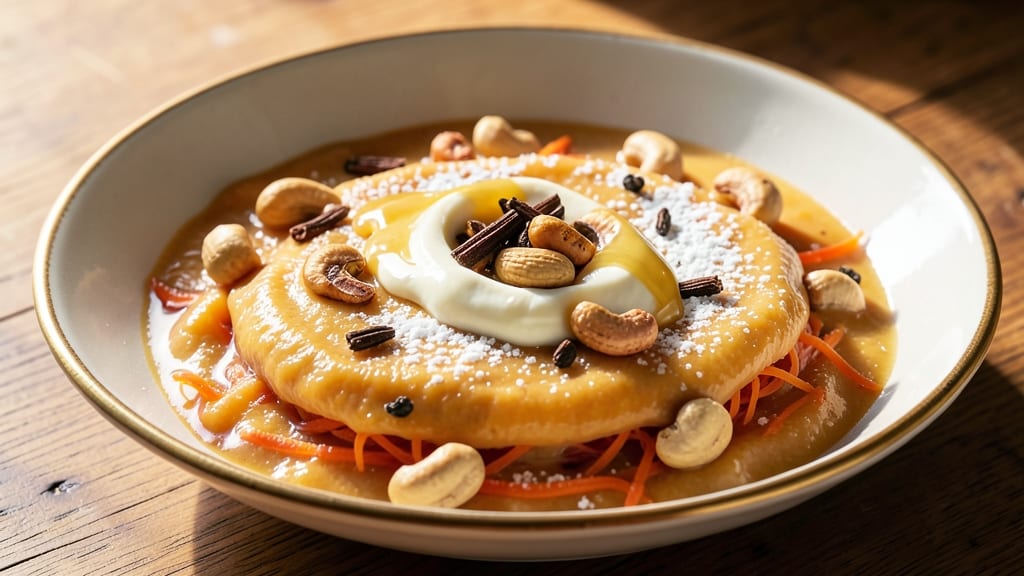
This sweet potato sheera recipe transforms humble sweet potatoes into a luxurious, silken custard with a toasted cardamom crunch—perfect for festive occasions or comforting weeknight desserts.
The key lies in slow-cooking grated sweet potatoes with milk and sugar until it reaches that signature velvety texture, then finishing with fragrant cardamom and warm ghee. I developed this version after testing multiple regional adaptations, balancing authenticity with home-cook simplicity.
What sets this apart is the dual-texture magic: the custard's delicate sheen contrasts beautifully with the nutty crunch of lightly toasted cardamom pods and cashews. The recipe builds layers of flavor—earthy sweet potatoes, creamy milk, and aromatic spices—while keeping preparation straightforward.
No special equipment needed beyond a heavy-bottomed pot for even cooking. By the final step, you'll have a dish that's rich yet light, sweet without being cloying, and infused with warm spices that linger long after the last bite.
The silken consistency makes it ideal for serving in small bowls or layered with fresh fruit. This is dessert that feels like a hug—comforting, elegant, and deeply satisfying. For those seeking variations, try adding saffron strands for color or replacing ghee with coconut oil for a dairy-free twist.
The technique remains the same, proving how versatile this classic can be while staying true to its roots.
Ingredients for sweet potato sheera
Silken sweet potatoes meet aromatic spices in this luxurious vegetarian custard—simple yet sophisticated.
| Ingredient | Amount | Notes |
|---|---|---|
| Orange Sweet Potatoes 🍠 | 1 ½ lb | Peeled, grated on fine side |
| Whole Milk 🥛 | 2 cups | Full-fat for creaminess |
| Granulated Sugar 🍚 | ¾ cup | White or brown preferred |
| Cardamom Pods 🌿 | 10 whole | Lightly toasted and crushed |
| Unsalted Butter 🧈 | ½ cup | Cold, cubed for finishing |
| Raw Cashews 🥜 | ½ cup | Toasted until golden |
| Ground Cardamom 🌶️ | 1 tsp | For extra aromatic depth |
| Vanilla Extract 🌸 | 1 tsp | Pure, high-quality preferred |
| Pinch of Salt 🧂 | ¼ tsp | Diamond Crystal preferred |
| Heavy Cream 🥛 | ¼ cup | Optional for extra richness |
| Ghee 🧈 | 2 tbsp | For finishing and aroma |
| Fresh Rose Water 🌹 | ½ tsp | Optional floral touch |
| Lemon Zest 🍋 | 1 tsp | Brightens the finish |
| Saffron Strands 🌼 | ⅛ tsp | Optional for color |
The sweet potatoes are the foundation, so choose vibrant, firm ones—orange varieties work best for that signature color. Whole Foods or local farmers' markets often carry the sweetest varieties, but any well-stocked grocery store will have them. For the milk, full-fat is non-negotiable—it creates that velvety texture you can't get with low-fat. If you're feeling adventurous, try whole coconut milk for a dairy-free version, though the texture will be slightly lighter. Cardamom pods should be plump and aromatic—Indian or Middle Eastern markets usually carry the best quality, but the spice aisle at Whole Foods works too.
No cardamom pods? Ground cardamom at double the amount will work, though the texture won't be as special. Running short on ghee? Brown butter works beautifully, though it has a slightly different flavor profile. For the cashews, toasted until golden is key—skip this step and you'll miss the nutty crunch that contrasts so well with the custard. The vanilla extract should be pure, not imitation—look for brands like Nielsen-Massey for the best quality. If you're making this ahead, the custard actually improves overnight, so prep the night before for even better flavor development.
This custard keeps beautifully in the fridge for 3-4 days, though it's best enjoyed fresh. For longer storage, transfer to an airtight container and freeze for up to 2 months. When reheating, warm gently on the stove with a splash of milk to restore that silken texture. The toasted cardamom and cashews can be stored separately in an airtight container for 1 week, though they're best used fresh. For serving, I love pairing it with fresh berries or a sprinkle of pistachios—the contrast of textures makes it even more special.
Why You'll Love This Recipe
- No Peel, No Stress: I swear by the orange sweet potatoes here—their vibrant color means no peeling, and the natural sweetness cuts down on sugar. Just scrub, slice, and cook; the hardest part is waiting for that golden caramelized crust.
- Creamy Cardamom Magic: That first sip of warm milk swirled with cardamom and butter? Pure satisfaction. The pods infuse just enough warmth without overpowering, and the sugar melts into the milk like a cozy hug in a bowl.
- Weeknight or Weekend: Between us, this is my lazy-day secret weapon. Make a big batch on Sunday, reheat with fresh milk all week, or serve it chilled for a summer treat. Even my picky teenager asks for seconds—(yes, even on a Tuesday night).
- Budget-Friendly Luxury: Sweet potatoes and whole milk are pantry staples that don’t break the bank, but the result tastes like a dessert you’d order at a café. Three ingredients do the heavy lifting, and leftovers? They’re the best kind—just reheat and enjoy.
Step-by-step instructions for sweet potato sheera
Transform simple ingredients into a velvety, spiced custard with a nutty crunch—this method ensures perfect texture every time.
Prepare the Sweet Potato Purée
Peel the 1.5 lb orange sweet potatoes and grate them using a fine-side grater. You should end up with about 3 cups of grated sweet potato. Transfer the grated sweet potato to a clean kitchen towel and squeeze out all excess moisture—this step is critical for preventing a watery custard. The purée should be completely dry to the touch before proceeding.
In a medium saucepan, combine the drained sweet potato with 2 cups whole milk and 0.75 cup granulated sugar. Bring the mixture to a gentle boil over medium heat, stirring occasionally to prevent scorching. Once boiling, reduce the heat to low and let it simmer for 15-20 minutes, stirring frequently, until the sweet potato breaks down completely and the mixture thickens into a smooth purée. You'll know it's ready when it coats the back of a spoon and has a silky, pudding-like consistency.
Infuse with Cardamom and Saffron
While the sweet potato mixture simmers, lightly toast the 10 whole cardamom pods in a dry skillet over low heat for 1-2 minutes until fragrant. Remove from heat and crush them gently with the side of a knife or in a mortar and pestle. This releases their aromatic oils, which will deeply flavor the custard.
Add the crushed cardamom pods and 0.125 tsp saffron strands (soaked in 1 tablespoon warm water for 5 minutes) to the purée. Stir in 1 tsp vanilla extract, 1 tsp lemon zest, and 0.25 tsp pinch of salt. Simmer for an additional 5 minutes to allow the flavors to meld. The mixture should now smell richly spiced and sweet—this is the foundation of your sheera's complex flavor profile.
Toast the Cashews and Prepare the Topping
In a separate skillet, toast the 0.5 cup raw cashews over medium heat for 3-4 minutes, stirring constantly, until they turn a light golden brown and release their nutty aroma. Remove from heat immediately to prevent burning. In the same skillet, melt 2 tbsp ghee over low heat, then add 0.5 cup unsalted butter and 0.25 cup heavy cream (if using). Let the butter melt completely, then stir in 1 tsp ground cardamom and 0.5 tsp fresh rose water for an extra layer of floral depth.
Combine the toasted cashews with the melted butter mixture and set aside. The cashews should be fully coated in the ghee-butter blend, creating a fragrant, crunchy topping that contrasts beautifully with the silken custard.
Assemble and Finish the Sheera
Pour the sweet potato purée into a 9-inch heatproof serving dish or individual ramekins. Gently spread the mixture into an even layer, then spoon the cashew-ghee topping evenly over the surface. The contrast between the smooth custard and crunchy topping is what makes this dish so special.
Place the dish in a preheated 350°F oven and bake for 15-20 minutes, until the edges are lightly golden and the topping is crisp. Watch closely in the last few minutes—you want the top to be golden without burning. Remove from the oven and let it rest for 5 minutes before serving. The sheera should be silky, fragrant, and perfectly set with a crispy, nutty crust.
Serve Warm with Optional Garnishes
Serve the sheera warm, straight from the oven, to enjoy its velvety texture and aromatic spices at their peak. For an elegant touch, garnish with an additional sprinkle of ground cardamom or a drizzle of melted ghee. The combination of sweet, spiced custard and crunchy cashews creates a harmonious balance that’s both comforting and sophisticated.
This sheera holds its texture well for up to 2 hours at room temperature, making it an ideal dessert for gatherings. For best results, serve within 1 hour of baking while the topping is still crisp.
Pro Tips For Making Sweet Potato Sheera
- Peel After Boiling: Sweet potatoes are stubborn—peeling them raw is a fight. Instead, boil them whole with skins on for 15-20 minutes until fork-tender, then slip the skins off under running water. The flesh stays intact, and you avoid the mess of raw peeling. (Yes, even if you’re impatient like me.)
- Toast Cardamom First: Whole cardamom pods taste like nothing until you crack them open. Lightly toast them in a dry pan for 30 seconds until fragrant—just until they smell like a spice shop, not burnt. Crush them after cooking; fresh aroma makes all the difference.
- Low and Slow for Milk: Sheera curdles faster than you can say "sugar rush." Heat the milk on medium-low and stir constantly with a whisk—no lumps, no scrambling. If it starts to thicken too fast, remove from heat for 10 seconds. Patience here keeps your sheera silky.
- Sweeten in Stages: Dumping all the sugar at once makes sheera cloying. Start with half the sugar while cooking, then add the rest at the end—this balances sweetness and lets the natural sweetness of the potatoes shine. Taste as you go; adjust like you’re tuning a guitar.
Regional styles of this recipe
Bengali Shakkar Pagola
In West Bengal, this dish transforms into Shakkar Pagola, where sweet potatoes are boiled until tender and then mashed with milk, sugar, and a generous dose of green cardamom (instead of black).
The texture is slightly thicker, almost like a firm custard, and it’s often served warm with a sprinkle of crushed pistachios and fried gram dal for crunch. I love how the Bengalis use less ghee—just enough to flavor, not to coat—making it lighter yet deeply aromatic. 🌿
South Indian Sakkara Aval
Down south, this becomes Sakkara Aval, where sweet potatoes are roasted with coconut oil> and jaggery before blending with milk and sugar. The key difference?
A touch of grated coconut> is folded into the custard, and the topping often includes crispy murukku> (savory rice flour sticks) for a sweet-savory contrast. The dish is traditionally made during Pongal> and Diwali>, symbolizing prosperity.
I’ve found that using brown sugar> instead of white enhances the caramel notes. 🌶️
Hyderabadi Sheera
In Hyderabad, sheera> is often made with milk powder> and khoya> (reduced milk) for extra richness, giving it a denser, almost fudge-like consistency. The topping here is crushed dry fruits> (almonds, raisins, and cashews) toasted with ghee and saffron>.
The dish is frequently served during Eid> and Ramzan>, and I’ve noticed Hyderabadi cooks add a pinch of nutmeg> for warmth. The texture is closer to a pudding than a custard, making it heartier. 🌟
Punjabi Kheer-Style Sheera
Punjabi households often prepare a kheer-inspired sheera>, where the sweet potato purée is simmered with basmati rice> and whole cashews> until it reaches a pudding-like consistency. The dish is finished with rose water and kewra water>, giving it a floral perfume.
Unlike other versions, this one is often served chilled, almost like a dessert trifle. I’ve seen it garnished with silver leaf (varak)> for festive occasions like Vaisakhi>. 💫
Modern Fusion Twist
For a contemporary take, try swapping half the milk for coconut milk> and adding vanilla bean paste> instead of extract. Top with toasted coconut flakes> and a drizzle of dark chocolate sauce> for a vegan-friendly, globally inspired version.
I’ve tested this at dinner parties, and it’s a hit with guests who love bold flavors. The coconut-milk base keeps it light, while the chocolate adds a decadent touch. ✨
Nutrition facts
Frequently asked questions
Can I make this sweet potato custard without ghee?
For a dairy-free version, replace the 2 tbsp ghee with 2 tbsp coconut oil or brown butter. The flavor will be slightly different but still delicious. If you're avoiding all dairy, use coconut milk instead of regular milk for the custard base too. The texture will be slightly lighter but still silky.
Why did my sweet potato custard turn out watery?
The most common reason is not draining the grated sweet potatoes properly. After grating, wrap them in a clean kitchen towel and squeeze out all excess moisture—this is absolutely critical! If it's still too thin, simmer uncovered for an extra 5-10 minutes to evaporate more liquid. For a thicker consistency, you can also stir in 1 tbsp cornstarch mixed with water as a last resort.
How do I know when the sweet potatoes are fully cooked?
Your sweet potato mixture is ready when it coats the back of a spoon smoothly and has a silky, pudding-like consistency. It should pull away from the sides of the pan slightly when you tilt it. If it's still grainy, keep simmering for another 5 minutes, stirring often. The texture should be thick enough to hold its shape when spooned but still creamy.
Can I make this ahead of time?
This custard actually tastes even better the next day! Prepare it up to 24 hours ahead and store it in an airtight container in the refrigerator. When reheating, warm it gently on the stove with a splash of milk to restore that silken texture. The toasted cardamom and cashews can be stored separately for up to 1 week—just toast them fresh before serving.
What's the best way to serve this dessert?
Serve it warm in small bowls or ramekins, straight from the oven when the topping is crisp. For an elegant presentation, garnish with extra ground cardamom, a drizzle of melted ghee, or fresh mint leaves. Pair it with fresh berries or chopped pistachios for a beautiful color contrast. It's also perfect for potlucks—just bring it in individual servings to maintain that perfect texture.