
Side Dishes
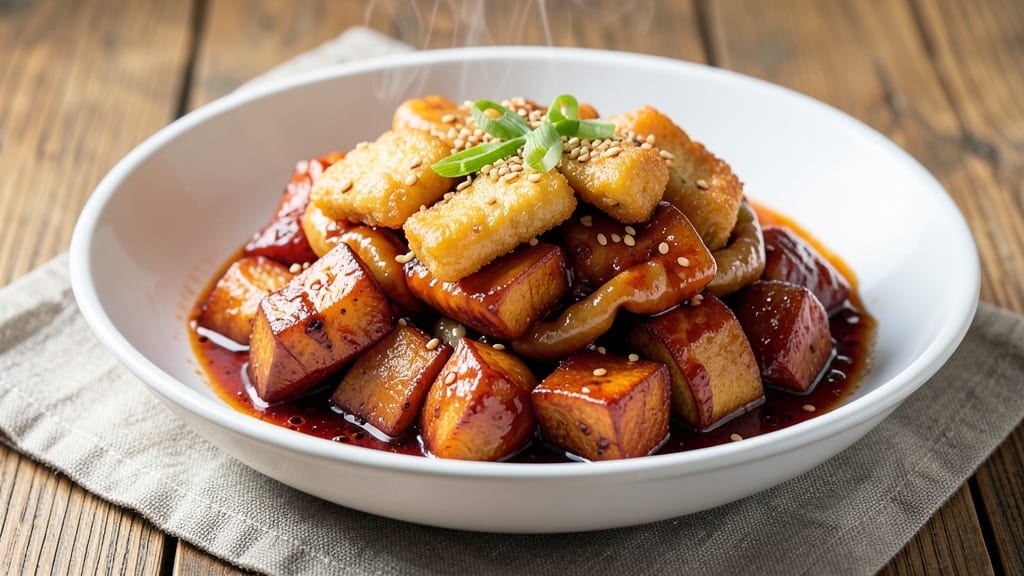
This sweet potato tteokbokki recipe transforms classic Korean rice cakes into a vibrant, chewy masterpiece with naturally sweet roasted sweet potatoes. The caramelized edges of the sweet potatoes contrast beautifully with the spicy-savory gochujang broth, creating a dish that's both comforting and bold.
I developed this recipe after craving the perfect balance of sweet, spicy, and umami—something that feels both nostalgic and fresh.
The magic happens in the roasting process, where sweet potatoes develop a silky texture and deep caramelized flavor that pairs perfectly with the chewy rice cakes.
A rich, aromatic broth made with gochujang, soy sauce, and a touch of sugar ties everything together, while optional proteins like fish cakes or tofu add heartiness. This dish is foolproof—ideal for weeknight dinners or meal prep—yet packed with restaurant-quality depth.
What you'll end up with is a spicy, sweet, and satisfying dish that's as visually striking as it is delicious. The sweet potatoes add natural sweetness that balances the heat, while the rice cakes absorb the flavorful broth, creating bites that are tender yet chewy.
Serve it with steamed rice or as a standalone dish—either way, it's a crowd-pleaser that feels like a hug in every bite.
For those who prefer a milder version, simply reduce the gochujang or add a splash of milk to the broth. Vegetarians can swap in tofu or mushrooms for protein, and the dish still delivers the same bold, comforting flavors. Let's get cooking!
Ingredients for sweet potato tteokbokki
Sweet potatoes and chewy rice cakes—this combo delivers restaurant-quality spice and sweetness right to your table.
| Ingredient | Amount | Notes |
|---|---|---|
| Medium Sweet Potatoes 🍠 | 2 lb | Cubed, skin on for texture |
| Tteokbokki Rice Cakes 🍡 | 14 oz | Store-bought or homemade |
| Gochujang Paste 🌶️ | ⅓ cup | Korean chili bean paste |
| Soy Sauce 🍶 | ¼ cup | Light or dark preferred |
| Brown Sugar 🍚 | ¼ cup | Packed, for caramelization |
| Fish Cakes 🐟 | 10 oz | Optional protein addition |
| Garlic Cloves 🧄 | 6 cloves | Minced for aromatic base |
| Asian Pearl Onions 🧅 | 2 whole | Sliced into half-moons |
| Green Onions 🌿 | ¼ cup | Sliced, for garnish |
| Vegetable Oil 🫒 | 2 tbsp | For roasting and stir-fry |
| Sesame Seeds 🌰 | 1 tbsp | Toasted, for garnish |
| Sesame Oil 🫒 | 1 tbsp | For finishing aroma |
| Water 💧 | 1 ½ cups | For broth consistency |
| Salt 🧂 | 1 tsp | Kosher or sea salt |
| Black Pepper 🌶️ | ½ tsp | Freshly ground preferred |
The sweet potatoes are non-negotiable here. Orange-fleshed varieties like Jewel or Beauregard roast up silky and caramelized—white sweet potatoes stay too starchy. I grab mine from Trader Joe's when they're on sale, or hit the produce section for the freshest. Cube them about 1.5 inches for perfect texture—too small and they burn, too big and they stay raw inside. For the rice cakes, Korean specialty stores have the best selection, but Asian grocery freezer sections always carry them too. Look for packages labeled 'tteokbokki'—they're chewier than regular rice cakes.
No fish cakes? Extra-firm tofu or shrimp works just as well—just cube them smaller so they cook faster. The gochujang is where the magic happens, so don't skimp. Maesil Gochujang is my go-to, but any brand works. For a milder version, mix in 1 tbsp of milk powder with the broth. The brown sugar might seem like overkill, but trust me—it caramelizes beautifully when roasted with the potatoes. No sesame oil? Toasted sesame seeds + 1 tsp neutral oil gives you that nutty aroma without the strong flavor.
Roasted sweet potatoes keep in the fridge for 5 days if stored in an airtight container—perfect for meal prep. The rice cakes? Eat them fresh or they get gummy. This dish reheats beautifully—just add a splash of water to the broth. For extra flavor, freeze portions of the broth in ice cube trays and toss them into future stir-fries. The sesame seeds and green onions lose freshness after 3 days, so garnish just before serving.
Why You'll Love This Recipe
- Sweet Potato Magic: I swear by the way those roasted sweet potatoes caramelize—just slice, toss in oil, and let the oven do the work. No peeling, no fuss, and the natural sweetness balances the spicy-savory sauce perfectly.
- Sauce in Minutes: Mix gochujang, soy sauce, and brown sugar in a bowl—that’s it. The gochujang gives it that signature tangy heat, while the brown sugar cuts through it like a cozy hug. Honestly, I’ve made this sauce wrong three times, but it still tastes spot-on.
- Leftovers That Shine: This dish actually gets better the next day. The sweet potatoes soften just enough to soak up the sauce, and the rice cakes plump up like little flavor bombs. I meal prep it all the time—just reheat and serve, no sad takeout nights.
- Budget Crowd-Pleaser: Sweet potatoes and rice cakes are cheap staples, and this recipe stretches for four servings without breaking the bank. Between us, I’ve served this at potlucks, family dinners, and lazy Sundays—no one ever asks for seconds just once.
Step-by-step instructions for spicy sweet potato tteokbokki
Here's how to balance sweet, spicy, and chewy textures in this Korean-inspired dish.
Roast the Sweet Potatoes Until Caramelized
Preheat your oven to 400°F and line a baking sheet with parchment paper. Cut the 2 lb medium sweet potatoes into 1-inch cubes, leaving the skin on for texture. Toss them with 1 tbsp vegetable oil, 1 tsp salt, and ½ tsp black pepper until evenly coated.
Spread the sweet potatoes in a single layer on the prepared baking sheet, leaving space between each piece. Roast for 25-30 minutes, stirring halfway through, until they're golden brown and tender when pierced with a fork. The edges should be slightly crispy—this caramelization is key to the dish's depth of flavor. Remove from the oven and let them cool slightly before using.
Build the Spicy-Sweet Broth Base
In a large pot, combine 1.5 cups water, 0.33 cup gochujang paste, 0.25 cup soy sauce, and 0.25 cup packed brown sugar. Stir over medium heat until the sugar dissolves completely, about 2-3 minutes. The mixture should smell rich and aromatic—like a perfect balance of sweet, spicy, and umami.
Add the 6 minced garlic cloves and cook for another 1 minute until fragrant. This is your flavor foundation, so don't rush it. The broth should be slightly thickened but still pourable. If it's too thin, simmer for an extra minute to reduce it. Keep this mixture warm while you prepare the remaining ingredients.
Stir-Fry the Rice Cakes and Protein
Heat 1 tbsp vegetable oil in a large skillet over medium-high heat. Add the 14 oz tteokbokki rice cakes and stir-fry for 3-4 minutes until they're lightly golden and slightly chewy. Remove them from the pan and set aside.
In the same skillet, add the 10 oz fish cakes and cook for 2-3 minutes per side until golden brown and heated through. The fish cakes should be crispy on the outside but still tender inside. Remove them from the skillet and set aside with the rice cakes. Here's where it gets fun—toss in the 2 sliced whole Asian pearl onions and cook for 1 minute until they just begin to soften.
Combine Everything for Maximum Flavor
Return all the cooked ingredients to the skillet with the warm broth base. Add the roasted sweet potatoes and bring everything to a gentle simmer over medium heat. Stir well to combine, letting the flavors meld together for 5-7 minutes. The sweet potatoes should absorb the spicy-sweet broth while maintaining their texture.
Taste and adjust seasoning if needed—you might want to add a splash more soy sauce for saltiness or a touch of brown sugar for sweetness. The dish should be balanced between sweet, spicy, and savory. Here's the thing—if it looks too thick, add 2-3 tablespoons of water to loosen it slightly. The perfect consistency should coat the back of a spoon but still be pourable.
Finish and Serve with Garnishes
Remove the tteokbokki from heat and stir in 1 tbsp sesame oil. This adds a nutty aroma that ties all the flavors together. Divide the dish among 4 serving bowls, garnishing each with 1 tbsp toasted sesame seeds and 1 tbsp sliced green onions. The contrast of textures and colors makes this dish visually stunning.
Serve immediately while hot, with extra rice cakes on the side if anyone's still hungry. The combination of chewy rice cakes, crispy fish cakes, tender sweet potatoes, and spicy-sweet broth creates a symphony of flavors in every bite. Don't forget to have some kimchi or a side of steamed rice ready—this dish pairs perfectly with both.
Pro Tips For Making Sweet Potato Tteokbokki
- Boil Sweet Potatoes First: I used to try to cube them raw and toss in later—big mistake. Boil whole medium sweet potatoes for 15-20 minutes until fork-tender, then peel and cube. This keeps them from turning to mush in the sauce and lets them soak up the gochujang flavor better.
- Toast Rice Cakes Hard: Skip the soft, mushy texture by toasting the rice cakes in a dry pan with a little oil for 2-3 minutes per side until golden. They’ll hold up in the sauce and give you that satisfying chewy bite. (Yes, even if you’re impatient like me.)
- Balance Gochujang Heat: Start with 1 tablespoon of gochujang paste and adjust to taste—it’s easier to add more than fix overly spicy sauce. If it’s too sharp, a splash of soy sauce or a pinch of brown sugar mellows it out. I learned this after making my first batch too aggressive.
- Simmer Low and Slow: After combining everything, reduce heat to medium-low and let it bubble gently for 10-15 minutes. Rushing this step makes the sauce watery and the flavors uneven. Low and slow lets the sweet potatoes absorb the sauce and the gochujang deepen in flavor.
Creative variations of sweet potato tteokbokki
Spicy-Sweet Fusion
Swap the traditional rice cakes for chewy taro rice cakes (taro tteok) to add a nutty depth that complements the sweet potatoes beautifully. I like using 12 oz of frozen taro rice cakes—they hold up better to the spicy broth and add a subtle earthiness.
For extra heat, add 1 tbsp of gochugaru (Korean chili flakes) to the broth while simmering. This variation is perfect for those who love bold flavors with a touch of complexity. 🌶️
Vegetarian Protein Twist
Replace fish cakes with extra-firm tofu cubes (about 12 oz) pressed and pan-fried until crispy. Toss the tofu in 1 tbsp soy sauce and 1 tsp cornstarch before cooking to enhance texture. For a smoky flavor, add ½ tsp smoked paprika to the broth.
This version keeps the dish hearty while making it fully plant-based. The tofu absorbs the spicy-sweet broth beautifully, creating a satisfying bite. 💚
Sweet Potato Purée Base
For a creamy twist, blend 1 cup of the roasted sweet potatoes with ½ cup warm broth until smooth. Stir this purée back into the simmering tteokbokki for a velvety texture that balances the chewiness of the rice cakes.
Add 1 tsp of vanilla extract to the purée for a subtle sweetness that pairs surprisingly well with the spicy gochujang. This version feels like a cross between tteokbokki and a sweet potato stew. 🥄
Kimchi Tteokbokki Remix
Add ½ cup chopped kimchi (with its juice) to the broth while simmering for a tangy kick. The fermented flavors cut through the sweetness of the potatoes, adding layers of complexity. For extra richness, stir in 1 tbsp of sesame paste (not oil) at the end.
This variation is perfect for kimchi lovers and adds a probiotic boost to the dish. The contrast of textures and flavors makes every bite exciting. 🥬
Mild Family-Friendly Version
Reduce the gochujang to 0.25 cup and add 1 tbsp of honey or maple syrup to balance the sweetness. For a creamy finish, stir in 2 tbsp of coconut milk at the end.
This version is ideal for kids or sensitive palates while still delivering the comforting flavors of tteokbokki. The sweet potatoes' natural sweetness shines through, making it a crowd-pleaser. 👨👩👧👦
Meal Prep Adaptation
Roast extra sweet potatoes and store them in an airtight container for up to 5 days. Keep the cooked rice cakes separate until ready to reheat. When assembling, simply toss the pre-cooked ingredients with a splash of water and reheat over medium heat for 5 minutes.
Add fresh fish cakes or tofu at the end to keep them crispy. This make-ahead version saves time without sacrificing flavor. Perfect for busy weeknights! ⏰
Nutrition facts
Frequently asked questions
Can I use regular potatoes instead of sweet potatoes?
Sweet potatoes are key here—their natural sweetness and silky texture create the perfect balance with the spicy broth. Regular potatoes would make the dish too starchy and lack that caramelized depth. If you're set on using them, try purple potatoes for a slightly earthier flavor, but roast them 10 minutes longer to compensate for their denser texture.
How do I adjust the spice level?
For milder heat, reduce the gochujang to 0.25 cup and add 1 tbsp honey or maple syrup to balance flavors. For extra spice, stir in 1 tbsp gochugaru (Korean chili flakes) at the end or add ½ tsp cayenne pepper to the broth. Always taste as you go—you can always add more spice, but you can't take it out!
Can I make this dish ahead of time?
Roast and store sweet potatoes for 5 days in an airtight container. Keep rice cakes separate until reheating. When ready, toss pre-cooked ingredients with 2 tbsp water and simmer for 5 minutes. Add fresh protein (like fish cakes) at the end to maintain crispiness. The flavors actually improve overnight as they meld together.
What if my rice cakes get mushy?
Overcooking is the most common culprit. Stir-fry rice cakes over medium-high heat for only 3-4 minutes—they should be lightly golden, not browned. For extra chewiness, add 1 tsp cornstarch when cooking. If they're already mushy, drain excess broth and stir in 1 tsp sesame oil to help restore texture.
Is there a vegetarian version?
Yes! Replace fish cakes with 12 oz extra-firm tofu (pressed and pan-fried) or mushrooms (like shiitake). For extra flavor, toss tofu in 1 tbsp soy sauce + 1 tsp cornstarch before cooking. The tofu absorbs the spicy-sweet broth beautifully while adding protein. This version keeps all the hearty, satisfying qualities of the original.