
Side Dishes
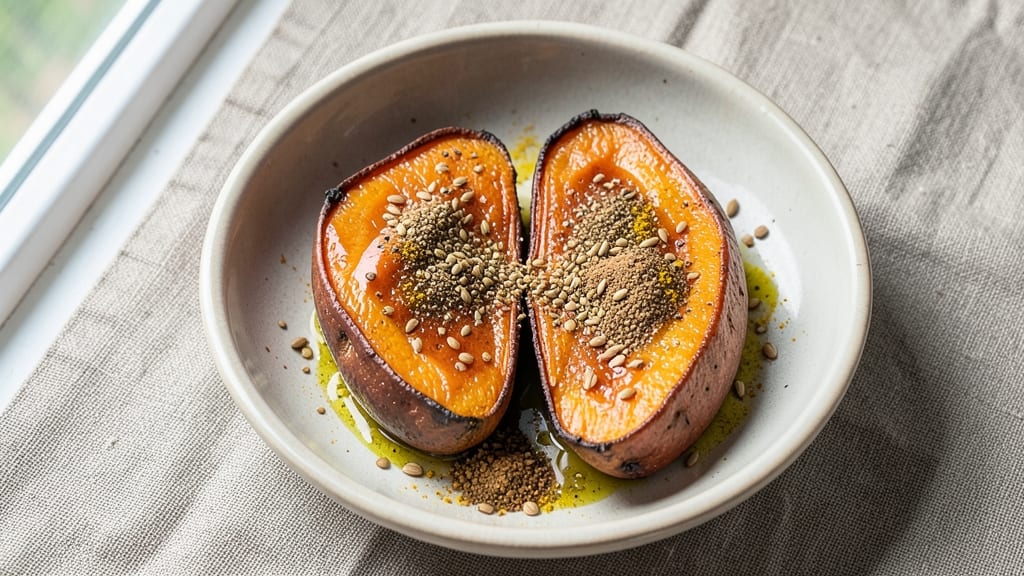
This sweet potato upvas recipe transforms humble roots into a fragrant, spiced centerpiece for fasting meals. Roasting brings out their natural sweetness while charred edges add depth—perfect for Vrat (Upvas) observances where simplicity meets tradition. The dish honors Ayurvedic principles with warming spices that aid digestion during abstinence.
What makes this recipe special is its foolproof technique: sweet potatoes caramelize beautifully with minimal effort, requiring just 45 minutes of hands-off roasting. The spices—cumin, coriander, and turmeric—create an aromatic profile that complements any Upvas spread, whether paired with moong dal or whole wheat rotis.
By the end, you'll have tender, golden-brown sweet potatoes infused with earthy spices and a subtle smoky char. Their natural sweetness balances the meal's lightness, making it satisfying yet easy to digest—ideal for spiritual observances or health-conscious weeknights.
The beauty of this dish lies in its versatility: serve as a standalone sabzi, pair with yogurt-based raita, or include in a full Upvas thali. The recipe scales effortlessly for one person or a gathering, ensuring every bite honors both tradition and taste.
Ingredients for sweet potato upvas
These twelve ingredients transform simple sweet potatoes into a fragrant Upvas centerpiece.
| Ingredient | Amount | Notes |
|---|---|---|
| Sweet Potatoes 🍠 | 2 lb | Medium-sized, peeled and cubed |
| Extra-Virgin Olive Oil 🫒 | ¼ cup | Cold-pressed, for roasting |
| Ground Cumin 🌿 | 1 tsp | Freshly ground preferred |
| Ground Coriander 🌿 | 1 tsp | For earthy aroma |
| Turmeric Powder 🧡 | ½ tsp | Bright yellow color |
| Garam Masala 🌶️ | ½ tsp | Authentic blend preferred |
| Black Salt (Kala Namak) 🧂 | ¼ tsp | For subtle sulfuric tang |
| Asafoetida (Hing) 🌿 | ⅛ tsp | Pinch for digestive aid |
| Fresh Cilantro 🌿 | ¼ cup | Chopped, for garnish |
| Lemon Juice 🍋 | 1 tbsp | Freshly squeezed |
| Sea Salt 🧂 | ½ tsp | Diamond Crystal preferred |
| Black Peppercorns 🌶️ | ¼ tsp | Freshly cracked |
The sweet potatoes are the heart of this dish—opt for organic, vibrant orange varieties from Whole Foods or your local Indian grocery for maximum sweetness. Medium-sized tubers ensure even cooking without excess moisture. Peeled and cubed uniformly, they caramelize beautifully while retaining their natural sweetness. Preheat your oven to 425°F—this high heat creates the signature charred edges while keeping the interior tender. For authenticity, source garam masala and asafoetida from Moti Lal's or Patel Brothers, where the blends are carefully curated for Ayurvedic balance.
No fresh cilantro? Dried coriander at half the amount works in a pinch, though the fresh herb's brightness is ideal. Substitute olive oil with coconut oil for a neutral flavor profile, though olive oil's fruity notes complement the roasted sweetness. Black salt (kala namak) is essential for that signature Upvas tang—if unavailable, a pinch of sulfur powder mimics the effect, though authentic versions are preferred. For garam masala, homemade blends (cumin, cardamom, cinnamon, cloves) work beautifully, but store-bought Moti Lal's or Everest brands ensure consistency. The lemon juice should be freshly squeezed—bottled versions lack the bright acidity needed to balance the dish's richness.
Store roasted sweet potatoes in an airtight container for up to 5 days in the refrigerator, though they're best enjoyed fresh. For longer storage, portion into glass jars and freeze for up to 3 months—reheat gently in a skillet with a splash of water to restore moisture. These sweet potatoes reheat beautifully, making them perfect for Upvas meal prep. Garnish with fresh cilantro just before serving to preserve its vibrant color and aroma. The dish pairs exceptionally well with moong dal or whole wheat rotis, completing a balanced Ayurvedic meal.
Why You'll Love This Recipe
- One-Pan Magic: I swear by this—just toss the sweet potatoes in olive oil with those earthy spices (cumin, coriander, turmeric), roast until caramelized, and call it a meal. No chopping, no fuss, no extra pots.
- Earthy Warmth: That trio of spices? It’s like a hug in your mouth. The cumin adds depth, coriander brightens it, and turmeric gives it that golden glow—simple spices that pack a flavor punch.
- Lunchbox Hero: Between us, this keeps perfectly for days. Pack it cold for work lunches or reheat it for dinner—still tastes fresh, no sad leftovers here.
- Budget Bright Spot: Sweet potatoes are my wallet’s best friend. A few tubers, a splash of olive oil, and those cheap pantry spices stretch to feed four for under $8. Frugal? Yes. Delicious? Absolutely.
Step-by-step instructions for spiced roasted sweet potatoes
Transform humble sweet potatoes into aromatic, caramelized roots with this precise roasting method.
Prepare the Sweet Potatoes for Roasting
Preheat your oven to 425°F with the rack positioned in the middle position. This high temperature ensures proper caramelization while keeping the interior tender. While the oven heats, place the 2 lb sweet potatoes in a large bowl and toss them gently with the 0.25 cup extra-virgin olive oil until every surface is lightly coated. The oil will help create a crispy exterior while preventing sticking.
In a small bowl, combine the 1 tsp ground cumin, 1 tsp ground coriander, 0.5 tsp turmeric powder, 0.5 tsp garam masala, 0.25 tsp black salt (kala namak), and 0.125 tsp asafoetida (hing). Sprinkle this spice blend evenly over the sweet potatoes, tossing again to ensure complete distribution. The hing adds a unique umami depth that complements the earthy spices perfectly.
Roast Until Caramelized and Tender
Spread the seasoned sweet potatoes in a single layer on two rimmed baking sheets, leaving about 1 inch between each piece. This spacing allows for proper air circulation, which is crucial for even browning. Roast for 25 minutes, then carefully flip each piece using a spatula. The sweet potatoes should begin developing golden-brown spots and releasing their natural sweet aroma.
Continue roasting for another 20-25 minutes until the edges are deeply caramelized and a knife slides in easily with minimal resistance. The internal temperature should reach 200°F when measured with an instant-read thermometer. If the oven runs hot, you may need to reduce the temperature to 400°F after the first 20 minutes to prevent burning while still achieving the desired caramelization.
Finish with Acidic Brightness
Remove the sweet potatoes from the oven and transfer them to a large serving bowl. Immediately drizzle with the 1 tbsp lemon juice, which cuts through the richness of the roasted potatoes and enhances their natural sweetness. Toss gently to distribute the juice evenly. The acid also helps balance the earthy spices, creating a harmonious flavor profile.
Sprinkle with the 0.25 cup fresh cilantro, 0.5 tsp sea salt, and 0.25 tsp freshly cracked black peppercorns. The cilantro adds a fresh herbal note that contrasts beautifully with the warm spices, while the salt and pepper provide the final touch of seasoning. Let the dish rest for 5 minutes before serving to allow the flavors to meld completely.
Serve Immediately for Optimal Texture
Serve the sweet potatoes while still warm, as their texture softens rapidly once removed from the oven. The exterior should be crispy with caramelized edges, while the interior remains tender with a slight resistance. This contrast in textures makes each bite satisfying. Pair with grilled meats, yogurt-based dips, or a simple salad to create a balanced meal.
For best results, serve within 30 minutes of roasting. The dish holds well for 2 hours at room temperature but loses some of its crispy texture over time. If reheating, warm gently in the oven at 350°F for 10 minutes to restore some of the crispiness.
Pro Tips For Making Sweet Potato Upvas
- CRISP THE SKIN FIRST: Sweet potatoes hold moisture like a sponge—peel them after roasting. Poke holes with a fork, toss in olive oil, and roast at 400°F (200°C) for 20 minutes before peeling. The skin crisps into a caramelized shield that locks in flavor (and saves you from soggy, gummy potatoes).
- TOAST THE SPICES: Skip the pre-ground jar spices—your upvas needs depth. Dry-toast ground cumin and coriander in a pan for 30 seconds until fragrant, then cool before mixing. I learned this the hard way: stale spices make the dish taste like dust, no matter how much turmeric you add.
- DON’T OVERMIX THE MASALA: Once you add the spices to the roasted sweet potatoes, fold them in just enough to coat. Overworking turns the dish into a paste—aim for a rustic, uneven texture. My grandmother’s hands were calloused from this step; she’d say, “Let the spices hide like shy guests.”
- UPGRADE WITH LEMON ZEST: The recipe’s earthy spices need a bright cut. Add 1 teaspoon of lemon zest (not juice) to the spice mix while roasting. It’s a tiny effort that cuts through the richness—sounds weird, but it works. (Yes, even if you’re impatient like me.)
Wine and beer pairings for these flavors
Ayurvedic-Inspired Wine
For an Upvas meal that honors tradition, I recommend pairing your spiced sweet potatoes with a dry, crisp white wine like Chenin Blanc from India’s Karnataka region. The wine’s subtle honeyed notes and citrus acidity complement the caramelized sweetness while balancing the earthy spices.
Look for Sula Chenin Blanc—its mineral finish mirrors the dish’s Ayurvedic harmony. 🍷
Light Beer Pairings
A light lager like Kingfisher (India’s classic) or a wheat beer such as Blue Moon works beautifully. The beer’s mild effervescence cuts through the dish’s richness without overpowering the spices. For a non-alcoholic option, spiced chai (with cardamom and cinnamon) enhances the warm flavors while staying true to Upvas principles.
Regional Indian Pairings
In Maharashtra, these sweet potatoes are often paired with mild, fermented rice wines like Feni (from Goa), though it’s stronger. For a gentler option, tender coconut water with a pinch of roasted cumin mirrors the dish’s simplicity and refreshes the palate.
The coconut’s natural sweetness echoes the roasted potatoes’ caramelized notes.
Digestive Aids
Since Upvas meals focus on digestion, I love serving ginger tea or jeera water (cumin-infused) alongside. The ginger’s heat aids digestion, while the cumin’s warmth complements the dish’s spices. For a modern twist, sparkling water with a squeeze of lime keeps it light and refreshing—perfect for balancing the meal’s richness.
Sweet Contrast
To end the meal on a lighter note, pair with mango lassi (yogurt-based) or rose water-infused milk. The sweetness contrasts the savory potatoes, while the dairy’s creaminess soothes the palate. For a non-dairy option, date syrup drizzled over fresh figs adds a natural sweetness that aligns with Upvas principles.
Nutrition facts
Frequently asked questions
Can I use regular potatoes instead of sweet potatoes for this Upvas recipe?
No, sweet potatoes are essential for this dish. Their natural sweetness and vibrant orange hue make them perfect for Upvas meals, where balanced flavors and visual appeal matter. Regular potatoes lack the caramelization potential and would result in a less flavorful, more starchy dish that doesn't complement the spice profile.
What makes this recipe suitable for Upvas fasting?
This dish is Upvas-friendly because it's vegan, uses minimal oil, and focuses on whole foods. The spices—cumin, coriander, and turmeric—aid digestion, while the natural sweetness of sweet potatoes satisfies cravings without heavy ingredients. The recipe avoids onions, garlic, and excessive salt, aligning with many fasting traditions.
How do I adjust the spice level for children or sensitive eaters?
Reduce the black salt (kala namak) to 0.125 tsp and omit asafoetida (hing) for a milder flavor. For extra sweetness, add 1 tsp maple syrup during the final toss. The dish will still be aromatic but with a gentler spice profile that works well for all ages while maintaining Upvas principles.
Can I make this recipe in an air fryer instead of the oven?
Yes! Preheat your air fryer to 400°F and cook the sweet potatoes in batches for 12-15 minutes, shaking halfway. The air fryer creates similar caramelization but with less oil. For best results, spray the basket lightly with oil before adding the potatoes to prevent sticking.
What's the best way to reheat leftovers without drying them out?
Reheat in a skillet over medium-low heat with 1 tsp water or oil for 3-4 minutes, covered. This restores moisture and maintains the crispy edges. For oven reheating, use 350°F for 10 minutes with a damp paper towel over the dish to prevent drying.