
Side Dishes
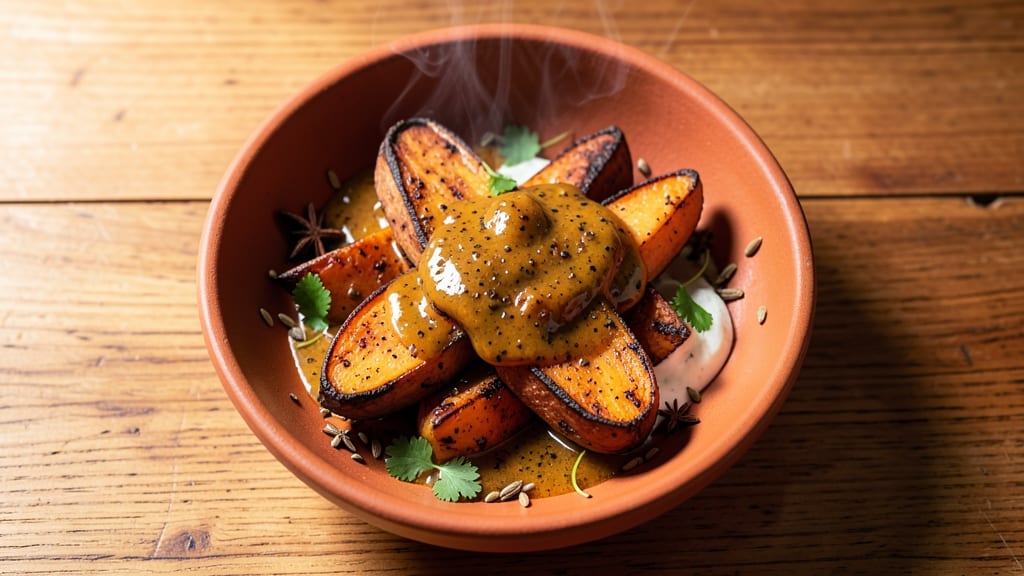
This tandoori sweet potato recipe brings restaurant-quality char and smoky yogurt flavor right to your home kitchen. The secret lies in a vibrant marinade of Greek yogurt, garam masala, and lemon juice that tenderizes the sweet potatoes while creating that signature tandoori char when roasted.
I've perfected this technique after years of experimenting with Indian street food flavors—each bite delivers tender, caramelized edges with a creamy interior.
The marinade transforms ordinary sweet potatoes into something extraordinary—think of the aromatic blend of cumin, coriander, and turmeric working together with yogurt to create a velvety texture that clings perfectly to the sweet potato's natural sweetness.
What makes this recipe special is the balance: the yogurt keeps the potatoes moist while the spices add depth, and the high-heat roasting creates those beautiful charred edges that scream "tandoori."
By the time you're done, you'll have perfectly roasted sweet potatoes with crispy, caramelized edges and tender, flavorful centers—ideal for serving alongside grilled meats or as a standalone vegetarian dish.
The smoky aroma alone will have everyone asking for seconds, and the presentation is just as impressive as it is delicious. Garnish with fresh cilantro or mint for a pop of color and freshness that completes the dish.
This recipe works beautifully for weeknight dinners or special occasions, and it's surprisingly simple to prepare. Whether you're serving it at a family gathering or meal prepping for the week, the combination of sweet, smoky, and creamy flavors makes it a crowd-pleaser every time.
Let's get started on creating this flavor-packed side dish!
Ingredients for tandoori sweet potato
Greek yogurt, aromatic spices, and sweet potatoes transform into restaurant-style tandoori flavor.
| Ingredient | Amount | Notes |
|---|---|---|
| Medium Sweet Potatoes 🍠 | 4 whole | Organic preferred, uniform size |
| Plain Greek Yogurt 🥛 | ¾ cup | Full-fat for creaminess, unsweetened |
| Lemon Juice 🍋 | 2 tbsp | Freshly squeezed, bright flavor |
| Garam Masala 🌶️ | 1 ½ tbsp | Freshly ground for maximum aroma |
| Ground Cumin 🌿 | ½ tbsp | Toasted for deeper flavor |
| Ground Coriander 🌿 | ½ tbsp | Freshly ground preferred |
| Turmeric Powder 🧂 | ½ tsp | Bright yellow color indicator |
| Red Chili Powder 🌶️ | ½ tsp | Adjust for heat preference |
| Olive Oil 🫒 | 2 tbsp | Extra-virgin for richness |
| Fresh Cilantro 🌿 | ¼ cup | Chopped, for garnish |
| Fresh Mint Leaves 🌿 | ¼ cup | Chopped, optional garnish |
| Salt 🧂 | 1 tsp | Diamond Crystal preferred |
| Black Pepper 🌶️ | ½ tsp | Freshly ground preferred |
The Greek yogurt is non-negotiable here—full-fat gives that creamy texture, and plain keeps the focus on the spices. I always grab Fage or Siggi's from the store, but any quality brand works. The sweet potatoes should be medium-sized and uniform so they cook evenly. If you can't find organic, regular works fine—just scrub them well. For the garam masala, Maldon or Everest brands are my go-to, but any blend with cumin, coriander, and cardamom will do. The key is to buy it whole and grind it fresh if possible—pre-ground loses punch fast.
No garam masala? Mix 1 tsp each cumin, coriander, and turmeric plus ½ tsp cinnamon for a close substitute. Fresh cilantro and mint are ideal, but dried works at half the amount if you're in a pinch. The olive oil matters—extra-virgin has more flavor than regular. Want extra smokiness? Add ½ tsp smoked paprika to the marinade. The lemon juice should be freshly squeezed—bottled loses brightness fast. If you're prepping ahead, marinate the potatoes for up to 8 hours in the fridge for deeper flavor.
Marinated potatoes keep 2 days in the fridge, but roast them within 24 hours for best texture. Garnish with fresh herbs right before serving—they wilt fast. Leftover roasted sweet potatoes reheat beautifully in a 350°F oven for 10 minutes with a splash of water to revive crispiness. Store leftovers in an airtight container for up to 5 days. For meal prep, portion into containers with a drizzle of olive oil to keep them moist.
Why You'll Love This Recipe
- No-Yogurt Waste: I use the leftover yogurt from this marinade in smoothies or as a dip base—no spoilage, just clever repurposing. The tangy garam masala kick stays with you, even in something new.
- Crowd-Pleaser Smell: That first whiff of roasted cumin and lemon hitting the oven? Instantly transforms any room into a cozy hangout spot. My picky eaters actually ask for seconds—honestly, the smell does half the work.
- Weeknight Workhorse: Toss in the yogurt mix, roast, and boom—done while you stir dinner or fold laundry. No babysitting the oven, no last-minute stress. (Yes, even on a Tuesday night.)
- Budget Bright Spot: Sweet potatoes stretch further than potatoes, and garam masala costs pennies per use. A single bag feeds four meals, and the yogurt’s acidity keeps them tasting fresh for days—no sad, dried-out leftovers here.
Step-by-step instructions for tandoori sweet potatoes
Transform humble sweet potatoes into smoky, charred masterpieces with this vibrant tandoori technique.
Prepare the Yogurt Marinade
In a medium bowl, combine the 0.75 cup plain Greek yogurt, 2 tablespoons lemon juice, 1.5 tablespoons garam masala, 0.5 tablespoon ground cumin, 0.5 tablespoon ground coriander, 0.5 teaspoon turmeric powder, 0.5 teaspoon red chili powder, 1 teaspoon salt, and 0.5 teaspoon black pepper. Whisk until smooth and vibrant yellow—this marinade should be thick enough to cling to the sweet potatoes without dripping.
The yogurt acts as a tenderizer while the spices create that signature tandoori flavor profile. I like to let this mixture sit at room temperature for 10 minutes to allow the spices to bloom and infuse fully. Here's the thing—if you use freshly ground spices, the aroma will be even more intense, so don't skip this step if possible.
Marinate the Sweet Potatoes
Peel the 4 whole medium sweet potatoes (if preferred) and cut them into 1-inch thick rounds, keeping the pieces uniform for even cooking. Place them in a large bowl and pour the yogurt marinade over them, tossing gently to coat each piece completely. Cover the bowl with plastic wrap and refrigerate for at least 2 hours, or up to 4 hours for deeper flavor penetration.
Real talk: The longer they marinate, the more tender and flavorful they become. I've found that after 4 hours, the sweet potatoes absorb so much marinade that they develop a beautiful golden crust when cooked. Don't rush this—patience here makes all the difference in that restaurant-quality finish.
Roast for Charred Perfection
Preheat your oven to 425°F and line a large baking sheet with parchment paper. Arrange the marinated sweet potatoes in a single layer, leaving ½-inch space between each piece for even air circulation. Drizzle 2 tablespoons olive oil over the top and toss gently to distribute.
Roast for 25-30 minutes, turning the sweet potatoes halfway through, until they develop deep char marks and golden edges. You'll know they're ready when the flesh is tender enough to pierce easily with a fork and the edges are crispy. The high heat caramelizes the natural sugars, creating that irresistible smoky-sweet contrast we love in tandoori dishes.
Garnish and Serve
Transfer the roasted sweet potatoes to a serving platter and immediately sprinkle with 0.25 cup chopped fresh cilantro and 0.25 cup chopped fresh mint leaves. The herbs add a bright, fresh finish that cuts through the richness of the yogurt marinade and balances the spices.
Serve warm while still crispy—these are best enjoyed immediately. The combination of charred edges, creamy yogurt marinade, and fresh herbs makes each bite a perfect balance of textures and flavors. Pair with grilled meats, in a grain bowl, or with a dollop of extra yogurt for dipping. The possibilities are endless, but the technique stays the same—simple, bold, and utterly delicious.
Pro Tips For Making Tandoori Sweet Potato
- PRY THE SKIN OPEN: Sweet potatoes resist marinade when whole—cut them lengthwise into ½-inch thick planks first, then score the flesh in a crosshatch. The yogurt marinade soaks in way better, and those charred edges? That’s where all the tandoori flavor lives. (Yes, even if it looks like you’re carving a Thanksgiving centerpiece.)
- SALT THE YOGURT: Your Greek yogurt needs a pinch of salt before mixing with spices—trust me, the garam masala and cumin taste flat without it. I used to skip this and wondered why my sweet potatoes tasted bland. Now I add ¼ teaspoon salt per cup of yogurt and let it sit for 10 minutes. The tang deepens, and the spices stick better.
- DON’T RUSH THE MARINADE: At least 2 hours in the fridge—overnight is ideal. I learned this after serving sweet potatoes that were just damp from the yogurt, not properly infused. The lemon juice needs time to brighten, and the garam masala’s warmth builds. Pro move: Toss the marinated potatoes on a wire rack for 30 minutes before grilling to avoid soggy spots.
- GRILL IN BATCHES: Crowd the grill or oven, and you’ll steam your sweet potatoes instead of sear them. Work in single-layer batches over direct heat for 4-5 minutes per side until edges blacken. Then finish under the broiler for 2 minutes to crisp the skin—just watch like a hawk, or you’ll torch them. (I’ve done it. Twice.)
Common mistakes when making this dish
Over-Marinating Risks
While longer marinating enhances flavor, leaving sweet potatoes in the yogurt marinade for more than 4 hours can make them mushy. The yogurt's acidity breaks down the cell walls over time, especially when combined with the heat-sensitive spices.
I've seen this happen when people marinate overnight—what should be tender becomes sad and soggy. Stick to 2-4 hours max for perfect texture. 🌶️
Skipping the Rest
Resist the urge to serve these immediately after roasting! Sweet potatoes need 5-10 minutes of rest time after coming out of the oven. This allows the juices to redistribute, preventing them from leaking out when you cut into them.
I've learned this lesson the hard way—serving too soon means dry, flavorless bites instead of that perfect creamy interior we want. 💫
Uneven Cooking
Using sweet potatoes of different sizes creates uneven cooking—some pieces will be underdone while others burn. Always select uniform medium-sized potatoes and cut them into 1-inch thick rounds. I like to weigh them first if possible, aiming for 6-8 ounces each.
Arrange them in a single layer with ½-inch space between pieces for proper air circulation. Crowding the pan leads to steaming instead of charring. ⚡
Low Heat Roasting
Tandoori dishes need high heat to create those signature char marks! Roasting at 375°F or lower will give you soft, flavorful sweet potatoes—but no char. Aim for 425°F and watch closely after 20 minutes.
If your oven runs hot, reduce to 400°F and increase time by 5 minutes. The key is getting those beautiful caramelized edges while keeping the interior tender. 🔥
Forgetting the Oil
Drizzling the 2 tablespoons olive oil right before roasting is crucial—it helps create that perfect crust. Without it, the yogurt marinade will dry out too quickly, preventing proper char formation.
I like to toss the potatoes gently after adding oil to ensure even distribution. This step makes all the difference between good and restaurant-quality tandoori flavor. 🫒
Using Wrong Yogurt
Non-fat or flavored yogurts won't give the same creamy texture or proper marinating action. Always use full-fat plain Greek yogurt—it's thicker and clings better to the sweet potatoes.
I've tried this with regular yogurt, and while it works, you lose that luxurious mouthfeel. The fat content also helps carry the spices more effectively during roasting. 🥛
Nutrition facts
Frequently asked questions
Can I use regular potatoes instead of sweet potatoes?
While you can use regular potatoes, the flavor and texture won't be the same. Sweet potatoes have a naturally sweeter taste and creamier texture that pairs perfectly with the yogurt marinade. If you must substitute, try yams—they hold up better to roasting than white potatoes. The caramelization happens more beautifully with sweet potatoes' natural sugars.
How do I get that authentic tandoori char without a tandoor?
Your oven can absolutely mimic tandoori char! Roast at 425°F on the top rack for maximum heat exposure. For extra char, place the baking sheet directly on the oven rack (with parchment) and broil for 1-2 minutes at the end. A grill pan also works well—just watch closely to avoid burning. The key is high, direct heat for those signature blackened edges.
Can I make this recipe ahead of time?
Yes, but with some adjustments. Marinate the sweet potatoes for up to 4 hours ahead, then refrigerate uncovered for 30 minutes before roasting to prevent sogginess. For leftovers, reheat at 350°F for 10 minutes with a splash of water to revive crispiness. The flavor actually improves after resting overnight, but texture may suffer if not reheated properly.
What can I serve with these tandoori sweet potatoes?
These pair beautifully with grilled meats like chicken or lamb, or as a vegetarian main with raita and naan. For a complete meal, serve with basmati rice, a cucumber salad, and garlic yogurt sauce. The smoky-sweet flavor also works well in grain bowls with quinoa or farro. Don't forget the extra yogurt for dipping!
Why did my sweet potatoes turn out dry?
This usually happens from over-roasting or skipping the rest time. Roast until tender (25-30 minutes max) and let them rest 5-10 minutes before serving. The yogurt marinade helps retain moisture, but high heat can still dry them out. Try covering with foil for the last 10 minutes of cooking if needed.