
Main Courses
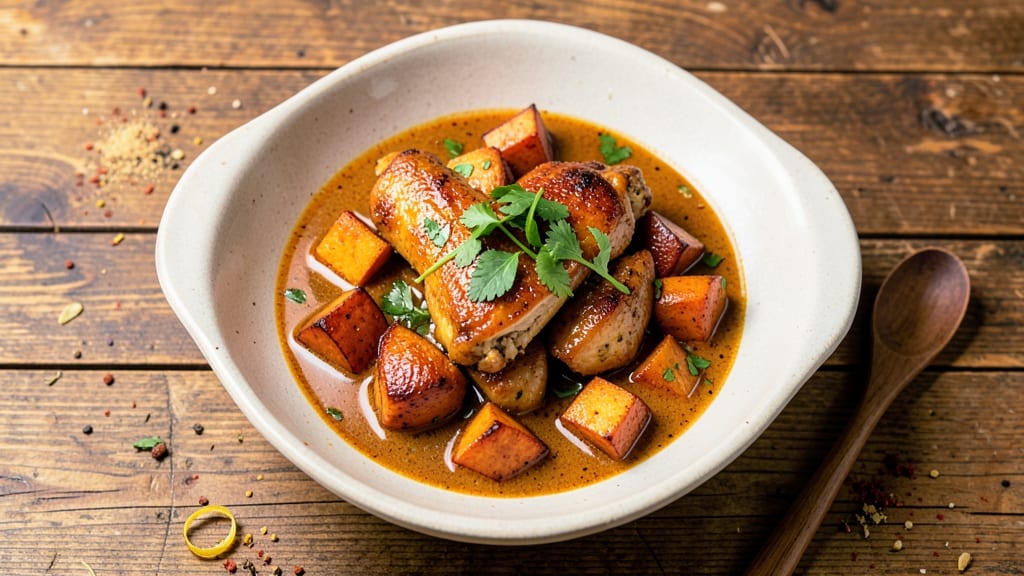
This Thai Chicken Sweet Potato Curry delivers the perfect balance of creamy coconut richness and tender sweet potatoes that melt in your mouth. 🌟 I developed this recipe after years of perfecting Thai curries—where the sweetness of caramelized roots meets the savory depth of coconut milk and aromatic spices. The secret lies in layering flavors: starting with toasted spices, building a velvety sauce, and letting the sweet potatoes soak up all that complex, comforting goodness.
The beauty of this dish is its approachability—you don’t need fancy ingredients, just a few pantry staples and 30 minutes of active time. We’ll sauté garlic and ginger until fragrant, then build the curry base with red curry paste and coconut milk, letting it simmer until it’s creamy and fragrant.
The chicken cooks just until tender, while the sweet potatoes transform into fork-tender bites with caramelized edges.
What makes this curry special is how the flavors come together: the natural sweetness of the sweet potatoes balances the heat from the chili paste, while the coconut milk keeps everything luscious and rich.
Serve it over jasmine rice or with warm naan to soak up every last drop of that aromatic sauce. The result? A restaurant-quality dish that’s simple enough for weeknight dinners.
For extra depth, garnish with fresh cilantro, a squeeze of lime, and crushed peanuts—these final touches add crunch and brightness that elevate the dish to new heights. This curry tastes even better the next day, making it perfect for meal prep or feeding a crowd. Let’s get cooking!
Ingredients for thai chicken sweet potato curry
Pantry staples meet aromatic Thai flavors—just 15 ingredients for a creamy, comforting curry.
| Ingredient | Amount | Notes |
|---|---|---|
| Boneless Chicken Thighs 🍗 | 1 ½ lb | Skin-on preferred for flavor |
| Sweet Potatoes 🍠 | 2 medium | Peeled, cubed into 1-inch pieces |
| Red Curry Paste 🌶️ | 2 tbsp | Store-bought or homemade |
| Coconut Milk 🥥 | 1 can | Full-fat for creaminess |
| Garlic Cloves 🧄 | 4 cloves | Minced for aromatic base |
| Fresh Ginger 🌿 | 1 tbsp | Grated, for zingy depth |
| Chicken Broth 💧 | 1 cup | Low-sodium preferred |
| Fish Sauce 🍶 | 1 tbsp | Red Boat brand recommended |
| Brown Sugar 🍚 | 1 tbsp | Light or dark variety |
| Lime Juice 🍋 | 2 tbsp | Freshly squeezed |
| Fresh Cilantro 🌿 | ¼ cup | Chopped, for garnish |
| Crushed Peanuts 🥜 | ¼ cup | Roasted for crunch |
| Jasmine Rice 🍚 | 1 ½ cups | Uncooked, for serving |
| Olive Oil 🫒 | 2 tbsp | For sautéing |
| Salt 🧂 | 1 tsp | Kosher or sea salt |
The sweet potatoes are the star here—orange-fleshed varieties like Beauregard are ideal, but any medium-sized potato works. Trader Joe's and most grocery stores carry them pre-peeled for convenience, but peeling and cubing them yourself ensures even cooking. For the coconut milk, full-fat canned versions (like Thai Kitchen) give the richest texture—light coconut milk won’t cut it. The chicken thighs? Skin-on, bone-in if possible—they stay juicier and add extra flavor to the sauce. If you're using boneless, skinless, just don’t overcook them.
No red curry paste? Mix 1 tbsp each of curry powder, chili powder, and turmeric as a quick substitute. Fresh ginger and garlic can be swapped for powdered versions (use half the amount), but fresh is worth the extra minute—it makes all the difference. Out of fish sauce? Soy sauce or Worcestershire sauce works in a pinch, though the umami depth won’t be identical. The brown sugar balances the heat—coconut sugar or maple syrup are great alternatives if you’re avoiding refined sugar. And for the peanuts? Any nut will do—cashews or almonds add a different but delicious texture.
This curry tastes even better the next day—plan ahead and make a double batch. Store leftovers in airtight containers for 4-5 days in the fridge or freeze for 3 months. I like to portion mine into meal prep containers with extra rice on the side. The sauce thickens as it cools, so add a splash of broth or water when reheating. Garnish with extra cilantro and lime right before serving—trust me, it’s worth the fresh squeeze. The rice? Cook it ahead and keep it warm in a rice cooker or covered pot.
Why You'll Love This Recipe
- One-Pot Magic: I swear by this recipe when I’m too tired to scrub pots—just brown the chicken, dump everything in, and let it simmer. The sweet potatoes soften while the curry builds flavor, and honestly? One sheet pan, one spatula, done.
- Creamy-Spicy Balance: That first spoonful of coconut milk swirled with red curry paste? It’s like a hug for your taste buds—rich but not heavy, with just enough heat to linger. The chicken stays juicy, and the sweet potatoes soak up all the good stuff.
- Meal Prep MVP: Between us, this curry begs to be made in bulk. The flavors deepen overnight, and reheating it later is pure comfort. I pack leftovers for lunch all week—no sad desk salads here.
- Budget-Friendly Feast: Chicken thighs and sweet potatoes stretch this dish for a crowd without breaking the bank. A jar of curry paste and a can of coconut milk turn cheap ingredients into something that feels fancy. (Yes, even on a Tuesday night.)
Step-by-step instructions for Thai chicken sweet potato curry
Here's how to make this rich, aromatic curry with perfectly tender chicken and sweet potatoes.
🍳 Step 1: Sauté Aromatics Until Fragrant
Heat the 2 tablespoons olive oil in a large pot or deep skillet over medium heat. Add the 4 cloves minced garlic cloves and 1 tablespoon grated fresh ginger, stirring constantly for 1-2 minutes until the garlic turns golden and you can smell that bright, zesty aroma.
Here's the thing—don't walk away. Garlic burns in seconds, and you want it to just barely color, not turn bitter. If your kitchen smells amazing right now, you're on the right track. Once the aromatics are fragrant, add the 2 tablespoons red curry paste and stir for 30 seconds to toast the spices and deepen their flavor.
🍳 Step 2: Cook the Chicken Until Golden
Add the 1.5 lb boneless chicken thighs to the pot, spreading them in a single layer. Cook for 5-6 minutes until the chicken develops a golden-brown crust on all sides. I press down gently on the thighs during the first minute—this prevents them from curling and ensures even contact with the pan.
Once the chicken is golden, remove it from the pot and set it aside on a plate. You'll add it back later, but this step ensures it gets properly seared before the long simmer. Don't skip this—it adds depth of flavor that raw chicken won't provide.
🥘 Step 3: Build the Creamy Curry Base
Return the pot to medium heat and add the 1 can coconut milk, scraping up any browned bits from the bottom with a wooden spoon. Stir in the 1 cup chicken broth, 1 tablespoon fish sauce, and 1 tablespoon brown sugar. Bring the mixture to a gentle simmer, then reduce heat to low and let it cook for 5 minutes to let the flavors meld.
This is where the magic happens. The coconut milk will start to separate slightly—this is normal and actually enhances the texture. Stir in the 2 medium cubed sweet potatoes and return the chicken to the pot. The sweet potatoes should be mostly submerged in the sauce, but that's okay—they'll absorb liquid as they cook.
⏰ Step 4: Simmer Until Tender and Creamy
Cover the pot and simmer for 20-25 minutes until the chicken is cooked through (internal temperature 165°F) and the sweet potatoes are fork-tender. Stir occasionally, but not too much—you want to let the flavors develop without breaking up the sweet potatoes.
Here's how to know it's done: The chicken should pull away from the bone easily, and when you pierce a sweet potato cube, it should feel soft all the way through with just a slight resistance in the center. If the sauce starts to look too thick, add 2-3 tablespoons water to loosen it to a creamy consistency.
🍽️ Step 5: Finish with Lime and Serve
Once everything is tender, stir in the 2 tablespoons lime juice and taste. Adjust seasoning with more fish sauce if needed—this is where you balance the flavors. The dish should be creamy, slightly sweet from the sweet potatoes and brown sugar, with a nice tang from the lime.
Divide the curry among bowls and top each serving with ¼ cup crushed peanuts and ¼ cup chopped fresh cilantro. Serve with the 1.5 cups cooked jasmine rice on the side. The peanuts add a delightful crunch that contrasts beautifully with the creamy curry, while the cilantro brightens everything up.
Pro Tips For Making Thai Chicken Sweet Potato Curry
- Sear the Chicken First: Toss the chicken thighs in a dry skillet over medium-high heat for 3-4 minutes per side before adding the curry paste. The crust locks in flavor and prevents the meat from turning rubbery later—trust me, I’ve made this curry both ways, and the seared version always wins. (Yes, even if you’re impatient like me.)
- Peel and Cube Sweet Potatoes: Skip the skin—it’s tough and takes forever to soften. Peel the sweet potatoes first, then cut them into 1-inch chunks for even cooking. Uneven pieces lead to some getting mushy while others stay hard, and nobody wants that fight in their curry.
- Bloom the Curry Paste: Cook the red curry paste in the same pan you seared the chicken—no oil needed—over medium heat for 1-2 minutes until it’s fragrant and sizzling. This step wakes up the spices and prevents a bland, one-dimensional flavor. (I used to skip this and wondered why my curry tasted like coconut milk with an afterthought.)
- Simmer, Don’t Boil: Once the coconut milk is added, keep the heat at a gentle simmer (tiny bubbles, occasional swirls) for 20 minutes. Boiling splits the curry paste and makes the sauce break—this curry is meant to be creamy and cohesive, not a watery mess. Lower the heat if it’s getting too lively.
Make-ahead tips for this dish
Prep Ahead Components
Start by prepping the sweet potatoes and chicken the night before—this cuts your cooking time by half. Cube and store the sweet potatoes in a bowl of water in the fridge to prevent browning.
For the chicken, trim excess fat and pat dry, then store in an airtight container with a sprinkle of salt. The aromatics (garlic and ginger) can be minced and stored in a small container for up to 3 days—just add them fresh when you're ready to cook. 🌟
Curry Base Prep
Make the curry base up to 2 days ahead for maximum flavor development. Combine the coconut milk, chicken broth, fish sauce, brown sugar, and lime juice in a saucepan and simmer for 10 minutes.
Let it cool completely, then store in an airtight container. When you're ready to cook, simply heat it gently and add the prepped chicken and sweet potatoes. This step is a game-changer for busy weeknights.
Freezer-Friendly Strategy
This curry freezes beautifully for up to 3 months, making it perfect for meal prep. Assemble the entire dish (except rice) and let it cool completely. Portion into freezer-safe containers, leaving 1-inch headspace for expansion.
To reheat, thaw overnight in the fridge, then warm on the stovetop with a splash of water or broth. I like to freeze it in individual portions—just grab and go when you need a comforting meal. ❄️
Garnish Prep Station
Set up a garnish station the night before to save time. Chop the cilantro and store it in a small container with a damp paper towel to keep it fresh.
Toast the peanuts in a dry skillet over medium heat for 3-4 minutes, then let them cool and store in an airtight container. When you're ready to serve, just grab a handful of each—it takes seconds and adds that restaurant-quality finish. Trust me, presentation matters!
Rice Prep Shortcut
Cook a big batch of jasmine rice and store it in the fridge for up to 4 days. Reheat portions in the microwave with a splash of water for 1-2 minutes until hot.
For extra fluffiness, spread the rice on a baking sheet and microwave for 30 seconds after reheating. I often cook 2 cups uncooked rice at a time—it’s perfect for two meals or a family dinner. The grains stay separate and delicious this way. 🍚
Flavor Boosting Trick
For an extra flavor kick, make a quick "curry paste boost" the day before. Mix 1 tbsp extra red curry paste with ½ tsp turmeric and ¼ tsp cayenne, then store in a small jar.
Add this mixture to the pot when you're simmering the curry—it deepens the flavor without extra effort. This trick is especially useful if you're serving guests or want to impress with minimal extra work. 💫
Nutrition facts
Frequently asked questions
Can I substitute sweet potatoes with regular potatoes?
Regular potatoes will work, but they lack the natural sweetness and vibrant color that makes this curry special. Sweet potatoes also hold up better during simmering—they caramelize beautifully and add a delightful texture contrast. If you must use regular potatoes, opt for waxy varieties like Yukon Gold and reduce the simmering time by 5 minutes to prevent them from falling apart.
How do I adjust the spice level for kids or sensitive eaters?
Reduce the red curry paste to 1 tablespoon and omit the cayenne if using the flavor-boosting trick. For extra mildness, stir in 1 teaspoon honey or maple syrup at the end to balance any lingering heat. Serve with extra jasmine rice to dilute the sauce further—this helps soften the flavors naturally while keeping the dish creamy and satisfying.
What's the best way to reheat leftovers?
Reheat gently on the stovetop over low heat with 2 tablespoons water or broth to restore creaminess. Microwaving works too—cover with a damp paper towel and heat for 1-2 minutes, stirring halfway. The sauce thickens as it cools, so add a splash of liquid when reheating. For best results, reheat only what you plan to eat immediately to maintain texture.
Can I make this curry in an Instant Pot?
Sauté the garlic, ginger, and curry paste as directed, then add all remaining ingredients except lime juice. Seal the lid and cook on High Pressure for 8 minutes, followed by a 10-minute natural release. Finish with lime juice and adjust seasoning. The Instant Pot version cooks faster but may need 1 extra tablespoon coconut milk to maintain creaminess due to moisture loss during pressure cooking.
Why did my curry sauce separate?
Coconut milk naturally separates when heated—this is normal and actually enhances texture! To fix it, whisk vigorously or blend briefly with an immersion blender. For prevention, stir the sauce occasionally during simmering and avoid boiling. If the separation is extreme, stir in 1 tablespoon cornstarch mixed with 2 tablespoons water to restore smoothness.