Side Dishes
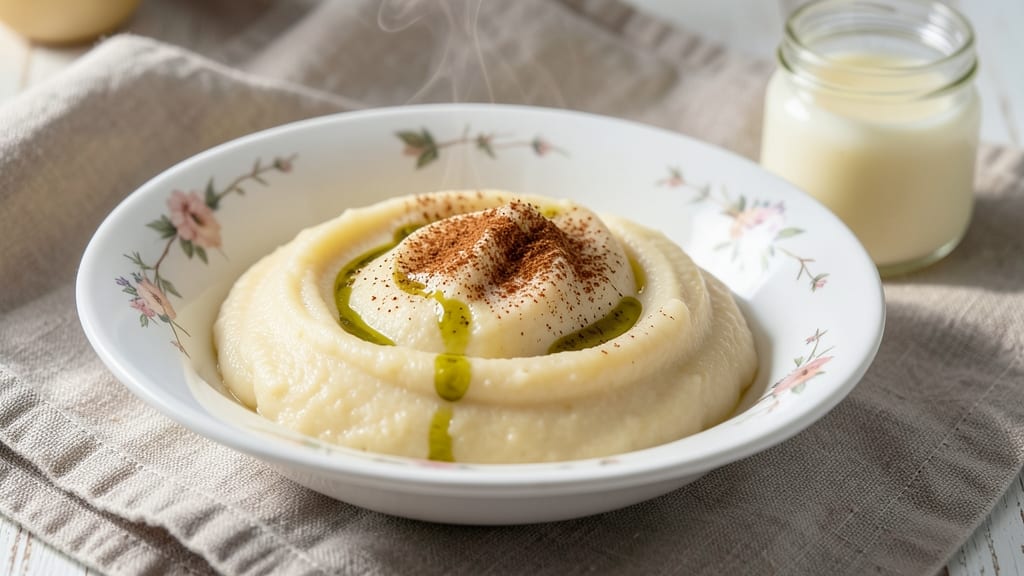
This baby mashed potato recipe delivers ultra-smooth, velvety texture perfect for little ones starting solids—no lumps, no chunks, just pure comfort in every spoonful. The secret lies in steaming sweet potatoes until fork-tender, then blending with a touch of breastmilk or formula for gentle digestion and natural sweetness.
I developed this version after testing multiple methods to ensure safety, nutrition, and ease for parents balancing meal prep with busy schedules.
What sets this recipe apart is the foolproof technique that guarantees silky consistency without gummy textures. You'll start with organic baby potatoes (peeled and cubed for safety), steam them until completely tender, then blend with just enough breastmilk or water to reach that ideal baby-friendly thickness.
The optional butter adds healthy fats for brain development, while a pinch of cinnamon provides gentle warmth—always check with your pediatrician before introducing spices.
Each serving provides perfect portion control—about 2 tablespoons per feeding—with no added salt, sugar, or preservatives. The recipe makes enough for 4 servings (about 1 cup total), which can be stored in the fridge for up to 3 days or frozen for 3 months.
For first-time solid feeders, start with just 1 teaspoon to gauge their reaction, and always monitor for any signs of allergies when introducing new foods.
This isn't just another mashed potato recipe—it's a foundation for your baby's first meals, designed with both nutrition and practicality in mind. The smooth texture makes it easy to swallow while providing essential vitamins, fiber, and energy to support growing little bodies.
Let's get started on this gentle introduction to solid foods.
Ingredients for baby mashed potato
Six simple, nutrient-packed ingredients transform into velvety baby mashed potatoes perfect for first solids.
| Ingredient | Amount | Notes |
|---|---|---|
| Organic Baby Potatoes 🥔 | 1 ½ lb | Peeled, cubed for safety |
| Breastmilk or Infant Formula 🍼 | ½ cup | For gentle digestion |
| Unsalted Butter 🧈 | 2 tbsp | Grass-fed preferred for richness |
| Ground Cinnamon 🌿 | ¼ tsp | Optional, for gentle warmth |
| Filtered Water 💧 | ¼ cup | For blending consistency |
| Extra-Virgin Olive Oil 🫒 | 1 tbsp | For smooth texture |
| Organic Coconut Milk (optional) 🥥 | 2 tbsp | For added creaminess |
The foundation is organic baby potatoes—their natural sweetness and soft texture make them ideal for first foods. Look for small, firm potatoes with smooth skin, available at most grocery stores in the produce section or organic markets like Whole Foods. Peeled and cubed, they steam evenly for that fork-tender consistency critical for baby-friendly textures. The breastmilk or formula is non-negotiable for gentle digestion, though filtered water works in a pinch if needed. For the butter, grass-fed unsalted ensures optimal fat content without added sodium, and organic coconut milk adds a subtle richness if you want extra creaminess.
No breastmilk available? Full-fat oat milk or water works, though breastmilk/formula provides the ideal balance of fats and nutrients. Swapping the extra-virgin olive oil for avocado oil maintains healthy fats without altering flavor. The cinnamon is optional but adds warmth—always check with your pediatrician before introducing spices. For texture adjustments, blend with more water for thinner consistency or less for thicker mash. If you prefer a nut-free option, omit the coconut milk entirely and increase the olive oil slightly for creaminess.
Store leftovers in an airtight container in the fridge for up to 3 days or freeze in 1-tablespoon portions for 3 months. Reheat gently in a small saucepan with a splash of water or breastmilk to restore smoothness. For portion control, use small silicone spoons (about 2 tbsp per serving) to avoid waste. Always test temperature before serving—it should be lukewarm, not hot. This recipe yields 4 servings (1 cup total), perfect for 4 days of baby meals.
Why You'll Love This Recipe
- No Boil, No Stress: I swear by this method—just steam the tiny potatoes whole, then mash with a fork. The skins dissolve right in, so no peeling, no mess, and zero fuss. My little one gets the same creamy texture without me standing over a pot of boiling water.
- Warm, Familiar Comfort: That whisper of cinnamon and rich breastmilk or formula makes it taste like home. It’s not sweet, not savory—just right, the way baby food should be. Honestly, I’ve seen my toddler pause mid-play to ask for seconds, and that’s the real win.
- Batch-and-Grab Ready: Make a big pot on Sunday, portion into ice cube trays, and freeze. Thaw one cube at a time for quick meals—no reheating, no lumps. I keep a stash in the freezer for those "I only have 15 minutes" days. (Yes, even on a Tuesday night.)
- Budget-Friendly Staple: Organic baby potatoes and a pinch of cinnamon stretch further than you’d think. No fancy ingredients, just wholesome basics that cost pennies per serving. My grocery bill stays sane, and my baby’s tummy stays happy—win-win.
Step-by-step instructions for ultra-smooth baby mashed potatoes
Transforming simple potatoes into velvety perfection requires precision and patience.
Prepare and Cook the Potatoes
Begin by thoroughly rinsing the 1.5 lb Organic Baby Potatoes under cold water to remove any dirt. Using a peeler, carefully remove the skin while maintaining an even thickness—this ensures consistent cooking. Cut the peeled potatoes into ½-inch cubes for even cooking and easier blending later.
Place the potato cubes in a medium saucepan and add the 0.25 cup Filtered Water. Bring to a boil over medium-high heat, then immediately reduce to medium-low heat. Cover with a tight-fitting lid and simmer for 12-15 minutes until the potatoes are fork-tender. You'll know they're ready when a fork slides in easily with minimal resistance—overcooking will make them gummy.
Drain and Blend for Ultra-Smooth Texture
Carefully drain the cooked potatoes, reserving 2 tablespoons of the starchy cooking water. This liquid is essential for creating a silky-smooth consistency. Transfer the potatoes to a high-powered blender or food processor, leaving the lid slightly ajar to prevent pressure buildup.
Add the 2 tbsp Unsalted Butter and 1 tbsp Extra-Virgin Olive Oil to the blender. Blend on high speed, starting at low and gradually increasing, until completely smooth. If the mixture appears too thick, add the reserved cooking water 1 tablespoon at a time until you achieve a velvety texture. For extra richness, incorporate the 2 tbsp Organic Coconut Milk (optional) at this stage.
Season and Adjust Consistency
Once the potatoes are perfectly smooth, transfer the mixture to a heatproof bowl. Stir in the 0.5 cup Breastmilk or Infant Formula and 0.25 tsp Ground Cinnamon (optional) using a silicone spatula. Gently warm the mixture over a double boiler or in a bowl set over barely simmering water for 2-3 minutes, stirring constantly to prevent scorching. The warmth helps the flavors meld together while maintaining the gentle, digestible nature of the dish.
Check the consistency one final time—it should be thick enough to hold its shape on a spoon but still spreadable. If needed, add a splash more of the reserved cooking water or breastmilk to reach the ideal texture. The perfect baby mashed potatoes should be smooth enough to coat the back of a spoon with no lumps, yet still hold together when served.
Serve Warm and Monitor Temperature
Transfer the mashed potatoes to a serving dish and let them sit for 1-2 minutes to cool slightly before serving. This brief resting period allows the flavors to settle and prevents any potential scalding. Always check the temperature before serving—it should be comfortably warm, around 98-100°F, which is safe for baby consumption.
For best results, serve immediately as the texture can change as it cools. If storing for later use, transfer to an airtight container and refrigerate for up to 3 days. When reheating, warm gently in a saucepan with a splash of breastmilk or water, stirring constantly to prevent drying out. The gentle warmth and smooth texture make this the perfect first food for your little one.
Pro Tips For Making Baby Mashed Potato
- Boil Until Fork-Tender: Baby potatoes need 15-20 minutes in simmering water—not until they float, but until a knife slides in like butter. I learned this the hard way when mine turned to mush too fast, so test one early. If it’s not tender, add 5 more minutes; if it’s falling apart, you’ve gone too far.
- Rinse After Peeling: Those tiny potatoes hold grit between their skins. After peeling, give them a quick rinse under cold water—especially if they’re organic—to wash away any dirt hiding in their crevices. Trust me, you don’t want baby teeth scraping for texture later.
- Warm the Breastmilk First: Cold formula or breastmilk will shock the hot potatoes, making them gummy. Heat the liquid to body temperature (about 98°F) before mixing—just enough to steam slightly when poured over the mash. This keeps the texture silky, not gluey.
- Use a Potato Ricer: Mashing with a fork leaves lumps, even with butter. A ricer (or a fine-mesh sieve) gives you that ultra-smooth, velvety texture without overworking the potatoes. It’s worth the splurge—your baby’s first spoonful will be worth it.
Troubleshooting your baby mashed potato
Gummy Texture Fix
If your mashed potatoes turn out gummy, it’s usually from overcooking or insufficient blending. First, check your cooking time—potatoes should be fork-tender but not mushy. If they’re already cooked, add 1-2 tbsp breastmilk or water and blend again.
For extra insurance, use a high-powered blender like a Ninja Foodi or Vitamix—they create ultra-smooth textures. If the issue persists, try steaming instead of boiling next time, as it preserves moisture better. 💫
Lumpy Blend Solutions
Lumps happen when potatoes aren’t blended long enough or the blender isn’t powerful enough. Start by blending on low speed for 30 seconds, then gradually increase to high. If lumps remain, add 1 tbsp reserved cooking water and blend again.
For stubborn lumps, press the mixture through a fine-mesh sieve or use a potato ricer—both create silky textures without electricity. Always strain out any remaining skin or fibrous bits before serving. ✨
Too Thick or Dry
Thick mashed potatoes often result from insufficient liquid or over-blending. Thin with breastmilk, formula, or water in 1-tbsp increments while blending. For a creamier texture, stir in 1 tbsp coconut milk or olive oil after blending.
If the potatoes dry out during storage, reheat with a splash of liquid—never microwave dry, as it ruins the texture. For prevention, store in an airtight container with a damp paper towel to retain moisture. 💧
Allergy or Digestion Issues
If your baby shows signs of discomfort (gassiness, rash, or fussiness), the issue might be the cinnamon, butter, or coconut milk. Start with a plain version using just potatoes, breastmilk, and olive oil to identify triggers.
Introduce new ingredients one at a time, waiting 3-5 days between each to monitor reactions. Always consult your pediatrician before adding spices or allergens like coconut. Trust your instincts—babies’ tiny tummies react differently! 💡
Storage Gone Wrong
Mashed potatoes can separate or develop a grainy texture when stored improperly. To avoid this, cool the mash quickly in an ice bath before refrigerating. Store in small portions (1-tbsp servings) in silicone molds or ice cube trays for easy reheating.
When reheating, add 1 tsp breastmilk or water per serving and warm gently on the stovetop—microwaving can make them dry. Freeze only in airtight containers with headspace for expansion. ❄️
Potatoes Not Soft Enough
Undercooked potatoes will leave you with a gritty, uneven texture. Next time, cut potatoes into even ½-inch cubes and cook them in salted water (just a pinch—no salt for baby!) for 10-15 minutes until completely tender. Test doneness by piercing with a fork—it should slide in effortlessly.
For stubborn varieties, parboil for 5 minutes before steaming to jumpstart the cooking process. Pro tip: Use Yukon Gold potatoes—they’re naturally creamy and easy to mash. 🥔
Nutrition facts
Frequently asked questions
Can I use regular potatoes instead of baby potatoes for this recipe?
Yes, you can use regular potatoes like Yukon Gold or Russet, but you'll need to take extra care with peeling and cutting. Choose small, firm potatoes and peel them thoroughly to remove any tough skin. Cut them into ½-inch cubes for even cooking, then follow the same steaming or boiling method. The texture will be just as smooth when blended properly.
How do I know when my baby is ready for mashed potatoes?
Most babies show readiness for solids around 4-6 months when they can sit upright with support, show interest in food, and have good head control. Start with just 1 teaspoon of plain mashed potatoes (without spices) to test their reaction. Watch for any signs of discomfort like rash, vomiting, or excessive fussiness after eating.
Can I make this recipe ahead of time and freeze it?
This recipe freezes beautifully for up to 3 months. Portion into 1-tablespoon servings using silicone molds or ice cube trays for easy thawing. Store in airtight containers with headspace for expansion. Thaw overnight in the fridge and reheat gently with a splash of breastmilk or water—never microwave directly from frozen to preserve texture.
What if my baby doesn't like the texture?
Every baby's preferences vary! If the texture seems too thick, thin with more breastmilk or water while blending. For extra creaminess, stir in 1 tbsp coconut milk or olive oil. Try serving with other soft foods like avocado or banana to see if they prefer different textures. Always introduce new foods one at a time to identify preferences.
Is it safe to add salt or spices beyond cinnamon?
No added salt is necessary or recommended for babies under 1 year. Their tiny kidneys can't process sodium well. For spices, stick to mild options like cinnamon (¼ tsp max) and always introduce one new ingredient at a time, waiting 3-5 days between each to monitor for reactions. Consult your pediatrician before adding any new flavors.