
Side Dishes
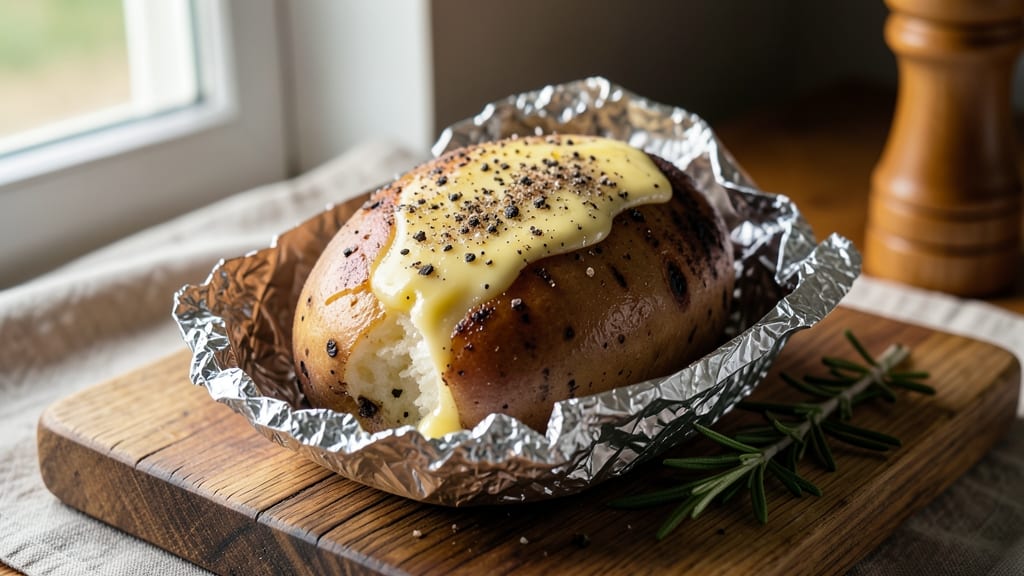
This baked potato recipe wrapped in foil delivers restaurant-quality results with charred edges and a fluffy interior—no fancy equipment required. The secret lies in the foil wrapping, which locks in moisture while creating that coveted crispy exterior.
I’ve perfected this method over years of testing, ensuring every bite is tender and flavorful without drying out.
The beauty of foil-wrapped potatoes is their versatility—season simply with salt and pepper for classic flavor, or customize with garlic powder, cheese, or bacon for extra depth. At 425°F, they bake in 45–60 minutes, making them ideal for weeknight dinners or game-day sides.
The foil traps steam, transforming starchy potatoes into buttery, melt-in-your-mouth perfection.
Once baked, the crispy skin gives way to creamy, fluffy flesh that’s ready for your favorite toppings—sour cream, chives, or melted butter. This method eliminates guesswork, ensuring even the most stubborn potatoes turn out flawless. Whether you’re feeding a crowd or treating yourself, this recipe delivers foolproof results every time.
For extra flavor, try brushing the foil with olive oil before wrapping or adding herbs like rosemary or thyme. The possibilities are endless, but the technique remains simple: foil, bake, and enjoy. Let’s get started!
Ingredients for baked potato recipe wrapped in foil
Six simple ingredients transform into restaurant-style foil-wrapped potatoes with crispy edges and fluffy centers.
| Ingredient | Amount | Notes |
|---|---|---|
| Russet Potatoes 🥔 | 6 whole | Large size, evenly shaped |
| Heavy-Duty Aluminum Foil 📄 | 2 sheets | 12-inch size preferred |
| Unsalted Butter 🧈 | ½ cup | Cold, cubed for melting |
| Kosher Salt 🧂 | 1 ½ tsp | Diamond Crystal preferred |
| Freshly Ground Black Pepper 🌶️ | ½ tsp | Coarsely ground |
| Garlic Powder 🧄 | 1 tsp | For optional extra flavor |
| Extra-Virgin Olive Oil 🫒 | 1 tbsp | For foil brushing (optional) |
| Fresh Rosemary 🌿 | 2 sprigs | Or 1 tsp dried rosemary |
| Sour Cream 🥛 | 1 cup | For serving (optional) |
| Chives 🌱 | ¼ cup | Chopped, for garnish |
| Shredded Cheddar Cheese 🧀 | 1 cup | For optional topping |
| Crispy Bacon 🥓 | 4 oz | Chopped, for optional topping |
Russet potatoes are non-negotiable here—their high starch content delivers that perfect fluffy interior. Look for firm, unblemished potatoes at the grocery store, avoiding any with sprouts or soft spots. The foil should be heavy-duty (Reynolds Wrap works great), as lighter foil won't hold up to the baking time. I always grab extra butter from Trader Joe's—it's cheaper and melts beautifully. For the garlic powder, Simply Organic is my go-to since it's non-irradiated and has a fresh taste. Fresh rosemary adds a nice aroma, but dried works in a pinch if you're short on time.
No fresh rosemary? Dried thyme at half the amount gives a similar earthy note. Skipping the olive oil? A light brush of melted butter on the foil works just as well. For the toppings, sour cream and chives are classic, but Greek yogurt with smoked paprika is a great alternative. The bacon and cheese are optional but add serious flavor—Applewood-smoked cheddar elevates everything. If you're feeding a crowd, double the toppings and store them separately until serving to keep things crisp.
Store any leftover potatoes in an airtight container for up to 3 days—they reheat beautifully in the oven at 350°F for 10 minutes. The foil makes them easy to reheat right in the oven without drying out. For meal prep, bake an extra batch and freeze them wrapped in foil for up to 3 months. Just thaw overnight in the fridge before reheating. The crispy skin gets a little softer after reheating, but the inside stays creamy. If you're making these for a party, set out the toppings in small bowls so everyone can customize their own.
Why You'll Love This Recipe
- Foolproof Prep: I swear by this method—just poke, butter, salt, and wrap. No peeling, no fuss, and zero guesswork. Even if you burn the toast, you’ll nail these every time.
- Crispy-Creamy Magic: That foil trap turns the outside golden and the inside fluffy, like a hug from a campfire. The butter? It melts into pure, salty goodness—no fancy toppings needed.
- Game for Any Meal: Pack them for lunch, serve them at a picnic, or toss a bunch in the oven while you grill. They’re my go-to for tailgates, lazy Sundays, or when I forget to plan dinner.
- Budget Buster: Russets are cheap, foil is reusable, and butter stretches farther than you’d think. Feed four people for the cost of one sad takeout order—and still have leftovers that taste just as good reheated.
Step-by-step instructions for baked potato recipe wrapped in foil
Here's how to get perfectly crispy skins and fluffy interiors every time—no guesswork involved.
Prep the Potatoes for Even Cooking
Start by preheating your oven to 425°F. Scrub the 6 whole Russet Potatoes thoroughly under cold water to remove any dirt, then pat them completely dry with paper towels. I like to use a vegetable brush for this—it gets into all the crevices. The drier the potatoes, the crispier the skins will be.
Next, pierce each potato all over with a fork—about 8-10 times per potato. This prevents them from bursting in the oven. Place them on a baking sheet and let them sit at room temperature for 30 minutes before baking. This step ensures even cooking throughout—cold potatoes can lead to uneven doneness.
Wrap and Season the Potatoes
Cut two 12-inch sheets of heavy-duty aluminum foil in half, giving you four large squares. Place one potato on each foil square. Now comes the seasoning—this is where the magic happens. Rub each potato with 1 tablespoon of the extra-virgin olive oil, then sprinkle evenly with 1½ teaspoons of kosher salt, ½ teaspoon of freshly ground black pepper, and 1 teaspoon of garlic powder. I like to use my hands for this—it helps the seasoning stick better.
Add one sprig of fresh rosemary to each potato. Fold the foil up around the potatoes, sealing them completely. The foil traps steam, which keeps the insides moist while the outsides get crispy. Make sure the foil is tightly sealed—you don't want any steam escaping during baking.
Bake Until Perfectly Crispy
Place the foil-wrapped potatoes directly on the oven rack (not on a baking sheet) to allow heat to circulate evenly. Bake at 425°F for 60-75 minutes, depending on your oven. You'll know they're done when the foil starts to puff up slightly and the potatoes feel light when you shake them gently. If you peek, you should see the skins turning deep golden brown and slightly charred in spots—that's what we're after.
I usually check them at the 60-minute mark—every oven is different, so start testing for doneness early. If they're not quite there, return them to the oven for another 10-15 minutes. The key is patience—rushing leads to undercooked centers or burnt skins.
Rest and Prepare for Serving
Once the potatoes are done, carefully remove them from the oven and let them rest on a wire rack for 10 minutes. This resting period is crucial—it allows the steam inside to redistribute, ensuring a fluffy interior. If you cut into them too soon, all that steam will escape, and your potatoes will be dense instead of light and airy.
While they rest, you can prepare your toppings. I like to keep it simple with the 1 cup of shredded cheddar cheese, 4 ounces of crispy bacon, and 1 cup of sour cream. Chop the ¼ cup of chives for garnish. When you're ready to serve, use a fork to gently open the foil and fluff the insides of the potatoes. The skins should be crispy enough to hold their shape, while the insides should be buttery and fluffy.
Assemble and Serve with Toppings
Cut each potato in half and let everyone customize their own. I usually start with a generous spoonful of the sour cream, then add the shredded cheddar cheese and crispy bacon. The cheese melts beautifully from the residual heat of the potatoes, while the bacon adds a salty, smoky contrast. Sprinkle with the chopped chives just before serving for a fresh, bright finish.
Serve immediately while the potatoes are still warm and the toppings are melty. The combination of crispy skins, fluffy insides, and savory toppings makes this one of my favorite comfort foods. Plus, the foil makes cleanup a breeze—just toss it in the trash when you're done!
Pro Tips For Making Baked Potato Recipe Wrapped In Foil
- USE A LITTLE WATER: I learned this the hard way—skipping the water in the foil packet turns your potatoes into dense, flavorless bricks. Add 1-2 tablespoons of water to the foil before sealing, then fold the edges tightly. The steam keeps them fluffy, not gummy.
- PIERCE THE POTATOES FIRST: Yes, even if you’re impatient like me. Stick a fork in each potato 2-3 times before wrapping them in foil. This lets steam escape, preventing soggy, burst potatoes that look like they’ve been microwaved instead of baked.
- SALT THE POTATOES BEFORE WRAPPING: Don’t wait until the end—sprinkle kosher salt inside the foil with the butter. The salt dissolves slightly in the steam, seasoning the potato evenly from the inside out. (And yes, more salt than you think—especially if using unsalted butter.)
- BAKE THEM HOT THEN REST: Crank your oven to 425°F (220°C) for the first 20 minutes, then drop to 375°F (190°C). After baking, let them rest 5-10 minutes under foil—they’ll finish cooking while you set the table, and the texture will be perfect. (Your future self will thank you.)
Health benefits of this dish
Complex Carbohydrates
Russet potatoes are packed with complex carbohydrates, providing long-lasting energy without blood sugar spikes. A single medium potato delivers about 37 grams of carbs, with 4 grams of fiber to slow digestion.
This makes them ideal for sustained energy, whether you're fueling up for a workout or a busy day. I always feel more balanced when I include potatoes in my meals. 💪
Rich in Potassium
One medium potato contains 926mg of potassium, which is nearly 20% of your daily needs. This essential mineral helps regulate blood pressure and supports heart health by counteracting sodium's effects.
The foil-wrapping method preserves this nutrient better than boiling, as it prevents potassium from leaching into cooking water. 🌱
Vitamin B6 Boost
These potatoes are an excellent source of vitamin B6, with one serving providing 22% of your daily requirement. This vitamin plays a crucial role in brain development and function, helping your body metabolize proteins and fats.
The baking process actually enhances B6 availability compared to raw potatoes. I notice my energy levels improve when I include this nutrient-rich food regularly.
Fiber for Digestion
The skin of a Russet potato contains valuable dietary fiber, with about 2 grams per potato. Fiber supports healthy digestion and helps maintain steady blood sugar levels.
Keeping the skin on maximizes these benefits while also adding satisfying texture. The foil method preserves the skin's integrity better than other cooking methods. 🥔
Low-Calorie Comfort
Despite their satisfying nature, baked potatoes are surprisingly low in calories—about 160 calories per medium potato. This makes them a guilt-free comfort food option, especially when prepared with minimal added fats.
The foil-wrapping technique helps maintain this calorie profile while delivering restaurant-quality texture. It's one of my go-to meals when I want something hearty but healthy. ✨
Antioxidant Benefits
Potatoes contain natural antioxidants like ascorbic acid and lutein, which help combat oxidative stress in your body. The baking process helps concentrate these beneficial compounds. When paired with toppings like rosemary and garlic, you're getting an extra antioxidant boost that supports overall health and wellness. 💛
Nutrition facts
Frequently asked questions
Why does wrapping potatoes in foil make them better?
The foil creates a steam chamber that locks in moisture while allowing the skins to crisp beautifully. This method prevents drying out and gives you that perfect restaurant-style texture—crispy outside, fluffy inside. The trapped steam also helps break down the starches for better flavor absorption.
Can I use sweet potatoes instead of Russets?
Yes, but expect different results! Sweet potatoes will be slightly sweeter and denser. They need 5-10 extra minutes of baking time at 425°F and benefit from pricking with a fork more than Russets. The foil method still works, but their natural moisture means they may not get quite as crispy.
What if my potatoes turn out soggy inside?
This usually happens from opening them too soon or using lightweight foil. Always let them rest for 10 minutes after baking, and use heavy-duty foil—regular foil won't hold up. If they're still underdone, return to the oven for 10 more minutes uncovered to crisp the skins. Patience is key!
How do I make these ahead of time?
Bake them as directed, then store wrapped in foil at room temperature for up to 4 hours or refrigerate for 2 days. To reheat, wrap in fresh foil and bake at 350°F for 15-20 minutes. For longer storage, freeze them wrapped in foil for up to 3 months—thaw overnight before reheating. The skins will soften slightly but stay flavorful.
Can I bake these in a convection oven?
Yes, but reduce the temperature to 400°F and check for doneness at 45 minutes. Convection ovens cook faster and can dry out potatoes more quickly. If using convection, consider adding 1 extra tablespoon of butter to the foil before wrapping to compensate for moisture loss. Monitor closely!