
Side Dishes
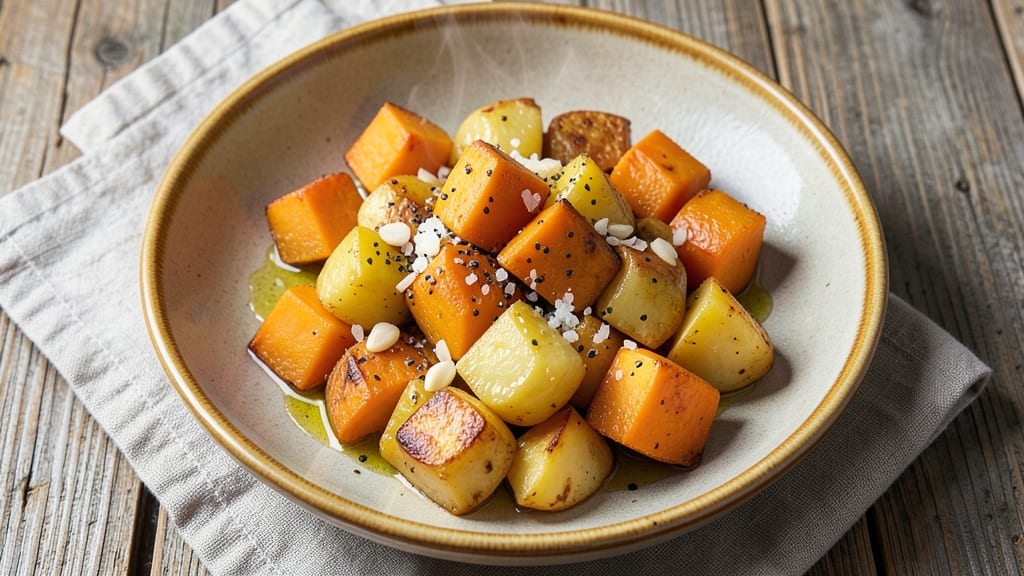
This baked squash and potato recipe delivers restaurant-quality roasted vegetables with caramelized edges that make every bite irresistible. The secret lies in high-heat roasting and a simple seasoning blend that enhances their natural sweetness while keeping preparation straightforward.
I developed this dish to create a vegetarian-friendly centerpiece that’s hearty enough for dinner but light enough for lunch.
What sets this recipe apart is the perfect balance of textures—tender flesh with crispy, golden-brown edges—achieved through precise oven timing and strategic seasoning. You’ll use just five key ingredients (plus optional garnishes) and 30 minutes of active prep, making it ideal for weeknight meals or holiday sides.
The dish pairs beautifully with grilled meats, fish, or even as a standalone vegetarian plate.
The roasting process transforms humble squash and potatoes into a savory, aromatic masterpiece, where the natural sugars deepen into caramelized perfection. A sprinkle of fresh herbs or a drizzle of olive oil at the end adds brightness, while optional vegan cheese brings extra richness.
This recipe is foolproof, delivering consistent results every time—no fancy techniques required.
Whether you’re meal prepping for the week or serving as a side for a special dinner, this baked squash and potato dish delivers bold flavors with minimal effort. The versatility lets you customize it to your taste, ensuring it becomes a staple in your recipe rotation. Let’s get started!
Ingredients for baked squash and potato
Five core ingredients transform humble squash and potatoes into restaurant-worthy roasted perfection with caramelized edges.
| Ingredient | Amount | Notes |
|---|---|---|
| Butternut Squash 🎃 | 1 ½ lb | Medium-sized, peeled and cubed |
| Yellow Potatoes 🥔 | 1 ½ lb | Yukon gold or similar, cut into chunks |
| Extra-Virgin Olive Oil 🫒 | ¼ cup | High-quality, fruity variety |
| Diamond Crystal Kosher Salt 🧂 | 1 ½ tsp | Adjust to taste |
| Freshly Ground Black Pepper 🌶️ | ½ tsp | Freshly cracked preferred |
| Garlic Cloves 🧄 | 3 cloves | Minced for even distribution |
| Smoked Paprika 🌶️ | 1 tsp | For depth and aroma |
| Fresh Thyme Leaves 🌿 | ¼ cup | Or 1 tsp dried thyme |
| Vegan Parmesan Cheese 🧀 | ¼ cup | Nutritional yeast blend optional |
| Fresh Rosemary 🌿 | 2 sprigs | For garnish and aroma |
The squash and potatoes are the stars here—Yukon gold potatoes deliver a creamy texture while butternut squash adds natural sweetness. For the best results, source organic produce when possible, as the skin on potatoes and squash contains beneficial nutrients. Whole Foods or local farmers' markets offer excellent options, but conventional grocery stores carry quality varieties too. Look for squash with firm skin and no soft spots, and potatoes that feel heavy for their size. Pre-cutting your vegetables saves time, but if you prefer to prep as you go, keep them in the fridge until ready to roast.
No smoked paprika? Regular paprika plus a pinch of cayenne works in a pinch, though the smoky depth is worth seeking out. Fresh thyme is ideal, but dried thyme at one-third the amount delivers similar results. For the vegan Parmesan, a blend of nutritional yeast, garlic powder, and salt creates that signature umami punch without dairy. The garlic should be minced finely for even distribution throughout the dish. If you're short on time, pre-minced garlic from a jar is acceptable, though fresh is always preferred for superior flavor.
Roasted vegetables keep best when refrigerated in an airtight container for up to 5 days, though they're at their peak within the first 2 days. For longer storage, freeze portions in a single layer before transferring to a bag, where they'll maintain quality for 3 months. Reheat gently in the oven or microwave until warmed through. These vegetables reheat beautifully, making them perfect for meal prep. The vegan Parmesan and fresh herbs should be added just before serving to preserve their vibrant flavors.
Why You'll Love This Recipe
- One-Pan Magic: I swear by this recipe because it’s literally one sheet pan, one oven, and zero cleanup battles. Just slice the squash and potatoes into even chunks (no peeling required—honestly, who has time?), toss with olive oil, salt, and pepper, and let the oven do the work. That’s it.
- Sweet-Savory Crunch: The butternut squash caramelizes into this perfect balance of sweetness and earthiness, while the potatoes develop a crispy edge that makes every bite satisfying. Between us, this combo is why I stopped buying takeout on Fridays—it’s that good.
- Meal Prep MVP: I make a double batch every Sunday because it reheats beautifully for lunches all week. The squash stays tender, the potatoes hold their shape, and honestly? It’s the only side dish I don’t dread pulling from the fridge. (Yes, even on a Tuesday night.)
- Budget-Friendly Feast: This recipe stretches to feed four for under $10, and the ingredients last for multiple meals. Butternut squash and potatoes are pantry staples, and a little olive oil goes a long way. Not the prettiest, but the taste makes up for it—and so does the wallet.
Step-by-step instructions for roasted sweet potatoes and butternut squash
Transform simple vegetables into a showstopping side dish with perfectly caramelized edges and tender interiors.
Prep and Season the Vegetables
Preheat your oven to 425°F for maximum browning potential. In a large bowl, combine the 1.5 lb butternut squash and 1.5 lb yellow potatoes—the cubes should be roughly 1.5-inch pieces for even cooking. Toss them together with the 0.25 cup extra-virgin olive oil until every surface glistens.
In a small bowl, whisk together the 1.5 tsp Diamond Crystal kosher salt, 0.5 tsp freshly ground black pepper, 1 tsp smoked paprika, and 0.25 cup fresh thyme leaves (finely chopped). Sprinkle this seasoning blend evenly over the vegetables, pressing gently to ensure it adheres. The paprika will give you that beautiful caramelized crust, while the thyme adds aromatic depth.
Roast Until Caramelized
Spread the seasoned vegetables in a single layer on two rimmed baking sheets, ensuring they don't overlap. This arrangement allows maximum air circulation for even browning. Roast for 25 minutes, then carefully flip each piece with tongs to ensure all sides develop that coveted caramelized crust.
Return to the oven and roast for another 15-20 minutes until the edges are deeply golden brown and the vegetables are tender when pierced with a fork. The butternut squash should yield slightly to pressure, and the potatoes should be fork-tender with crispy exteriors. If you notice any pieces browning too quickly, tent loosely with foil to prevent burning while allowing other areas to catch up.
Add Aromatics and Finish Roasting
While the vegetables roast, finely mince the 3 cloves garlic and finely chop the 2 sprigs fresh rosemary (discard the woody stems). After the initial roasting, sprinkle these aromatics evenly over the vegetables. The garlic will infuse the dish with savory depth, while the rosemary adds a piney brightness that cuts through the richness.
Return the baking sheets to the oven and roast for an additional 10 minutes to allow the garlic to bloom and the rosemary to release its essential oils. The vegetables should now be deeply caramelized with crispy edges that give way to tender, flavorful interiors. The garlic should be fragrant but not burnt, indicating it's infused the dish perfectly.
Garnish and Serve
Remove the vegetables from the oven and transfer them to a serving platter. Immediately sprinkle with the 0.25 cup vegan parmesan cheese, pressing it gently into the warm vegetables so it melts slightly and creates a savory crust. The cheese adds a nutty, umami dimension that complements the natural sweetness of the squash and potatoes.
Garnish with additional fresh rosemary sprigs for visual appeal and serve immediately while the vegetables are at their peak texture and temperature. The contrast between the crispy, caramelized edges and the tender, flavorful centers creates a perfect balance in every bite. This dish pairs beautifully with grilled meats, hearty salads, or even as a standalone vegetarian centerpiece.
Pro Tips For Making Baked Squash And Potato
- CUT SQUASH IN EVEN SLICES: I learned this the hard way—uneven butternut squash pieces roast at wildly different rates. Aim for ½-inch thick half-moons (yes, even if it takes a few extra minutes to prep). The thinner edges caramelize perfectly while the thicker centers stay tender.
- SALT POTATOES BEFORE ROASTING: This isn’t just about flavor—salting whole potatoes 30 minutes before baking (while you prep the squash) guarantees they crisp up instead of turning soggy. Use about 1 teaspoon kosher salt per pound, then rinse and dry thoroughly.
- ROAST POTATOES FIRST: Start the potatoes in a 425°F oven for 20 minutes before adding the squash. They’ll get a head start on crisping while the squash warms up, and you’ll avoid the dreaded "one side raw, one side burnt" scenario.
- USE A MIXED OIL BATH: Drizzle the squash and potatoes with olive oil after they’re in the oven—just enough to coat the bottom of the pan. Then, after 15 minutes, drizzle another tablespoon directly over the squash. The high heat will make it smoke slightly, creating a nutty aroma and deeper flavor. (Yes, it’s messy, but it works.)
Troubleshooting perfect results
Uneven Browning
If your squash or potatoes develop dark spots while others remain pale, your oven likely has hot spots. Rotate the baking sheets halfway through roasting to ensure even exposure. I also recommend using two sheets instead of one to maximize airflow.
If browning occurs too quickly, tent the tray with foil for the last 10 minutes to slow caramelization while keeping interiors tender. 🌡️
Soggy Vegetables
Overcrowding on baking sheets traps steam, leading to soggy textures. Arrange vegetables in a single layer with ½-inch gaps between pieces. For extra insurance, pat dry with a kitchen towel before seasoning—this removes excess moisture that can steam instead of caramelize.
I've found that using rimmed baking sheets prevents drips from pooling underneath.
Underseasoned Flavor
The seasoning blend should permeate the vegetables by the end, but if they taste bland, your oil-to-vegetable ratio may be off. Aim for 2 tablespoons of olive oil per pound of vegetables.
For deeper flavor, add ½ teaspoon of smoked paprika to the vegan Parmesan before sprinkling on top. Taste as you roast—adjust with extra salt or a squeeze of lemon juice if needed.
Potatoes Too Hard
Tough potatoes usually mean they weren't cooked long enough. Test doneness by piercing with a fork—they should slide in easily. For extra insurance, add 5 minutes to the roasting time if using smaller potato chunks.
I like to cover the tray with foil after the first 25 minutes to steam the interiors while still allowing browning on the edges.
Squash Too Soft
Butternut squash can become mushy if overcooked. Remove it from the oven when it's just tender—it will continue cooking slightly from residual heat. For better control, cut squash into 1-inch cubes instead of larger pieces and reduce roasting time by 5 minutes.
A meat thermometer helps: squash is done at 200°F internal temperature.
Garlic Burns Quickly
Fresh garlic burns faster than dried, so add it only in the final 10 minutes of roasting. For extra insurance, wrap the minced garlic in a small square of foil before sprinkling on the vegetables.
This creates a makeshift barrier that prevents direct heat exposure. If using pre-minced garlic, reduce the amount by 25% since it's more concentrated.
Nutrition facts
Frequently asked questions
Can I use regular potatoes instead of Yukon gold?
Yes, but Yukon golds are ideal for their creamy texture and natural sweetness. Regular russet potatoes will work too—they'll be fluffier inside with slightly crispier edges. Just reduce roasting time by 5 minutes since they cook faster. For extra flavor, add ½ teaspoon of garlic powder to the seasoning blend.
How do I substitute butternut squash if I can't find it?
Acorn or delicata squash make excellent substitutes—they're sweeter and roast faster. For a non-squash option, try 1.5 lb of sweet potatoes (peeled and cubed) or 1 lb of parsnips (cut into matchsticks). Reduce roasting time by 10 minutes for sweet potatoes since they cook more quickly than butternut.
Can I make this dish ahead of time?
These roasted vegetables reheat beautifully. Store in an airtight container in the fridge for up to 5 days. Reheat in a 350°F oven for 15-20 minutes until warmed through. For best texture, add fresh thyme and vegan Parmesan just before serving. The flavors actually improve overnight as the seasonings meld.
Why does my squash turn out watery?
Excess moisture is usually from not patting vegetables dry before roasting or overcrowding on the sheet. Always dry the cut pieces thoroughly with a kitchen towel, and leave ½-inch gaps between them. For extra insurance, roast at 400°F instead of 425°F—the slightly lower heat helps evaporate moisture more gradually.
What's the best way to make this vegetarian-friendly?
This recipe is already vegetarian, but you can enhance it further! Swap the vegan Parmesan for a sprinkle of toasted pumpkin seeds or hemp hearts for extra protein. For a creamy finish, drizzle with cashew cream (blended soaked cashews with lemon juice). The dish pairs perfectly with grilled tofu or stuffed bell peppers for a complete vegetarian meal.