
Soups & Stews
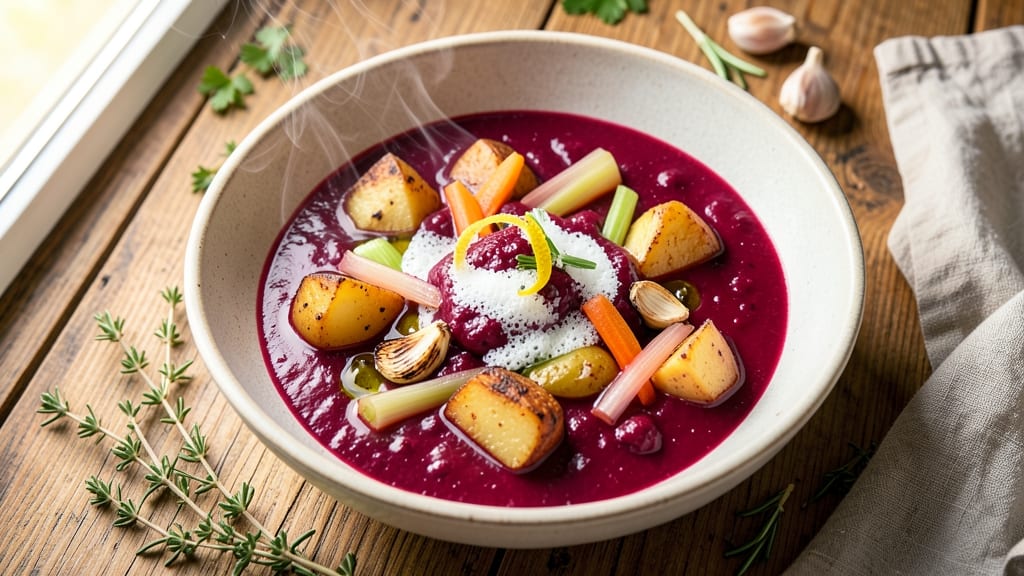
This beet and potato soup recipe delivers the perfect balance of earthy sweetness and creamy velvety texture—transforming simple ingredients into a hearty, comforting bowl.
The secret lies in slow simmering roasted beets and potatoes with aromatic vegetables, creating a naturally sweet base that pairs beautifully with savory herbs and a touch of creaminess. My version builds flavor through proper technique rather than shortcuts, ensuring every spoonful is rich without being heavy.
The beauty of this soup is its versatility—it works as a satisfying main dish or a comforting side, and you can easily adapt it to dietary needs by using vegetable broth or coconut milk instead of dairy.
Roasting the vegetables first intensifies their natural sweetness while developing deep, caramelized flavors that form the soup's foundation. The result is a velvety, well-rounded broth that coats every bite with just the right amount of body and warmth.
What makes this recipe stand out is how the textures come together: tender roasted vegetables hold their shape while blending into the broth, creating a satisfying contrast with the smooth, creamy finish.
The earthy beets add natural sweetness that balances the heartiness of the potatoes, while fresh herbs and a touch of cream (or dairy-free alternative) add brightness and richness. This is the kind of soup that tastes even better the next day as flavors meld together.
Perfect for chilly evenings, meal prep, or holiday gatherings, this soup scales easily to feed a crowd while maintaining its restaurant-quality depth. The instructions are designed to be straightforward, with clear steps for roasting, simmering, and blending—no complicated techniques required.
Let's create a bowl that's as nourishing as it is delicious.
Ingredients for beet and potato soup
Roasted beets and potatoes form the heart of this velvety soup, balanced by aromatic vegetables and creamy coconut milk.
| Ingredient | Amount | Notes |
|---|---|---|
| Medium Beets 🍠 | 2 lbs | Roasted, peeled, cubed |
| Yukon Gold Potatoes 🥔 | 2 lbs | Peeled, cubed, even size |
| Yellow Onions 🧅 | 2 whole | Diced, medium dice |
| Carrots 🥕 | 3 medium | Peeled, chopped into chunks |
| Celery Stalks 🌿 | 4 whole | Chopped, medium dice |
| Garlic Cloves 🧄 | 6 cloves | Peeled, minced |
| Vegetable Broth 💧 | 6 cups | Low-sodium preferred |
| Extra-Virgin Olive Oil 🫒 | ½ cup | For roasting vegetables |
| Fresh Thyme 🌿 | ¼ cup | Leaves only, chopped |
| Fresh Parsley 🌿 | ¼ cup | Chopped, for garnish |
| Fresh Ginger 🌿 | 2 tbsp | Grated, freshly |
| Coconut Milk 🥥 | 1 cup | Full-fat, for creaminess |
| Lemon Juice 🍋 | 1 tbsp | Freshly squeezed |
| Sea Salt 🧂 | 1 ½ tsp | Diamond Crystal preferred |
| Black Peppercorns 🌶️ | ½ tsp | Freshly cracked |
| Maple Syrup 🍯 | 1 tbsp | For subtle sweetness |
The beets and potatoes are the stars here—Yukon Gold potatoes for their buttery texture and deep red beets for that signature earthy sweetness. Whole Foods or Trader Joe's carry excellent organic selections; look for firm, vibrant produce with no soft spots. For the broth, low-sodium vegetable broth is key—Imagine or Pacific Foods brands are my go-tos for clean flavor. The ginger should be freshly grated (the good stuff from the produce section, not powdered)—it adds warmth that freezes beautifully if you make extra. Celery and carrots should be crunchy and fresh—avoid wilted stalks that'll turn your soup mushy.
No Yukon Gold potatoes? Russets or red potatoes work in a pinch, though texture differs slightly. Substituting coconut milk? Full-fat cashew cream (blend soaked cashews with water) delivers similar richness. Fresh thyme unavailable? Dried thyme at one-third the amount suffices, but fresh is worth seeking out at farmers' markets. The maple syrup can be swapped for agave or date syrup, though maple's subtle earthiness complements the beets perfectly. For extra depth, roast the beets and potatoes separately—this caramelization transforms their natural sweetness into a velvety base that's the soul of this soup.
Store leftovers in airtight containers for up to 5 days—flavors deepen overnight. Freeze for 3 months by portioning into individual containers. The coconut milk may separate when frozen; give it a stir and reheat gently. For meal prep, double the batch—this soup reheats beautifully and makes hearty lunches. Garnish with extra thyme and parsley before serving; fresh herbs brighten every spoonful. The roasted vegetables keep well in the fridge for 4 days before blending, so prep ahead if your schedule allows.
Why You'll Love This Recipe
- No Chopping Chaos: I swear by this recipe because you can use pre-washed baby carrots and pre-peeled Yukon Golds—half the prep work gone. Even the beets stay in their skins until the end (less mess, same sweetness).
- Earthy-Creamy Magic: That deep, caramelized onion base? It’s the soul of this soup. The beets add a natural sweetness while the potatoes keep it hearty—like a hug in a bowl, but way more nutritious.
- Meal Prep MVP: Between us, this soup tastes better the next day. I make a big batch on Sundays, and it’s my go-to for lunches—just reheat and add a swirl of cream if I’m feeling fancy.
- Budget-Friendly Pantry Hero: Yellow onions, celery, and carrots are always cheap, and beets last forever in the fridge. Honestly, it’s the kind of recipe that makes grocery day less stressful—no specialty items, just solid flavors.
Step-by-step instructions for beet and potato soup
Transform humble root vegetables into velvety, earthy soup with balanced sweetness and rich texture.
Roast the Vegetables for Deep Flavor
Preheat your oven to 400°F. Toss the 2 lbs medium beets and 2 lbs Yukon Gold potatoes (both cubed) with 0.25 cup extra-virgin olive oil, 0.5 tsp sea salt, and 0.25 cup fresh thyme. Spread them evenly on two rimmed baking sheets. Roast for 30-35 minutes until tender and caramelized at the edges, stirring halfway through.
While they roast, prepare the aromatic vegetables: Heat 0.25 cup extra-virgin olive oil in a large Dutch oven over medium heat. Add the 2 whole yellow onions, 3 medium carrots, and 4 whole celery stalks (all chopped), cooking for 8-10 minutes until softened but not browned. Add the 6 cloves minced garlic and 2 tbsp fresh ginger, cooking for another 1 minute until fragrant.
Build the Broth Base
Pour in the 6 cups vegetable broth and bring to a gentle simmer. Add the roasted beets and potatoes, along with the 1.5 tsp sea salt and 0.5 tsp black peppercorns. Simmer uncovered for 20-25 minutes until the potatoes are fork-tender and the flavors meld. The soup should have a thick, rustic texture at this stage.
Here's where the magic happens: Stir in the 1 tbsp maple syrup and 1 tbsp lemon juice. The syrup enhances the natural sweetness of the beets while the lemon brightens the earthy flavors. Taste and adjust seasoning—you want a balance of sweet, savory, and slightly tangy.
Achieve Creamy Velvety Texture
Reduce heat to low and stir in the 1 cup coconut milk. The heat will gently warm it, creating a luxurious creaminess without curdling. Let the soup simmer for 5 minutes to allow the coconut milk to fully integrate and the flavors to settle. The result should be a smooth, velvety consistency with pockets of rustic texture from the roasted vegetables.
For best results, use an immersion blender to purée about half the soup until silky smooth, then stir it back into the remaining chunky portion. This creates visual contrast and texture variation in each spoonful. If the soup is too thick, thin with additional broth 1 tablespoon at a time until you reach your desired consistency.
Finish and Serve
Remove from heat and let the soup rest for 5 minutes to allow flavors to develop fully. Stir in the 0.25 cup fresh parsley just before serving to add a fresh herbal note that cuts through the richness. The parsley should be visible in each serving for both color and flavor contrast.
Serve immediately in warm bowls, garnished with a drizzle of coconut milk and a sprinkle of cracked black pepper. The contrast between the creamy soup and the peppery finish elevates each spoonful. This soup tastes even better the next day as the flavors continue to meld, so consider making extra for leftovers.
Pro Tips For Making Beet And Potato Soup
- PEEL BEETS LAST: I used to peel and chop everything first, but beets oxidize fast—those bright red cubes turn dull gray if exposed too long. Save the beets for last, then add them raw to the pot just before simmering. The color stays vibrant, and you’ll get that showstopping look without extra work.
- SOFTEN ONIONS FIRST: After burning three batches of soup because I rushed the base, I learned: sweat the onions and celery in butter until they’re actually soft—not just translucent, but breaking down into tiny bits. This takes 8-10 minutes, but it builds flavor that cuts through the earthiness of beets. (Yes, even if you’re impatient like me.)
- SKIP THE BOILING WATER: I was skeptical until I tried it—peel and cube the Yukon Golds, then toss them straight into the hot pot with the other veggies. No pre-boiling means they absorb the broth’s flavor better and don’t turn mushy. Just make sure the pot’s hot enough to soften them evenly.
- STIR IN THE CREAM COLD: This isn’t the prettiest method, but it’s the tastiest: stir in the cream or yogurt at the very end, straight from the fridge. Hot cream curdles like a nightmare, but cold cream blends in silky and keeps the soup rich without breaking. (Your future self will thank you.)
Dietary considerations for this beet and potato soup
Vegan-Friendly Base
This soup is naturally vegan-friendly, thanks to the vegetable broth and coconut milk base. The Yukon Gold potatoes and beets provide hearty texture and natural sweetness without any animal products. For extra richness, I recommend using full-fat coconut milk—it adds a luxurious creaminess that rivals dairy.
The maple syrup and lemon juice balance flavors beautifully, ensuring the soup isn’t one-note. 🥥
Gluten-Free Adaptations
To keep this soup gluten-free, always use certified gluten-free vegetable broth—brands like Pacific Foods or Imagine offer excellent low-sodium options. Double-check labels on spices and broth to avoid cross-contamination. The Yukon Gold potatoes and beets are naturally gluten-free, and the coconut milk is safe as long as it’s pure.
For added flavor, a sprinkle of nutritional yeast (check for gluten-free certification) adds a cheesy note without gluten. 🌾
Low-Sodium Options
This recipe is designed to be low-sodium by using low-sodium vegetable broth and controlling salt additions. If you need to reduce sodium further, skip adding extra salt at the end—let the natural flavors of the roasted beets and potatoes shine.
For a salt-free version, use Diamond Crystal sea salt sparingly (it’s less salty than table salt) or omit it entirely. The black peppercorns and fresh ginger add depth without relying on sodium. 🧂
Allergen Considerations
For nut allergies, coconut milk is the only potential concern—opt for oat milk or cashew cream instead. If you’re avoiding dairy, the coconut milk is already a great substitute, but always check labels for hidden additives.
For soy allergies, ensure your broth is soy-free (many vegetable broths contain soy). The fresh herbs and root vegetables are naturally allergen-free, making this soup a safe bet for most dietary restrictions. 🌱
Sweetness Adjustments
If you prefer less sweetness, reduce the maple syrup to ½ tablespoon or omit it entirely—the roasted beets naturally caramelize and add depth. For extra sweetness, add ½ teaspoon vanilla extract or a pinch of cinnamon to complement the beets.
The lemon juice helps balance any sweetness, so adjust it to taste. 🍯
Texture Variations
For a completely smooth soup, blend everything until silky using an immersion blender. For rustic texture, leave some chunks of roasted beets and potatoes intact. If the soup is too thick, thin it with warm water or additional broth—this keeps the flavor concentrated while improving consistency.
The coconut milk adds creaminess, but you can swap it for silken tofu blended with water for a dairy-free option. 🥄
Nutrition facts
Frequently asked questions
Can I use regular potatoes instead of Yukon Gold?
Yes, but the texture will differ slightly. Yukon Gold potatoes hold their shape better and have a buttery texture, while red or russet potatoes will break down more when roasted. For a similar result, use red potatoes (they stay firmer) or add 1 extra tablespoon of coconut milk to compensate for any extra starchiness.
How can I make this soup spicier?
Add ½ teaspoon smoked paprika or ¼ teaspoon cayenne pepper when sautéing the onions. For heat that lingers, stir in 1 teaspoon of hot sauce or a pinch of cayenne at the end. Fresh chili flakes or a dash of Sriracha also work beautifully as a garnish.
Why does my soup taste bitter?
Bitterness often comes from overcooking the beets or using too much ginger. Roast beets for 30-35 minutes (not longer) and reduce ginger to 1 tablespoon if needed. Balance flavors with 1 extra tablespoon lemon juice or a pinch of sugar to counteract any bitterness. The coconut milk should also help smooth out harsh flavors.
Can I make this soup ahead of time?
This soup tastes even better the next day as flavors meld. Store in an airtight container in the fridge for up to 5 days or freeze for 3 months. Reheat gently on the stove, stirring occasionally. If using frozen, thaw overnight in the fridge before reheating—never microwave directly from frozen.
What's the best way to peel beets?
First, roast whole beets until tender (wrap in foil at 400°F for 45-50 minutes). The skins will slip off easily when cool. For raw beets, use a vegetable peeler or paring knife to remove the skin in strips. Always wear gloves—beet juice stains! For efficiency, peel after roasting to save time and reduce mess.