
Soups & Stews
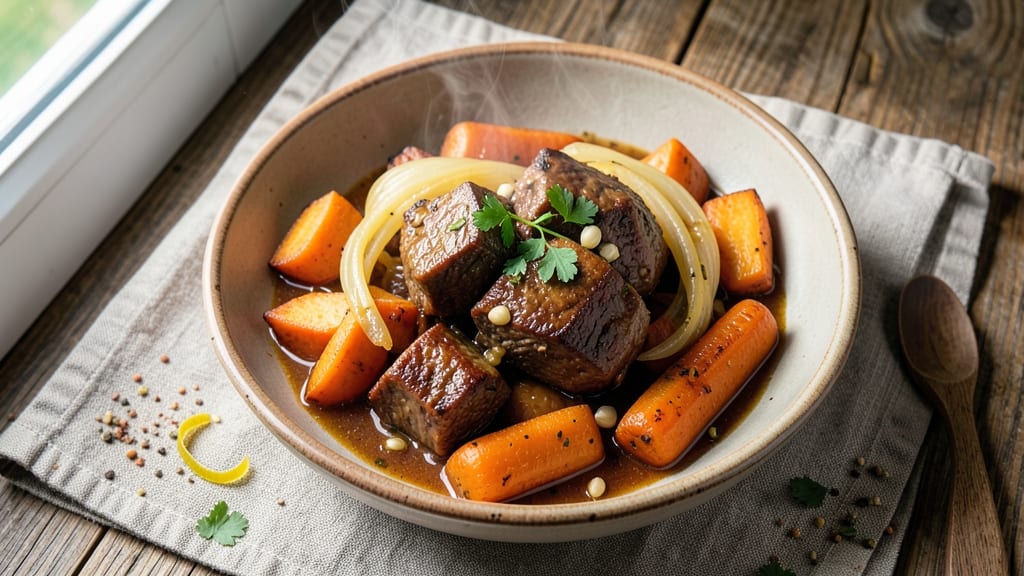
This one-pot stew meat and sweet potato recipe delivers deep, caramelized flavor with minimal effort—perfect for cozy nights when you crave hearty, comforting meals. The secret lies in browning the meat first, creating a rich, savory foundation that transforms tough cuts into tender, melt-in-your-mouth pieces.
Sweet potatoes add natural sweetness and creaminess, while slow simmering develops layers of complexity that turn a simple pot into a restaurant-worthy dish.
What sets this recipe apart is the balance of techniques: browning the meat unlocks deep umami notes, while deglazing the pan captures every flavorful bit. Sweet potatoes cook directly in the stew, absorbing the broth and developing a tender, caramelized edge.
The result is a dish that’s rich, satisfying, and effortless—ideal for weeknights or meal prep. With just one pot to manage, cleanup is a breeze, and the flavors only get better as it sits.
The final dish features tender beef (or your choice of protein) paired with velvety sweet potatoes, all swimming in a deeply aromatic broth.
The texture is perfect—fork-tender meat and creamy potatoes that hold their shape—while the flavors are bold yet balanced, with just the right touch of sweetness to complement the savory depth. Serve with crusty bread to soak up every last drop of that flavorful liquid gold.
This recipe works equally well on the stovetop or in a slow cooker, making it versatile for any kitchen. Whether you're feeding a family or prepping for leftovers, the one-pot method ensures dinner comes together without stress.
The slow cooking process allows flavors to meld beautifully, resulting in a dish that feels indulgent but is simple to achieve.
Ingredients for stew meat and sweet potato
The foundation of this one-pot masterpiece: tender beef, caramelized sweet potatoes, and aromatic broth components.
| Ingredient | Amount | Notes |
|---|---|---|
| Beef Chuck Roast 🥩 | 2 lb | Cut into 1.5-inch cubes, trimmed of fat |
| Sweet Potatoes 🍠 | 2 lb | Medium size, peeled and cut into 1.5-inch chunks |
| Yellow Onion 🧅 | 1 whole | Medium size, chopped into 1/2-inch pieces |
| Carrots 🥕 | 4 whole | Medium size, cut into 1-inch pieces |
| Garlic Cloves 🧄 | 4 cloves | Peeled and smashed |
| Tomato Paste 🍅 | ½ cup | Smooth, not chunky |
| Dry Red Wine 🍷 | 1 cup | Bold variety like Cabernet Sauvignon |
| Beef Broth 💧 | 4 cups | Low-sodium preferred |
| Olive Oil 🫒 | 2 tbsp | Extra-virgin for browning |
| Thyme 🌿 | 1 tbsp | Fresh leaves, chopped |
| Bay Leaves 🍃 | 2 whole | Dried, standard size |
| Salt 🧂 | 1 ½ tsp | Diamond Crystal kosher salt |
| Black Pepper 🌶️ | 1 tsp | Freshly ground |
| All-Purpose Flour 🌾 | 2 tbsp | For thickening if needed |
The beef chuck roast is non-negotiable for texture—its marbled fat renders into the stew, creating a luxurious mouthfeel. Costco or local butchers typically carry pre-cut chuck roast, but if buying whole, ask for the shoulder cut. Trim excess fat before cubing to prevent greasiness. For the sweet potatoes, organic varieties from the produce section (like Beauregard) develop the best caramelized edges. The onions and carrots should be firm with vibrant color—avoid any with soft spots or wilting. Garlic cloves should be plump and free of sprouts, indicating freshness.
Substitutions are flexible but require adjustments. Chicken thighs work well as a poultry alternative, but increase cooking time by 15 minutes. For wine, dry sherry or additional beef broth maintains depth without alcohol. Fresh thyme can be swapped for 1 teaspoon dried thyme, though the flavor will be less pronounced. The tomato paste is crucial for color and umami—Trader Joe's squeeze tubes are ideal for portion control. If your broth is high-sodium, reduce the salt in the recipe by half. For a vegetarian version, replace the beef with extra-firm tofu pressed and cubed, though texture will differ.
Store leftovers in an airtight container for up to 5 days, though flavors peak after 24 hours as ingredients meld. Freeze portions for 3 months—the broth actually improves upon reheating. For meal prep, double the recipe and freeze half immediately. The sweet potatoes will soften further when reheated, so adjust cooking time slightly if using frozen portions. This stew reheats beautifully on the stovetop over medium-low heat, stirring occasionally to prevent sticking. The one-pot method ensures minimal cleanup while maximizing flavor development through slow simmering.
Why You'll Love This Recipe
- One-Pot Magic: I swear by this for lazy nights—just dump everything in, let it simmer, and walk away. No chopping boards to clean, no extra pots to wash. The sweet potatoes soften right in the broth, and the beef practically melts off the bone.
- Sweet & Savory Balance: That caramelized beef chuck with tender sweet potatoes? It’s like a hug in a bowl. The onions and garlic build layers of warmth, while the natural sweetness of the potatoes keeps it from feeling heavy.
- Leftovers That Win: Between us, this stew gets better the next day. I make a double batch on Sundays—some for dinner, some for lunches—and everyone’s happy. The flavors deepen overnight, and reheating takes two minutes.
- Budget-Friendly Feast: A whole roast and sweet potatoes stretch across meals without breaking the bank. Honestly, it’s my go-to for feeding the family without stressing over grocery bills. Plus, the carrots add color and crunch for almost no cost.
Step-by-step instructions for stew meat and sweet potato recipe
This one-pot method delivers deep caramelized flavors while keeping prep simple and cleanup minimal.
Sear the Beef Chuck Roast for Maximum Flavor
Heat a large Dutch oven over medium-high heat until hot. Add the 2 tablespoons olive oil and swirl to coat the bottom evenly. Working in batches if needed, add the 2 lb beef chuck roast cut into 1.5-inch cubes, trimming excess fat as you go. This prevents the oil from becoming overwhelmed.
Sear the beef for 4-5 minutes per side until deeply browned with a crust forming. Don't crowd the pan—this ensures proper browning. As each batch finishes, transfer the beef to a plate. You're building flavor through the Maillard reaction here, so resist the urge to rush this step. The browned beef will release its rich, meaty essence into the stew as it simmers.
Develop the Flavor Base with Aromatics and Wine
Reduce heat to medium and add the 1 whole yellow onion chopped into ½-inch pieces, 4 whole carrots cut into 1-inch pieces, and 4 cloves garlic cloves that have been peeled and smashed. Cook for 5-6 minutes until the vegetables soften slightly and the onion becomes translucent.
Stir in the ½ cup tomato paste and cook for 1 minute to toast its edges lightly. This deepens its flavor. Pour in the 1 cup dry red wine and scrape up all the browned bits from the bottom of the pot with a wooden spoon. This deglazing step captures all that concentrated flavor you worked so hard to develop. Let the wine simmer for 2-3 minutes until reduced by half, intensifying its richness.
Build the Stew Foundation with Broth and Vegetables
Add the 2 lb sweet potatoes cut into 1.5-inch chunks, 4 cups beef broth, 1.5 teaspoons salt, 1 teaspoon black pepper, 1 tablespoon thyme, and 2 whole bay leaves to the pot. Stir gently to combine, then return the seared beef to the pot, distributing it evenly among the vegetables.
Bring the mixture to a gentle boil, then immediately reduce heat to low. Here's the key: maintain a bare simmer where you see just a few bubbles breaking the surface occasionally. Cover the pot with a tight-fitting lid and let it cook for 2 hours. This slow cooking transforms the tough chuck roast into tender, fork-shreddable meat while allowing the sweet potatoes to develop a creamy texture with caramelized edges.
Thicken and Finish the Stew
After 2 hours, check the consistency of your stew. If it's too thin for your preference, sprinkle the 2 tablespoons all-purpose flour over the surface and stir gently to combine. Let it simmer uncovered for 5-10 minutes longer to thicken slightly. The flour acts as a natural thickener without altering the stew's fundamental character.
Taste and adjust seasoning if needed. The sweet potatoes should be tender enough to pierce easily with a fork, and the meat should pull apart with gentle pressure. If the stew needs more depth, you can add a splash more broth or a pinch of salt. Remove and discard the bay leaves before serving, as they're meant for flavoring during cooking but can be too fibrous to enjoy.
Pro Tips For Making Stew Meat And Sweet Potato
- SEAR THE CHUCK ROAST FIRST: That beef won’t break apart like it should if you skip this step. Get your pan smoking hot—I mean actual smoke—and sear the roast 3-4 minutes per side before anything else. The crust locks in flavor and keeps the meat tender later. (Yes, even if you’re impatient like me.)
- CUT SWEET POTATOES UNEVENLY: Big chunks stay tough, small ones turn to mush. Aim for 1.5–2-inch pieces, but mix sizes—some thick, some thin. The thinner pieces soften first, while the thicker ones hold shape. No need for perfect uniformity; just don’t go smaller than 1 inch.
- DON’T CROWD THE ONIONS AND CARROTS: I learned this the hard way—piling them all in at once means they steam instead of caramelize. Spread them out in the pot and let them sizzle for 5 minutes before adding liquid. You’ll get real color and depth, not sad, pale veggies.
- USE COLD LIQUID FOR THE STEW: Pouring cold broth or water into the pot keeps the meat from cooking too fast and turning tough. Start with just enough to barely cover the bottom, then add more later. (Pro move: Save time by using frozen veggies—just add them in the last 20 minutes.)
Perfect pairings for stew meat and sweet potato
Crusty Bread Pairing
Nothing complements this rich stew like a warm, crusty loaf of sourdough or baguette to soak up every last drop of that flavorful broth. I love using a freshly baked artisanal baguette from my local bakery—its crisp exterior contrasts beautifully with the tender, creamy sweet potatoes.
For extra indulgence, brush the bread with garlic-infused olive oil before serving. 🥖
Fresh Herb Garnish
Brighten the dish with a sprinkle of fresh parsley or thyme just before serving. The vibrant green adds a pop of color and freshness that cuts through the richness.
For an extra touch, I sometimes add chopped chives or a few thinly sliced scallions—their mild oniony bite pairs perfectly with the sweet potatoes. A pinch of freshly cracked black pepper also elevates the dish.
Creamy Side Options
If you want to balance the hearty stew with something lighter, consider serving it alongside mashed cauliflower or creamy polenta. The smooth texture of these sides contrasts nicely with the chunky sweet potatoes and tender beef.
For a more traditional pairing, buttered egg noodles or garlic mashed potatoes work beautifully. The starchiness helps round out the meal.
Cheese Board Accompaniment
For a more elevated presentation, serve the stew with a small cheese board featuring aged cheddar, brie, and blue cheese. The sharp, creamy, and tangy notes complement the stew’s savory-sweet profile.
Add a few cured meats like prosciutto or salami for a heartier spread. The contrast of textures and flavors makes the stew feel even more luxurious. 🧀
Wine Pairing Recommendations
A bold Cabernet Sauvignon or Malbec enhances the rich, meaty flavors of the stew while standing up to the sweet potatoes. For a lighter option, a Pinot Noir with its bright acidity cuts through the dish’s richness.
If you prefer white wine, a Chardonnay with a touch of oak adds a creamy texture that pairs beautifully with the sweet potatoes. Avoid overly tannic wines—they can clash with the stew’s depth. 🍷
Nutrition facts
Frequently asked questions
Can I use chicken or pork instead of beef?
For chicken, use bone-in thighs (they stay juicier than breasts) and reduce cooking time to 1 hour 15 minutes. Pork shoulder works beautifully too—just increase simmering to 2 hours 30 minutes for extra tenderness. The key is adjusting cooking time based on fat content and cut type.
How do I prevent sweet potatoes from turning mushy?
Cut sweet potatoes into even 1.5-inch chunks and add them to the pot 30 minutes before the beef is fully tender. This staggered approach lets them cook through without over-softening. For extra structure, keep the lid slightly ajar during the last 10 minutes of cooking to allow steam to escape.
Can I make this in a slow cooker?
Yes! Brown the beef first (still essential for flavor), then transfer everything to your slow cooker. Use the low setting for 7-8 hours or high for 4-5 hours. The sweet potatoes will absorb more liquid, so you may need to add ½ cup extra broth before serving. The slow cooker version is even more forgiving for busy schedules!
What if I don't have red wine?
No problem! Substitute with 1 cup beef broth + 1 tablespoon balsamic vinegar for depth, or use dry sherry at a 1:1 ratio. Even apple cider vinegar (1 tablespoon) adds brightness. The wine's main role is deglazing and adding complexity—these alternatives work in a pinch.
How can I make this dish spicier?
Add 1 teaspoon smoked paprika with the tomato paste, or stir in ½ teaspoon cayenne pepper during the final 10 minutes of cooking. For heat with depth, include 1-2 chipotle peppers in adobo (minced) when adding the broth. Always taste first—you can adjust to your preference!