
Desserts
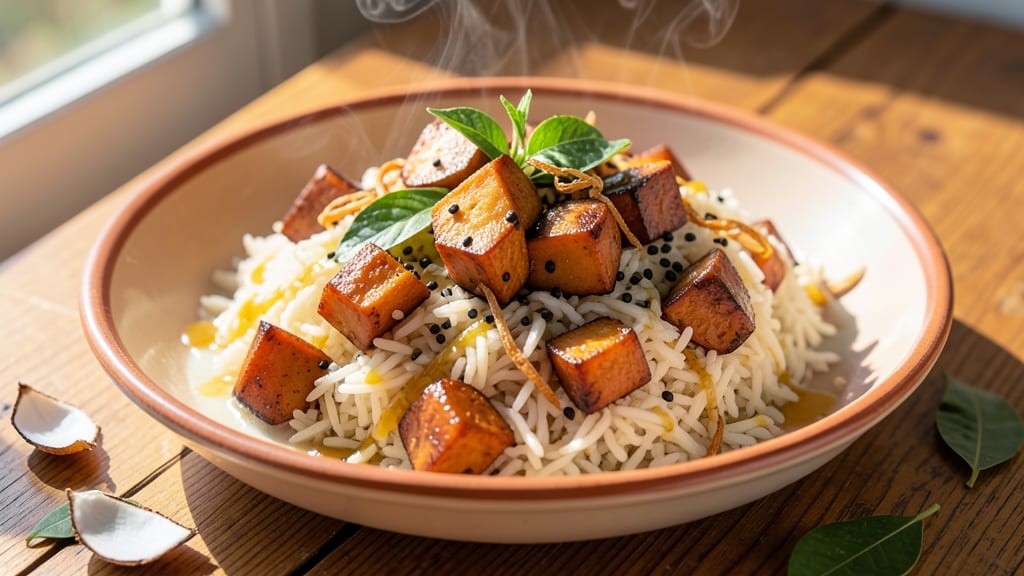
This one-pot sweet potato rice recipe Indian transforms humble ingredients into a fragrant, golden pilaf that tastes like a hug from your favorite Indian kitchen.
The secret lies in slow-cooked sweet potatoes infused with warm spices like cumin and turmeric, melted into fluffy basmati rice with coconut milk for creamy richness. I developed this version after years of experimenting with traditional sabudana khichdi, adapting it for home cooks who want restaurant-quality flavor without the fuss.
The magic happens in the spices—mustard seeds sizzling in ghee, curry leaves releasing their citrusy aroma, and cardamom adding floral warmth. Unlike many Indian rice dishes, this version uses sweet potatoes for natural sweetness and texture, while coconut milk keeps it luxuriously moist.
The one-pot method means minimal cleanup, and the dish is naturally vegetarian, gluten-free, and packed with fiber from both the rice and sweet potatoes.
What you'll end up with is a fragrant, golden pilaf where each grain of rice is tender yet distinct, sweet potatoes melt into creamy pockets, and every bite carries layers of spiced coconut flavor.
The dish pairs beautifully with yogurt raita or a sprinkle of toasted peanuts for crunch. It's the kind of comforting meal that feels special enough for guests but simple enough for weeknight dinners.
Perfect for meal prep—this rice keeps well in the fridge for up to 3 days, making it ideal for busy schedules. The spices can be adjusted to your preference, and you can even add vegetables like peas or carrots for extra color and nutrition.
Let's create this aromatic, one-pot wonder that brings a taste of India to your table.
Ingredients for sweet potato rice recipe indian
Golden sweet potatoes and fragrant basmati rice meet spiced coconut milk in this one-pot Indian masterpiece.
| Ingredient | Amount | Notes |
|---|---|---|
| Basmati Rice 🍚 | 1 cup | Uncooked, long-grain preferred |
| Sweet Potatoes 🍠 | 1 ½ lbs | Peeled, cubed into 1-inch pieces |
| Coconut Milk 🥥 | 1 can | Full-fat, 13.5 oz can |
| Ghee 🧈 | ½ cup | For authentic flavor |
| Mustard Seeds 🌿 | 1 tbsp | Lightly toasted first |
| Curry Leaves 🌿 | ¼ cup | Fresh, dried if unavailable |
| Green Chilies 🌶️ | 2 whole | Slit lengthwise, seeds removed |
| Ground Turmeric 🌿 | ½ tsp | Bright yellow color |
| Ground Cumin 🌿 | 1 tsp | Toasted for deeper flavor |
| Ground Coriander 🌿 | 1 tsp | Freshly ground preferred |
| Cardamom Pods 🌿 | 4 whole | Lightly crushed |
| Salt 🧂 | 1 tsp | Adjust to taste |
| Fresh Cilantro 🌿 | ¼ cup | Chopped, for garnish |
The coconut milk is non-negotiable here—full-fat canned gives that creamy, luxurious texture. I always grab Goya or Thai Kitchen brands from the Latin or Asian aisle at Walmart or Target—they're reliable and affordable. For the sweet potatoes, orange-fleshed varieties work best (like Jewel or Beauregard). If you can't find curry leaves, dried ones at half the amount work, but fresh is ideal. The basmati rice should be old crop if you're picky about texture—newer rice gets mushy.
No cardamom pods? Ground cardamom at one-third the amount is a decent swap, though whole pods add that floral punch. Short on ghee? Butter works in a pinch, but ghee has a higher smoke point and deeper flavor. The green chilies can be omitted if you prefer mild heat, or swap for red chili powder at half the amount. For extra richness, add 1 tbsp of cashew paste—blend soaked cashews with a splash of water. The rice-to-water ratio matters: 1:1.5 for perfectly tender grains.
This keeps beautifully in the fridge for 3-4 days—just reheat with a splash of water. For longer storage, freeze portions in airtight containers for up to 3 months. I always make a double batch because it reheats even better the next day. The flavors meld overnight, becoming even more aromatic. Garnish with fresh cilantro right before serving—it brightens everything up.
Why You'll Love This Recipe
- One-Pot Magic: I swear by this recipe—just chop the sweet potatoes, rinse the rice, and toss everything in one pot. The rice and potatoes cook together, so no juggling timers or separate pans. Honestly, I’ve made it on days when I forgot to meal prep, and it still came out golden and fragrant.
- Creamy Without Guilt: That coconut milk and ghee combo? It’s where this dish gets its magic. The rice turns impossibly tender, while the sweet potatoes soak up just enough creaminess to feel indulgent—no heavy cream or butter needed. Between us, it’s the kind of comfort food that doesn’t require a side of regret.
- Lunchbox Hero: I pack this cold or at room temperature, and it’s still a hit. The sweetness of the potatoes balances the nutty basmati, making it a kid-approved (yes, even my picky one) and office-friendly meal. Add a sprinkle of mustard seeds for a little crunch, and suddenly, you’ve got a lunch that feels like a treat.
- Budget Stretch: Sweet potatoes and basmati rice are my go-to budget staples, and this recipe uses them efficiently. A single batch feeds four, and leftovers reheat beautifully—no soggy rice here. I’ll be real: I’ve served this at potlucks, family dinners, and lazy Sundays, and it’s always the dish people ask for seconds on.
Step-by-step instructions for sweet potato rice
This aromatic one-pot dish combines tender sweet potatoes and fragrant basmati rice in a coconut-ghee embrace.
Prepare the Sweet Potatoes and Aromatics
Peel and cube the 1.5 lbs sweet potatoes into 1-inch pieces - uniform size ensures even cooking. In a large, heavy-bottomed pot (your one-pot vessel), melt the 0.5 cup ghee over medium heat. The ghee should shimmer but not smoke - this takes about 2 minutes. Add the 1 tbsp mustard seeds and let them sizzle until they pop and turn golden brown, about 30 seconds. This is your aromatic foundation.
Next, add the 0.25 cup curry leaves and 2 whole green chilies (slit lengthwise). The curry leaves will darken slightly, releasing their citrusy aroma, while the chilies will soften just enough to infuse flavor. Stir for 1 minute until the leaves turn a deeper green and the chilies become translucent. Here's where the magic begins - the spices are waking up and filling your kitchen with that unmistakable South Indian fragrance.
Build the Spice Base
Add the 0.5 tsp ground turmeric, 1 tsp ground cumin, 1 tsp ground coriander, and 4 whole cardamom pods (lightly crushed). Stir vigorously for 30 seconds to toast the spices - you'll notice the cumin turning slightly darker and the cardamom releasing its floral notes. This step develops the complex spice profile that makes this dish so special. Don't skip this - raw spices won't deliver the same depth of flavor.
Pour in the 1 cup basmati rice, coating each grain with the spice mixture. Stir for 1 minute until the rice is completely coated and translucent. The ghee will start to cling to the rice grains, creating that beautiful golden crust we're aiming for. This is your secret to perfectly separate grains later - each one gets its own flavor coating.
Cook the Sweet Potatoes and Rice Together
Add the cubed sweet potatoes and stir gently to distribute them evenly among the rice. Pour in 1 can coconut milk (full-fat for maximum creaminess) and 1 tsp salt. The mixture should look vibrant - deep orange from the sweet potatoes, golden from the rice, and creamy from the coconut milk. Bring everything to a gentle boil, then reduce heat to low and cover tightly with a lid. This is where patience pays off.
Cook for 20 minutes without disturbing. The sweet potatoes will soften first, then the rice will absorb the coconut milk. You'll know it's ready when the sweet potatoes are fork-tender (they should pierce easily but still hold their shape) and the rice is cooked through. The liquid should be mostly absorbed, leaving just a light sauce clinging to the rice and potatoes. If it's too wet after 20 minutes, uncover and simmer for another 5 minutes - the rice will continue cooking from residual heat.
Rest and Garnish for Perfect Texture
Remove from heat and let the one-pot sit covered for 10 minutes. This resting period allows the flavors to meld and the rice to finish absorbing any remaining moisture. The sweet potatoes will continue softening slightly, becoming even more tender. Here's where you'll notice the difference between rushed cooking and patient preparation - each bite will be perfectly balanced between the sweet potatoes and rice.
Fluff the rice gently with a fork, then stir in the 0.25 cup chopped fresh cilantro. The bright green color contrasts beautifully with the orange sweet potatoes and golden rice. Taste and adjust seasoning - you might want to add a pinch more salt or a squeeze of lemon if you prefer. Serve immediately in deep bowls, letting each person scoop up the perfect combination of sweet potato and rice in every bite.
Pro Tips For Making Sweet Potato Rice Recipe Indian
- PEEL AND CUBE SMALL: Sweet potatoes keep their shape better when cut into 1-inch cubes—no need for perfect uniformity, but avoid anything larger than a golf ball or they’ll turn to mush before the rice cooks. I learned this the hard way when my first batch turned into a gluey mess.
- TOAST THE RICE DRY: After rinsing basmati, spread it in a single layer on a tray and toast in ghee over medium heat for 3-4 minutes until the edges turn translucent. This prevents mushy rice later—yes, even if you’re tempted to skip it.
- SIMMER COCONUT LOW: Reduce coconut milk to a gentle simmer before adding it to the rice—boiling it too hard makes the dish taste thin and watery. Think "barely bubbling," not "rolling boil," or you’ll regret the texture.
- SAVOR THE MUSTARD: Let mustard seeds pop fully in ghee before adding anything else—if you rush, they’ll taste raw and bitter. A quick shake of the pan helps them bloom faster, but don’t walk away; they burn faster than you think.
Common mistakes when making perfect results
Overcooking the Rice
This is my biggest rookie mistake when first trying this recipe—the temptation to peek under the lid or stir too soon. Sweet potato rice needs 20 minutes of undisturbed cooking at low heat after boiling. Stirring releases steam, which can make the rice mushy.
If it looks dry after 20 minutes, uncover and cook 2-3 more minutes on low—don't walk away! The rice should be tender but still have a slight bite. 🌡️
Skipping Ghee Toasting
Many home cooks rush the ghee step, but toasting the mustard seeds and spices is non-negotiable for authentic flavor. If you skip this, your dish will lack that deep, nutty aroma.
Heat the ghee until it shimmers (not smokes) for 2 minutes, then add mustard seeds—they should pop and turn golden in 30 seconds. This step builds the aromatic base that carries through the entire dish.
Uneven Sweet Potato Sizes
Cutting sweet potatoes into inconsistent pieces leads to some cubes staying rock-hard while others turn to mush. Aim for 1-inch cubes that are uniform in size.
If you're short on time, microwave the cubes for 3 minutes before adding to the pot—this jumpstarts the cooking process and ensures even tenderness. 🍠
Ignoring the Resting Time
After cooking, letting the rice rest for 10 minutes covered is crucial for even more flavor development. Skipping this step means the rice will release too much moisture when you fluff it, resulting in a soggy texture.
The resting time also lets the sweet potatoes absorb any remaining liquid, creating that perfect balance of tender sweet potato and fluffy rice in every bite.
Using Low-Quality Ghee
Not all ghee is created equal. For this recipe, use pure, clarified ghee (like Gowardhan or Amul)—it has a higher smoke point and richer flavor. Store-bought butter or vegetable ghee won't give the same depth of taste.
If you can't find Indian ghee, European-style ghee (like Kerrygold) works as a decent substitute, though it lacks the same aromatic complexity.
Overcrowding the Pot
Using a pot that's too small forces the rice and sweet potatoes to steam rather than cook properly. For 4 servings, a 3-quart heavy-bottomed pot is ideal—it gives the ingredients room to cook evenly without boiling over.
If your pot is too small, spread the ingredients in a single layer before adding the coconut milk to prevent clumping. ⚡
Nutrition facts
Frequently asked questions
Can I substitute regular potatoes for sweet potatoes in this recipe?
While you can technically use regular potatoes, the flavor and texture will be completely different. Sweet potatoes add natural sweetness and a creamy, slightly fibrous texture that pairs beautifully with the coconut and spices. Regular potatoes will make the dish denser and less aromatic. If you must substitute, try purple sweet potatoes for a unique color and slightly earthier flavor.
How do I adjust the spice level for kids or sensitive palates?
Remove the green chilies entirely for a mild version, or reduce them to just 1 chili with seeds removed. You can also skip the mustard seeds (though they add great aroma) and use half the ground spices. For extra mildness, add 1 tsp honey or jaggery at the end to balance any remaining heat.
What's the best way to reheat this sweet potato rice?
Reheat gently in a pot with 2 tablespoons water over low heat for 3-4 minutes, covered. Microwaving works too—place a damp paper towel over the dish and heat for 1-2 minutes. Never reheat dry, as this makes the rice rubbery. The coconut milk may separate slightly when reheated, which is normal—just stir gently to recombine.
Can I make this recipe without coconut milk?
Yes, but the dish will lose its creamy texture. Replace the coconut milk with 1 cup water + 2 tablespoons yogurt for a lighter version, or use 1 cup vegetable broth for more depth. If you want richness without coconut, add 1 tablespoon cashew paste (blend soaked cashews with water) to the ghee step.
What are the best sides to serve with this sweet potato rice?
This dish pairs perfectly with cooling accompaniments like yogurt raita (mix yogurt with cucumber, mint, and salt) or a simple cucumber-onion salad. For protein, add grilled paneer or boiled chickpeas. A sprinkle of toasted peanuts or cashews on top adds crunch and extra flavor.