
Side Dishes
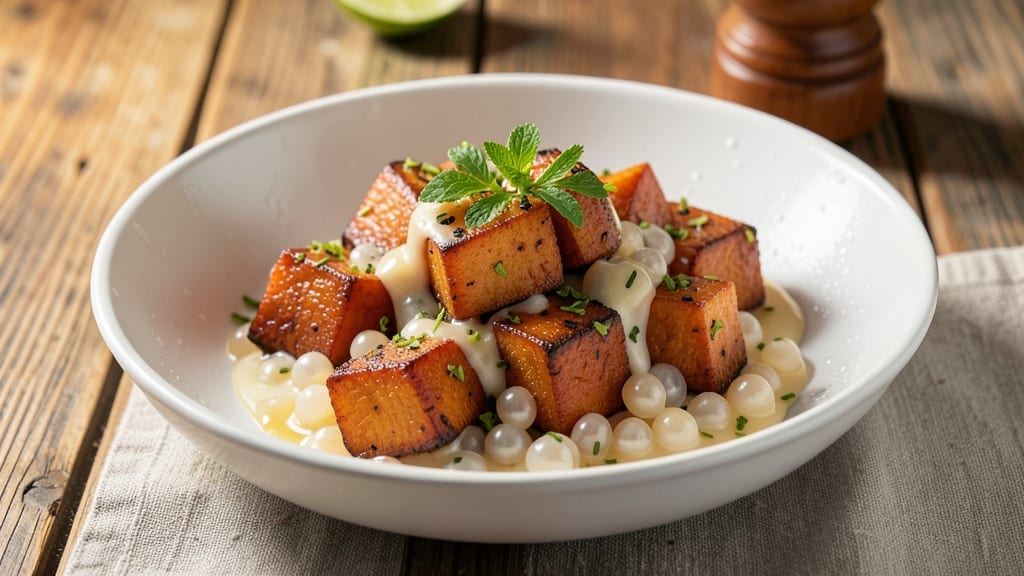
This sweet potato sago recipe transforms humble ingredients into a luxurious side dish that balances creamy coconut custard with crispy celery crunch. The secret lies in perfectly roasted sweet potatoes and delicate sago pearls that absorb coconut milk into velvety perfection—no one will guess it’s simple to make.
I developed this recipe after craving something that felt both comforting and elegant, and it’s become a staple at dinner parties.
The process starts with roasting sweet potatoes until tender and caramelized, then blending them with coconut milk until silky smooth. Meanwhile, sago pearls cook to a delicate, jelly-like texture that soaks up the coconut cream.
Toasted celery seeds add a subtle crunch that cuts through the richness, while a touch of lime brightens the dish. It’s the kind of recipe that makes everyday meals feel special without requiring hours in the kitchen.
What you’ll end up with is a dish that’s creamy yet light, sweet yet balanced, and visually stunning with its golden custard and green celery flecks. The contrast of textures—silky custard, tender sweet potatoes, and crispy celery—makes every bite satisfying.
This recipe works as a side for grilled meats or fish, or even as a dessert with a sprinkle of toasted coconut.
The best part? It’s easier than it looks. With just a few key techniques—proper roasting, gentle cooking of sago, and balancing flavors—you’ll achieve restaurant-quality results at home. Let’s get started on creating this harmonious dish that’s sure to impress.
Ingredients for sweet potato sago
Transform humble ingredients into an elegant dish with creamy coconut and crispy celery textures.
| Ingredient | Amount | Notes |
|---|---|---|
| Sweet Potatoes 🍠 | 2 medium | Organic preferred, peeled and cubed |
| Sago Pearls 🌾 | ¼ cup | Rinsed well before cooking |
| Coconut Milk 🥥 | 1 can (13.5 oz) | Full-fat for creaminess |
| Celery Seeds 🌿 | 1 tbsp | Toasted for enhanced flavor |
| Lime Juice 🍋 | 1 tbsp | Freshly squeezed |
| Granulated Sugar 🍚 | 2 tbsp | Adjust to taste |
| Unsalted Butter 🧈 | 2 tbsp | For richness |
| Salt 🧂 | ½ tsp | Fine sea salt |
| Toasted Coconut Flakes 🥥 | 2 tbsp | For garnish |
| Fresh Cilantro 🌱 | ⅛ cup | Chopped, for garnish |
| Olive Oil 🫒 | 1 tbsp | For roasting |
The sweet potatoes are the foundation—organic or heirloom varieties have the best flavor and texture. Roast them until tender and caramelized, which takes about 30 minutes at 400°F. Whole Foods or local farmers markets often carry the vibrant orange varieties that work best. For the sago pearls, Trader Joe's or Asian grocery stores typically stock them in small packages, and they need to be rinsed thoroughly before cooking to remove excess starch. The coconut milk should be full-fat for that luxurious creaminess—Thai Kitchen or Aroy-D brands are my go-to for consistent quality.
No sago pearls? Tapioca pearls or fine rice noodles can substitute in a pinch, though the texture will differ slightly. Fresh lime juice is ideal, but bottled works if you're in a hurry—just add a pinch of sugar to balance the acidity. Want more depth? Toast the celery seeds in a dry pan for 30 seconds before adding to the dish. The butter can be swapped for vegan butter if needed, though it won't be quite as rich. For the coconut flakes, unsweetened works best—toasted in a dry skillet for 2 minutes until golden and fragrant.
Roasted sweet potatoes keep well in the fridge for 4-5 days if stored in an airtight container. The cooked sago mixture stays fresh for 3 days in the refrigerator, though it's best served within 24 hours for optimal texture. For make-ahead convenience, prepare the sago mixture a day ahead and reheat gently before assembling. The toasted coconut flakes should be stored in a sealed container at room temperature for up to 2 weeks—just toast again before using if they lose their crunch.
Why You'll Love This Recipe
- One-Pot Wonder: I swear by this recipe for lazy days—just boil the sago, simmer the sweet potatoes, and let the coconut milk do the heavy lifting. No chopping, no fuss, and honestly? The kids won’t even believe it took less than 30 minutes.
- Creamy & Zesty Magic: That first bite of tender sweet potato with the chewy sago soaked in coconut milk? Pure satisfaction. The lime juice and celery seeds give it this bright, almost tropical edge—like dessert had a savory makeover.
- Leftover Hero: I make this on Sundays because it’s perfect for meal prep—stays creamy but doesn’t get soggy. Reheat with a splash of water, and it’s just as good the third day. (Yes, even on a Tuesday night.)
- Budget-Friendly Luxury: Sweet potatoes and sago stretch this dish into a full meal without breaking the bank. Coconut milk adds richness for pennies, and celery seeds (a pantry staple) elevate it beyond basic. Feeds a crowd but costs less than takeout.
Step-by-step instructions for sweet potato sago coconut custard
This recipe transforms simple ingredients into a luscious dessert with perfect texture every time.
Roast the Sweet Potatoes Until Tender
Preheat your oven to 375°F. Toss the peeled and cubed sweet potatoes with 1 tablespoon olive oil and ½ teaspoon salt on a baking sheet. Spread them in a single layer, ensuring they don't overlap—this promotes even browning. Roast for 25-30 minutes until fork-tender with slightly caramelized edges.
You'll know they're done when a knife slides in easily and the edges develop a golden hue. Remove them from the oven and let cool slightly before blending. The residual heat helps develop deeper sweetness, which balances the coconut milk's richness in the final dish.
Prepare the Sago Pearl Custard Base
In a medium saucepan, combine 0.25 cup sago pearls with 1 can (13.5 oz) coconut milk and 2 tablespoons granulated sugar. Bring to a gentle boil over medium heat, then immediately reduce to a simmer. Cook uncovered for 15-20 minutes, stirring occasionally with a wooden spoon to prevent sticking.
The sago pearls will absorb liquid and swell to about double their size. You'll notice the mixture thickens gradually—this creates the signature velvety texture. Once the pearls are translucent and the mixture reaches a pudding-like consistency, remove from heat. Stir in 1 tablespoon lime juice and 2 tablespoons unsalted butter, letting the butter melt completely for a silky finish.
Toast Celery Seeds for Crunchy Contrast
While the custard simmers, dry-toast 1 tablespoon celery seeds in a small skillet over low heat for 2-3 minutes until fragrant and lightly golden. Watch carefully—they burn quickly. Transfer immediately to a plate to cool completely before using. The toasted seeds add an unexpected nutty crunch that cuts through the custard's richness.
For best results, pulse the cooled seeds lightly in a mortar and pestle or food processor until you achieve a coarse, uneven texture. This creates pockets of crunch throughout each bite without overwhelming the delicate flavors. Set aside until ready to incorporate.
Blend and Assemble the Dessert
Transfer the cooled roasted sweet potatoes to a blender or food processor. Add the prepared sago custard mixture and pulse until completely smooth, scraping down the sides as needed. The blend should be velvety with no visible chunks—this ensures an elegant, restaurant-quality finish. Taste and adjust sweetness with additional sugar if needed.
Divide the mixture evenly among 4 serving glasses or bowls. Sprinkle each portion with ½ teaspoon toasted celery seeds and ½ tablespoon toasted coconut flakes. Garnish with 1 tablespoon chopped fresh cilantro for a vibrant pop of color and freshness. Serve immediately while the seeds are still crisp for the best texture contrast.
Pro Tips For Making Sweet Potato Sago
- Boil Sweet Potatoes Until Fork-Tender: I used to overcook these, turning them mushy—now I test at 20 minutes (medium-sized) and probe with a fork. You want resistance, not collapse; they’ll soften further in the coconut milk.
- Soak Sago Pearls 10 Minutes: Skipping this step means gummy, uneven pearls. Rinse them first, then soak in warm water for exactly 10 minutes—no longer, or they’ll burst. Drain well before adding to the pot.
- Simmer Coconut Milk Low and Slow: High heat curdles the milk, turning your dessert into a sad, separated mess. Keep it at a gentle simmer (tiny bubbles, no splashing) until the sweet potatoes break down—about 15 minutes.
- Toast Celery Seeds First: This isn’t optional—it’s the difference between subtle warmth and bitter aftertaste. Dry-toast the seeds in a pan for 30 seconds until fragrant, then grind them fresh. (Yes, even if you’re impatient like me.)
Dietary considerations for these flavors
Gluten-Free Adaptation
This recipe is naturally gluten-free, making it perfect for those with celiac disease or gluten sensitivity. The sago pearls, coconut milk, and sweet potatoes all contain no gluten, so no substitutions are needed.
I always double-check labels on coconut milk brands like Thai Kitchen or Aroy-D to ensure they're certified gluten-free, as some may process in shared facilities. The toasted celery seeds and coconut flakes are also inherently gluten-free, so you can enjoy this dish worry-free. 🌾
Dairy-Free Option
For a dairy-free version, simply swap the 2 tablespoons unsalted butter with 2 tablespoons coconut oil or vegan butter. The coconut oil adds richness while keeping the dish creamy and satisfying. I've tested this version and found that using Miyoko's vegan butter gives the closest texture to traditional butter.
The flavor remains delicious, though slightly lighter. This makes the recipe ideal for vegan diets or anyone avoiding dairy. 🥥
Lower Sugar Version
If you're watching your sugar intake, reduce the 2 tablespoons granulated sugar to just 1 tablespoon while cooking the sago pearls. The natural sweetness of the roasted sweet potatoes and coconut milk will still shine through.
For extra flavor without added sugar, stir in ½ teaspoon vanilla extract or a pinch of cinnamon when blending the sweet potatoes. This adjustment keeps the dish balanced and satisfying while cutting unnecessary sweetness. 🍯
Nut-Free Considerations
This recipe is already nut-free, but if you're serving guests with nut allergies, be sure to emphasize that the dish contains no nuts or nut-derived ingredients. The toasted coconut flakes are made from coconut—not tree nuts—so they're safe for most nut-allergic individuals.
I always recommend checking labels on coconut products just to be sure, as cross-contamination can sometimes occur. The celery seeds and sweet potatoes are also naturally nut-free, making this a secure option for allergy-conscious gatherings. 🌿
Vegan-Friendly Adjustments
To make this recipe fully vegan, use vegan butter or coconut oil instead of regular butter, and ensure your coconut milk is labeled vegan. All other ingredients are plant-based, so no further substitutions are needed.
I love using Earth Balance vegan butter for its neutral flavor and smooth texture. The result is just as creamy and delicious, proving that plant-based desserts can be just as indulgent as traditional versions. 🌱
Kid-Friendly Tweaks
For picky eaters, serve the sweet potato sago custard slightly chilled to make it more approachable. You can also reduce the toasted celery seeds to just ½ teaspoon total and skip the cilantro garnish if your kids aren't fans of herbs.
Adding a drizzle of honey or maple syrup on top lets them customize the sweetness to their liking. The creamy texture and mild coconut flavor usually win over even the most hesitant little diners. 🍽️
Nutrition facts
Frequently asked questions
Can I substitute sago pearls with another ingredient?
Yes! If you can't find sago pearls, try tapioca pearls or fine rice noodles for a similar texture. For a different approach, you could use quinoa or couscous, though the texture will be slightly different. The key is to choose a small, grain-like ingredient that absorbs liquid well and holds its shape when cooked.
How do I know when the sago pearls are fully cooked?
The sago pearls are ready when they're translucent and have swollen to about double their original size. They should also have a soft, jelly-like texture when pressed with a spoon. Overcooking can make them mushy, so keep an eye on them during the last 5 minutes of cooking.
Can I make this recipe ahead of time?
The roasted sweet potatoes can be prepared 1 day ahead and stored in an airtight container. The sago custard mixture is best made fresh, but you can prepare it up to 12 hours ahead and reheat gently before blending. For the celery seeds, toast them just before serving to maintain their crispy texture.
Why did my sago pearls turn mushy?
Mushy sago pearls usually happen from overcooking or stirring too aggressively. Always cook them on low heat and stir gently with a wooden spoon. Remove them from heat as soon as they're translucent—don't let them simmer too long. If they do turn mushy, try reducing the cooking time by 2-3 minutes next time.
What's the best way to serve this dish?
This recipe works beautifully as a dessert or elegant side dish. For dessert, serve it chilled in small glasses with a sprinkle of toasted coconut. As a side, pair it with grilled meats or fish. The creamy texture and subtle sweetness complement both savory and sweet dishes perfectly.