
Side Dishes
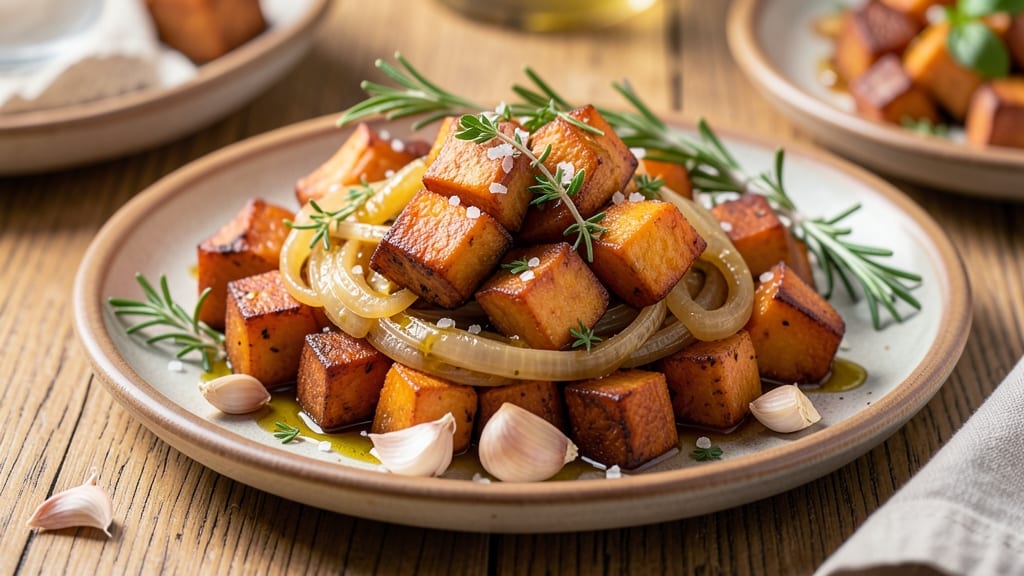
This sweet potato shallot recipe transforms simple ingredients into a restaurant-quality side dish that balances caramelized sweetness with crispy shallot crunch.
The secret lies in roasting the sweet potatoes until tender and then finishing them with sautéed shallots that develop a perfect golden-brown edge—just enough to add texture without overpowering the natural sweetness of the potatoes.
What makes this recipe stand out is its versatility—it works as a hearty side for roasted meats, a vegetarian main with a drizzle of olive oil, or even a topping for grain bowls.
The process is straightforward: roast the sweet potatoes until fork-tender, then sauté the shallots until they’re crispy and fragrant, and finally toss them together with a touch of garlic and fresh herbs for brightness.
The result is a dish that’s rich in flavor, visually striking, and effortlessly elegant—perfect for weeknight dinners or special occasions. The sweet potatoes develop a deep, caramelized edge while staying creamy inside, while the shallots add a crunchy, slightly sweet contrast that keeps every bite interesting.
This recipe is foolproof and adaptable—whether you prefer a savory-sweet glaze or a herb-infused finish, it’s easy to customize. Pair it with grilled chicken, steak, or even black beans for a complete meal. Let’s get started!
Ingredients for sweet potato shallot
Restaurant-quality side dish with caramelized sweet potatoes and crispy shallot crunch—simple ingredients, bold flavors.
| Ingredient | Amount | Notes |
|---|---|---|
| Sweet Potatoes 🍠 | 1 ½ lb | Medium-sized, peeled and cubed |
| Shallots 🧅 | 1 lb | Peeled and halved lengthwise |
| Extra-Virgin Olive Oil 🫒 | ¼ cup | High quality, fruity variety |
| Garlic Cloves 🧄 | 3 cloves | Minced, fresh preferred |
| Fresh Thyme Leaves 🌿 | ¼ cup | Chopped, stems removed |
| Fresh Rosemary 🌿 | ¼ cup | Chopped, fresh preferred |
| Salt 🧂 | 1 ½ tsp | Diamond Crystal kosher salt |
| Black Pepper 🌶️ | ½ tsp | Freshly ground preferred |
| Maple Syrup 🍯 | 1 tbsp | Pure, grade B preferred |
| Balsamic Vinegar 🍷 | 1 tbsp | Aged, for finishing |
| Toasted Walnuts 🥜 | ¼ cup | Chopped, optional garnish |
The sweet potatoes are the foundation—organic sweet potatoes from the grocery store’s produce section work best, but any variety will do. Look for firm, vibrant orange potatoes with no soft spots. For the shallots, Whole Foods or local farmers markets often carry the freshest, most flavorful bulbs, but regular grocery stores usually have them too. The key is to use shallots that are firm and free of sprouts. If you can't find fresh shallots, yellow onions work in a pinch, though they won’t have the same delicate sweetness. Toast the walnuts in a dry pan until fragrant—this adds depth to the dish without overpowering the natural flavors.
No fresh thyme or rosemary? Dried herbs at one-third the amount will suffice, though fresh is ideal for that bright, aromatic punch. Running low on maple syrup? Agave nectar or honey works just as well—just remember honey isn’t vegan. The olive oil should be extra-virgin and fruity, not the cheap, rancid stuff that’s been sitting on the shelf for years. For the shallots, cut them lengthwise into thin slices—this ensures they caramelize quickly without burning. If you prefer a sweeter finish, add an extra tablespoon of maple syrup or a pinch of cinnamon. The balsamic vinegar adds a tangy contrast, so don’t skip it—it’s what ties the dish together.
Roasted sweet potatoes keep well in the fridge for 4-5 days if stored in an airtight container. The shallots can be prepped ahead and stored in the fridge for 2 days before sautéing. For a make-ahead option, roast the sweet potatoes and store them separately, then toss with the shallots just before serving. The dish reheats beautifully—simply warm in a skillet with a splash of water to restore moisture. Garnish with toasted walnuts right before serving to maintain their crunch. Portion into containers for meal prep, but hold off on adding the shallots until reheating to preserve their texture.
Why You'll Love This Recipe
- One-Pan Magic: I swear by this—just toss everything on a sheet pan, roast, and walk away. No chopping boards to scrub, no pots to wash. The shallots caramelize right alongside the sweet potatoes, and honestly? That’s my kind of cleanup.
- Caramelized Edge, Creamy Heart: Between us, the crispy skin and buttery flesh are chef’s kiss. The olive oil and thyme turn the sweet potatoes into something richer than you’d expect, while the shallots add this sweet, almost jammy depth. (Yes, even on a Tuesday night.)
- Lunchbox Hero: I make a big batch on Sundays because this holds up perfectly for days—great cold in salads, reheated for breakfast, or packed for work. The flavors only get better as it sits, and my kids actually eat the leftovers. (A miracle.)
- Budget-Friendly Luxury: Sweet potatoes and shallots are cheap, but this tastes like a fancy dinner. A little olive oil and thyme stretch a long way, and you won’t find a more satisfying, filling side for the price. Plus, it’s one of those dishes that makes you feel like you’ve splurged—without the bill.
Step-by-step instructions for sweet potato shallot caramelization
Transform humble ingredients into a symphony of caramelized sweetness with this precise technique.
Prep and Par-Cook the Sweet Potatoes
Preheat your oven to 400°F. Toss the 1.5 lb cubed sweet potatoes with 1 tablespoon of the extra-virgin olive oil, 0.75 teaspoon salt, and 0.25 teaspoon black pepper. Spread them in a single layer on a rimmed baking sheet and roast for 15 minutes until tender when pierced with a fork but not yet browned.
This initial cooking ensures the sweet potatoes develop a creamy texture without becoming mushy. The partial cooking also prevents them from overcooking later when we add the shallots. Remove from oven and let cool slightly before proceeding.
Caramelize Shallots with Herbs
Heat a large oven-safe skillet over medium-low heat. Add the remaining 1.5 tablespoons extra-virgin olive oil and the 1 lb halved shallots, cut-side down. Cook undisturbed for 10 minutes until golden brown on the cut sides, then stir and cook another 10 minutes until deeply caramelized.
Add the 3 minced garlic cloves, 0.25 cup chopped fresh thyme, and 0.25 cup chopped fresh rosemary. Cook for 2 minutes until fragrant, stirring constantly to prevent burning. The herbs will release their aromatic oils, creating a fragrant base for the dish.
Combine and Finish with Sweet Elements
Add the partially cooked sweet potatoes to the skillet with the caramelized shallots. Stir gently to combine, then increase heat to medium-high. Cook for 5 minutes until the sweet potatoes are heated through and the mixture begins to sizzle.
Reduce heat to low and stir in the 1 tablespoon maple syrup and 1 tablespoon balsamic vinegar. Cook for another 3 minutes until the sweet potatoes are tender and the mixture has thickened slightly. The maple syrup enhances the natural sweetness while the balsamic adds a tangy depth.
Garnish and Serve Warm
Transfer the mixture to serving plates and immediately top with the 0.25 cup chopped toasted walnuts. The walnuts add a satisfying crunch that contrasts beautifully with the creamy sweet potatoes and caramelized shallots.
Serve immediately while the sweet potatoes are warm and the shallots retain their caramelized texture. This dish pairs exceptionally well with a dollop of Greek yogurt or a sprinkle of flaky sea salt for added dimension.
Pro Tips For Making Sweet Potato Shallot
- CUT SHALLOTS SMALL: Tiny shallots cook faster and sweeten properly—no one wants to bite into a raw, rubbery chunk. Aim for 1/8-inch slices or even smaller if you’re impatient (yes, even if you’re impatient like me).
- ROAST SWEET POTATOES FIRST: I used to roast everything together, but pre-roasting the sweet potatoes at 400°F (200°C) for 20 minutes softens them without burning. Then you just crisp the edges later—no soggy mess.
- SALT SHALLOTS MID-COOK: Tossing shallots with salt halfway through caramelization (around 8-10 minutes) pulls out moisture and deepens their sweetness. Skip this, and they’ll just turn bitter—learned that the hard way.
- FINISH WITH THYME LATE: Add fresh thyme leaves only in the last 2 minutes—any earlier, and they’ll turn to dust. A quick toss with the hot oil releases their aroma perfectly, making the dish smell like a bistro.
Best sauces and condiments for this sweet potato shallot
Maple-Balsamic Glaze
This sweet-savory glaze elevates the dish by balancing the natural sweetness of the sweet potatoes with a tangy kick. Heat 1 tablespoon maple syrup and 1 tablespoon balsamic vinegar in a small saucepan over medium heat for 3-4 minutes until slightly thickened.
Drizzle 1 tablespoon over the finished dish just before serving—it caramelizes beautifully on contact. 🍯
Honey-Mustard Drizzle
For a brighter, slightly tangy finish, whisk together 1 tablespoon honey, 1 teaspoon Dijon mustard, and 1 teaspoon apple cider vinegar. Warm the mixture gently until smooth, then drizzle over the sweet potatoes and shallots.
This works especially well if you prefer a less sweet profile than maple syrup. The mustard adds depth without overpowering the dish.
Garlic-Herb Oil
Infuse 2 tablespoons extra-virgin olive oil with 2 minced garlic cloves and 1 teaspoon chopped fresh rosemary by gently heating in a small saucepan for 2-3 minutes—don’t let it brown.
Strain and drizzle over the finished dish for an aromatic, herby finish. This adds another layer of flavor without altering the texture of the sweet potatoes or shallots.
Spicy Honey Glaze
For heat lovers, combine 1 tablespoon honey, ½ teaspoon cayenne pepper, and ½ teaspoon smoked paprika in a small bowl. Warm the mixture until the spices dissolve, then drizzle over the dish.
The cayenne adds a subtle kick that pairs perfectly with the sweetness, while the smoked paprika deepens the flavor profile. 🌶️
Creamy Yogurt Sauce
Mix ¼ cup plain Greek yogurt with 1 teaspoon lemon juice, ½ teaspoon ground cumin, and a pinch of salt. Dollop this cooling sauce alongside the sweet potatoes for a creamy contrast.
The yogurt’s tang cuts through the richness, making it ideal for balancing the caramelized shallots and sweet potatoes. Serve on the side for dipping or spooning over the dish.
Toasted Walnut Pesto
Blend ½ cup toasted walnuts, 2 tablespoons fresh parsley, 1 tablespoon olive oil, 1 teaspoon lemon zest, and ½ teaspoon salt until smooth. Swirl this nutty pesto into the finished dish for a vibrant, herby crunch.
The walnut pesto adds a fresh, earthy note that complements the caramelized shallots and sweet potatoes beautifully. 🥜
Nutrition facts
Frequently asked questions
Can I substitute regular potatoes for sweet potatoes in this recipe?
While you can technically use regular potatoes, the flavor and texture will be completely different. Sweet potatoes have a natural sweetness and creamy texture that pairs beautifully with caramelized shallots. Regular potatoes will be starchier and less flavorful. If you must substitute, try purple or red potatoes for a slightly sweeter profile, but the dish won't be the same.
How do I prevent the shallots from burning while caramelizing?
Keep the heat at medium-low and cook the shallots undisturbed for the first 10 minutes to allow them to develop a deep golden color. Stir occasionally after that, and never rush the process. If they start to brown too quickly, reduce the heat further. Patience is key—rushed caramelization leads to burnt shallots.
Can I make this dish ahead of time?
Yes, but with a few adjustments. Roast the sweet potatoes in advance and store them in an airtight container for up to 4 days. Caramelize the shallots separately and store them in the fridge for 2 days. When ready to serve, simply reheat the sweet potatoes in a skillet with a splash of water, then toss in the shallots just before serving to maintain their crispy texture.
What’s the best way to reheat leftovers?
Reheat in a skillet over medium heat with a splash of water or olive oil to restore moisture and prevent drying out. If using the microwave, cover with a damp paper towel and heat in 30-second intervals, stirring between each interval. Avoid reheating in the oven, as it can make the sweet potatoes dry and tough.
Can I use this recipe as a main dish instead of a side?
To turn this into a hearty main dish, serve it over a bed of quinoa, farro, or couscous. Add a protein like grilled chicken, chickpeas, or crispy tofu for extra substance. Top with a dollop of Greek yogurt or a drizzle of tahini sauce to balance the richness. The caramelized shallots and sweet potatoes will hold their own as a satisfying meal.