
Breakfast & Brunch
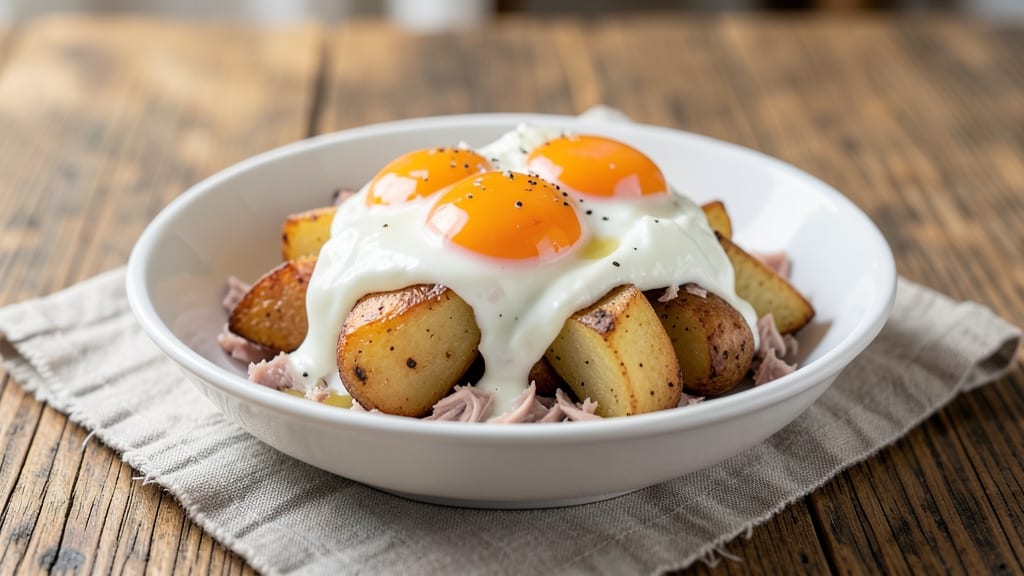
This tuna egg potato recipe transforms simple ingredients into a hearty, protein-packed breakfast that delivers crispy edges and fluffy centers in one pan. The secret lies in layering thinly sliced potatoes with canned tuna and eggs, then baking until golden perfection—no frying required.
I developed this dish after realizing how quickly tuna, potatoes, and eggs could become a satisfying meal when combined thoughtfully, especially for busy mornings or meal prep.
The beauty of this recipe is its versatility—it works as a standalone dish or as part of a larger brunch spread. The potatoes develop a satisfying crispy exterior while staying tender inside, while the eggs bind everything together with creamy richness.
Adding a touch of mayo or Greek yogurt enhances the texture, but it's optional for those avoiding dairy. This method also makes it easy to customize with your favorite seasonings or herbs.
What you'll end up with is a dish that's equal parts comforting and elegant—ideal for pescatarians, quick weeknight breakfasts, or even a light lunch. The combination of textures and flavors creates something unexpectedly satisfying, proving that simple ingredients can deliver restaurant-quality results with minimal effort.
Ready to try this one-pan wonder?
Whether you prefer it as a baked dish, a salad base, or a stir-fry component, this recipe adapts effortlessly to your needs. The key is balancing the crispy potatoes, tender tuna, and perfectly cooked eggs—each element plays a crucial role in the final harmony.
Let's get started on creating this flavorful, protein-rich meal that's sure to become a staple.
Ingredients for tuna egg potato
Thinly sliced potatoes, creamy eggs, and flaky tuna create a satisfying one-pan meal with crispy edges and fluffy centers.
| Ingredient | Amount | Notes |
|---|---|---|
| Russet Potatoes 🥔 | 1 ½ lb | Thinly sliced, 1/8-inch thickness |
| Canned Tuna in Water 🐟 | 2 cans | 5 oz each, drained |
| Large Eggs 🥚 | 4 whole | Room temperature preferred |
| Mayonnaise 🥫 | ¼ cup | Dairy-free option available |
| Greek Yogurt 🧀 | ¼ cup | Plain, full-fat preferred |
| Dijon Mustard 🌶️ | 1 tbsp | For tangy depth |
| Olive Oil 🫒 | ¼ cup | Extra-virgin for richness |
| Salt 🧂 | 1 ½ tsp | Diamond Crystal preferred |
| Black Pepper 🌶️ | ½ tsp | Freshly ground for best flavor |
| Garlic Powder 🧄 | ½ tsp | For subtle aromatic base |
| Fresh Dill 🌿 | 2 tbsp | Chopped, for freshness |
| Lemon Juice 🍋 | 1 tbsp | Freshly squeezed |
| Panko Breadcrumbs 🍞 | ¼ cup | For added texture |
The russet potatoes are the foundation—thin slices ensure even cooking and crispy edges. Pre-slicing with a mandoline guarantees uniform thickness, but a sharp knife works too. Opt for organic russets when possible; their thicker skins hold up better during baking. For the tuna, high-quality brands like Wild Planet or Starkist deliver superior texture. Drain thoroughly to avoid excess moisture in your dish. The eggs should be large, preferably organic, for richer flavor and better binding properties. Store them in the coldest part of your fridge until use.
No mayo? Greek yogurt or vegan mayo works beautifully as a substitute. Short on dill? Fresh parsley or chives add brightness, though dill's anise notes are ideal. The panko breadcrumbs can be swapped for crushed Ritz crackers or gluten-free breadcrumbs if needed. For extra crispiness, sprinkle an additional tablespoon of panko before baking. The lemon juice can be omitted if you prefer a milder flavor, but it brightens the entire dish. Always taste as you go—adjust salt and pepper to balance the flavors.
Pre-sliced potatoes can be stored in cold water in the fridge for up to 2 days before baking. The tuna should be used within 3 days of opening, while eggs keep best in their original carton. This dish reheats beautifully—cover with foil and warm in the oven at 350°F for 10 minutes. For meal prep, assemble the dish but skip baking until ready to serve. The flavors meld beautifully overnight, making it perfect for 3-4 days of lunches or breakfasts.
Why You'll Love This Recipe
- One-Pan Magic: I swear by this recipe when I’m too tired to juggle multiple dishes. Russets roast right alongside the tuna and eggs—no chopping, no fuss—just crispy edges and fluffy insides all in one pan. The yogurt-mayo mix ties everything together without extra cleanup.
- Creamy Crunch Combo: That Greek yogurt swirl in the mayo? It’s the secret weapon. The tuna stays moist, the potatoes get that golden crunch, and the eggs add a rich, custardy finish. It’s not fancy, but it’s ridiculously satisfying—like a loaded potato without the guilt.
- Lunchbox Hero: Between us, this is my go-to for packed lunches. The leftovers keep for days, and the flavors only get better. Toss it in a container, and you’ve got a protein-packed meal that’ll actually make someone smile (even my picky husband).
- Budget Win: Honestly, I make this when I’m broke and need to feed a crowd. Canned tuna, cheap potatoes, and a few eggs stretch this recipe farther than you’d think. Plus, the yogurt adds creaminess without breaking the bank—win, win.
Step-by-step instructions for tuna egg potato recipe
Master the one-pan technique for golden crusts and tender centers with this method.
🍳 Step 1: Parboil the Potatoes for Perfect Texture
Cut the 1.5 lb Russet Potatoes into 1/8-inch thick slices using a mandoline or sharp knife. Place them in a large pot of salted boiling water for 4-5 minutes—just until they begin to soften slightly but remain firm to the touch. This partial cooking prevents them from turning mushy later.
Drain immediately and transfer to a clean kitchen towel to remove excess moisture. The potatoes should be warm but still hold their shape when pressed. This step ensures they develop crispy edges without becoming rubbery in the oven.
👨🍳 Step 2: Prepare the Tuna Mixture
In a medium bowl, combine the 2 cans drained Canned Tuna in Water, 0.25 cup Mayonnaise, 0.25 cup Greek Yogurt, 1 tbsp Dijon Mustard, 0.5 tsp Garlic Powder, 0.5 tsp Black Pepper, 2 tbsp chopped Fresh Dill, and 1 tbsp Lemon Juice. Mix thoroughly until fully incorporated—this forms the creamy base for your dish.
The tuna should be flaked evenly, and the mixture should be smooth. Taste and adjust seasoning if needed, as the acidity from the lemon and mustard may require additional salt. This mixture will later bind with the potatoes and eggs for cohesive texture.
🍳 Step 3: Assemble the Potato Layers
Preheat your oven to 400°F. In a 9x13-inch baking dish, spread half of the potato slices in a single layer. Spoon half of the tuna mixture evenly over the potatoes, then sprinkle with 0.75 tsp Salt and 0.25 cup Panko Breadcrumbs. Repeat with the remaining potatoes and tuna mixture, finishing with another sprinkle of breadcrumbs.
Press down gently on the top layer to ensure even contact with the bottom. The breadcrumbs will create a crispy crust while the potatoes maintain their tenderness. This layered approach ensures every bite delivers both potato and tuna in perfect harmony.
🔥 Step 4: Bake Until Golden and Crispy
Place the baking dish on the center rack and bake for 25-30 minutes until the edges are deep golden brown and the top layer of breadcrumbs is crispy. The potatoes should be tender when pierced with a fork, but not falling apart.
Watch closely after 20 minutes—if the top isn't browning evenly, tent loosely with foil for the last 5 minutes to prevent over-browning while finishing the cooking. The dish is done when the crust is crisp and the potatoes yield slightly under pressure.
⏰ Step 5: Rest and Serve Warm
Remove from the oven and let the dish rest for 5-10 minutes before serving. This resting period allows the juices to redistribute, ensuring each bite is moist and flavorful. The crispy edges will soften slightly but maintain their texture.
Slice into squares or serve directly from the baking dish. The contrast between the crispy potato crust and creamy tuna filling makes this dish irresistibly satisfying. Garnish with additional fresh dill if desired, and serve with a simple side salad for balance.
Pro Tips For Making Tuna Egg Potato
- Boil Potatoes Until Fork-Tender: Russets break apart when overcooked—test with a fork at 15 minutes, not 20. You want them soft enough to mash but still holding shape when mixed with the tuna filling. I learned this the hard way after making a mushy, gluey disaster.
- Drain and Rinse Tuna Thoroughly: The water in canned tuna makes the filling watery. Drain it, then rinse under cold water while pressing with a spoon to remove excess moisture. Trust me, skipping this step turns your dish into a sad, wet mess.
- Mix Mayo and Yogurt First: Combine the mayo and yogurt before adding anything else—this keeps the filling smooth and prevents lumps. Stir in the tuna and potatoes last, or you’ll end up with a streaky, uneven texture. Sounds simple, but I used to rush it.
- Bake at 375°F, Not Higher: Cranking the oven too hot dries out the eggs and turns the edges rubbery. 375°F gives you a golden crust without overcooking the center. If you’re impatient, cover loosely with foil for the first 15 minutes, then uncover.
Serving suggestions for this dish
Brunch Spread Pairing
Serve this dish alongside a fresh citrus salad with arugula, blood orange slices, and shaved fennel—the bright acidity cuts through the richness beautifully. I like to toss 4 cups arugula with 2 tbsp extra-virgin olive oil, 1 tbsp honey, and a squeeze of lemon juice.
The crispness of the fennel adds a satisfying crunch that complements the crispy potato edges. 🥗
Warm Bread Companion
A warm, crusty baguette or sourdough makes an excellent side for soaking up any extra tuna mixture. Toast slices in the oven alongside your dish for 5-7 minutes at 400°F until golden and crisp.
The open crumb structure of sourdough holds up well to the creamy filling, while the crust adds a satisfying texture contrast. For extra flair, rub the bread with a garlic clove before toasting. 🍞
Protein Boost Add-On
If you want to make this dish even heartier, add a side of smoked salmon or grilled shrimp for extra protein. The smoky notes of salmon pair wonderfully with the dill and lemon in the tuna mixture, while shrimp adds a light, briny contrast.
I recommend serving 4 oz smoked salmon per person, sliced thinly and arranged on a platter with lemon wedges. 🐟
Dipping Sauces
Prepare a quick spicy aioli by mixing ¼ cup mayonnaise, 1 tsp sriracha, and 1 tsp lemon juice. This adds a kick that balances the richness of the dish.
For a tangier option, whisk together ¼ cup Greek yogurt, 1 tbsp Dijon mustard, and a pinch of salt. Both sauces work perfectly for dipping or drizzling over the top of the baked dish. 🌶️
Coffee or Tea Pairing
A medium-roast coffee with notes of caramel or a black tea like Earl Grey complements this dish beautifully. The bitterness of coffee helps cleanse your palate between bites, while the citrusy notes of Earl Grey enhance the lemon and dill flavors.
For a non-caffeinated option, try hibiscus tea—its tartness pairs wonderfully with the dish's creamy texture. ☕
Meal Prep Serving Style
When prepping for the week, serve this dish cold or at room temperature with a side of quick-pickled vegetables. Thinly slice 1 cucumber and 1 carrot, then toss with ¼ cup apple cider vinegar, 1 tbsp sugar, and a pinch of salt.
The pickled crunch contrasts perfectly with the creamy tuna and crispy potatoes, making it ideal for lunches. 🥒
Nutrition facts
Frequently asked questions
Can I use fresh tuna instead of canned?
Fresh tuna works but requires careful handling. Use 8 oz fresh tuna steak per 2 cans (about 1/2 lb), seared or poached first to 145°F internal temperature. Flake before mixing with the potato layers. Fresh tuna has a firmer texture and stronger flavor, so reduce salt in the recipe by 0.5 tsp to avoid over-seasoning.
Why do my potatoes turn mushy?
Overcooking or skipping the parboil step causes mushiness. Always parboil potatoes for 4-5 minutes first, then drain completely. Bake at 400°F for 25-30 minutes max—check at 20 minutes. If using thicker slices (1/4-inch instead of 1/8-inch), reduce bake time by 5 minutes.
How can I make this gluten-free?
Replace panko with gluten-free breadcrumbs or crushed cornflakes (about 1/4 cup). For extra crispiness, use 1 tbsp cornstarch mixed with 1 tbsp olive oil as a breadcrumb substitute. Check all ingredients (like mayo) for hidden gluten—some brands contain wheat additives.
Can I prep this ahead of time?
Yes! Assemble the dish 1 day ahead and refrigerate uncovered for 1-2 hours to dry the potatoes slightly. Bake straight from the fridge, adding 5-10 extra minutes at 400°F. For meal prep, bake and store in airtight containers for 3-4 days. Reheat covered at 350°F for 10 minutes.
What's the best way to store leftovers?
Cool completely, then store in airtight containers for up to 4 days in the fridge. For longer storage, freeze portions for 2 months. To reheat, cover with foil and warm at 350°F for 10-15 minutes. Microwave reheating works but may make breadcrumbs soggy—avoid if possible.