
Side Dishes
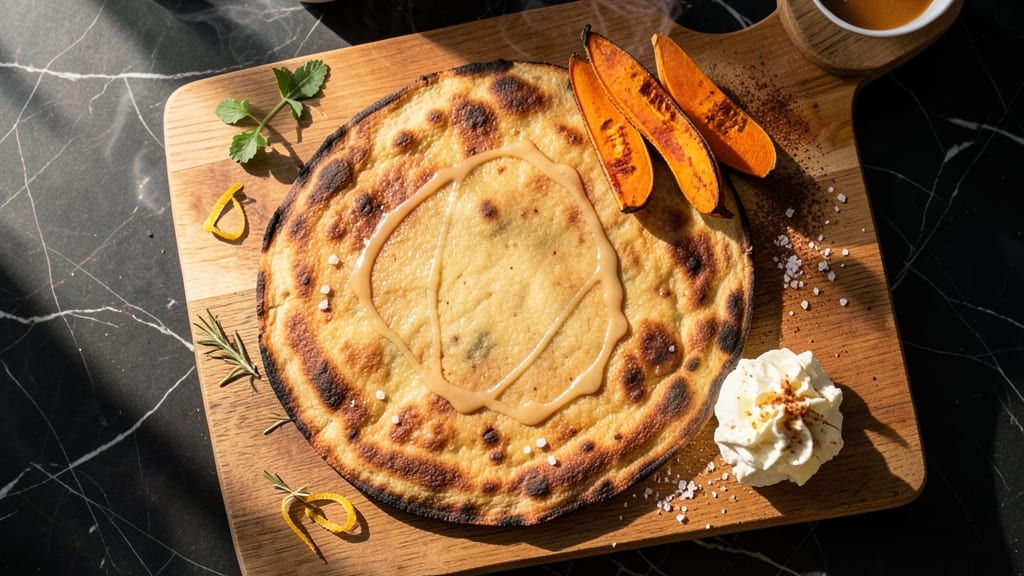
This vegan sweet potato flatbread delivers restaurant-quality flaky layers and nutty crisp edges without a single animal product. 🌱 The secret lies in a simple dough that combines mashed sweet potato with plant-based butter and flour, creating a tender yet sturdy base that holds up perfectly when pan-fried.
I developed this recipe after years of experimenting with vegan flatbreads—this version finally cracked the code for that signature crispy, golden-brown crust while keeping the inside soft and pillowy.
The beauty of this recipe is its versatility—it works equally well as a side dish for curries, a wrap for hearty fillings, or even as a base for a sweet dessert flatbread.
The sweet potato not only adds natural sweetness but also gives the dough moisture and structure, eliminating the need for eggs or dairy.
With just a few simple ingredients and about 20 minutes of hands-on time, you'll have a batch of golden, crisp-edged flatbreads that taste far more indulgent than they are.
What makes this flatbread truly special is the texture contrast: the outside achieves a satisfying crunch while the inside remains tender and slightly chewy, almost like a cross between a flatbread and a cracker.
The nutty aroma from the toasted flour and plant-based butter fills your kitchen as it cooks, making it impossible to resist. Serve warm with hummus, chutney, or your favorite vegan spread for a meal that feels both comforting and sophisticated.
Best of all, this recipe scales effortlessly—whether you're cooking for one or feeding a crowd. The dough comes together in just 10 minutes, and the flatbreads cook in batches on a skillet or griddle.
Once you try this vegan version, you may never go back to store-bought flatbreads again. Let's get started!
Ingredients for vegan sweet potato flatbread
Sweet potato magic meets crispy flatbread perfection—just nine ingredients for golden, flaky layers.
| Ingredient | Amount | Notes |
|---|---|---|
| Large Sweet Potatoes 🍠 | 2 whole | Peeled, cooked and mashed smooth |
| All-Purpose Flour 🌾 | 3 cups | Plus 1 tbsp for dusting |
| Vegan Butter 🧈 | ½ cup | Melted, unsalted preferred |
| Plant-Based Milk 🥛 | ¼ cup | Almond or soy works best |
| Granulated Sugar 🍚 | 1 tbsp | Optional for slight sweetness |
| Ground Cinnamon 🌿 | ½ tsp | For subtle warmth |
| Salt 🧂 | ½ tsp | Fine sea salt preferred |
| Olive Oil 🫒 | 1 tbsp | For cooking flatbreads |
| Sesame Seeds 🌾 | 1 tbsp | Optional for garnish |
| Fresh Rosemary 🌿 | 1 sprig | For aroma during cooking |
Sweet potatoes are the star here. Orange-fleshed varieties work best—they're naturally sweet and moist. Roast them until tender (about 45 minutes at 400°F), then mash until completely smooth. No lumps, or your flatbreads will tear. For extra richness, I grab Earth Balance vegan butter from the store's organic section, but any plant-based butter works. If you're feeling fancy, toast your flour in a dry pan for 2-3 minutes before mixing—this deepens the nutty flavor that makes these flatbreads sing.
No vegan butter? Coconut oil or olive oil in equal amounts will work, though texture might be slightly less tender. Running short on plant milk? Unsweetened applesauce at half the amount keeps things moist without altering flavor. Skip the sugar if you're sensitive to sweetness, but trust me—it balances the earthy sweet potato perfectly. For extra flakiness, chill the dough for 30 minutes before rolling. And if you're making a big batch, Trader Joe's sells pre-peeled sweet potatoes that save time without sacrificing quality.
The dough keeps for 2 days wrapped in plastic in the fridge, but fresh is always best. For make-ahead convenience, shape and freeze flatbreads on parchment paper before cooking—they'll crisp up beautifully straight from frozen. Store cooked flatbreads in an airtight container with a paper towel to keep them crisp. I like to portion mine into 4-inch rounds for easy serving, but feel free to make them larger for heartier wraps. These reheat beautifully in a dry skillet or oven for 3-5 minutes at 350°F.
Why You'll Love This Recipe
- Sweet Potato Swap Wins: I swear by this trick—roasting the sweet potato until it’s just tender means it blends into a velvety dough with zero fuss. No food processor? Hand-mix it with a fork while the oven does all the work.
- Buttery Sweet Crunch: That crispy edge? Pure magic from the vegan butter brushed on top while baking. Inside stays soft and naturally sweet—like a cross between a biscuit and a pancake, but better.
- Breakfast to Brunch: Serve it warm with maple syrup for a lazy morning, or stack it with avocado and chili flakes for a brunch crowd-pleaser. (Yes, even on a Tuesday night.) The dough keeps 3 days in the fridge—perfect for spontaneous feedings.
- Pantry Stash Hero: Uses staples you already have, and the sugar? A pinch goes a long way. I’ve made this with store-brand flour and expired plant milk—still turns out solid. Leftovers? Toast them like chips for a snack.
Step-by-step instructions for vegan sweet potato flatbread
Here's how to create golden, flaky layers with crisp edges—no butter substitutes needed.
👨🍳 Step 1: Mix the Sweet Potato Dough
In a large mixing bowl, combine the 2 whole Large Sweet Potatoes (cooled and mashed smooth) with the 0.5 cup Vegan Butter (melted), 0.25 cup Plant-Based Milk, 1 tbsp Granulated Sugar, 0.5 tsp Ground Cinnamon, and 0.5 tsp Salt. Stir until fully integrated and the mixture is smooth—you want a thick, spreadable consistency that holds together when pressed.
Next, gradually add the 3 cups All-Purpose Flour (plus the extra 1 tbsp for dusting) while mixing with a wooden spoon or your hands. Knead for 5-7 minutes until the dough becomes elastic and no longer sticks to your fingers. If it feels too dry, add 1 teaspoon of plant-based milk at a time until pliable. The dough should be soft but not sticky—think of it like playdough that holds its shape when rolled.
🥘 Step 2: Divide and Rest the Dough
Divide the dough into 4 equal portions (about 8 ounces each) and roll each into a smooth ball. Place them on a lightly floured surface, cover with a damp towel, and let them rest for 30 minutes. This resting period relaxes the gluten, making the flatbreads easier to roll out and ensuring those signature flaky layers.
While the dough rests, preheat your oven to 375°F. Line a baking sheet with parchment paper and lightly brush it with 1 tbsp Olive Oil—this prevents sticking and adds subtle flavor. I like to use a pastry brush for even coverage, but a paper towel works too. The oil will also help create that crispy edge we're after.
🔥 Step 3: Roll and Cook the Flatbreads
On a floured surface, take one dough ball and roll it into a ⅛-inch thick circle, about 8 inches in diameter. Be gentle but firm—you want even thickness for consistent cooking. If the dough resists, let it rest another 5 minutes to soften. Place the rolled flatbread on the prepared baking sheet and lightly brush the top with a bit more olive oil.
Bake for 12-15 minutes until the edges are golden brown and the center feels firm to the touch. You'll see those beautiful flaky layers forming as it cooks—this is the magic of the sweet potato dough! Remove from the oven and immediately sprinkle with 1 tbsp Sesame Seeds and a pinch of ground cinnamon for extra flavor. Repeat with the remaining dough balls, baking in batches if needed.
🍳 Step 4: Add Rosemary Aroma and Serve
While the flatbreads are still warm, place a 1 sprig Fresh Rosemary on top of each one and cover with a clean kitchen towel for 5 minutes. This infuses the warm flatbread with that fresh, herbal aroma—it's a game-changer for flavor. The steam from the flatbread will release the rosemary's oils, making every bite more vibrant.
Serve immediately while still warm and crisp. These flatbreads are perfect for dipping in hummus, spreading with almond butter, or using as a wrap for fresh veggies. The sweet potato gives them a natural sweetness that balances beautifully with savory toppings, while the crisp edges add that satisfying crunch with every bite.
Pro Tips For Making Vegan Sweet Potato Flatbread
- ROAST SWEET POTATOES FIRST: I learned this the hard way—boiling them first makes the dough gummy. Instead, roast the peeled sweet potatoes at 400°F (200°C) for 25-30 minutes until fork-tender, then mash them while still hot. The residual heat breaks down the starch better, giving you a smoother dough that won’t turn gluey when mixed with flour.
- USE COLD VEGAN BUTTER: This isn’t about butter flavor—it’s about texture. Scoop your vegan butter straight from the fridge (or chill it 15 minutes) before mixing it into the dough. Cold butter creates flaky layers in the flatbread, while soft butter just dissolves into a dense, cakey mess. Trust me, your flatbread will thank you.
- STEAM THE DOUGH 10 MINUTES: Skip the temptation to bake immediately. After shaping, cover the flatbread with a damp towel and let it steam in a warm oven (200°F/95°C) for 10 minutes. This relaxes the gluten just enough to prevent cracking when it hits the final high heat. (Yes, even if you’re impatient like me.)
- SWAP 1/4 CUP FLOUR FOR OAT FLOUR: The dough can get tough if you rely solely on all-purpose flour. Replace ¼ cup with finely ground oat flour—it adds subtle sweetness and keeps the flatbread moist without compromising structure. No food processor? Pulse rolled oats in a spice grinder until powdery. It’s a small swap with a noticeable payoff.
Pro cooking tips for great vegan sweet potato flatbread
Dough Texture Secrets
The key to flaky layers is achieving the perfect dough consistency—smooth but elastic, like playdough. I find that using cooled, lump-free sweet potato mash is non-negotiable; any lumps will create weak spots that tear when rolling.
For extra tenderness, I always melt the vegan butter first and let it cool slightly before mixing—this prevents the dough from becoming too warm and sticky. If your dough feels too dry during kneading, add plant-based milk 1 teaspoon at a time until it's just pliable but not wet. 🌱
Pro tip: Toast your all-purpose flour in a dry skillet for 2-3 minutes before mixing—this deepens the nutty flavor and improves the dough's structure. I like to use a fine-mesh sieve to dust the work surface between rolls, which prevents sticking and gives that signature crisp edge.
The dough should be soft enough to roll out smoothly but firm enough to hold its shape when lifted.
Rolling Like a Pro
Even thickness is everything for consistent cooking. I use a rolling pin with a marble base (like the OXO Good Grips brand) because it glides effortlessly and gives me more control.
Roll each dough ball into a ⅛-inch thick circle by pressing down with even pressure—don't wiggle the pin, or you'll create uneven layers. If the dough resists, let it rest another 5 minutes covered with a damp towel.
For extra flakiness, I fold the rolled flatbread in half, then unfold it before placing it on the baking sheet—this creates those signature layers. 🥖
For a restaurant-quality finish, brush the rolled flatbreads with a thin layer of olive oil before baking. I use a pastry brush for even coverage, focusing on the edges where you want maximum crispiness.
If you're short on time, you can also pan-fry these flatbreads in a heavy skillet over medium heat for 2-3 minutes per side—just keep an eye on them to avoid burning.
Baking for Perfect Crisp
Preheat your oven to 375°F and line the baking sheet with parchment paper—this prevents sticking and ensures easy removal. The flatbreads are done when the edges are golden brown and the center feels firm to the touch (about 12-15 minutes).
I like to bake them in batches to avoid overcrowding, which can lead to uneven cooking. For extra crispiness, transfer the baked flatbreads to a wire rack for 5 minutes before serving—this prevents them from getting soggy in a container. 🔥
If you're making these ahead of time, store them in an airtight container with a paper towel to absorb moisture. To reheat, pop them in a 350°F oven for 3-5 minutes or crisp them up in a dry skillet over medium heat for 1-2 minutes per side.
The secret to reheating is speed—don't let them sit too long, or they'll lose their crisp edge.
Rosemary Infusion Hack
This is my favorite finishing touch: placing a fresh rosemary sprig on each warm flatbread and covering it with a damp towel for 5 minutes. The steam from the flatbread releases the rosemary's oils, infusing every bite with a fragrant herbal note.
I use organic rosemary from the grocery store (like Trader Joe's or Whole Foods), but even a small sprig makes a difference. For extra flavor, I also sprinkle sesame seeds and a pinch of ground cinnamon right after baking—this adds texture and warmth. 🌿
If you're feeling adventurous, try adding a pinch of turmeric to the dough for a golden hue, or a splash of vanilla extract for a subtle sweetness. The beauty of this recipe is how adaptable it is—experiment with spices like cardamom or nutmeg for a festive twist.
Just remember, the dough should stay soft and pliable; overmixing or adding too many wet ingredients will throw off the texture.
Nutrition facts
Frequently asked questions
Can I make this flatbread without sweet potatoes?
The sweet potato is key for moisture and natural sweetness, but you can substitute 1 cup of cooked and mashed white potato or ½ cup unsweetened applesauce for a neutral flavor. Just reduce the plant-based milk by 2 tablespoons to balance the extra moisture. For a spiced version, try ½ cup pumpkin puree instead.
Why did my flatbreads turn out dense instead of flaky? Dense flatbreads usually happen from overworking the dough or skipping the 30-minute rest.
Can I use this dough for wraps instead of flatbreads?
Roll the dough into 6-inch circles (about ¼-inch thick) and cook in a dry skillet over medium heat for 1-2 minutes per side until golden. These work perfectly for vegan wraps—try filling with hummus, roasted veggies, and avocado. For extra flexibility, brush with a little olive oil after cooking.
How do I store these flatbreads to keep them crisp?
Store cooled flatbreads in an airtight container with a paper towel to absorb moisture. For best texture, reheat in a 350°F oven for 3-5 minutes or crisp in a dry skillet over medium heat for 1 minute per side. If freezing, wrap individually in parchment paper—they'll crisp up straight from frozen!
What's the best way to make these gluten-free?
Replace the all-purpose flour with a 1:1 gluten-free baking flour blend (like Bob's Red Mill) and add ½ teaspoon xanthan gum to improve texture. For binding, increase the plant-based milk by 2 tablespoons. The dough may be slightly stickier, so use extra flour when rolling and reduce the olive oil to prevent sogginess.